You open a “beginner” workout, and the first move is a burpee. Suddenly, closing the video feels like the most sensible exercise on the list.
In this article
You are not the problem. Beginner-friendly movement should give you room to learn. Start with these six simple bodyweight exercises for beginners: a squat, wall push-up, supported split squat, glute bridge, bird dog, and prone W raise. Together, they train your legs, upper body, and trunk without gym equipment, and every move has an easier option.
This article helps you choose the right versions and practice them with clear safety checks. It is not a weekly training program. If you want a schedule, you will find a four-week plan after the sample round.
Six exercises for beginners without equipment
Bodyweight training uses your own body as resistance. “No equipment” does not have to mean no support: a wall or a sturdy chair can make an exercise more manageable while you build control.
| Exercise | Main focus | Start with | Easier option | Progress when ready |
|---|---|---|---|---|
| Squat to a chair | Thighs, hips, glutes | 5–10 reps | Use a higher chair or a smaller range | Hover above the chair |
| Wall push-up | Chest, shoulders, arms | 5–10 reps | Stand closer to the wall | Step farther back or use a stable counter |
| Supported split squat | Legs, glutes, balance | 5–8 per side | Use a shallower range and a wall | Use less hand support |
| Glute bridge | Glutes, back of thighs | 6–12 reps | Use a smaller range | Pause at the top |
| Bird dog | Trunk control, shoulders, hips | 5–8 per side | Move one limb at a time | Reach the opposite arm and leg together |
| Prone W raise | Upper back, shoulders | 6–10 reps | Keep hands on the floor | Lift hands slightly with a relaxed neck |
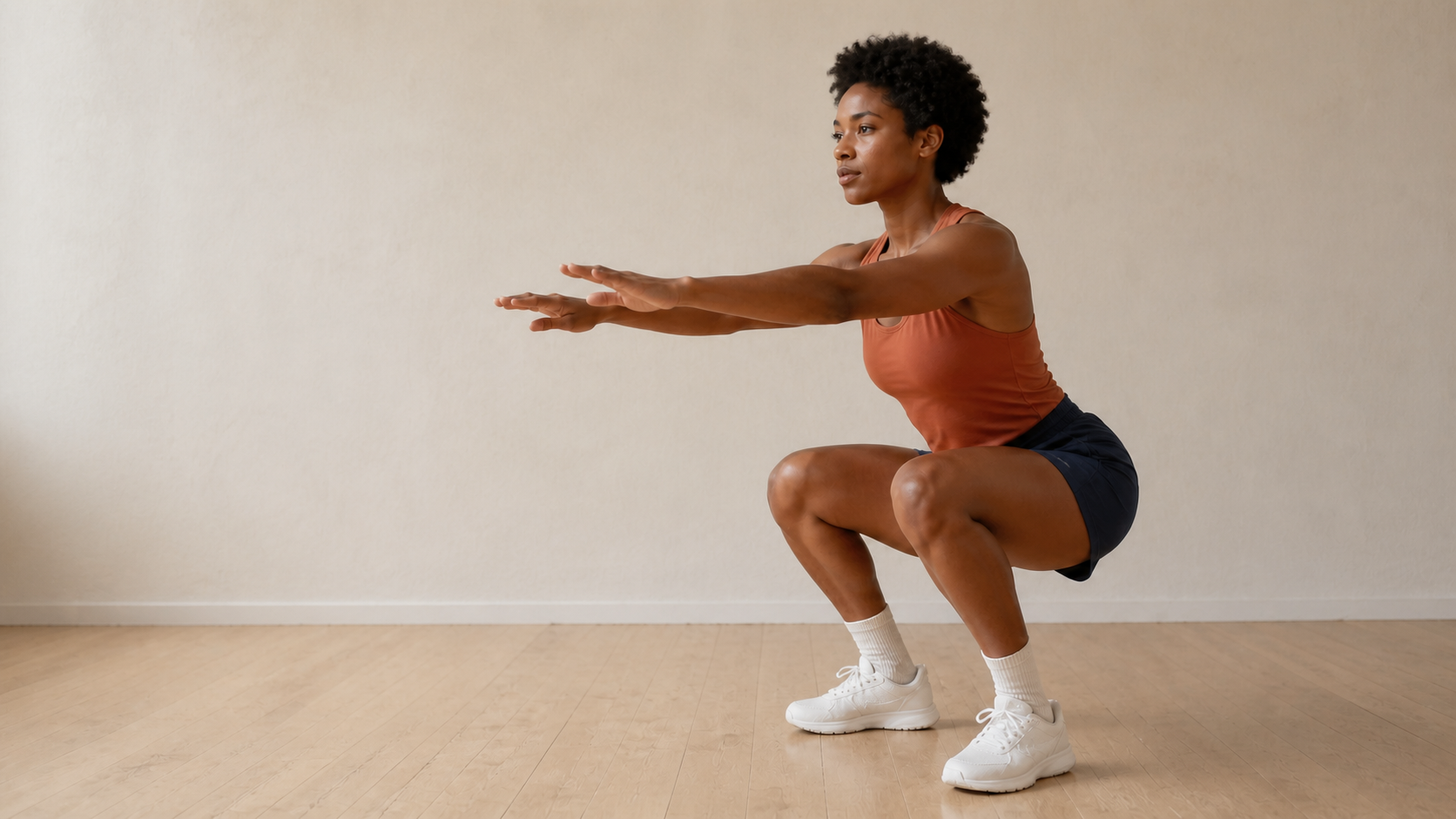
1. Squat to a chair
Stand in front of a stable chair. Bend your knees and send your hips back until you lightly touch the seat, then press through your feet to stand. Keep your full foot down. Use a higher seat or a smaller range if needed; hover above the chair when you are ready for more challenge.
Common mistake: dropping quickly into the chair. Try instead: lower slowly enough to stay balanced and let the seat be a light target, not a place to collapse.
2. Wall push-up
Place your hands on a wall around chest height, a little wider than your shoulders. Step back, keep your body in one long line, and bend your elbows as your chest moves toward the wall. Push away. Stand closer to make it easier; step farther back or use a stable counter for more challenge.
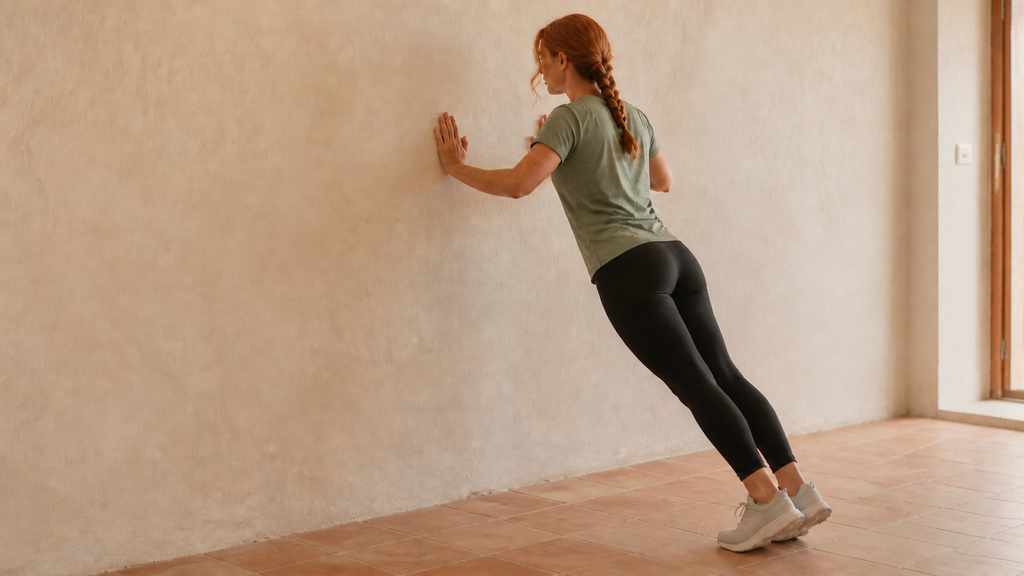
Common mistake: letting the hips sag or the head reach the wall first. Try instead: keep your ribs, hips, and head moving as one line.
3. Supported split squat
Stand beside a wall with one foot forward and one back, as if they were on two train tracks. Use one hand for balance. Bend both knees through a comfortable range, then stand. Make the movement shallower if you wobble or feel strained.
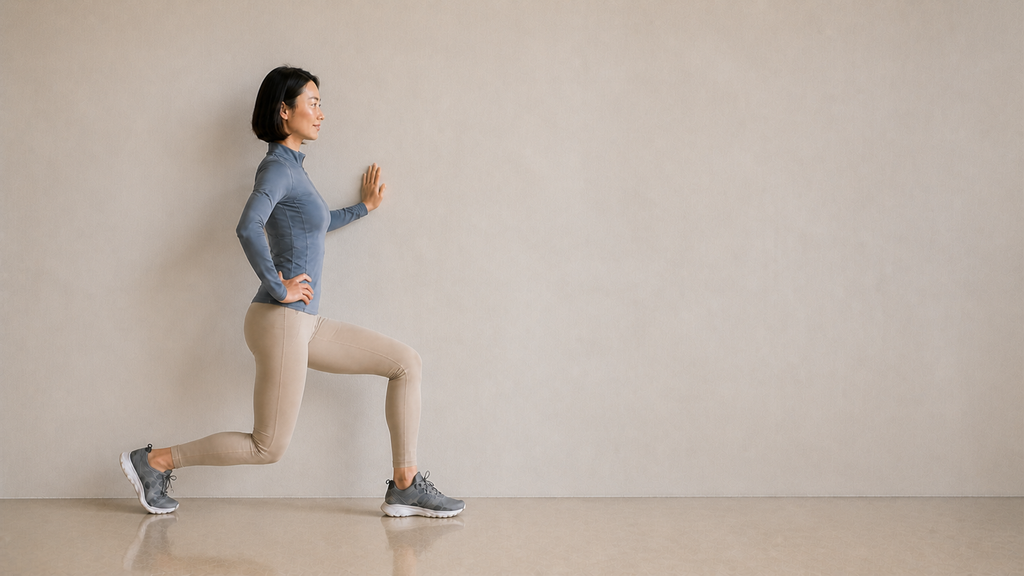
Common mistake: standing with feet on one narrow line. Try instead: give your feet a little side-to-side space for balance.
4. Glute bridge
Lie on your back with your knees bent and feet down. Gently brace your middle, press through your feet, and lift your hips without arching your lower back. Lower slowly. Use a smaller range or skip the move if the floor position is uncomfortable.
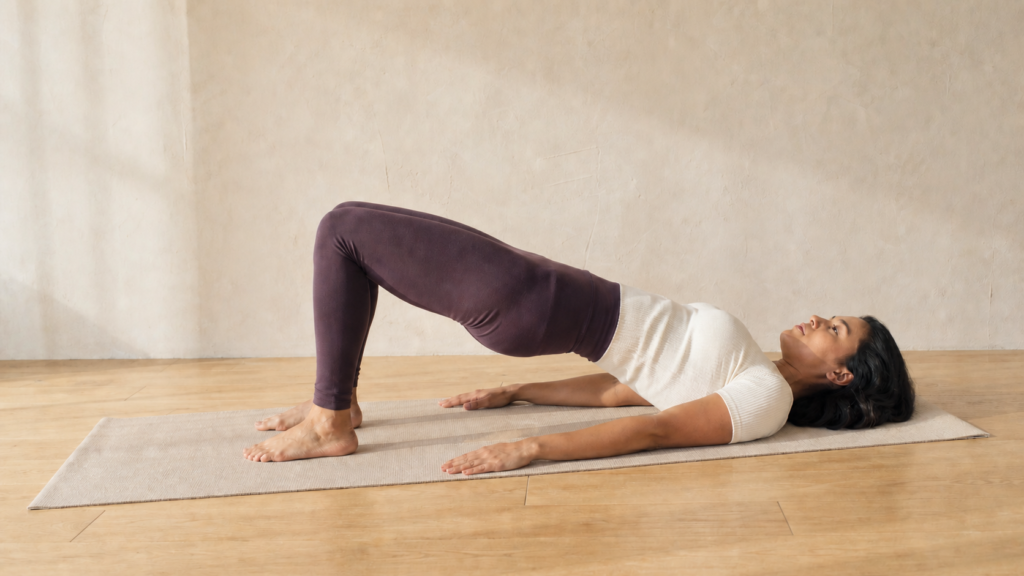
Common mistake: forcing the hips high by arching the back. Try instead: stop when your torso feels long and steady.
5. Bird dog
Start on your hands and knees. Reach one leg behind you without turning your hips, then switch sides. If that feels steady, reach the opposite arm forward too. Think “long,” not “high,” and shorten the reach if your torso twists.
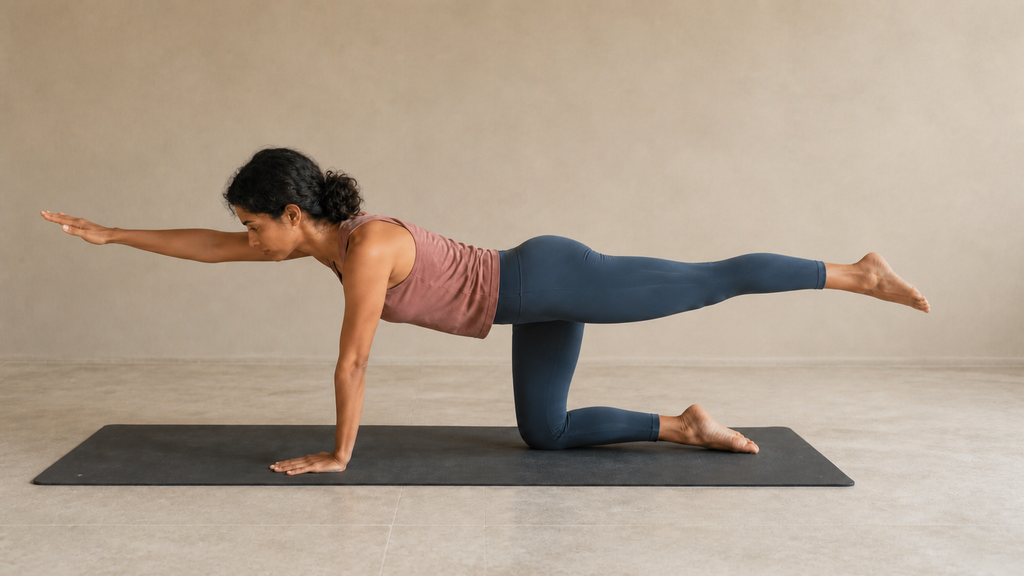
Common mistake: lifting the leg high. Try instead: keep your hips level and reach away from your body.
6. Prone W raise
Lie face down with your elbows bent in a W and your forehead supported. Gently draw your shoulder blades down, lift your hands a short distance, then lower. Keep your neck relaxed. If this position does not suit you, place your forearms on a wall and slide them up without shrugging.
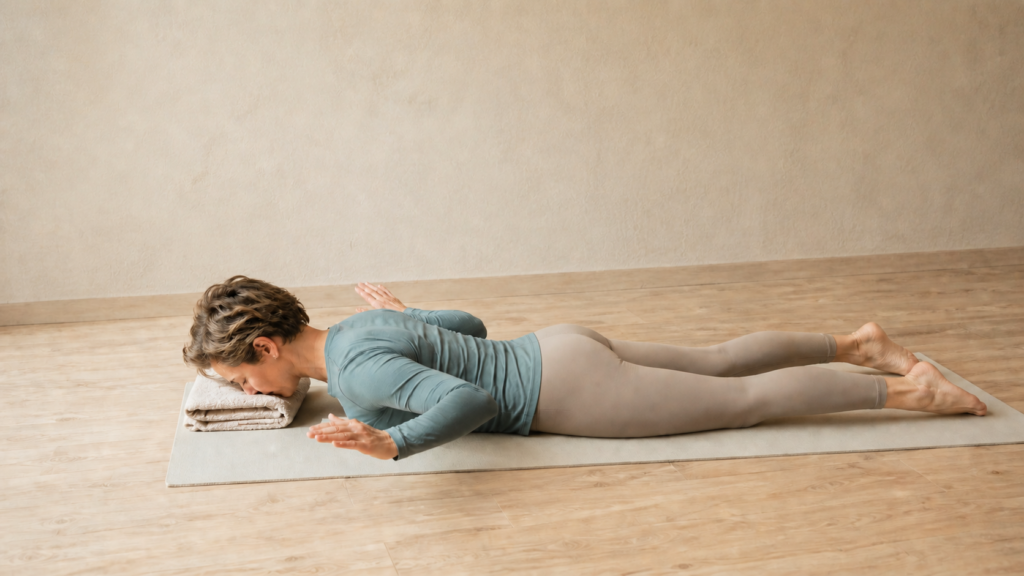
Common mistake: tightening the neck. Try instead: use a smaller lift or choose wall slides.
Which exercises count as compound movements?
Compound exercises use several joints and muscle groups together. The squat, wall push-up, and split squat are clear compound bodyweight exercises for beginners. The bird dog also coordinates several areas, but its main role here is trunk control.
Smaller movements still have a place. Six controlled exercises for your legs, upper body, and trunk are more useful than a long list you dread starting.
A true pulling exercise is hard to create with zero equipment. The prone W raise works on upper-back control, but it does not replace a loaded row. A resistance band and secure anchor can add that missing pattern later.
Try this simple full-body workout
For a short full-body workout for beginners with no equipment, choose these six moves:
- Squat to a chair: 5–10 reps
- Wall push-up: 5–10 reps
- Supported split squat: 5–8 reps per side
- Glute bridge: 6–12 reps
- Bird dog: 5–8 reps per side
- Prone W raise: 6–10 reps
March in place and practice a few easy reps first. Complete one set of each exercise, resting for 30–90 seconds or longer if needed. The session may take 10–20 minutes.
Try it on two days of the week with recovery time between sessions. Current U.S. guidance recommends training all major muscle groups on at least two days each week. Build toward that target gradually.
If six moves feel like too much, choose the squat, wall push-up, glute bridge, and bird dog. One calm round still counts as practice.
Ready for a schedule? Follow the Bodyweight Exercise Program for Beginners.
How to tell when an exercise is the right level
The right version lets you:
- move through a comfortable range without pain;
- keep a steady pace instead of dropping or bouncing;
- breathe rather than hold your breath through every rep;
- finish knowing you could have done a few more controlled reps;
- stay in control on both sides.
When the top of the range feels steady in two sessions, add one or two reps, use a larger range, slow the lowering phase, or try a harder variation. Change one thing at a time.
The 2026 American College of Sports Medicine position stand found that bodyweight and home-based resistance training can improve strength and physical function. It also found that training to momentary muscle failure is not consistently necessary for the average healthy adult. Consistent practice matters more than making every set dramatic.
FAQ
Can beginners build strength with bodyweight exercises?
Yes. Bodyweight exercise is resistance training and can improve strength and physical function. It still needs to challenge you, so add reps, range, control, or a harder variation over time.
Are easy bodyweight exercises for beginners too basic to work?
“Easy” should mean appropriate for your current level, not effortless. A wall push-up may challenge one person and warm up another. Choose the version that becomes demanding while your form remains controlled.
Can I do bodyweight exercises every day?
You do not need to repeat the same challenging session daily. Recovery needs vary with exercise choice, effort, sleep, health, and training history. For a structured weekly schedule, use the four-week plan linked above.
Your next move
Choose one exercise that matches your current situation and practice three to five slow reps. Check what you feel, correct one mistake, and stop while the movement is still controlled. Once the technique makes sense, use the linked four-week plan to turn the exercises into a schedule.