You get home hungry, open the fridge, and find one carrot, half a container of rice, and several ingredients that do not seem to belong to the same meal. Ordering dinner would be easy. Paying for it again this week would not.
This is not a planning failure. Most budget meal advice asks you to choose between a complicated recipe and a joyless plate of “cheap” food. You need a simpler system.
For quick healthy meals on a budget, combine one affordable base, one protein food, one fruit or vegetable, and one strong flavor. Choose ingredients that can work in at least two meals, then cook extra only when you already know how you will use it. The seven ideas below follow that formula and share ingredients, so you can spend less time cooking and leave fewer lonely leftovers in the fridge.
The budget meal formula
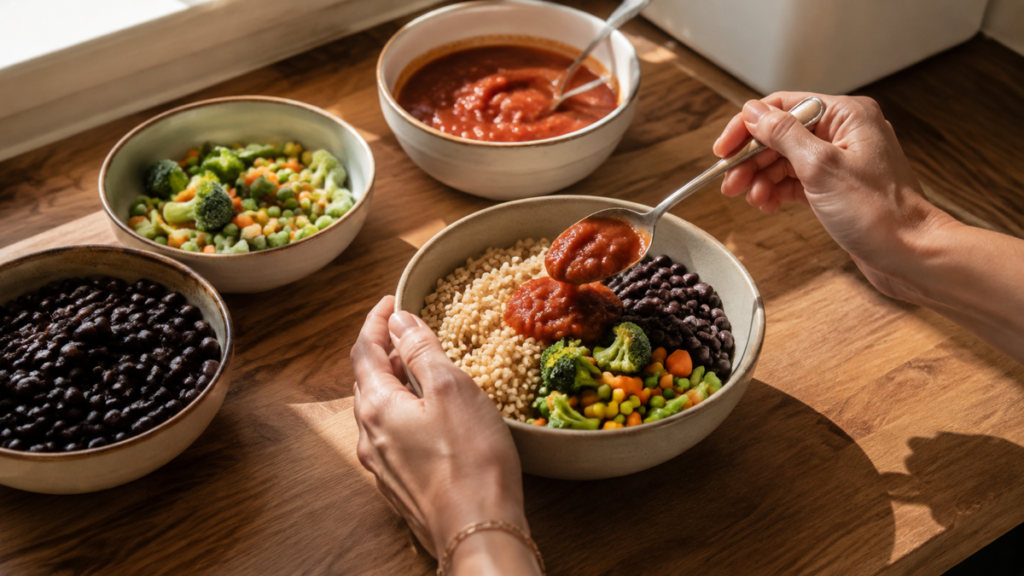
A meal does not need a long ingredient list to feel complete. Start with four flexible parts:
- Base: oats, rice, potatoes, whole-grain pasta, bread, or tortillas.
- Protein food: beans, lentils, eggs, plain yogurt, tofu, canned fish, poultry, nuts, or seeds.
- Produce: fresh, frozen, or canned vegetables and fruit.
- Flavor: salsa, canned tomatoes, peanut butter, cheese, herbs, spices, lemon, or a favorite sauce.
This is a guide, not a plate-grading system. Your appetite, culture, schedule, dietary needs, and local food prices matter. Add more of any part that helps the meal work for you.
Beans, vegetables, oats, and whole grains can add fiber; eggs, yogurt, tofu, fish, poultry, nuts, seeds, beans, and lentils can provide protein. Adjust the amount to your hunger. If a meal leaves you searching for snacks an hour later, it may simply need a larger portion or another component.
If you want more help with the basic building blocks, start with these healthy eating tips for beginners. For now, keep the formula loose enough to use what you already own.
Plan your shop in 10 minutes
Cooking healthy on a budget starts before you add anything to your cart. A short check at home can prevent duplicate purchases and help you build meals around food that needs using first.
1. Shop your kitchen
Look through the refrigerator, freezer, and pantry. Write down:
- one base you already have;
- one protein food;
- any produce that needs to be used soon;
- sauces or seasonings that can pull those foods together.
If you already have rice, a can of beans, and salsa, you are not starting from an empty kitchen. You already have the start of a meal.
2. Pick three anchor meals
Choose three meals you can genuinely make during this particular week. Give each one a backup version.
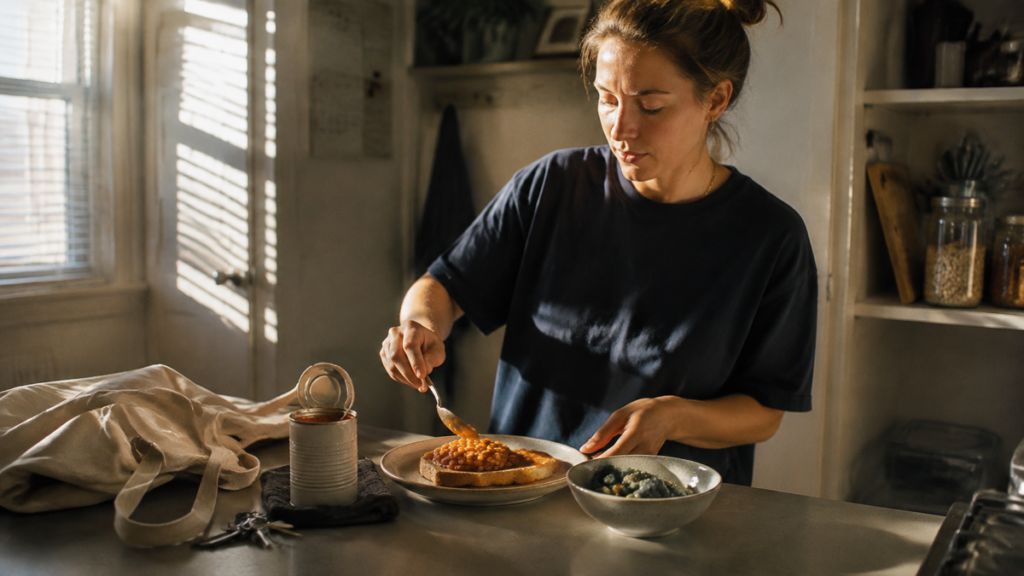
For example, plan egg fried rice with vegetables, tomato lentil pasta, and bean-topped potatoes. If the week gets messy, the backup versions might be eggs on toast, pasta with frozen vegetables, and beans on toast.
That backup plan matters. It is usually cheaper to use a simple meal you planned than to let ambitious ingredients spoil while you find another dinner.
3. Compare the usable price
The biggest package is not automatically the best deal. Compare the unit price when your store provides one, and compare like with like: per 100 grams, per ounce, or per item. Then ask two questions: Will you use it before it spoils, and can you store it safely?
To estimate the cost per serving, add the cost of the amount of each ingredient you will use, then divide by the number of servings. Use this quick check: unit price, usable amount, number of meals. The cheapest package is not always the cheapest plan.
A bulk bag of rice may be useful. A large box of tender greens is not a bargain if half goes into the trash.
4. Mix fresh, frozen, canned, and shelf-stable foods
Fresh is not the only useful form of produce. Frozen and canned vegetables count too, and they can be easier to keep on hand between shopping trips. Choose the form that fits the meal, storage space, and price where you live.
When you buy packaged foods, check the Nutrition Facts labels on two similar products you would actually buy if you want to compare sodium, added sugars, or saturated fat. You do not need to turn the aisle into a research project. One quick comparison is enough.
A flexible grocery list for seven meals
Prices change by country, season, store, and package size, so a fixed “$20 menu” is rarely useful for everyone. Use this list as a structure, then choose the lowest-cost suitable option available to you.
Bases
- rolled oats;
- rice;
- potatoes;
- whole-grain pasta or another pasta you enjoy;
- bread or tortillas.
Protein foods
- dried or canned beans and lentils;
- eggs;
- plain yogurt or a fortified soy alternative;
- one optional item on sale, such as tofu, canned fish, or poultry.
Produce
- frozen mixed vegetables;
- canned tomatoes;
- sturdy fresh vegetables, such as carrots, cabbage, or onions;
- one or two fruits that fit your budget;
- one fresh item on sale, if useful.
Flavor makers
- peanut butter or another nut or seed butter;
- salsa or a versatile sauce;
- oil;
- two seasonings you already like.
Do not buy every item if your cupboard already covers that role. Easy budget-friendly healthy meals come from overlap, not from collecting every possible “healthy” ingredient.
7 quick budget meals that reuse the same ingredients
Each idea is a template. Swap foods within the same role rather than buying a missing ingredient for one recipe.
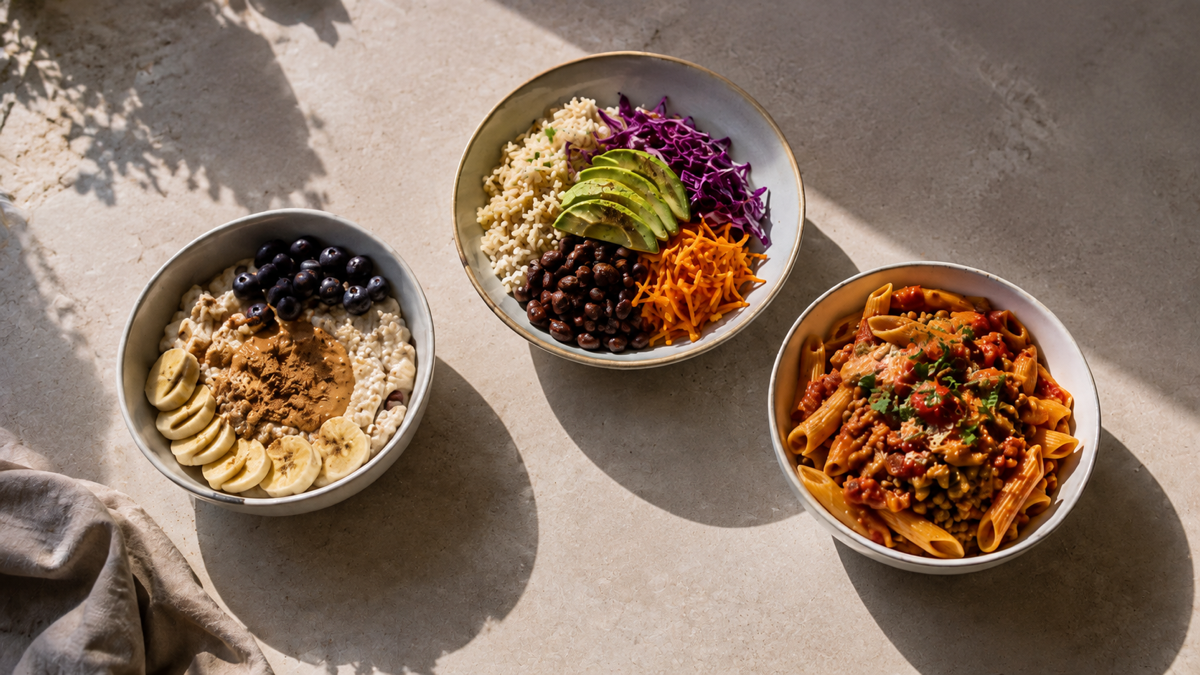
1. Fruit oats with peanut butter
Cook oats with water, milk, or a fortified plant beverage. Stir in peanut butter and top with sliced banana, apple, frozen berries, or another affordable fruit.
Quick setup: Slice fresh fruit while the oats cook, or stir frozen berries into the oats as they heat.
Use what you have: No fruit left? Add cinnamon and a spoonful of yogurt, or make the savory oats below instead.
2. Savory egg and vegetable oats
Cook oats with water and a small pinch of salt. Stir in frozen vegetables for the final few minutes. Top with a cooked egg and add black pepper, chili flakes, salsa, or soy sauce.
Quick setup: Use frozen vegetables that can go straight into the pan, and cook the egg while the oats finish.
Use what you have: Replace the egg with beans, lentils, or cubed tofu. Leftover cooked vegetables work here too.
3. Fast bean and vegetable rice bowl
Warm cooked rice with drained beans and frozen vegetables. Add salsa, canned tomatoes, or your favorite sauce. Finish with yogurt, cheese, herbs, or seeds if they are already in the kitchen.
Quick setup: Canned beans and frozen vegetables remove the chopping and can heat with the rice in one pan.
Use what you have: Turn the same filling into a wrap, spoon it over a potato, or add extra liquid and seasoning for a quick soup.
4. Tomato lentil pasta
Cook pasta. While it boils, warm canned tomatoes with canned or cooked lentils, frozen vegetables, and seasoning. Toss the sauce with the pasta and add a splash of pasta water if it looks too thick.
Quick setup: Choose canned lentils and vegetables that need no chopping. The sauce can heat while the pasta cooks.
Use what you have: Beans can replace lentils. Add cabbage, carrots, spinach, or any vegetable that needs using.
5. Loaded potato with beans
Microwave or bake a potato until tender. Split it and add warm beans, salsa, and yogurt or grated cheese. Serve with cabbage, carrots, frozen vegetables, or leftover produce on the side.
Quick setup: Microwave the potato, then warm the beans while it cooks.
Use what you have: Sweet potato, rice, toast, or a tortilla can carry the same toppings.
6. Egg fried rice with vegetables
Heat a little oil in a skillet. Add frozen vegetables and cook until hot. Move them to one side, scramble in an egg, then add cooked rice that was chilled promptly and kept cold, plus soy sauce or another savory seasoning. Heat everything through.
Quick setup: Use frozen vegetables and properly chilled leftover rice so the whole meal comes together in one skillet.
Use what you have: Add tofu, beans, or leftover cooked meat. If your rice is fresh and hot, make a warm rice bowl instead.
7. Crunchy bean wraps
Mash drained beans with salsa, yogurt, or a little oil and seasoning. Add shredded cabbage or carrots, then roll the filling into tortillas. Toast the wraps in a dry skillet if you want a crisp finish.
Quick setup: Start with canned beans and pre-shredded cabbage or carrots, or use vegetables you prepared earlier in the week.
Use what you have: Spoon the filling onto toast, over rice, or into a baked potato. A spoonful of canned fish can replace some or all of the beans.
Turn the seven meals into a realistic week
The simplest way to plan healthy meals for the week on a budget is to repeat ingredients, not necessarily identical meals. One pot of rice can become a bowl on Monday and fried rice on Wednesday. Beans can move from a potato to a wrap. The canned tomatoes opened for pasta can flavor rice or soup the next day.
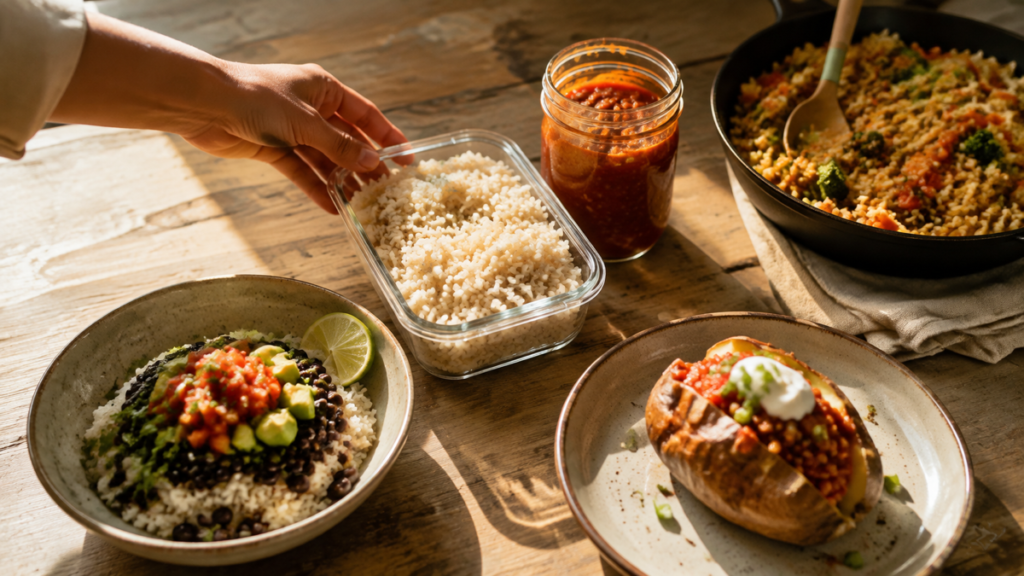
Here is one possible seven-day flow. Treat it as a map for using ingredients, not a schedule you have to follow exactly:
| Day | Main meal | What it uses next |
|---|---|---|
| Monday | Tomato lentil pasta | Save extra sauce for Wednesday |
| Tuesday | Bean and vegetable rice bowls | Chill extra rice promptly for Thursday |
| Wednesday | Loaded potatoes with leftover tomato-lentil sauce | Use any extra toppings in wraps |
| Thursday | Egg fried rice with vegetables | Clear out small amounts of vegetables |
| Friday | Crunchy bean wraps | Use remaining cabbage, carrots, and beans |
| Saturday | Fruit oats with peanut butter, plus a flexible leftovers meal | Use remaining fruit and yogurt |
| Sunday | Savory egg and vegetable oats, plus a freezer or pantry meal | Reset only what you need for Monday |
You can build breakfast from oats, yogurt, fruit, eggs, or toast throughout the week. Lunch can be leftovers, a smaller version of dinner, or a basic bean-and-vegetable bowl.
If you prefer a full breakfast-lunch-dinner framework, use our flexible nutrition plan for beginners and swap in the budget meals above. Keep the meals that match your week; you do not need to copy an entire sample plan.
Prep once, then keep the meals flexible
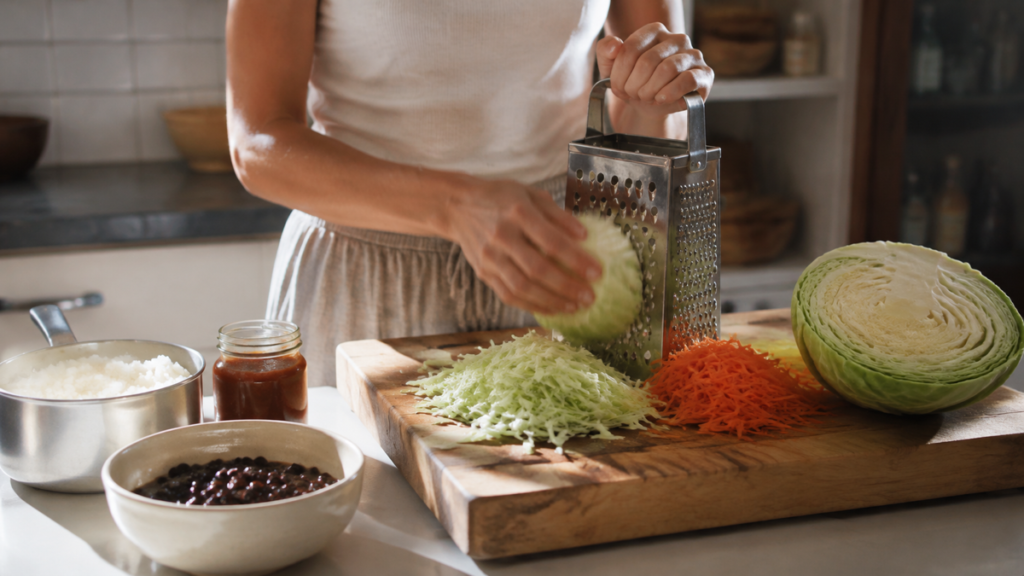
You do not have to spend Sunday filling a tower of containers. Prepare only the components that will remove friction later.
Try this short sequence:
- Cook a pot of rice or another grain.
- Cook lentils if you bought them dried, or rinse and drain canned beans.
- Shred sturdy vegetables such as cabbage and carrots.
- Mix one simple sauce or put your chosen salsa where you can see it.
- Label leftovers with the date before they disappear behind the condiments.
Stop when you have made the next two or three meals easier. A half-prepped week is still useful.
Refrigerate perishable foods and leftovers within two hours, or within one hour when the temperature is above 90°F (32°C). Keep the refrigerator at or below 40°F (4°C), and use most cooked leftovers within three to four days. Freeze extra portions if they will not be used in that window.
Make low-budget healthy meals work better
If the meal is not filling enough
Add food rather than deciding the whole meal failed. Increase the base, add another protein food, include more vegetables, or finish with fruit and yogurt. A cheap meal that does not meet your appetite is not a useful bargain.
If fresh produce keeps spoiling
Buy less of it at one time and lean on frozen or canned options for later in the week. Use delicate produce first and keep sturdy vegetables, frozen vegetables, and shelf-stable foods for the final days.
If you are bored with the same ingredients
Change the format and flavor. Rice and beans can become a salsa bowl, a curry-style bowl, a soup, or a wrap filling. The ingredients stay familiar while the meal feels different.
If the cheapest food needs too much cooking
Compare cost with the time and energy you actually have. Canned beans may cost more than dried beans but still be the better buy on a week when cooking a pot from scratch will not happen. Convenience can protect the rest of your grocery plan.
If a sale tempts you to overbuy
Decide where the food will go before it goes into your cart. Buy extra only if you can store it and name the meals that will use it. A discount does not save money when the food spoils.
FAQ
What is the cheapest healthy meal to make?
There is no universal cheapest meal because prices vary. Start with a low-cost staple available where you live, such as oats, rice, potatoes, pasta, or bread. Add beans, lentils, eggs, or another affordable protein food, plus fresh, frozen, or canned produce. A bean-and-vegetable rice bowl is one flexible example.
How do I calculate the cost per serving?
Add the cost of the amount of each ingredient you use, then divide the total by the number of servings. Compare that figure, not only the package price, when choosing between two meals.
Which ingredients should I use first?
Start with delicate produce and opened packages. Save frozen vegetables, canned foods, sturdy produce, and unopened staples for later in the week.
Is meal prep always cheaper?
Only when you use what you prepare. Start with two or three components that fit several meals instead of cooking a different recipe for every day. Freeze extra portions before you get tired of them or before the safe refrigerator window ends.
How do I eat well when my grocery budget changes each week?
Keep the meal formula and change the ingredients. Check what you own, look for useful sale items, compare unit prices, and choose a base, protein source, produce, and flavor that fit this week’s budget. The structure stays steady even when the shopping list changes.
Choose your first budget meal
Do not plan all seven meals right now. Pick one base and one protein food you already have, then add produce and flavor. Write that meal at the top of your grocery list and buy only the missing pieces.
That is enough to make tonight easier and give tomorrow’s ingredients somewhere useful to go.