
It is 6 p.m., you are hungry, and every saved recipe seems to require twelve ingredients and a calmer week. When you are new to changing how you eat, all that advice can feel like another project you are failing to manage.
You do not need a perfect menu. The most useful healthy eating tips are simple habits you can repeat: build more balanced meals, include vegetables and fruit, protein foods, and fiber-rich carbohydrates, choose water often, and pay attention to added sugars and sodium. Start with one action, not a total kitchen overhaul.
These healthy diet tips are designed to work with busy days, different budgets, and the foods you already enjoy.
10 healthy eating tips that fit real life
1. Improve one meal first
Choose the meal that causes the most friction. If breakfast disappears between your alarm and your first meeting, solve breakfast. If dinner turns into random snacks, start there.
Add one useful item before you remove anything: fruit with breakfast, frozen vegetables with dinner, or a protein food at lunch. A small change you repeat has more practical value than a complicated reset that lasts three days.
Small action: Pick one meal to improve this week and write down the one food you will add.
2. Use a flexible meal formula
You do not have to measure every section of your plate. Use this loose formula when you need a quick decision:
- a vegetable or fruit;
- a protein food;
- a fiber-rich carbohydrate;
- an optional source of unsaturated fat or flavor.
That could be a bean-and-rice bowl with vegetables and avocado, or eggs on whole-grain toast with tomatoes and fruit. Portions and needs vary, so treat the formula as a prompt, not a prescription.
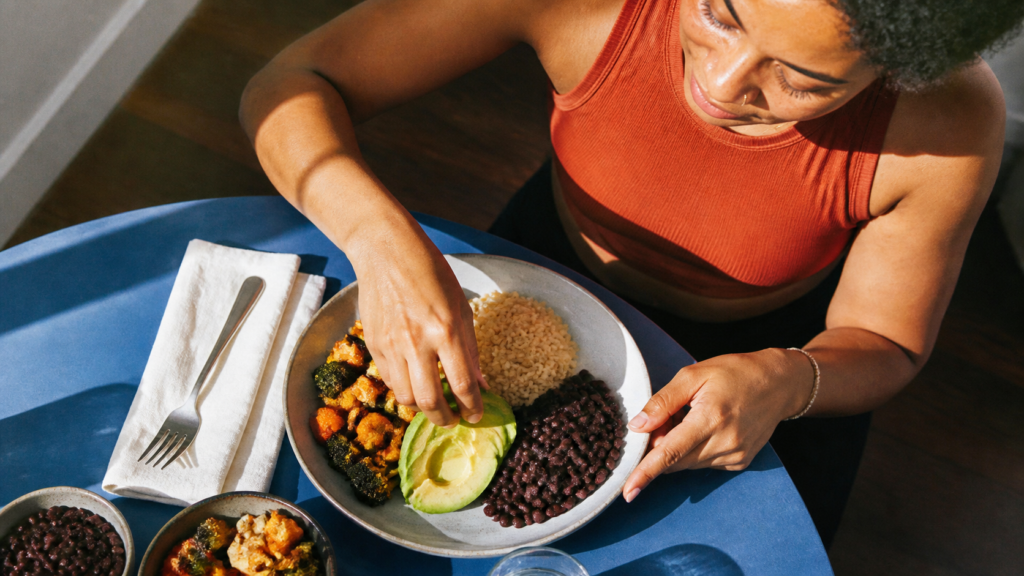
If you want more ready-to-use combinations, explore these healthy eating meal ideas for quick breakfasts, lunches, dinners, and low-effort days.
Small action: Use the formula for your next meal and notice which component is missing.
3. Make vegetables and fruit easy to reach
Fresh produce is not the only valid choice. Frozen vegetables, frozen fruit, and canned options can be practical, nutritious backups. When buying canned fruit, compare options with little or no added sugar. For canned vegetables and beans, look for lower-sodium choices when available; draining and rinsing can also help.
Keep the easiest option visible: washed fruit on the counter, pre-cut vegetables at eye level, or a bag of frozen vegetables beside your quickest dinner staples.
Small action: Put one piece of fruit on your desk or beside the item you reach for every morning.
4. Choose fiber-rich carbohydrates more often
Carbohydrates do not need to disappear from a healthy diet. Whole grains, beans, lentils, vegetables, and fruit provide carbohydrates along with fiber and other nutrients.
Try one familiar swap: oatmeal instead of a low-fiber breakfast pastry, whole-grain bread instead of white bread, or brown rice mixed half-and-half with white rice. “More often” leaves room for preference, culture, access, and the meal in front of you.
Small action: Choose one carbohydrate you eat often and try a higher-fiber version once this week.
5. Rotate your protein foods
Protein can come from beans, peas, lentils, tofu, tempeh, nuts, seeds, eggs, seafood, poultry, meat, dairy foods, and suitable alternatives. You do not need every option, and you do not need to eat the same one daily.
Keep two low-effort choices available. Canned beans, eggs, plain yogurt, tofu, canned fish, or cooked leftovers can turn toast, salad, rice, or vegetables into a more complete meal.
Small action: Add one easy protein food to your next grocery list.
6. Include mostly unsaturated fats
Fat is part of a balanced eating pattern. Foods such as nuts, seeds, avocado, olives, fish, and oils including olive or canola oil provide unsaturated fats.
Use them in ordinary ways: add nuts to oatmeal, stir seeds into yogurt, dress vegetables with olive oil, or add avocado to a sandwich. You do not need to pour “healthy” fat onto every meal; it still contributes energy, and the amount that suits you is individual.
Small action: Choose one familiar meal and add or swap in one source of unsaturated fat this week.
7. Keep backup meals, not just aspirational groceries
The best healthy food tips still have to survive a late meeting. Keep meal planning light: choose two or three familiar meals for the week and one backup option for a low-energy day. Convenience is a tool, not a nutritional failure. Small action: Decide on one backup meal today and make sure its ingredients are available.

8. Compare labels without turning lunch into homework
For packaged foods, check the serving size first. Then compare similar products for the nutrients that matter to that choice, such as fiber, sodium, saturated fat, or added sugars.
“Total sugars” includes sugars naturally present in foods such as fruit and milk as well as any added sugars. On U.S. labels, the separate “Added Sugars” line shows sugars added during processing. One label does not decide whether a food is good or bad; it gives you context for the rest of your eating pattern.
Small action: Compare two versions of one packaged food you buy often and choose using one relevant label value.
9. Choose water as your usual drink
Water, sparkling water, and unsweetened drinks are simple everyday options. If plain water feels dull, add citrus, berries, cucumber, or herbs.
You do not need to ban every sweet drink. Notice what you have most often and make the easiest useful change, such as ordering a smaller size or replacing one daily sugary drink with water.
Small action: Replace one sweetened drink with water today.
10. Plan for imperfect days
Healthy eating is a pattern, not a score for one meal. Restaurant food, dessert, travel days, and convenience foods can all fit. After an unplanned meal, your next step is simply your next regular meal—not skipping food or starting a punishment workout.
This matters because rigid rules can turn a normal schedule change into an all-or-nothing cycle. Keep the plan flexible enough to use on your busiest week.
Small action: If one meal goes differently than planned, return to your usual eating pattern at the next meal.
Your next step
Choose the meal you will eat next and add one missing piece: produce, protein, a fiber-rich carbohydrate, or water. That is enough for today. You can build from there without turning dinner into a test of discipline.