
It is Sunday evening. Your calendar is already full. Every meal plan you saved seems to involve seven recipes, twenty containers, and a second refrigerator. The plan is asking more of your week than your week can give.
A useful nutrition plan for beginners can be much simpler. Choose a few repeatable meals. Include several nourishing food groups across the day. Prepare only the parts that save you time, and keep one backup meal ready. You do not need to count every calorie or cook seven days of food at once.
The plan below gives you a flexible week of breakfasts, lunches, and dinners, plus a practical grocery list and prep routine. It is a general starting point, not an individualized prescription. Adjust the foods and amounts for your appetite, culture, budget, schedule, and dietary needs.
What should a beginner nutrition plan include?
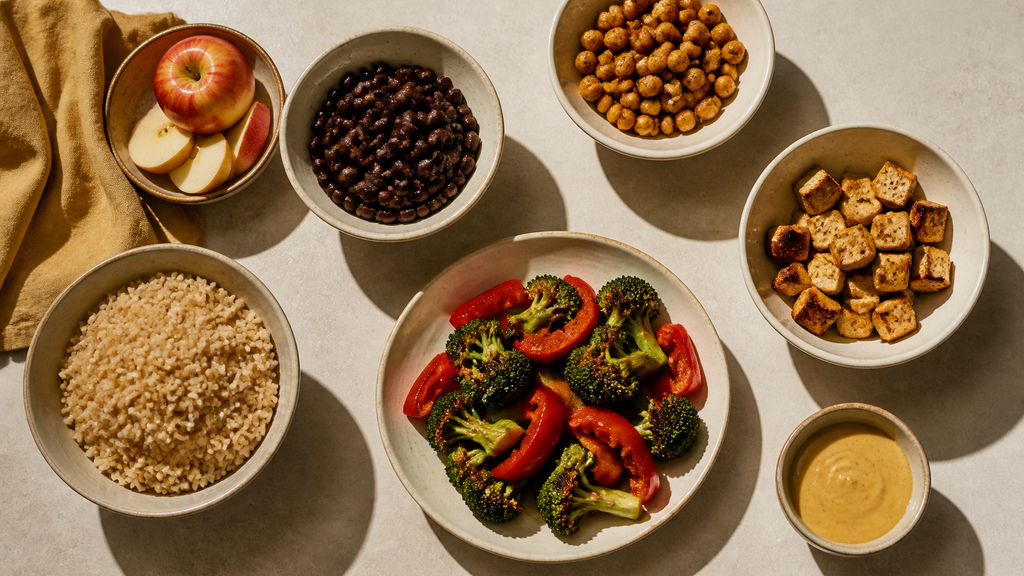
Start with a loose meal formula instead of a stack of food rules. For most main meals, choose a few of these building blocks:
| Building block | Everyday options | Fast shortcut |
|---|---|---|
| Protein food | Eggs, yogurt, fish, poultry, meat, beans, lentils, tofu, tempeh, nuts, or seeds | Canned beans, boiled eggs, plain yogurt, canned fish, or baked tofu |
| Vegetables or fruit | Fresh, frozen, canned, or dried options | Frozen vegetables, pre-washed greens, or fruit that needs no chopping |
| Fiber-rich carbohydrate | Oats, whole-grain bread, brown rice, quinoa, potatoes, beans, or whole-grain pasta | Microwave grains, canned beans, or whole-grain toast |
| Fat or flavor | Olive oil, avocado, nuts, seeds, cheese, hummus, herbs, or sauce | One dressing or sauce you already enjoy |
Not every plate needs to contain every item. Breakfast may be oatmeal with yogurt and berries. Lunch could be a bean-and-rice bowl. Dinner might be fish or tofu, potatoes, and vegetables. Look at the pattern across your day and week rather than grading one meal.
If you want the basic habits behind this formula, start with our healthy eating tips for beginners. Pick one change that feels manageable before adding another.
Water and unsweetened drinks are simple everyday choices. Snacks are optional and depend on your appetite and schedule. If you want one, combine foods that sound satisfying to you. Try fruit with yogurt, crackers with hummus, or nuts with a piece of fruit.
How to use this plan without overcomplicating it
Before you look at the seven days, make three decisions:
- Check your calendar. Mark late workdays, meals out, travel, and evenings when cooking is unlikely.
- Choose what to repeat. Two breakfasts, two lunches, and three dinners are enough to create variety without buying a different ingredient for every meal.
- Plan one backup. Keep a freezer or pantry meal for the day your original plan stops being realistic.
The amounts are intentionally open. Serve more or less based on your hunger and needs. Add another component if a meal does not keep you satisfied, and remove or swap anything that does not suit you.
A simple nutrition plan for the week
This example reuses ingredients on purpose. Cook once, use leftovers safely, and change the format or sauce so lunch does not feel like a replay of dinner.
| Day | Breakfast | Lunch | Dinner |
|---|---|---|---|
| Monday | Overnight oats with plain yogurt or a fortified soy alternative, berries, and nuts or seeds | Chickpea and grain bowl with crunchy vegetables and lemon dressing | Sheet-pan chicken or tofu with broccoli, peppers, and potatoes |
| Tuesday | Eggs or tofu scramble on whole-grain toast with fruit | Sheet-pan leftovers in a wrap with greens and hummus | Lentil tomato pasta with spinach |
| Wednesday | Yogurt or fortified soy yogurt with oats, fruit, and seeds | Leftover lentil pasta with extra vegetables | Black bean or chicken taco bowls with rice, cabbage, salsa, and avocado |
| Thursday | Overnight oats with banana and peanut or seed butter | Taco bowl leftovers packed over greens or rice | Baked fish or tofu with potatoes and green beans |
| Friday | Whole-grain toast with nut or seed butter, banana, and yogurt or milk | Hummus lunch box with vegetables, whole-grain crackers, fruit, and eggs, beans, or leftover tofu | Frozen vegetable stir-fry with edamame, chicken, or shrimp and rice |
| Saturday | Eggs or tofu scramble with vegetables and toast | Soup with whole-grain toast and fruit | Flexible meal: leftovers, a restaurant meal, or a familiar favorite |
| Sunday | Yogurt bowl or oatmeal with fruit | Leftover soup, stir-fry, or a simple sandwich | Bean, vegetable, and grain bowl; prepare extra components for Monday |
Treat this as a template. Swap any ingredient for a similar option you prefer or can buy locally. If you do not eat dairy, use a suitable fortified alternative. If you eat vegetarian meals, beans, lentils, tofu, tempeh, eggs, dairy foods, nuts, and seeds can help you vary protein sources.
For more combinations, browse these healthy eating meal ideas. Replace one meal at a time.
Turn it into a healthy meal prep weekly plan
Meal prep does not have to mean lining up twenty identical containers. A short component-prep session gives you more room to change your mind.
1. Check what you already have
Look through the refrigerator, freezer, and pantry before shopping. Note open vegetables, cooked grains, sauces, and foods that need to be used soon. Build at least one meal around them.
2. Prepare the ingredients with the most overlap
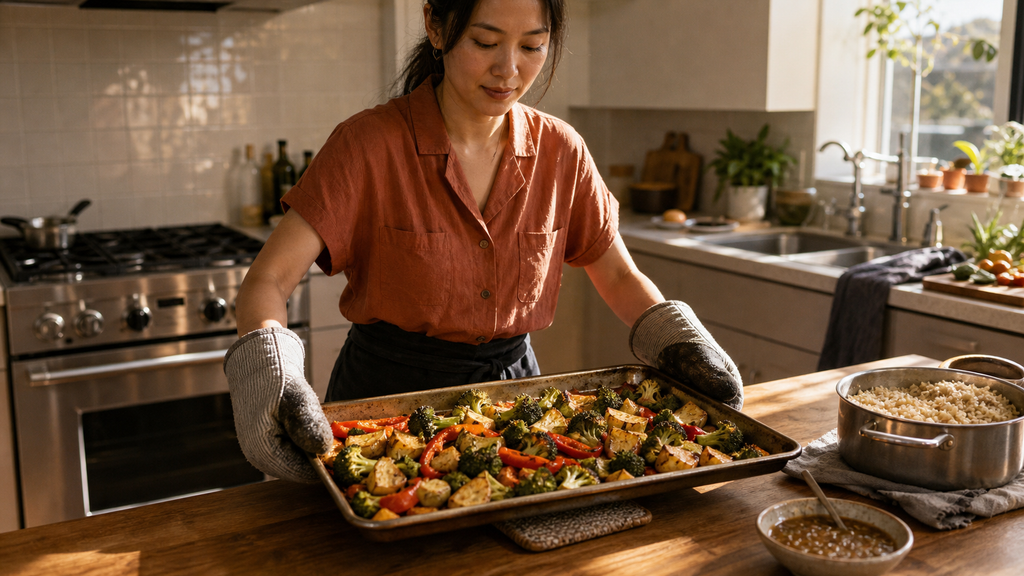
For the example week, you might:
- cook one grain for bowls, wraps, and stir-fry;
- roast one tray of vegetables and potatoes;
- cook chicken, tofu, or another protein you chose;
- mix one dressing or buy a sauce you will actually use;
- assemble two jars of overnight oats;
- wash fruit and any vegetables you plan to eat raw.
That is enough. Chopping every vegetable on Sunday is not mandatory, especially if texture matters to you later in the week.
3. Use leftovers in a new format
Put roasted vegetables into a grain bowl on Monday and a wrap on Tuesday. Add them to eggs or a tofu scramble later in the week. Turn taco-bowl ingredients into a salad or quesadilla. Repeating ingredients saves work. Repeating the exact same finished meal is optional.
4. Plan a midweek reset
Choose one small task for Wednesday or Thursday. Cook another grain, restock fruit, move a frozen portion to the refrigerator, or make the next two lunches. A ten-minute reset is often more useful than expecting one prep session to carry the entire week.
5. Store prepared food safely
Refrigerate perishable food promptly in covered containers. The USDA advises using most cooked leftovers within three to four days. Freeze portions intended for later in the week. You can also schedule a second prep session instead of keeping one Sunday batch in the refrigerator for seven days.
Quick and easy healthy meal prep for busy days
When your week is especially full, prep decisions rather than recipes:
- Choose one breakfast: overnight oats, yogurt and fruit, or eggs on toast.
- Choose one bowl: grain, beans or another protein, vegetables, and sauce.
- Choose one tray meal: vegetables plus chicken, fish, tofu, or chickpeas.
- Choose one backup: soup and toast, a freezer bowl, or beans with microwave rice and vegetables.
Convenience foods can do real work here. Frozen vegetables, canned beans, and pre-washed greens are useful options. So are microwave grains, rotisserie chicken, canned fish, and prepared hummus. They shorten the route from “I should make dinner” to eating it.
Healthy meal prep for work without sad desk lunches
Pack lunches you would still choose at noon. Grain bowls, sturdy wraps, pasta salads, soup, and snack-style lunch boxes usually travel better than delicate dressed salads.
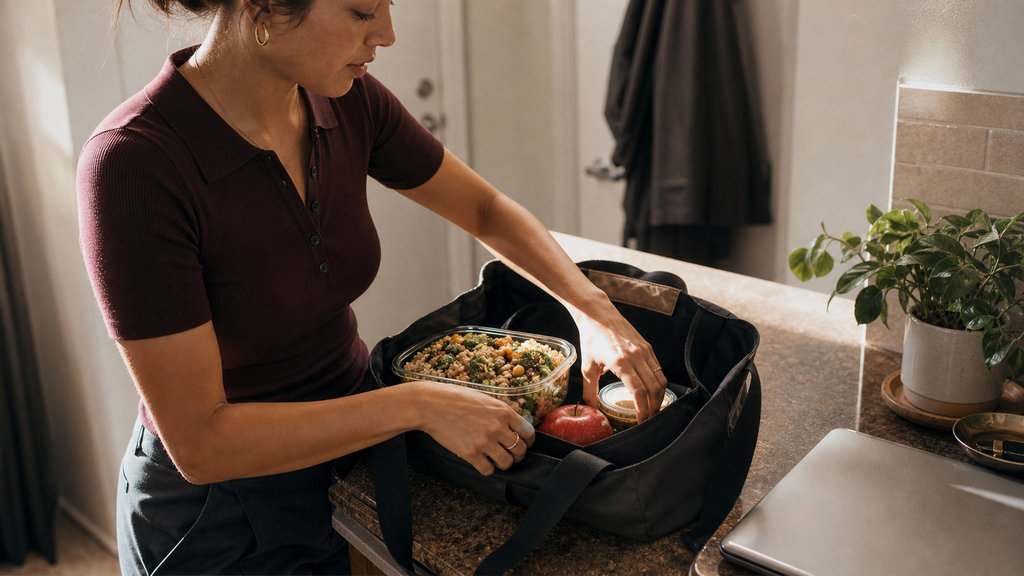
Keep wet ingredients separate when texture matters. Add dressing after reheating or just before eating. If you have access to a refrigerator at work, put perishable food away when you arrive. For days without reliable cold storage, follow appropriate food-safety guidance and choose shelf-stable options that suit the setting.
Keep one emergency lunch at work if you can. Try a shelf-stable grain pouch, canned beans or fish, whole-grain crackers, nuts or seeds, and fruit. It will not win a styling award. It can still rescue a meeting-heavy afternoon.
Healthy meal prep grocery list
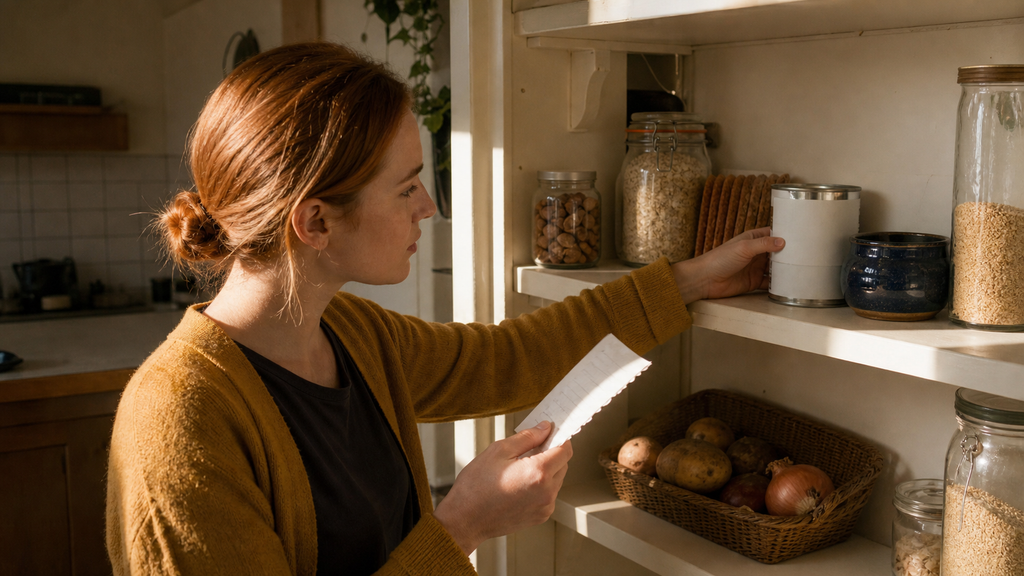
Use this list as a menu of options, not an instruction to buy everything. Choose foods that match your selected meals, cross off what you already own, and adjust amounts for your household.
Vegetables and fruit
- berries or another fruit for oats and yogurt;
- bananas, apples, oranges, or other easy-to-pack fruit;
- leafy greens or cabbage;
- broccoli, peppers, carrots, tomatoes, or green beans;
- frozen stir-fry vegetables;
- lemons or limes for dressing and flavor.
Protein foods
- eggs;
- plain yogurt or a fortified soy alternative;
- beans, chickpeas, or lentils;
- chicken, fish, tofu, tempeh, shrimp, or another option you enjoy;
- nuts, seeds, or nut or seed butter;
- hummus.
Grains and other carbohydrates
- oats;
- whole-grain bread, wraps, or crackers;
- rice, quinoa, or another grain;
- potatoes;
- whole-grain or legume-based pasta.
Fats, sauces, and flavor
- olive oil;
- avocado;
- salsa, pesto, tahini, or a favorite dressing;
- herbs and spices you already know how to use;
- cheese, if you want it.
Backup foods
- canned soup;
- frozen vegetables and fruit;
- canned beans or fish;
- microwave grains;
- one frozen meal you enjoy.
How to adjust the plan to your life
If mornings are chaotic: repeat the same breakfast on workdays. Variety can happen at lunch or dinner.
If you dislike leftovers: prep components instead of complete meals. Cook a grain, wash produce, and make a sauce, then assemble different meals as you go.
If your budget is tight: compare unit prices and use beans and lentils. Buy produce in the forms that fit your budget. Plan around foods already in the kitchen. Fresh, frozen, canned, and shelf-stable foods can all have a place.
If the week changes: move a meal, freeze a portion, or use the backup. You do not need to compensate for an unplanned restaurant meal by skipping the next one.
If portions feel wrong: change them. A fixed online plan cannot know your body size, activity, appetite, health, or goals.
When a general plan is not enough
Generic meal plans cannot account for every health need. Seek personal guidance from a qualified health professional or registered dietitian if you:
- are pregnant or breastfeeding;
- have diabetes, kidney disease, digestive disease, or food allergies;
- have an eating disorder or a history of disordered eating;
- take medicines that are affected by food;
- have significant symptoms or need therapeutic nutrition care.
Unexpected weight change, persistent fatigue, dizziness, pain, or other concerning symptoms also deserve professional assessment rather than a stricter internet meal plan. Do not use this sample week to replace prescribed nutrition advice.
FAQ
Do beginners need to count calories?
Not necessarily. Many beginners can start with regular meals and a wider range of nutrient-dense foods. It also helps to plan practical options for busy days. Calorie and nutrient needs vary. If you need a specific intake for a health condition, performance goal, or weight-management plan, seek personal guidance. A universal number cannot reflect your full needs.
Can I meal prep for a full seven days at once?
You can plan seven days at once, but not every cooked food should sit in the refrigerator for seven days. Refrigerate the first few days, freeze later portions, or prepare a second small batch midweek. Follow the storage directions for the specific foods you use.
What if I miss a planned meal?
Move it, freeze it, or replace it with your backup. The next meal does not need to “make up” for the change. A flexible plan should reduce decisions, not create another scorecard.
Your next 10-minute step
Choose two breakfasts, two lunches, and three dinners from this nutrition plan for beginners. Check your calendar. Circle the meals you are most likely to cook. Write down only the ingredients you do not already have.
Then choose one backup meal. That small decision is what makes the plan useful when Thursday looks nothing like you expected.