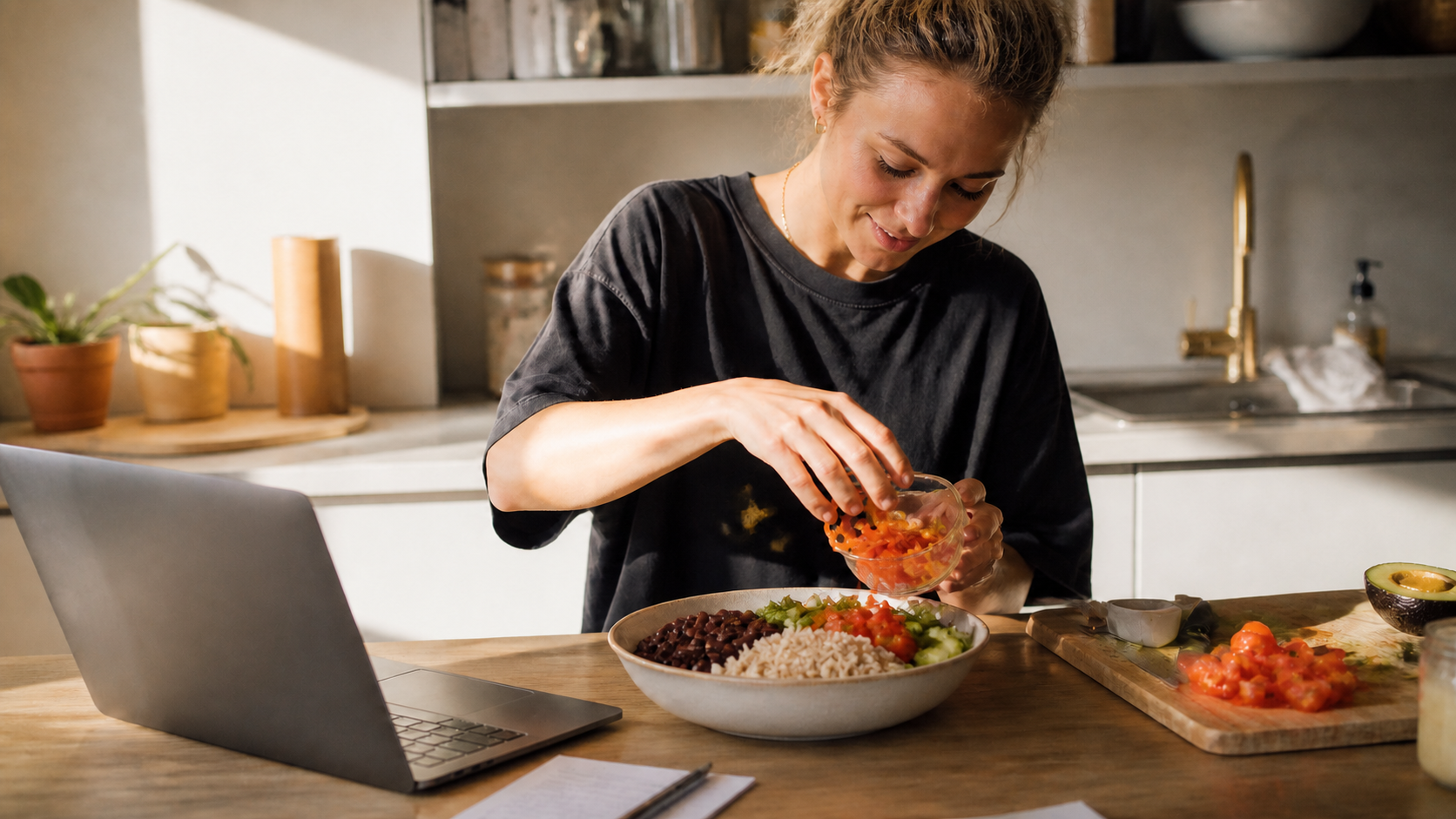
It is late, you are hungry, and the recipe you saved for tonight somehow needs three pans and a fresh bunch of herbs you do not own. So dinner becomes a handful of snacks while you decide what to make.
You are not bad at planning. You need a shorter list of meals that can survive a real workweek.
These healthy eating meal ideas give you 16 flexible options for breakfast, lunch, dinner, and low-energy days. Most use familiar ingredients, and every idea has an easy shortcut or swap. Pick two that sound good—not all 16—and put those ingredients on your next grocery list.
A simple formula for a satisfying meal
You do not need to calculate a perfect plate. When you are staring into the fridge, look for a few useful building blocks:
- a protein food, such as eggs, beans, lentils, tofu, fish, poultry, meat, yogurt, nuts, or seeds;
- a vegetable or fruit;
- a fiber-rich carbohydrate, such as oats, whole-grain bread, brown rice, potatoes, beans, or whole-grain pasta;
- an optional source of fat or flavor, such as olive oil, avocado, nuts, seeds, cheese, herbs, or sauce.
Not every meal has to include every item. Your needs, appetite, culture, budget, and food preferences matter. Use the formula to spot what could make a meal more complete, not to grade your plate.
For the everyday habits behind these meals, see our healthy eating tips for beginners and choose one small change to practice this week.
16 healthy eating meal ideas you can actually use
Quick breakfasts
1. Berry oatmeal with yogurt
Cook rolled oats with milk, a fortified plant beverage, or water. Add fresh or frozen berries and a spoonful of plain yogurt. Finish with nuts or seeds for crunch. If mornings are rushed, combine the ingredients as overnight oats the night before.
2. Egg and vegetable toast
Scramble eggs with spinach, tomatoes, mushrooms, or frozen peppers. Serve them on whole-grain toast with fruit on the side. For a plant-based version, use crumbled tofu and season it with pepper, garlic, and your favorite herbs.
3. Yogurt, fruit, and oat bowl
Layer plain yogurt or a fortified soy alternative with fruit, oats, and nuts or seeds. Frozen fruit works well if you let it thaw in the refrigerator overnight. Compare labels on flavored yogurts if you want an option with less added sugar.
4. Peanut butter and banana toast
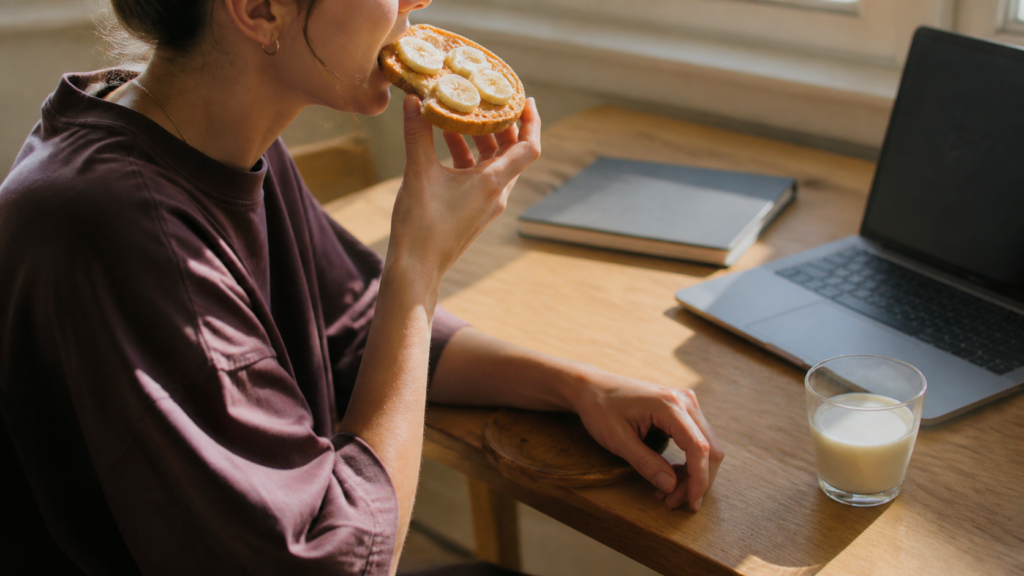
Spread peanut or another nut or seed butter on whole-grain toast, then add banana slices and cinnamon. Pair it with milk, a fortified soy beverage, or plain yogurt if you want a more substantial breakfast. This one also travels well when breakfast happens at your desk.
Packable lunches
5. Bean and grain bowl
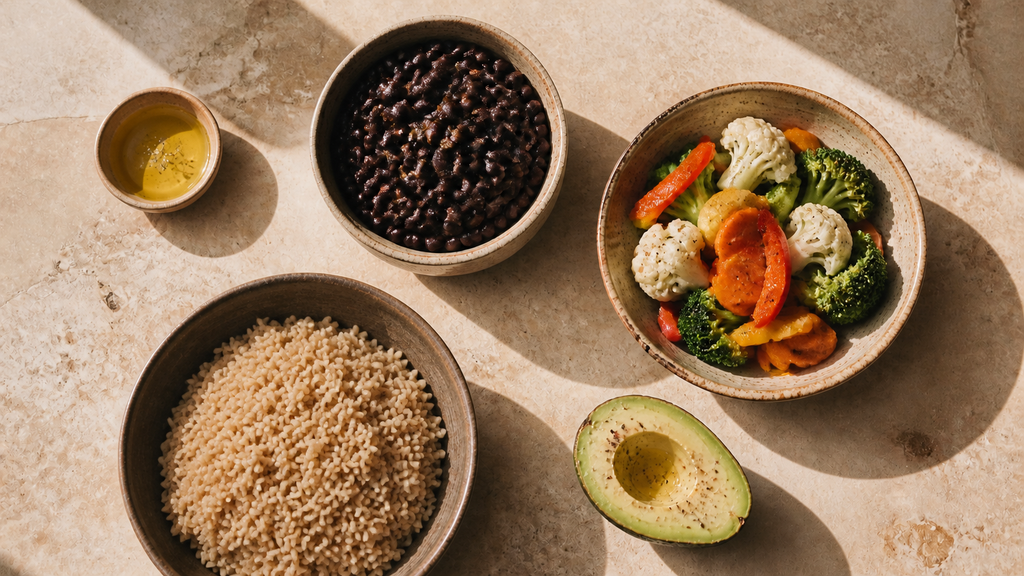
Start with cooked brown rice, quinoa, barley, or another grain you enjoy. Add canned beans, chopped vegetables, and salsa or a lemon-and-olive-oil dressing. Microwave grains and rinsed canned beans turn this into a five-minute assembly job.
6. Hummus crunch wrap
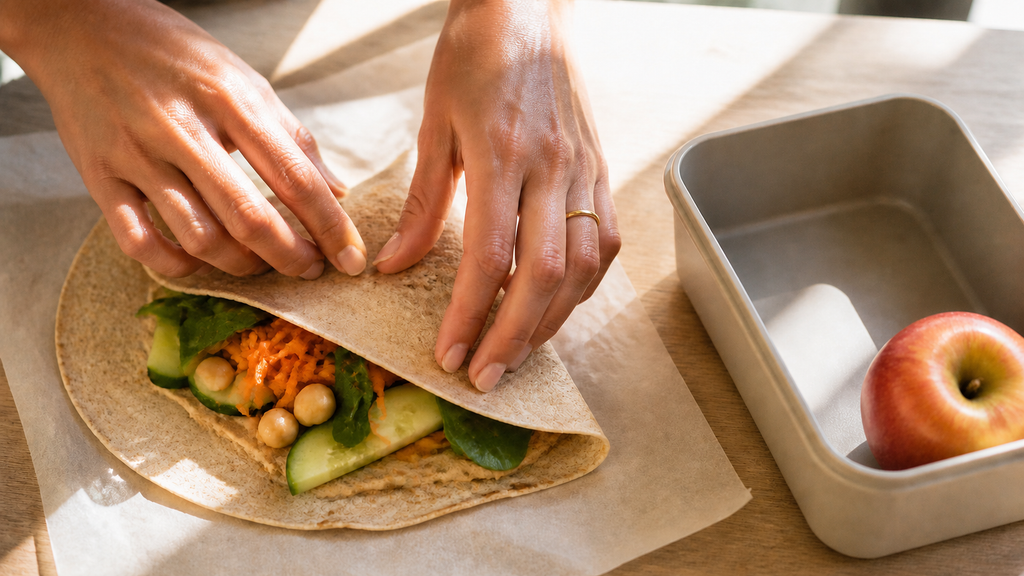
Spread hummus over a whole-grain wrap. Add cucumber, grated carrot, greens, and leftover chicken, tofu, or chickpeas. Roll it tightly and pack fruit on the side. Keep wet ingredients in the center so the wrap is less likely to go soggy.
7. Tuna or chickpea salad on toast
Mix canned tuna or mashed chickpeas with plain yogurt or mayonnaise, mustard, chopped celery, and black pepper. Spoon it over whole-grain toast or into a pita, then add tomatoes or leafy greens. Make enough for tomorrow’s lunch if that suits your schedule.
8. Leftover lunch upgrade
Use last night’s protein and grain as the base, then add a different vegetable and sauce. Roasted chicken and rice can become a bowl with frozen vegetables and tahini; baked tofu can become a wrap with slaw and salsa. Changing the texture and flavor keeps leftovers from feeling like a repeat.
Easy dinners
9. One-pan protein and vegetables
Roast chicken pieces, fish, tofu, or chickpeas with a tray of vegetables. Add olive oil and seasonings, then serve with potatoes or a quick-cooking whole grain. Choose ingredients with similar cooking times, or cut slower-cooking vegetables into smaller pieces.
10. Lentil tomato pasta
Warm canned lentils with a tomato-based pasta sauce and stir in spinach until it wilts. Toss with whole-grain or legume-based pasta and add herbs or grated cheese if you like. Frozen spinach works too, and there is no prize for chopping it yourself.
11. Flexible taco bowls
Layer rice, black beans or cooked chicken, lettuce or cabbage, tomatoes, corn, and avocado. Add salsa and plain yogurt, then let everyone adjust their own bowl. Use a microwave grain pouch and frozen corn when you need dinner faster.
12. Baked potato with a real topping
Top a baked or microwaved potato with chili, beans, tuna, cottage cheese, or leftover meat. Add steamed broccoli, spinach, or a side salad. The topping turns a plain potato into a meal; choose the combination that fits your preferences and what is already open in the fridge.
13. Fast vegetable stir-fry
Cook frozen stir-fry vegetables with tofu, shrimp, chicken, or edamame. Add a simple sauce and serve over brown rice or noodles. If you compare bottled sauces, the Nutrition Facts label can help you choose between similar options for sodium and added sugars.
14. Soup plus a useful side
Pair lentil, bean, chicken, or vegetable soup with whole-grain toast, fruit, or a small salad. For a canned soup, add frozen vegetables or beans while it heats. A basic side can make soup feel like dinner without starting a second recipe.
Low-effort backup meals
15. No-cook snack plate
Combine whole-grain crackers or bread with hummus, cheese, canned fish, or hard-boiled eggs. Add raw vegetables and fruit. It may look like a collection of ingredients, but it still counts as a meal—and it is far more useful than waiting for the energy to cook something elaborate.
16. Freezer bowl in minutes
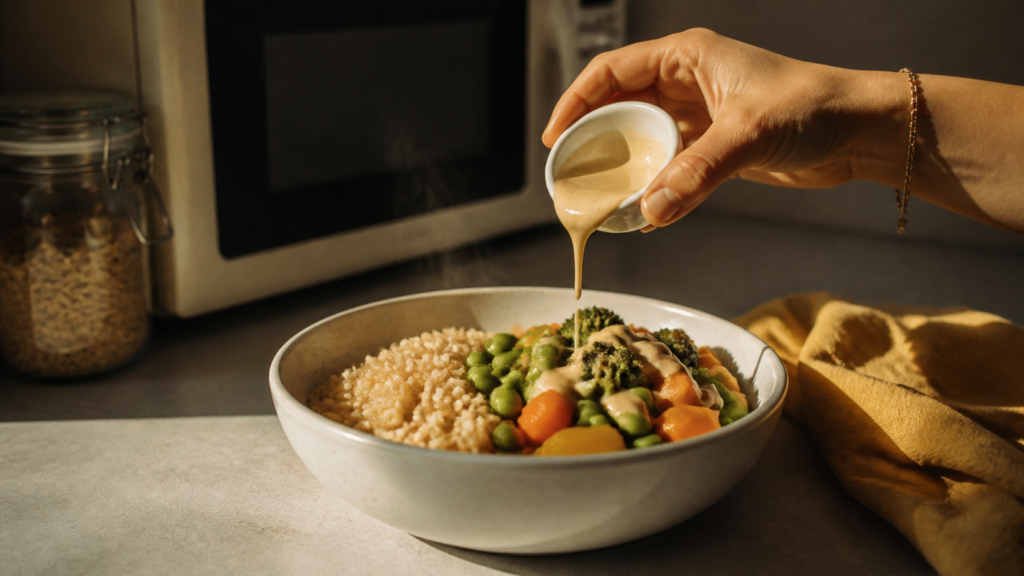
Microwave frozen vegetables and a pouch of brown rice or another grain, then add canned beans, leftover protein, or edamame. Finish with pesto, salsa, tahini, or olive oil and lemon. Keep one version of this meal in the freezer and pantry for the night your original plan falls apart.
How to choose meals for the week
Planning seven different dinners is ambitious. Start with three decisions:
- Choose two meals from this list that share at least one ingredient.
- Pick one backup meal that uses mostly freezer or pantry foods.
- Leave room for leftovers, eating out, or a schedule change.
For example, black beans can go into a grain bowl at lunch and taco bowls at dinner. Spinach can join eggs, pasta, or soup. This overlap shortens the grocery list without forcing you to eat the same prepared meal for five days.
Convenience foods can help. Frozen vegetables, canned beans, pre-washed greens, microwave grains, and rotisserie chicken can reduce prep work. When choosing packaged options, check the serving size first and compare similar products for the nutrients that matter to you, such as fiber, sodium, saturated fat, or added sugars.
FAQ
Do frozen and canned foods count?
Yes. Frozen vegetables and fruit can be practical options, and canned foods can make meals much faster. Look for fruit with little or no added sugar and lower-sodium vegetables or beans when available. Draining and rinsing canned beans can also remove some of the sodium from the packing liquid.
Does every meal need to be perfectly balanced?
No. Healthy eating is the pattern you build over time, not a pass-or-fail test at each meal. If lunch is light on vegetables, you can include some later. If dinner comes from the freezer, you have not ruined anything.
What if one of these meals does not keep me full?
Treat the ideas as starting points, not fixed portions. Add more food or another component based on your appetite—for example, more grain, another protein food, extra vegetables, fruit, or a source of fat. Individual energy and nutrition needs vary.
Pick tonight’s easiest option
Choose the idea that requires the fewest new ingredients. Write down what is missing, then decide on one backup meal for later in the week. A useful dinner plan does not have to be impressive. It only has to make your next decision easier.