Category: NUTRITION

  • Anti-Inflammatory Diet: A Practical Beginner’s Guide

    Anti-Inflammatory Diet: A Practical Beginner’s Guide

    You open your phone to learn how to start an anti-inflammatory diet, and five minutes later you have a list of foods to fear. One post bans gluten. Another blames dairy, tomatoes, or seed oils. A third wants you to buy a shelf of powders. Dinner still needs to happen.

    Here is the useful answer: an anti-inflammatory diet is not one official menu or a short detox. It is a flexible eating pattern built mostly around vegetables and fruit, whole grains, beans and other legumes, nuts and seeds, protein foods, and sources of unsaturated fat. It also leaves less room for foods and drinks that are high in added sugars, saturated fat, or sodium when those choices dominate the week.

    The overall pattern matters more than one “healing” ingredient. You do not need to empty your kitchen, eat perfectly, or force every meal into the same template. Start with one meal you eat often and make it a little more plant-forward, varied, and satisfying.

    What is an anti-inflammatory diet?

    Inflammation is part of the body’s normal defense and repair system. Short-term, or acute, inflammation helps you respond to an injury or infection. Problems can arise when inflammatory activity lasts too long or occurs where it is not needed.

    Food is only one part of that picture. Injury, infection, health conditions, and environmental exposures can also affect inflammatory processes. That is why a meal cannot switch inflammation on or off like a light.

    Nutrition studies often track blood markers such as C-reactive protein rather than a feeling you can notice after lunch. Reviews of the research suggest that Mediterranean-style dietary patterns may improve some markers on average. The findings are not equally strong for every marker, population, or version of the diet, and a change in a marker does not guarantee a particular symptom or health outcome.

    So what can you use from the evidence? Favor a varied, mostly plant-forward pattern that you can repeat. Treat dramatic promises about single foods, detoxes, and instant results with caution.

    Anti-inflammatory foods to choose more often

    You do not need a special “anti-inflammatory” aisle. Most of the useful ingredients are ordinary foods that can work across cuisines, budgets, and schedules.

    A quick more-often/less-often

    Choose more oftenChoose less often when they dominate your week
    Vegetables and fruit; beans and lentils; whole grains; nuts and seeds; varied protein foods; olive, canola, and other unsaturated fatsSugary drinks; processed meats; foods high in saturated fat or sodium; refined grains and sweets eaten as the default

    Make plants the easiest part to add

    Vegetables, fruit, beans, lentils, whole grains, nuts, and seeds bring different combinations of fiber, vitamins, minerals, and plant compounds. Variety matters more than chasing the food with the most impressive headline.

    Fresh produce is one option, not the entrance fee. Frozen vegetables, frozen fruit, canned tomatoes, and canned beans can make the pattern much easier to maintain. Choose unsweetened or lower-sodium versions when they are available and useful to you, but do not let the perfect label block a practical meal.

    Keep protein varied

    Beans, lentils, tofu, tempeh, nuts, seeds, fish, eggs, poultry, meat, yogurt, and suitable alternatives can all contribute protein. A plant-forward diet does not have to be vegetarian, and there is no prize for forcing foods you dislike.

    Try replacing some processed or fatty meat meals with beans, fish, tofu, or another protein you enjoy. Think “more often” and “less often,” not “clean” and “bad.”

    Use mostly unsaturated fats

    Olive and canola oils, nuts, seeds, avocado, and fish provide unsaturated fats. They can replace some butter, coconut oil, fatty meats, or other foods high in saturated fat rather than simply being added to everything.

    Fat still contributes energy, so pouring extra oil over every meal is not automatically more helpful. The swap matters.

    Let flavor do some work

    Herbs, spices, citrus, garlic, vinegar, and sauces can make simple ingredients feel like dinner rather than a nutrition assignment. Ginger and turmeric can be part of the flavor, but neither needs to appear daily. A varied pattern does not depend on one spice.

    Build an anti-inflammatory meal in four parts

    When you are hungry and short on time, use this loose formula:
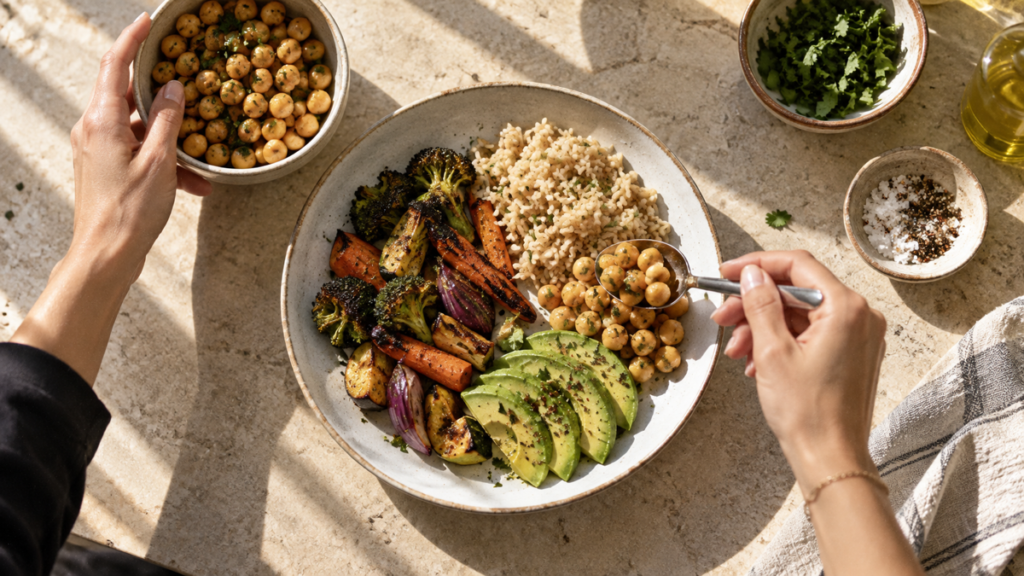
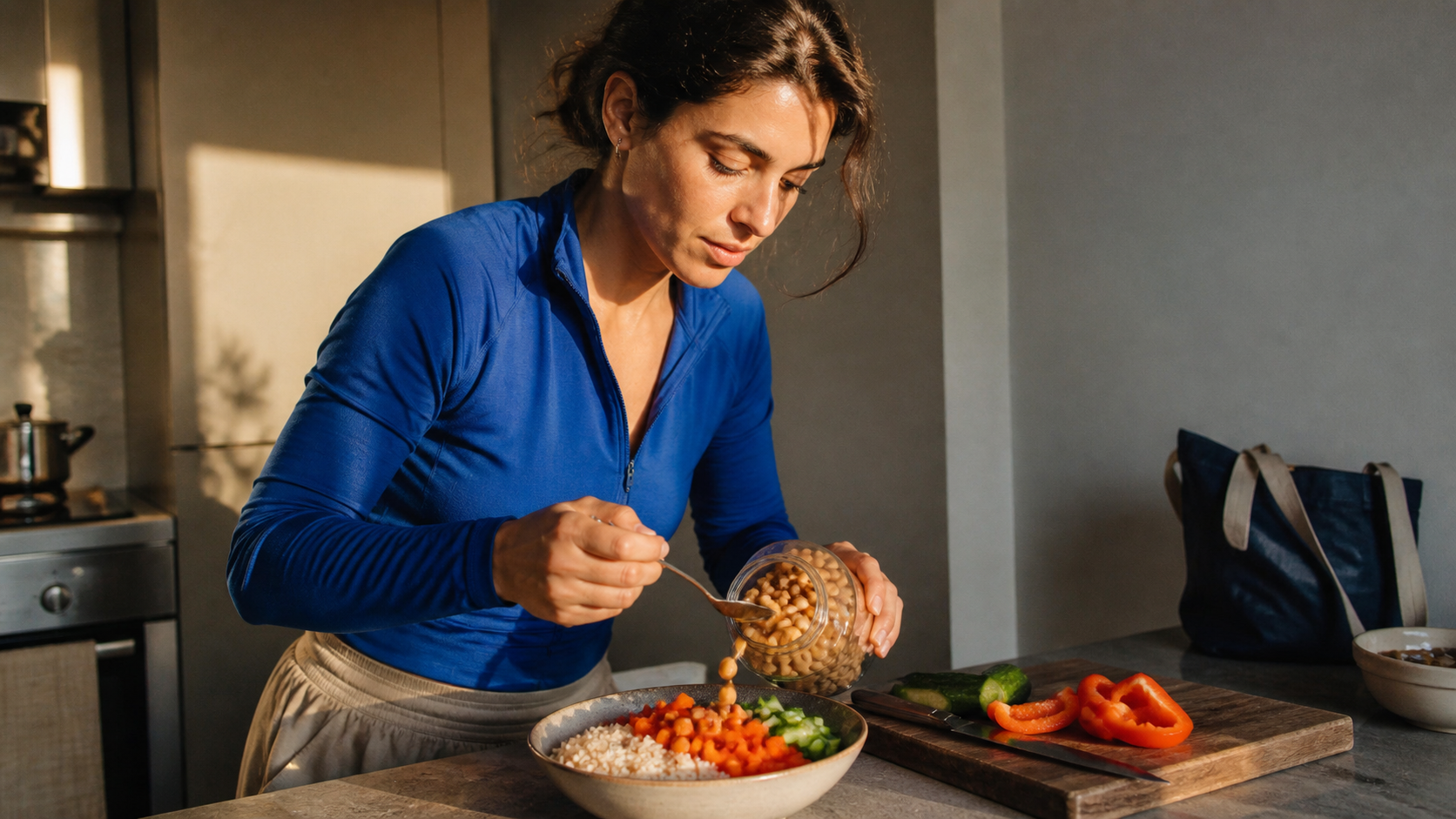
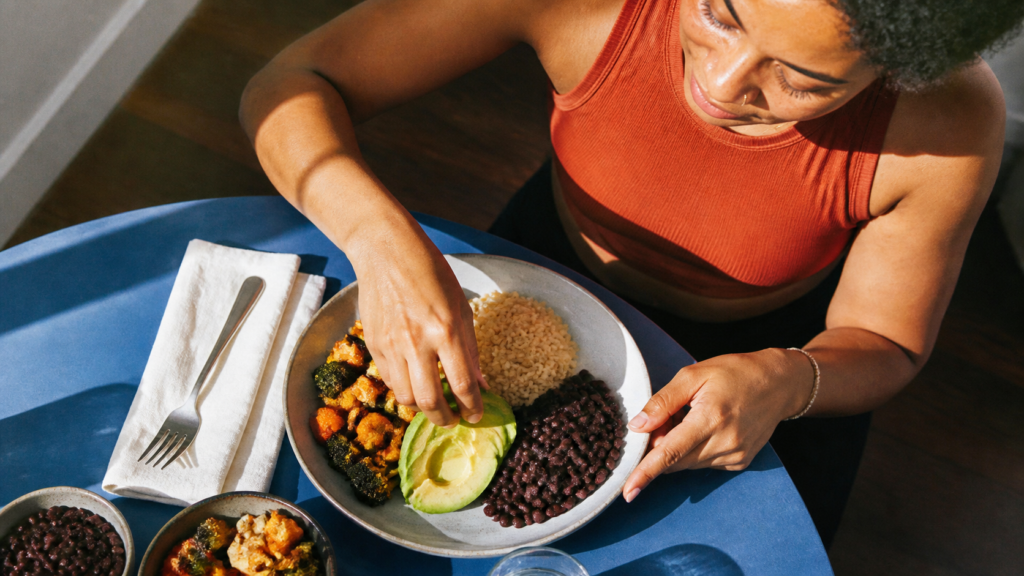
    Hands add chickpeas to a plate with roasted vegetables, brown rice, and avocado.
    1. Add a vegetable or fruit. Choose fresh, frozen, canned, or dried.
    2. Choose a protein food. Try beans, lentils, tofu, fish, eggs, poultry, yogurt, nuts, seeds, or another option that suits you.
    3. Include a carbohydrate, choosing higher-fiber options often. Try oats, potatoes, corn, whole-grain bread or pasta, brown rice, quinoa, or another grain you enjoy.
    4. Finish with an unsaturated fat or strong flavor. Use olive oil, avocado, nuts, seeds, hummus, herbs, spices, salsa, or a dressing you like.

    Not every meal will contain every part. Your appetite, culture, budget, access, and dietary needs decide the details. Use the formula to make the next choice easier, not to grade your plate.

    If you want to practice the same building blocks without the inflammation label, these healthy eating tips for beginners break them into small, repeatable habits.

    What this can look like on a busy day

    This is not a fixed meal plan. It is a set of ways to upgrade meals you may already eat.
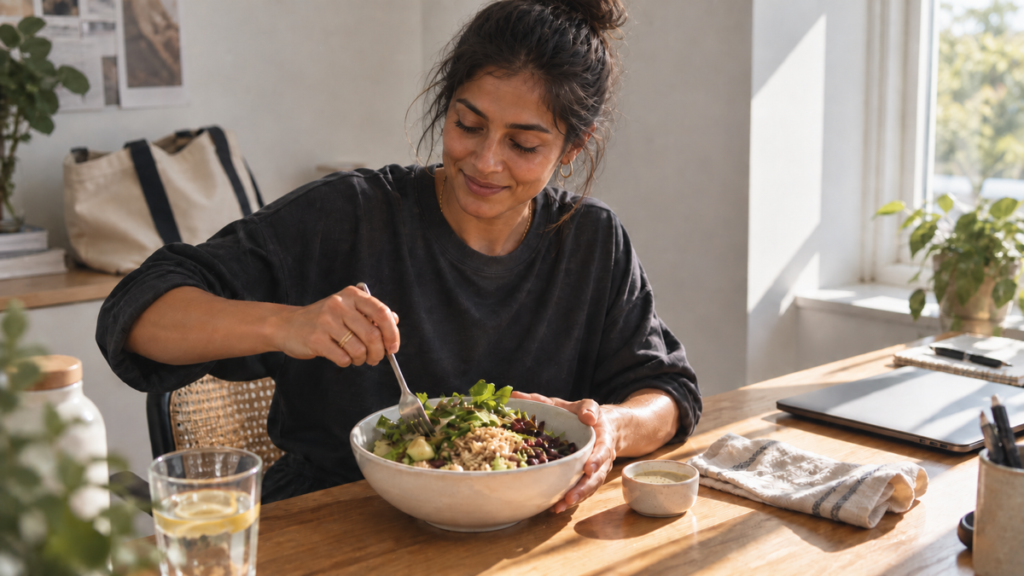
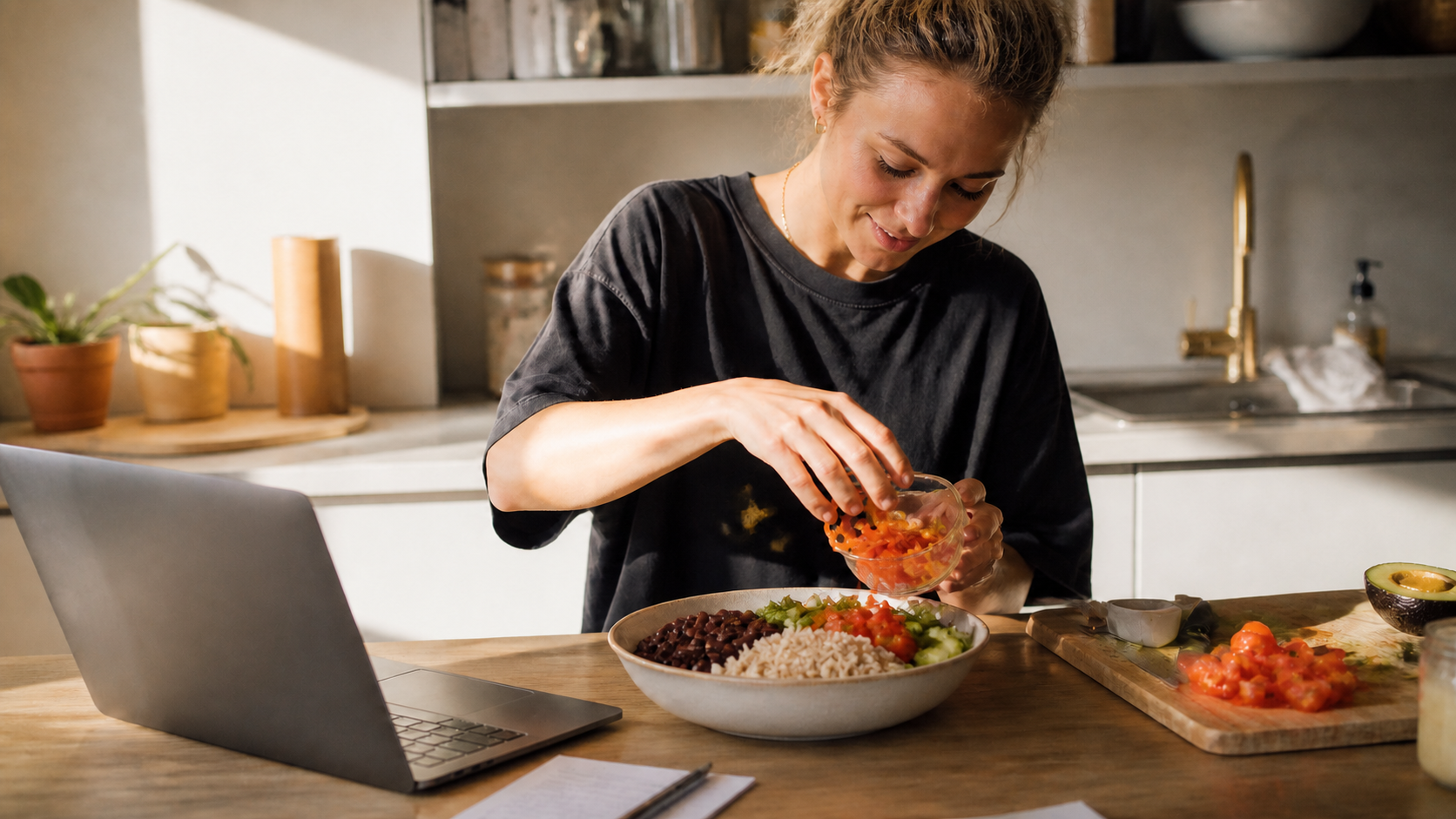
    Woman mixes greens, beans, and grains in a bowl beside a closed laptop.
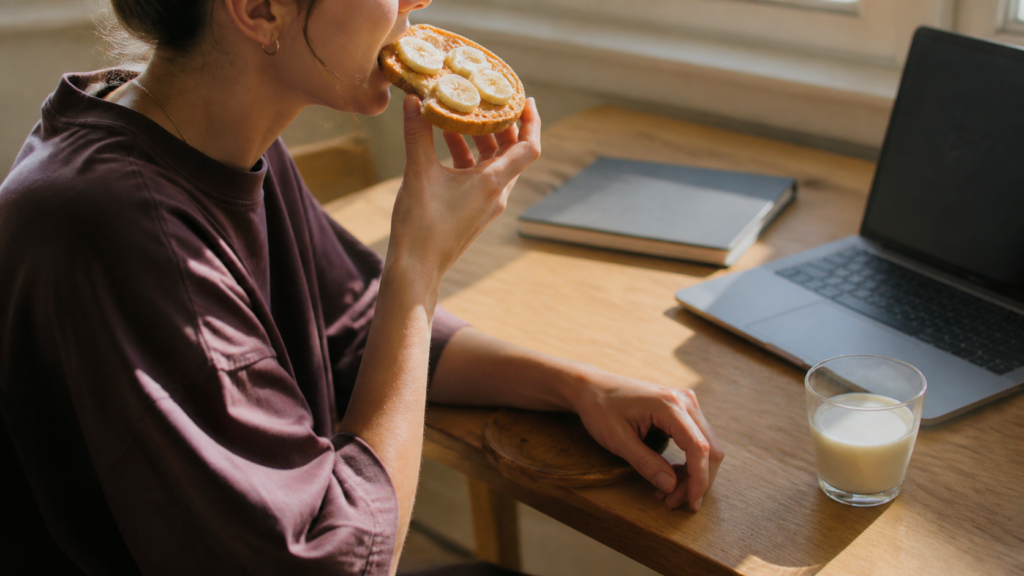
    • Rushed breakfast: Add berries and nuts or seeds to oatmeal, or pair whole-grain toast with eggs and fruit.
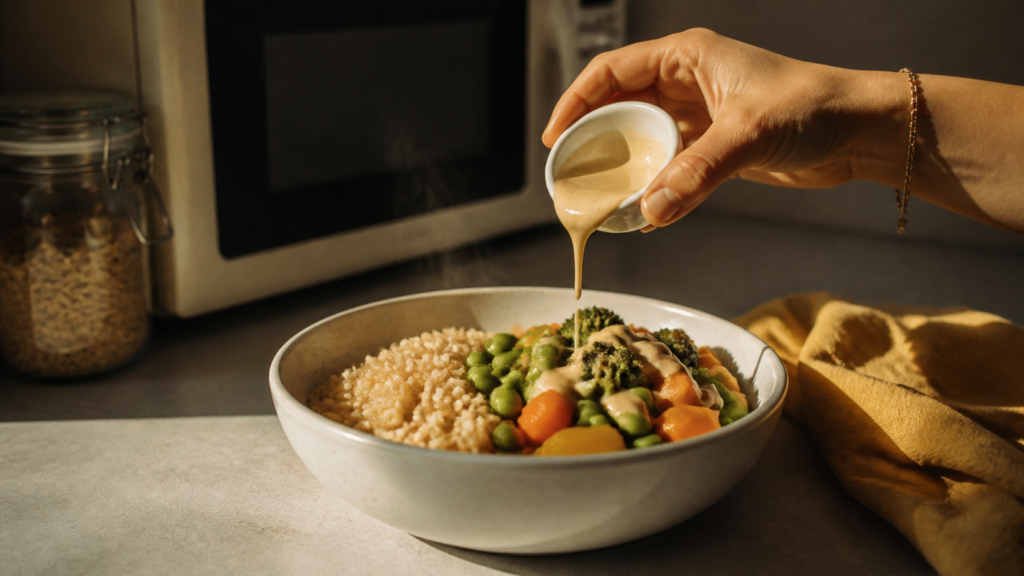
    • Desk lunch: Combine a microwave grain pouch, rinsed canned beans, pre-washed greens, and a dressing.
    • Late dinner: Heat frozen vegetables with tofu, chicken, or shrimp; add rice and a sauce you enjoy.
    • No-cook evening: Put hummus, whole-grain bread or crackers, chopped or pre-cut vegetables, fruit, and a protein food on one plate.
    • Snack that needs more staying power: Pair fruit with yogurt, nuts, or a nut or seed butter.

    The convenience foods are doing useful work here. “Minimally processed” does not mean everything must be raw, homemade, or prepared from scratch. Frozen produce, canned beans, plain yogurt, whole-grain bread, and precooked grains can make a nourishing pattern possible on a Wednesday night.

    For more complete combinations, use one of our easy healthy meals and make only the swaps that fit your kitchen.

    A one-week starting plan

    Changing everything at once makes a simple idea feel like a new job. Try this smaller sequence instead.

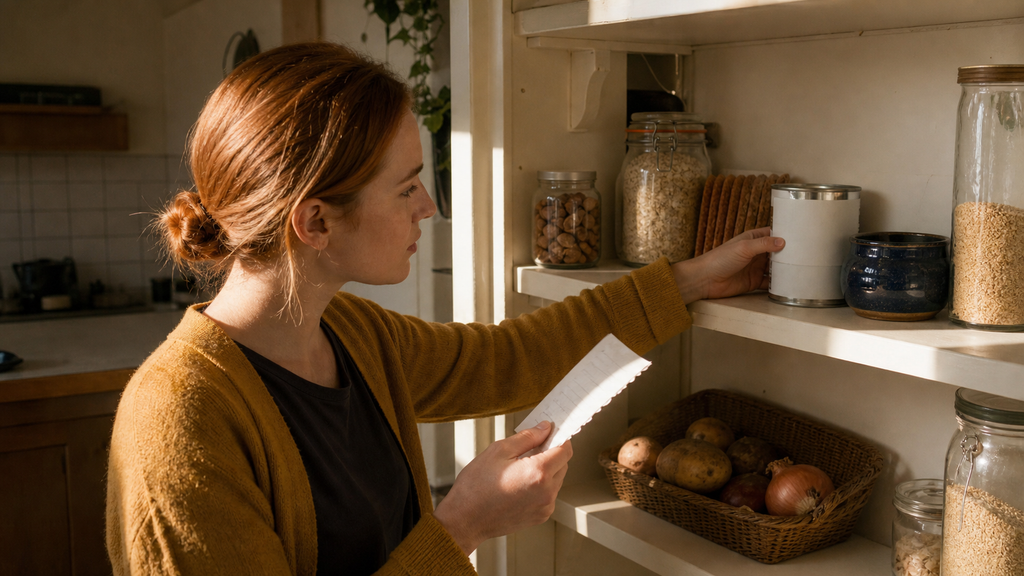
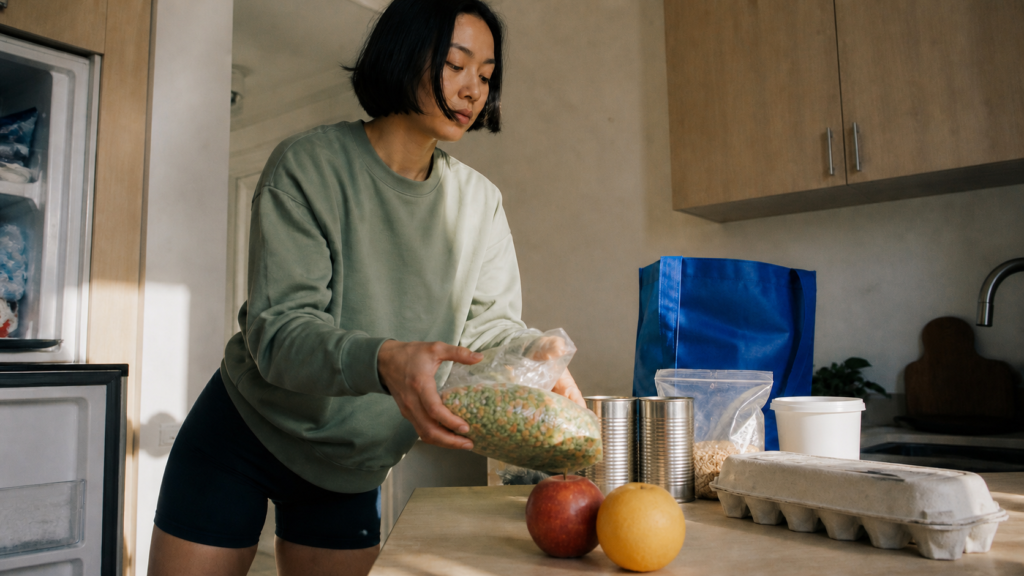
    Woman stores frozen vegetables beside a small set of repeatable meal staples.

    1. Pick one repeat meal

    Choose the meal you eat most often or the one that causes the most friction. Breakfast at your desk may be easier to improve than every dinner this week.

    2. Add one plant food

    Add fruit to breakfast, frozen vegetables to dinner, or beans to a grain bowl. You can improve the pattern before removing anything.

    3. Choose two reliable proteins

    Keep one quick option and one option you enjoy cooking. That might be canned beans and salmon, eggs and tofu, or yogurt and chicken.

    4. Make one fat swap

    Use olive oil instead of butter for one dish, add nuts instead of a pastry to one snack, or choose fish in place of processed meat for one meal. You do not need to make every swap at once.

    5. Plan one backup dinner

    Pick a meal made from pantry or freezer foods. Write it where you can see it. A backup meal protects the plan from the night when the meeting runs late and the fresh ingredients have lost their charm.

    6. Repeat before you expand

    Use the same changes for a week. If they are affordable, satisfying, and easy enough to repeat, keep them. If not, simplify the ingredients or choose a different meal.

    7. Review the routine, not your worth

    Ask practical questions: Did the food keep you satisfied? Did you have what you needed? Which step took too long? Adjust the system, not your self-respect.

    If you prefer to map breakfasts, lunches, and dinners together, our flexible nutrition plan for beginners shows how to reuse ingredients without cooking a different recipe every day.

    Foods to choose less often without banning them

    An anti-inflammatory diet does not require a forbidden-food drawer. Look at what dominates your usual pattern instead.

    Try choosing sugary drinks less often, replacing some processed meats with other proteins, and relying less often on foods high in saturated fat or sodium. Refined grains and sweets can still fit; pair them with other foods and pay attention to frequency rather than treating one serving as damage.

    This approach also makes room for birthdays, travel, restaurant meals, cultural foods, and the dinner someone else cooked. One meal does not define your dietary pattern. Your repeat choices do most of the work.

    Two women share vegetables, beans, bread, and dessert at a sunny café table.

    Do not cut out several food groups solely because a viral list labels them inflammatory. For a general eating pattern, variety is a more useful default than broad elimination. Cutting several food groups can make meals harder to plan and less varied without answering the original question.

    What “clean eating” should mean here

    If you searched for a “clean” anti-inflammatory diet, you may be expecting a strict list of approved foods. But clean eating is not a standardized scientific approach, and packaged food is not automatically a poor choice.

    A so-called clean-eating anti-inflammatory diet often comes with more rules than evidence. A more useful approach is to choose a variety of nutrient-dense foods more often while keeping practical packaged options in the plan. It does not mean avoiding every additive, buying only organic food, or cooking every meal yourself.

    Clean-eating advice framed as anti-inflammatory should not turn ordinary choices into a moral test. Canned beans, frozen vegetables, jarred sauce, and whole-grain bread may be exactly what helps you eat a more balanced dinner. Practical beats pristine.

    Woman adds frozen vegetables to a basket with beans, bread, and fruit.

    Five mistakes that make the plan harder

    1. Shopping for superfoods before planning meals

    A bag of specialty powder cannot fix a week with no workable lunches. Start with meals, then decide whether any extra ingredient is worth the cost.

    2. Changing breakfast, lunch, dinner, and snacks overnight

    The more rules you add, the harder it is to see which ones are useful. Change one repeat meal first and build from there.

    3. Confusing expensive with effective

    Berries are useful, and so are apples. Salmon can fit, and so can beans. Choose foods you can buy and repeat rather than a photogenic cart that strains your budget.

    4. Expecting a clear feeling after every meal

    Inflammation is not something you can reliably score from one afternoon of energy, bloating, or skin changes. Many factors can affect how you feel. Use the pattern to support overall diet quality, not to explain every symptom.

    5. Treating supplements as the main strategy

    A whole dietary pattern and a single supplement are different interventions, so evidence for one does not automatically apply to the other. You do not need powders or capsules to start with the meal pattern in this guide.

    FAQ

    What is the best anti-inflammatory diet?

    There is no single official plan. A Mediterranean-style eating pattern has the most consistent research support among named patterns, although the strength of evidence varies. Its practical foundation is flexible: plenty of plant foods, whole grains and legumes, a variety of proteins, and mostly unsaturated fats.

    Which foods cause inflammation?

    Research does not support treating one ordinary food as a universal cause of chronic inflammation. The evidence is more useful at the level of repeated dietary patterns than single foods. A pattern dominated by sugary drinks, processed meats, refined carbohydrates, and foods high in saturated fat or sodium may be less supportive than a varied, plant-forward pattern. That does not turn any one food into a toxin.

    Do I need to avoid gluten or dairy?

    Not by default. Both can fit an anti-inflammatory diet. Use alternatives when you have an allergy, intolerance, established dietary instruction, or a personal preference—not because a generic online list says everyone must avoid them.

    Is an anti-inflammatory diet vegetarian?

    It can be, but it does not have to be. Mediterranean-style patterns often include fish, eggs, dairy, and smaller amounts of meat alongside plenty of plant foods. You can choose a version that fits your culture, preferences, budget, and dietary needs.

    Start with the meal in front of you

    You do not need a dramatic reset. Choose one meal you will probably eat tomorrow. Add a fruit or vegetable, include a protein food, keep a fiber-rich carbohydrate, and use a fat or flavor you enjoy.

    Then repeat the meal once. That is a stronger start than buying six “anti-inflammatory” ingredients with no plan for Tuesday.
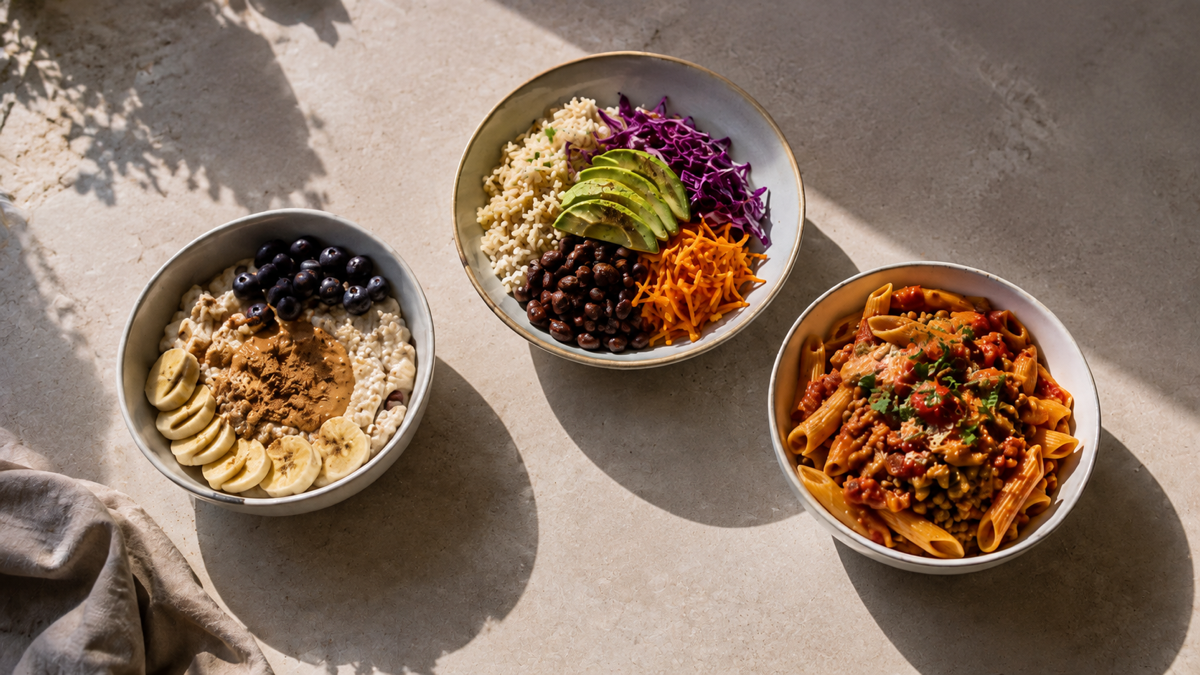
  • Quick Healthy Meals on a Budget: 7 Flexible Ideas

    Quick Healthy Meals on a Budget: 7 Flexible Ideas

    You get home hungry, open the fridge, and find one carrot, half a container of rice, and several ingredients that do not seem to belong to the same meal. Ordering dinner would be easy. Paying for it again this week would not.

    This is not a planning failure. Most budget meal advice asks you to choose between a complicated recipe and a joyless plate of “cheap” food. You need a simpler system.

    For quick healthy meals on a budget, combine one affordable base, one protein food, one fruit or vegetable, and one strong flavor. Choose ingredients that can work in at least two meals, then cook extra only when you already know how you will use it. The seven ideas below follow that formula and share ingredients, so you can spend less time cooking and leave fewer lonely leftovers in the fridge.

    The budget meal formula

    A meal does not need a long ingredient list to feel complete. Start with four flexible parts:

    1. Base: oats, rice, potatoes, whole-grain pasta, bread, or tortillas.
    2. Protein food: beans, lentils, eggs, plain yogurt, tofu, canned fish, poultry, nuts, or seeds.
    3. Produce: fresh, frozen, or canned vegetables and fruit.
    4. Flavor: salsa, canned tomatoes, peanut butter, cheese, herbs, spices, lemon, or a favorite sauce.
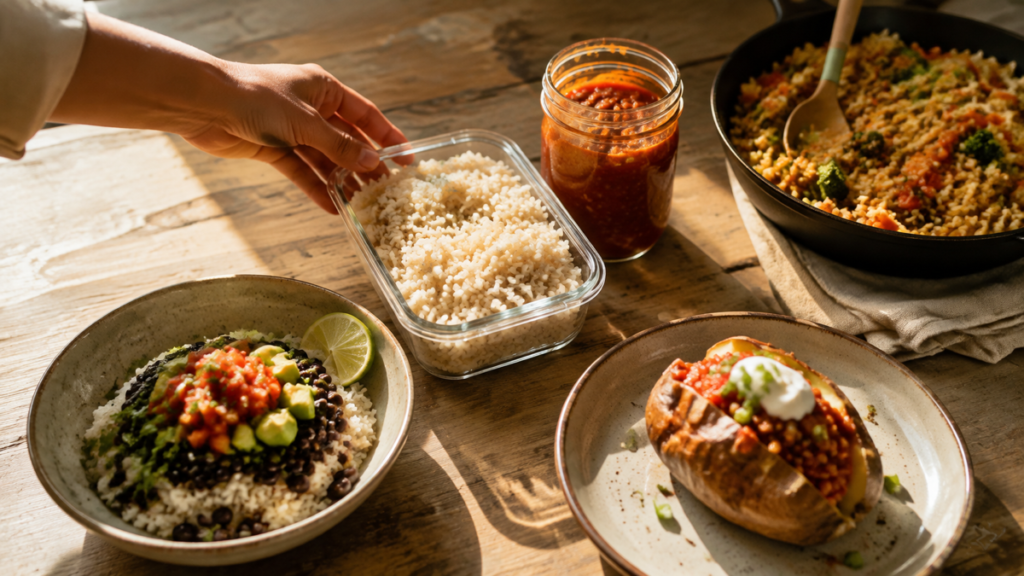
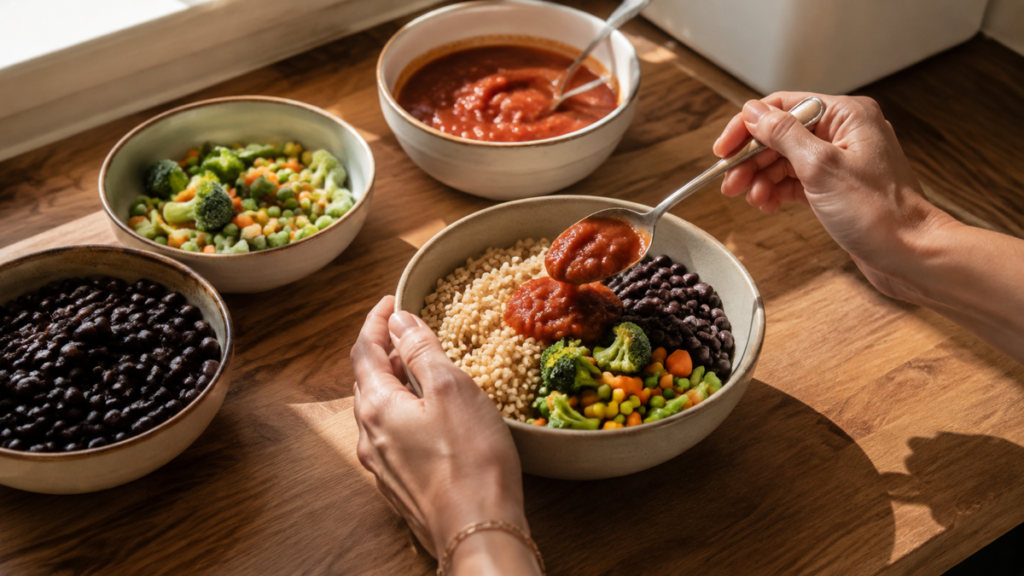
    Hands adding salsa to a rice bowl with black beans and mixed vegetables.

    This is a guide, not a plate-grading system. Your appetite, culture, schedule, dietary needs, and local food prices matter. Add more of any part that helps the meal work for you.

    Beans, vegetables, oats, and whole grains can add fiber; eggs, yogurt, tofu, fish, poultry, nuts, seeds, beans, and lentils can provide protein. Adjust the amount to your hunger. If a meal leaves you searching for snacks an hour later, it may simply need a larger portion or another component.

    If you want more help with the basic building blocks, start with these healthy eating tips for beginners. For now, keep the formula loose enough to use what you already own.

    Plan your shop in 10 minutes

    Cooking healthy on a budget starts before you add anything to your cart. A short check at home can prevent duplicate purchases and help you build meals around food that needs using first.

    1. Shop your kitchen

    Look through the refrigerator, freezer, and pantry. Write down:

    • one base you already have;
    • one protein food;
    • any produce that needs to be used soon;
    • sauces or seasonings that can pull those foods together.

    If you already have rice, a can of beans, and salsa, you are not starting from an empty kitchen. You already have the start of a meal.

    2. Pick three anchor meals

    Choose three meals you can genuinely make during this particular week. Give each one a backup version.

    For example, plan egg fried rice with vegetables, tomato lentil pasta, and bean-topped potatoes. If the week gets messy, the backup versions might be eggs on toast, pasta with frozen vegetables, and beans on toast.

    That backup plan matters. It is usually cheaper to use a simple meal you planned than to let ambitious ingredients spoil while you find another dinner.

    3. Compare the usable price

    The biggest package is not automatically the best deal. Compare the unit price when your store provides one, and compare like with like: per 100 grams, per ounce, or per item. Then ask two questions: Will you use it before it spoils, and can you store it safely?

    To estimate the cost per serving, add the cost of the amount of each ingredient you will use, then divide by the number of servings. Use this quick check: unit price, usable amount, number of meals. The cheapest package is not always the cheapest plan.

    A bulk bag of rice may be useful. A large box of tender greens is not a bargain if half goes into the trash.

    4. Mix fresh, frozen, canned, and shelf-stable foods

    Fresh is not the only useful form of produce. Frozen and canned vegetables count too, and they can be easier to keep on hand between shopping trips. Choose the form that fits the meal, storage space, and price where you live.

    When you buy packaged foods, check the Nutrition Facts labels on two similar products you would actually buy if you want to compare sodium, added sugars, or saturated fat. You do not need to turn the aisle into a research project. One quick comparison is enough.

    A flexible grocery list for seven meals

    Prices change by country, season, store, and package size, so a fixed “$20 menu” is rarely useful for everyone. Use this list as a structure, then choose the lowest-cost suitable option available to you.

    Bases

    • rolled oats;
    • rice;
    • potatoes;
    • whole-grain pasta or another pasta you enjoy;
    • bread or tortillas.

    Protein foods

    • dried or canned beans and lentils;
    • eggs;
    • plain yogurt or a fortified soy alternative;
    • one optional item on sale, such as tofu, canned fish, or poultry.

    Produce

    • frozen mixed vegetables;
    • canned tomatoes;
    • sturdy fresh vegetables, such as carrots, cabbage, or onions;
    • one or two fruits that fit your budget;
    • one fresh item on sale, if useful.

    Flavor makers

    • peanut butter or another nut or seed butter;
    • salsa or a versatile sauce;
    • oil;
    • two seasonings you already like.

    Do not buy every item if your cupboard already covers that role. Easy budget-friendly healthy meals come from overlap, not from collecting every possible “healthy” ingredient.

    7 quick budget meals that reuse the same ingredients

    Each idea is a template. Swap foods within the same role rather than buying a missing ingredient for one recipe.

    1. Fruit oats with peanut butter

    Cook oats with water, milk, or a fortified plant beverage. Stir in peanut butter and top with sliced banana, apple, frozen berries, or another affordable fruit.

    Quick setup: Slice fresh fruit while the oats cook, or stir frozen berries into the oats as they heat.

    Use what you have: No fruit left? Add cinnamon and a spoonful of yogurt, or make the savory oats below instead.

    2. Savory egg and vegetable oats

    Cook oats with water and a small pinch of salt. Stir in frozen vegetables for the final few minutes. Top with a cooked egg and add black pepper, chili flakes, salsa, or soy sauce.

    Quick setup: Use frozen vegetables that can go straight into the pan, and cook the egg while the oats finish.

    Use what you have: Replace the egg with beans, lentils, or cubed tofu. Leftover cooked vegetables work here too.

    3. Fast bean and vegetable rice bowl

    Warm cooked rice with drained beans and frozen vegetables. Add salsa, canned tomatoes, or your favorite sauce. Finish with yogurt, cheese, herbs, or seeds if they are already in the kitchen.

    Quick setup: Canned beans and frozen vegetables remove the chopping and can heat with the rice in one pan.

    Use what you have: Turn the same filling into a wrap, spoon it over a potato, or add extra liquid and seasoning for a quick soup.

    4. Tomato lentil pasta

    Cook pasta. While it boils, warm canned tomatoes with canned or cooked lentils, frozen vegetables, and seasoning. Toss the sauce with the pasta and add a splash of pasta water if it looks too thick.

    Quick setup: Choose canned lentils and vegetables that need no chopping. The sauce can heat while the pasta cooks.

    Use what you have: Beans can replace lentils. Add cabbage, carrots, spinach, or any vegetable that needs using.

    5. Loaded potato with beans

    Microwave or bake a potato until tender. Split it and add warm beans, salsa, and yogurt or grated cheese. Serve with cabbage, carrots, frozen vegetables, or leftover produce on the side.

    Quick setup: Microwave the potato, then warm the beans while it cooks.

    Use what you have: Sweet potato, rice, toast, or a tortilla can carry the same toppings.

    6. Egg fried rice with vegetables

    Heat a little oil in a skillet. Add frozen vegetables and cook until hot. Move them to one side, scramble in an egg, then add cooked rice that was chilled promptly and kept cold, plus soy sauce or another savory seasoning. Heat everything through.

    Quick setup: Use frozen vegetables and properly chilled leftover rice so the whole meal comes together in one skillet.

    Use what you have: Add tofu, beans, or leftover cooked meat. If your rice is fresh and hot, make a warm rice bowl instead.

    7. Crunchy bean wraps

    Mash drained beans with salsa, yogurt, or a little oil and seasoning. Add shredded cabbage or carrots, then roll the filling into tortillas. Toast the wraps in a dry skillet if you want a crisp finish.

    Quick setup: Start with canned beans and pre-shredded cabbage or carrots, or use vegetables you prepared earlier in the week.

    Use what you have: Spoon the filling onto toast, over rice, or into a baked potato. A spoonful of canned fish can replace some or all of the beans.

    Turn the seven meals into a realistic week

    The simplest way to plan healthy meals for the week on a budget is to repeat ingredients, not necessarily identical meals. One pot of rice can become a bowl on Monday and fried rice on Wednesday. Beans can move from a potato to a wrap. The canned tomatoes opened for pasta can flavor rice or soup the next day.

    Cooked rice and tomato-lentil sauce reused in a rice bowl, loaded potato, and vegetable fried rice.

    Here is one possible seven-day flow. Treat it as a map for using ingredients, not a schedule you have to follow exactly:

    DayMain mealWhat it uses next
    MondayTomato lentil pastaSave extra sauce for Wednesday
    TuesdayBean and vegetable rice bowlsChill extra rice promptly for Thursday
    WednesdayLoaded potatoes with leftover tomato-lentil sauceUse any extra toppings in wraps
    ThursdayEgg fried rice with vegetablesClear out small amounts of vegetables
    FridayCrunchy bean wrapsUse remaining cabbage, carrots, and beans
    SaturdayFruit oats with peanut butter, plus a flexible leftovers mealUse remaining fruit and yogurt
    SundaySavory egg and vegetable oats, plus a freezer or pantry mealReset only what you need for Monday

    You can build breakfast from oats, yogurt, fruit, eggs, or toast throughout the week. Lunch can be leftovers, a smaller version of dinner, or a basic bean-and-vegetable bowl.

    If you prefer a full breakfast-lunch-dinner framework, use our flexible nutrition plan for beginners and swap in the budget meals above. Keep the meals that match your week; you do not need to copy an entire sample plan.

    Prep once, then keep the meals flexible

    You do not have to spend Sunday filling a tower of containers. Prepare only the components that will remove friction later.

    Try this short sequence:

    1. Cook a pot of rice or another grain.
    2. Cook lentils if you bought them dried, or rinse and drain canned beans.
    3. Shred sturdy vegetables such as cabbage and carrots.
    4. Mix one simple sauce or put your chosen salsa where you can see it.
    5. Label leftovers with the date before they disappear behind the condiments.
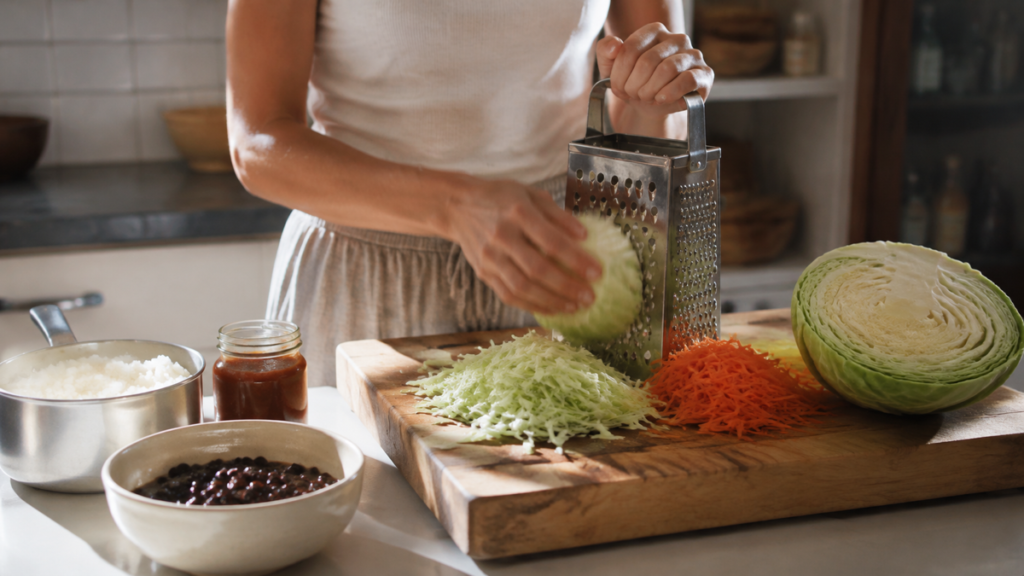
    Woman shredding cabbage beside prepared rice, beans, carrots, and a simple sauce.

    Stop when you have made the next two or three meals easier. A half-prepped week is still useful.

    Refrigerate perishable foods and leftovers within two hours, or within one hour when the temperature is above 90°F (32°C). Keep the refrigerator at or below 40°F (4°C), and use most cooked leftovers within three to four days. Freeze extra portions if they will not be used in that window.

    Make low-budget healthy meals work better

    If the meal is not filling enough

    Add food rather than deciding the whole meal failed. Increase the base, add another protein food, include more vegetables, or finish with fruit and yogurt. A cheap meal that does not meet your appetite is not a useful bargain.

    If fresh produce keeps spoiling

    Buy less of it at one time and lean on frozen or canned options for later in the week. Use delicate produce first and keep sturdy vegetables, frozen vegetables, and shelf-stable foods for the final days.

    If you are bored with the same ingredients

    Change the format and flavor. Rice and beans can become a salsa bowl, a curry-style bowl, a soup, or a wrap filling. The ingredients stay familiar while the meal feels different.

    If the cheapest food needs too much cooking

    Compare cost with the time and energy you actually have. Canned beans may cost more than dried beans but still be the better buy on a week when cooking a pot from scratch will not happen. Convenience can protect the rest of your grocery plan.

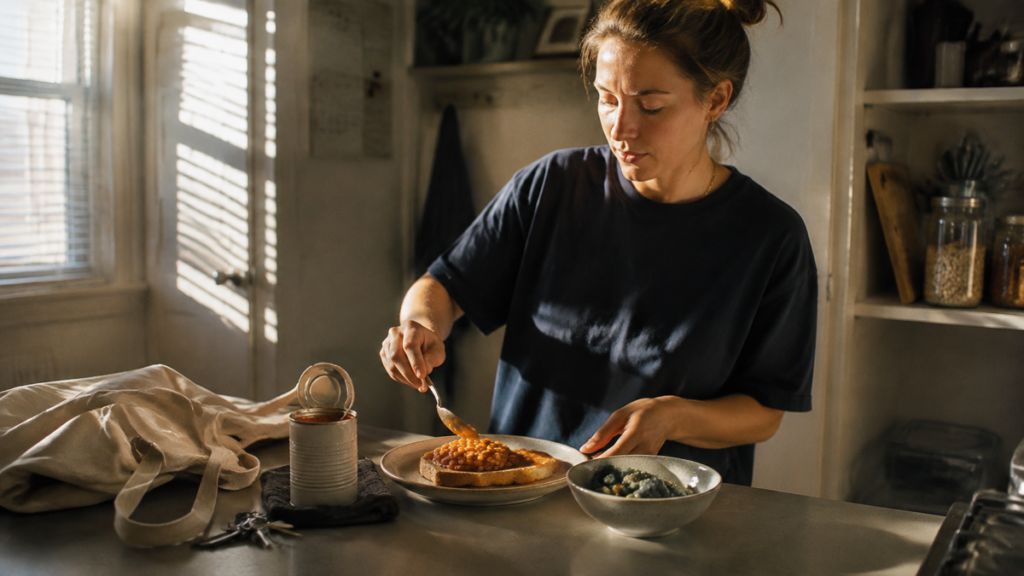
    Woman making beans on toast with vegetables after work in a small sunlit kitchen.

    If a sale tempts you to overbuy

    Decide where the food will go before it goes into your cart. Buy extra only if you can store it and name the meals that will use it. A discount does not save money when the food spoils.

    FAQ

    What is the cheapest healthy meal to make?

    There is no universal cheapest meal because prices vary. Start with a low-cost staple available where you live, such as oats, rice, potatoes, pasta, or bread. Add beans, lentils, eggs, or another affordable protein food, plus fresh, frozen, or canned produce. A bean-and-vegetable rice bowl is one flexible example.

    How do I calculate the cost per serving?

    Add the cost of the amount of each ingredient you use, then divide the total by the number of servings. Compare that figure, not only the package price, when choosing between two meals.

    Which ingredients should I use first?

    Start with delicate produce and opened packages. Save frozen vegetables, canned foods, sturdy produce, and unopened staples for later in the week.

    Is meal prep always cheaper?

    Only when you use what you prepare. Start with two or three components that fit several meals instead of cooking a different recipe for every day. Freeze extra portions before you get tired of them or before the safe refrigerator window ends.

    How do I eat well when my grocery budget changes each week?

    Keep the meal formula and change the ingredients. Check what you own, look for useful sale items, compare unit prices, and choose a base, protein source, produce, and flavor that fit this week’s budget. The structure stays steady even when the shopping list changes.

    Choose your first budget meal

    Do not plan all seven meals right now. Pick one base and one protein food you already have, then add produce and flavor. Write that meal at the top of your grocery list and buy only the missing pieces.

    That is enough to make tonight easier and give tomorrow’s ingredients somewhere useful to go.

  • Keto Diet for Beginners: A Practical, Balanced Start

    Keto Diet for Beginners: A Practical, Balanced Start

    You have three keto tabs open. One tells you to count “net carbs.” Another puts butter in coffee. A third has turned your grocery list into a shelf of expensive snack bars. You still do not know what to make for dinner.

    That confusion is not a lack of discipline. The internet often makes keto for beginners sound simpler and safer than it is.

    Here is the direct answer: a ketogenic diet is a very-low-carb, high-fat, moderate-protein eating pattern designed to produce ketosis. Studies and care guides often set the range at roughly 20–50 grams of total carbohydrate a day. No single target guarantees ketosis for every person.

    You do not need to follow keto to lose weight or improve your meals. It can be one option, but it is strict, can cause side effects, and may be unsafe with certain health conditions or medicines. This guide will help you understand the tradeoffs before you reorganize your kitchen around it.

    What is the keto diet, exactly?

    Carbs are a major source of glucose, which your body can use as fuel. When carb intake stays very low, the liver makes more ketones from fat. The body can then use more fat and ketones as fuel. This state is called nutritional ketosis.

    Keto is not simply a high-protein diet. Protein is usually moderate. The main change is a large cut in carbs, so more fuel comes from fat. Exact ratios vary across studies, treatment plans, and popular diets. Two keto menus can look quite different.

    Nutritional ketosis is also not the same as diabetic ketoacidosis, or DKA. DKA is a dangerous buildup of acids in the blood. It is most often linked to diabetes and too little working insulin. It needs urgent care. Extreme thirst, frequent urination, nausea or vomiting, stomach pain, deep breathing, fruity-smelling breath, marked sleepiness, or confusion can be warning signs. If you have diabetes or suspect DKA, seek urgent help rather than trying to correct it with food, pills, or powders.

    What can you eat on a keto diet?

    A thoughtful keto meal is more than meat, cheese, and added fat. It still needs variety, enough fiber, and foods that provide vitamins and minerals.

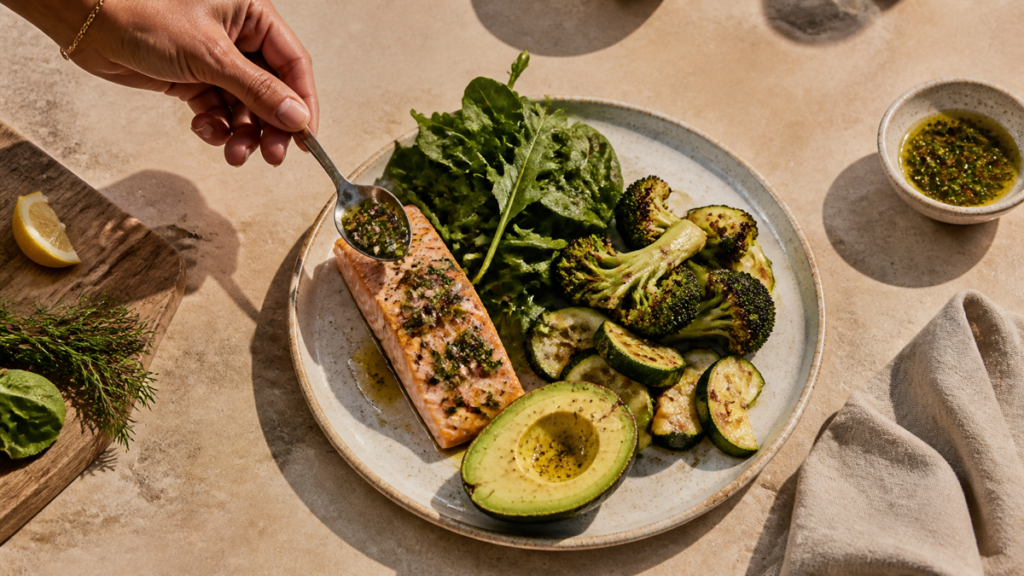
    Overhead keto meal with salmon, leafy greens, roasted broccoli and zucchini, avocado, and olive-oil herb dressing.
    Meal partOptions that often fit more easilyWhat to watch
    Low-carb vegetablesLeafy greens, broccoli, cauliflower, zucchini, mushrooms, cucumber, peppersCarbs add up across portions, sauces, and packaged mixes
    Protein foodsFish, eggs, tofu, poultry, plain yogurt, cheese, meatKeto is not an unlimited-protein plan; processed and fatty meats can add substantial saturated fat and sodium
    Mostly unsaturated fatsOlive or canola oil, avocado, nuts, seeds, oily fishFats provide a lot of energy, and “keto-friendly” does not always mean heart-healthy
    FlavorHerbs, spices, lemon or lime, vinegar, mustard, pesto, unsweetened saucesCheck serving sizes and added sugars in packaged sauces

    Foods commonly limited include bread, rice, pasta, cereal, potatoes, corn, most beans and lentils, many fruits, sweets, and sugar-sweetened drinks. That does not make these foods unhealthy. Whole grains, legumes, fruit, and starchy vegetables can provide fiber and useful nutrients. Keto limits them because they contain more carbs.

    If you choose this pattern, prioritize low-carb vegetables and sources of unsaturated fat. Do not build every meal around bacon, butter, cream, and processed meat. The American Heart Association finds that ketogenic diets, as commonly intended, align poorly with its heart-health guidance. They can restrict fruits, whole grains, and legumes and may be high in saturated fat.

    You do not need keto bars, powders, cookies, or ketone drinks. A package can say “keto” and still be expensive, heavily processed, low in useful nutrients, or easy to overeat. Read the serving size, ingredients, total carbohydrate, fiber, saturated fat, and sodium instead of relying on the front label.

    A note about total and net carbs

    U.S. Nutrition Facts labels list Total Carbohydrate. “Net carbs” is a marketing calculation that often subtracts fiber and sometimes sugar alcohols, but formulas can differ between products. If a doctor has given you a carb target, ask whether it refers to total or net carbs. Use the same method each time.

    How to start keto without turning it into a second job

    If the safety check is clear and you still want to try it, start with planning rather than a dramatic pantry purge.

    1. Write down your actual goal

    “I want to do keto” is a method, not a goal. Are you hoping to lose weight, manage blood glucose, reduce food decisions, or test whether certain meals feel more satisfying?

    The answer matters. A less strict eating plan may meet the same goal with more freedom. If your goal relates to a health condition, ask a doctor or dietitian to review your medicines, lab results, and follow-up needs.

    If you want to improve your meals without a strict carb target, start with our healthy eating tips for beginners. They focus on flexible habits you can test one at a time.

    2. Review your current meals

    Write down three typical days without grading them. Circle the foods that supply carbs, protein, vegetables, and fats. This shows how large the change would be.

    If breakfast is oatmeal, lunch is a bean wrap, and dinner is pasta, keto would replace several foods that currently provide fiber and familiar structure. That is useful information. A plan that ignores your preferences, culture, budget, and schedule will be hard to sustain no matter how polished the meal-prep containers look.

    For a broader weekly framework, use our flexible nutrition plan for beginners to organize meals without forcing them into a keto target.

    3. Choose three repeatable meal templates

    Use a simple formula: nonstarchy vegetables + a protein food + a mostly unsaturated fat + flavor.

    • Breakfast: eggs or tofu with spinach, mushrooms, and avocado;
    • Lunch: leafy salad with salmon, chicken, eggs, or tofu, plus cucumber, seeds, and olive-oil dressing;
    • Dinner: fish, poultry, tofu, or meat with roasted broccoli or zucchini and an olive-oil-based sauce.

    Portions determine the actual carb, protein, fat, and calorie content. These are meal ideas, not a guarantee that you will reach ketosis or a plan for your needs.

    4. Plan three days before planning a month

    Choose meals with overlapping ingredients. For example, use spinach in breakfast eggs and a lunch salad, roast two trays of vegetables, and cook enough salmon or tofu for leftovers. Keep a backup meal, such as an omelet with frozen vegetables or canned tuna with salad greens.

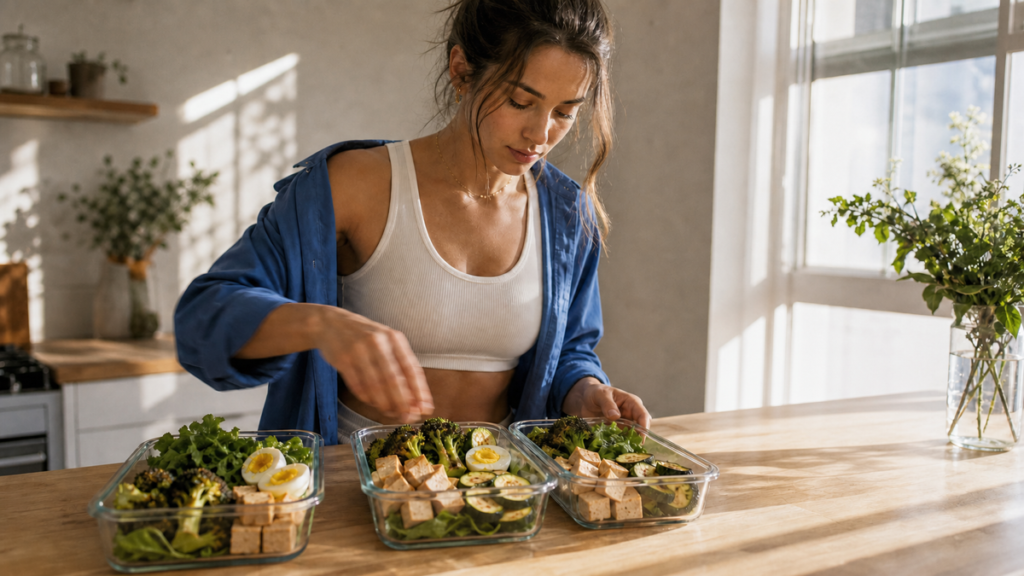
    Woman packing three days of simple low-carbohydrate meals in a sunlit kitchen.

    A three-day trial exposes simple problems quickly. Lunch may be too small. You may have no option near work, too little fiber, or a dinner nobody else in the household wants. Fix those problems before buying a month of specialty products.

    5. Shop from a short list

    Choose a few items from each group rather than buying every food labeled keto.

    Vegetables:

    • leafy greens;
    • broccoli or cauliflower;
    • zucchini, mushrooms, cucumber, or peppers;
    • frozen nonstarchy vegetables for backup meals.

    Protein foods:

    • eggs;
    • fish, poultry, tofu, or tempeh;
    • plain yogurt or cottage cheese, if they fit your plan;
    • canned fish or another easy backup.

    Fats and flavor:

    • olive or canola oil;
    • avocado;
    • nuts or seeds;
    • herbs, spices, vinegar, mustard, lemon, or lime.

    Check labels because carb counts can vary across yogurt, sauces, dressings, nut products, and plant-based alternatives.

    6. Decide how you will review the experiment

    Pick a date after two to four weeks to assess more than the scale. Ask:

    • Can I eat enough vegetables and fiber without constant tracking?
    • Do my meals fit my budget and workdays?
    • How are my energy, digestion, sleep, mood, and workouts?
    • Am I becoming more preoccupied with food or afraid of daily meals?
    • If I have a health goal, what clear measure will my doctor review?

    Stopping or changing the plan is not failure. It is a reasonable response to new information.

    A simple three-day keto meal example

    This example shows how meals can be built from daily foods. It does not set portions or a personal carb target.

    DayBreakfastLunchDinner
    1Spinach and mushroom eggs with avocadoChicken or tofu salad with cucumber, seeds, and olive-oil dressingSalmon with roasted broccoli and cauliflower mash
    2Plain Greek or unsweetened soy yogurt with chia seeds, walnuts, and a small portion of berriesTuna lettuce cups with sliced peppers and avocadoTofu and nonstarchy vegetable stir-fry with sesame oil
    3Vegetable omelet or tofu scrambleLeftover salmon or tofu over greensTurkey meatballs or baked tofu with zucchini ribbons and tomato sauce

    Add a snack only if you are hungry and it fits your needs. Options might include a boiled egg, cucumber with a yogurt dip, or a small portion of nuts. “Keto snack” is not a required food group.

    The carb content will depend on brands, recipes, and portions. Anyone who needs a therapeutic ketogenic ratio or precise carb target should use a plan made by a doctor and dietitian.

    What might you notice at the beginning?

    Some people report fatigue, headache, nausea, constipation, dizziness, or changes in exercise performance as they adjust. Research on ketogenic interventions also finds gastrointestinal complaints among the most commonly reported adverse events. Symptoms and timing vary, so “keto flu” is not a milestone you need to push through.

    Keep regular fluids available and include low-carb foods that provide fiber. Do not take large doses of salt, potassium, magnesium, or other pills or powders without checking whether they suit you. Kidney function, blood pressure, medicines, sweating, and other factors can affect electrolyte needs.

    Pause the plan and seek care if symptoms are strong, do not pass, or get worse. Fainting, confusion, repeated vomiting, trouble breathing, severe weakness, or signs of DKA need urgent care.

    Is the keto diet effective for weight loss?

    Keto can produce short-term weight loss for some people, and research has found changes in several metabolic measures. That does not mean ketosis guarantees fat loss or that keto works better for everyone.

    An umbrella review of randomized-trial meta-analyses found that many reported effects came from short studies. The strength of the evidence varied by outcome. Current reviews generally find no clear long-term weight-loss edge over less strict plans. Food quality, total calorie intake, your response, and the ability to keep going all matter.

    Blood lipids can also respond in different ways. Triglycerides may fall for some people, while LDL cholesterol can rise. If you follow keto beyond a brief trial, ask a doctor what to track. Weight change does not tell the whole health story.

    For people with diabetes, a sharp carb cut can change blood glucose and medicine needs quickly. Do not reduce insulin or other medicine on your own. The risk is not solved by choosing a more “natural” version of keto.

    Seven common keto mistakes

    1. Treating low carb as low vegetable

    Low-carb vegetables help provide fiber, micronutrients, volume, and variety. Put them on the shopping list first, not after the cheese drawer is full.

    2. Making saturated fat the default

    Butter, cream, coconut oil, fatty meat, and processed meat can push saturated fat up quickly. Use more olive or canola oil, nuts, seeds, avocado, and fish when they suit your needs.

    3. Trusting the word “keto” more than the label

    Check the serving size and nutrition information. A cookie does not become a foundational food because the package changed color.

    Woman checking the back of an unbranded food package while shopping for leafy greens, avocado, eggs, yogurt, and olive oil.

    4. Forgetting that restriction has a cost

    Removing grains, legumes, and much of the fruit in your usual diet can reduce fiber and food variety. Replacing those nutrients takes planning; a multivitamin does not automatically repair a limited eating pattern.

    5. Starting during the busiest week of the month

    A major food change is harder when you are traveling, working late, or feeding a household with different needs. Choose a quieter start, plan portable meals, and keep realistic backups.

    6. Using pills and powders to chase every symptom

    Ketone drinks, “fat burners,” and electrolyte powders are not required to begin. New or worsening symptoms deserve assessment, not an expanding stack of products.

    7. Turning one higher-carb meal into a moral problem

    Food is not a test of character. Review what happened and decide whether to continue, adjust, or choose a more flexible pattern. Guilt is not a nutrition strategy.

    FAQ

    How long does it take to reach ketosis?

    It varies. Carb intake, fuel needs, activity, your body, and the specific plan can all affect timing and ketone levels. Do not use a countdown from social media as a safety check. If ketosis is required for medical care, the care team should manage the tests.

    Can you eat fruit and vegetables on keto?

    Yes, but the range and portions are narrower. Low-carb vegetables often fit more easily, while small portions of berries may fit some plans. Many other fruits and starchy vegetables contain more carbs and may not fit a strict target. Limited does not mean unhealthy.

    Do you need to count calories on keto?

    Not necessarily, but keto does not make energy intake irrelevant. Some people feel less hungry; others can easily eat more energy through oils, cheese, nuts, cream, and packaged snacks. Your goal and response matter more than a universal tracking rule.

    Is keto sustainable?

    For some people, yes. For many, the restrictions make travel, social meals, exercise, and even digestion harder. A plan does not need to be permanent to teach you something, but it should not require your whole life to shrink around it.

    Choose your next step, not your forever diet

    Before you remove half the foods in your kitchen, write down your goal and complete the safety check. Then compare keto with one less strict way to reach the same goal.

    If you still choose keto, plan three days of daily meals, shop from a short list, and set a review date. A keto diet for beginners should begin with clear choices and real limits – not a promise that one carb-fat split will work for every body.

  • Easy Healthy Meals: 8 Simple Recipes for Busy Days

    Easy Healthy Meals: 8 Simple Recipes for Busy Days

    It is 6:30 p.m. You have two hungry people to feed, half a bag of spinach in the fridge, and no patience for a recipe that starts with “marinate overnight.” Suddenly, toast looks like the only realistic plan.

    You are not failing at healthy eating. You need fewer decisions and meals that are easy enough for an ordinary Tuesday.

    Start with one of the eight easy healthy meals below. These practical recipes use familiar ingredients and include a shortcut or swap. Most take 20 minutes or less; the sheet-pan dinner needs about 30–35 minutes but very little attention. Pick the meal that fits tonight rather than the one that looks most impressive.

    What makes a simple healthy meal?

    There is no single meal that is “healthy” for every person. Your appetite, culture, budget, allergies, health needs, and food preferences all matter. A useful everyday meal often combines a few building blocks:

    • a protein food, such as eggs, yogurt, beans, lentils, tofu, fish, or poultry;
    • a vegetable or fruit;
    • a fiber-rich carbohydrate, such as oats, whole-grain bread, beans, potatoes, brown rice, or whole-grain pasta;
    • a source of flavor or fat, such as olive oil, avocado, nuts, seeds, herbs, cheese, or sauce.

    Not every plate needs every item. Use this as a prompt when a meal feels incomplete, not as a scoring system. Good, healthy meals can include convenience foods too. Frozen vegetables, canned beans, microwave grains, and pre-washed greens often remove the step that stops dinner from happening.

    If you want the everyday habits behind this loose framework, our healthy eating tips for beginners can help you choose one change without rebuilding your whole routine.

    These recipes offer general ideas rather than an individualized nutrition plan. If you manage a medical condition, food allergy, eating disorder, pregnancy-related need, or prescribed diet, adapt them with guidance from a qualified professional.

    Choose tonight’s easiest option

    All eight recipes make two servings. Times are estimates, so allow a little longer if you are learning a technique or using unfamiliar equipment.

    MealTimeBest shortcut
    Berry yogurt oatmeal7 minFrozen berries
    Egg, spinach, and tomato toast10 minPre-washed spinach
    Creamy chickpea crunch wraps10 minCanned chickpeas and bagged slaw
    Tuna and white bean salad bowls10 minCanned beans and tuna
    Black bean sweet potato bowls15 minMicrowave the potatoes
    Pesto vegetable pasta20 minFrozen vegetables
    Lemon salmon with couscous20 minQuick-cooking couscous
    Sheet-pan chicken, broccoli, and potatoes30–35 minSmall potato cubes and pre-cut broccoli

    8 easy healthy meals for busy days

    1. Berry yogurt oatmeal

    This warm bowl works for breakfast, lunch after a chaotic morning, or any evening when cooking feels ambitious. The oats, yogurt, fruit, and nuts cover several useful meal components without creating a sink full of dishes.

    You need:

    • 1 cup rolled oats;
    • 2 cups milk, fortified unsweetened soy beverage, or water;
    • 1 cup fresh or frozen berries;
    • 3/4 cup plain yogurt or unsweetened soy yogurt;
    • 2 tablespoons chopped nuts or seeds;
    • cinnamon, if you like.

    Make it: Combine the oats and liquid in a saucepan. Simmer for about five minutes, stirring until creamy. Add frozen berries during the final two minutes, or add fresh berries after cooking. Divide between two bowls and top with yogurt, nuts or seeds, and cinnamon.

    Easy swap: No berries? Use a sliced banana, chopped apple, peaches packed in juice, or another fruit you enjoy.

    2. Egg, spinach, and tomato toast

    Eggs and toast are already a meal. Spinach and tomatoes simply make it more colorful and substantial.

    You need:

    • 4 eggs;
    • 2 packed cups baby spinach;
    • 1 large tomato, chopped, or 1 cup cherry tomatoes, halved;
    • 4 slices whole-grain bread;
    • 1 teaspoon olive oil;
    • black pepper and any herbs you like.

    Make it: Toast the bread. Heat the oil in a skillet over medium heat, add the tomato and spinach, and cook until the spinach wilts. Beat the eggs, pour them into the pan, and stir gently until no liquid egg remains. Divide over the toast and add pepper or herbs.

    Easy swap: Use frozen spinach that has been thawed and squeezed dry. If four slices are more or less than you want, adjust the toast to your appetite.

    3. Creamy chickpea crunch wraps

    These wraps need no stove and travel well for lunch. The filling is flexible enough to handle the half cucumber, lone carrot, or bag of slaw already waiting in your fridge.

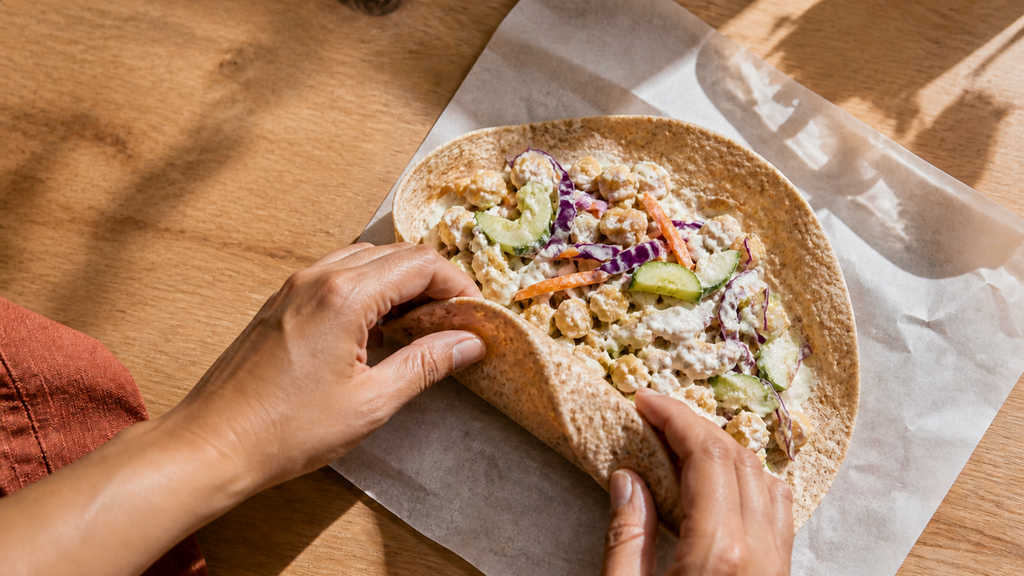
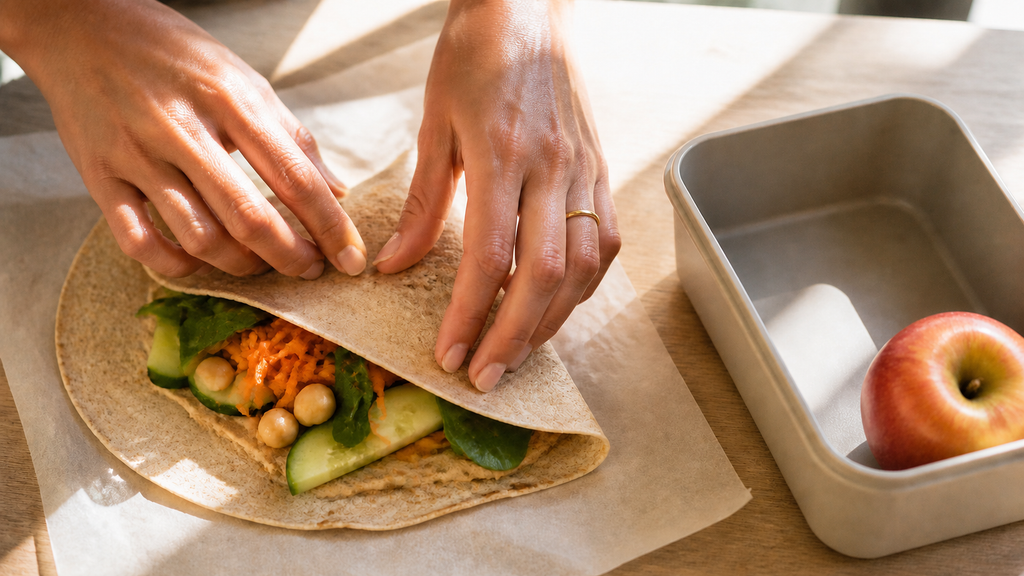
    Hands rolling a whole-grain chickpea wrap with cabbage, carrot, and cucumber.

    You need:

    • 1 can chickpeas, drained and rinsed;
    • 3 tablespoons plain yogurt or 2 tablespoons tahini plus a splash of water;
    • 1 teaspoon mustard;
    • 1 tablespoon lemon juice or vinegar;
    • 1 cup shredded cabbage, bagged slaw, or chopped cucumber and carrot;
    • 4 small whole-grain tortillas;
    • black pepper and dried herbs.

    Make it: Mash about half the chickpeas in a bowl. Stir in the yogurt or tahini, mustard, lemon juice, vegetables, pepper, and herbs. Spoon the mixture into the tortillas and roll them tightly.

    Easy swap: Serve the filling over salad greens or scoop it up with whole-grain crackers if you do not have tortillas.

    4. Tuna and white bean salad bowls

    This is one of the fastest meals in the collection because the main ingredients are already cooked. It also holds up better than a delicate salad if you make lunch a few hours early.

    You need:

    • 1 can tuna, drained;
    • 1 can cannellini or other white beans, drained and rinsed;
    • 1 cup chopped tomatoes;
    • 1 small cucumber, chopped;
    • 2 handfuls salad greens;
    • 1 tablespoon olive oil;
    • 1 tablespoon lemon juice or vinegar;
    • black pepper and dried oregano.

    Make it: Gently mix the tuna, beans, tomato, cucumber, olive oil, lemon juice, pepper, and oregano. Divide the greens between two bowls and spoon the mixture on top.

    Easy swap: Replace the tuna with another half-can of beans or baked tofu. Add whole-grain toast, a pita, or leftover rice when you want a more substantial meal.

    5. Black bean sweet potato bowls

    Sweet potatoes can take a while in the oven. The microwave turns them into a realistic weeknight base while the toppings stay cool and crisp.

    You need:

    • 2 medium sweet potatoes, scrubbed;
    • 1 can black beans, drained and rinsed;
    • 1 cup frozen corn;
    • 1/2 cup salsa;
    • 1 avocado or 1/2 cup plain yogurt;
    • lime juice and cilantro, optional.

    Make it: Prick the sweet potatoes several times with a fork. Microwave them on a microwave-safe plate for five minutes, turn them, then continue in one-minute bursts until soft through the center. Microwave times vary, and the potatoes will be hot, so open them carefully. Warm the beans and corn. Split the potatoes and add the bean mixture, salsa, avocado or yogurt, and optional lime or cilantro.

    Easy swap: Use a pouch of brown rice or another cooked grain instead of sweet potatoes.

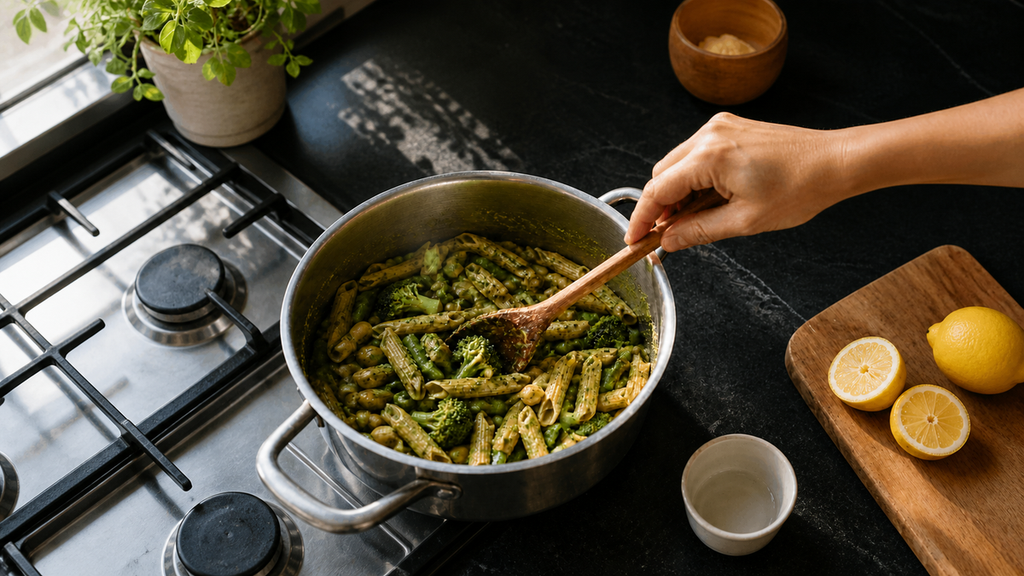
    6. Pesto vegetable pasta with chickpeas

    Pasta does not need an elaborate sauce to become a useful meal. Cooking frozen vegetables in the same pot keeps this version quick, colorful, and low on cleanup.

    One portion of pesto pasta with chickpeas and green vegetables being stirred in a small saucepan.

    You need:

    • 6 ounces (170 g) whole-grain pasta;
    • 3 cups frozen broccoli, peas, green beans, or a mixed vegetable blend;
    • 1 can chickpeas, drained and rinsed;
    • 3 tablespoons pesto;
    • 1 tablespoon lemon juice;
    • black pepper;
    • grated Parmesan or nutritional yeast, optional.

    Make it: Cook the pasta according to the package directions. Add the frozen vegetables for the final three to five minutes, using the package cooking time as a guide. Reserve a little cooking water, then drain. Return everything to the pot with the chickpeas, pesto, lemon juice, and a splash of cooking water. Stir over low heat until hot.

    Easy swap: Use cooked chicken, white beans, or edamame instead of chickpeas. Compare pesto labels if sodium is something you monitor.

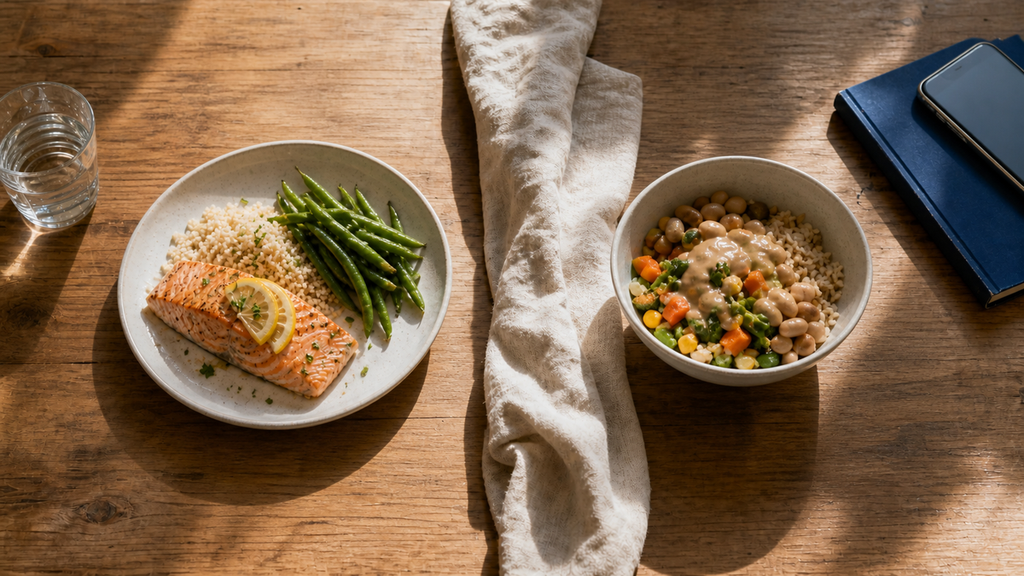
    7. Lemon salmon with couscous and green beans

    Fish can feel like weekend cooking, but thin salmon fillets cook while couscous rests off the heat. The result looks polished without requiring advanced timing.

    You need:

    • 2 salmon fillets, about 4–6 ounces (115–170 g) each;
    • 2 cups green beans, fresh or frozen;
    • 3/4 cup whole-wheat couscous;
    • 3/4 cup water or low-sodium broth, or the amount listed on the couscous package;
    • 2 teaspoons olive oil;
    • 1 lemon;
    • black pepper, garlic powder, or dried herbs.

    Make it: Heat the oven to 400°F (200°C). Place the salmon and green beans on a lined sheet pan, rub them with the oil, and add lemon juice and seasonings. Bake until the salmon reaches 145°F (63°C) in its thickest part, usually about 12–15 minutes depending on thickness. Meanwhile, prepare the couscous according to the package directions. Divide everything between two plates.

    Easy swap: Use a fish you like and cook it to the safe temperature for that type. For a plant-based version, replace the salmon with seasoned canned lentils and warm them with the green beans.

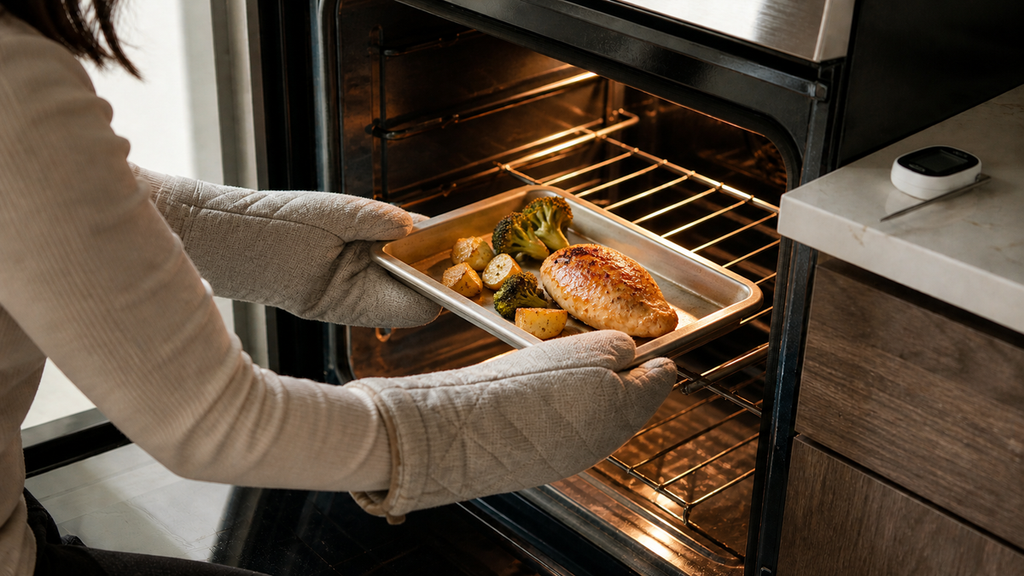
    8. Sheet-pan chicken, broccoli, and potatoes

    This dinner takes the longest on the list, but most of that time belongs to the oven. Cut the potatoes small so they finish with the chicken.

    Woman removing one portion of cooked chicken, broccoli, and potatoes from the oven.

    You need:

    • 12 ounces (340 g) boneless, skinless chicken breast or thighs, cut into large bite-size pieces;
    • 12 ounces (340 g) small potatoes, cut into 1/2-inch pieces;
    • 3 cups broccoli florets;
    • 1 1/2 tablespoons olive oil;
    • 1 teaspoon paprika or Italian seasoning;
    • garlic powder and black pepper;
    • lemon wedges or plain yogurt, optional.

    Make it: Heat the oven to 425°F (220°C). Toss the potatoes with one-third of the oil and some seasoning. Roast for 15 minutes. Add the chicken and broccoli tossed with the remaining oil and seasoning. Spread everything into one layer and roast for another 15–18 minutes, or until the chicken reaches 165°F (74°C) in its thickest piece and the potatoes are tender.

    Keep raw chicken and its utensils away from the vegetables you plan to eat uncooked. Wash your hands and any contacted surfaces with soap and water.

    Easy swap: Replace the chicken with drained chickpeas. Add them with the broccoli and roast until the edges are lightly crisp.

    How to make everyday healthy meals easier

    You do not need to turn eight recipes into an eight-day food plan. Choose two meals with overlapping ingredients, then keep one backup meal for the day that refuses to cooperate.

    One salmon dinner beside one quick grain, bean, and vegetable backup bowl.

    For example, buy spinach, tomatoes, whole-grain bread, canned beans, yogurt, and frozen vegetables. Make the egg toast first, use the remaining vegetables in pasta, and save chickpea wraps for the no-cook night. The goal is to finish useful groceries, not collect ingredients for seven unrelated recipes.

    Three habits make the next meal easier:

    1. Choose two recipes, not eight. A short decision is easier to shop for and repeat.
    2. Prepare one friction point. Wash the greens, mix a sauce, or cook a grain. Stop before meal prep becomes a second job.
    3. Write down the successful swap. “Frozen broccoli works in the pasta” is useful information for next week.

    When you are ready to organize breakfasts, lunches, and dinners across a full week, use our flexible nutrition plan for beginners instead of forcing these meals into a rigid schedule.

    Store cooked leftovers in covered containers within two hours. Most cooked leftovers can stay refrigerated for three to four days and should be reheated to 165°F (74°C). When in doubt about a specific ingredient or storage condition, follow current local food-safety guidance.

    FAQ

    What are healthy meals to eat when you have no time?

    Choose a meal that is assembled from cooked or ready-to-use ingredients: tuna and white bean salad, chickpea wraps, yogurt oatmeal, or a microwave sweet potato with beans. A useful backup can be as simple as canned beans, frozen vegetables, and a microwave grain with a sauce you enjoy.

    Can frozen and canned foods be part of a healthy meal?

    Yes. Frozen vegetables and fruits, canned beans, canned fish, and other basic convenience foods can make meals more realistic. Check the label when you compare similar products. The serving size tells you what the listed nutrients refer to, while the percent Daily Value can help you compare fiber, sodium, saturated fat, and added sugars.

    Do I need to calculate calories for these meals?

    No. These recipes do not prescribe calories or portion sizes for an individual. Start with the listed two-serving recipe, notice your hunger and fullness, and adjust the amount or add a side when needed. Individual calorie needs vary, and a qualified professional can help if you need a personalized plan.

    What are the best healthy meals for busy nights?

    The best option is one you have time, ingredients, and enough interest to make. Keep two levels of easy: a 20-minute cooked meal for a normal evening and a five-minute assembled meal for the late one. Consistency becomes much more realistic when the backup is already part of the plan.

    Pick one meal for tonight

    Do not save all eight recipes and hope a calmer version of you appears next week. Choose one now. Check the kitchen for its protein food, vegetable or fruit, carbohydrate, and flavor, then add only the missing ingredients to your list.

    Easy healthy meals become repeatable when you remember the setting, not just the recipe: chickpea wraps for the no-cook night, salmon when you have 20 quiet minutes, and sheet-pan chicken when the oven can do most of the work.

  • Nutrition Plan for Beginners: A Flexible Week of Meals

    Nutrition Plan for Beginners: A Flexible Week of Meals

    It is Sunday evening. Your calendar is already full. Every meal plan you saved seems to involve seven recipes, twenty containers, and a second refrigerator. The plan is asking more of your week than your week can give.

    A useful nutrition plan for beginners can be much simpler. Choose a few repeatable meals. Include several nourishing food groups across the day. Prepare only the parts that save you time, and keep one backup meal ready. You do not need to count every calorie or cook seven days of food at once.

    The plan below gives you a flexible week of breakfasts, lunches, and dinners, plus a practical grocery list and prep routine. It is a general starting point, not an individualized prescription. Adjust the foods and amounts for your appetite, culture, budget, schedule, and dietary needs.

    What should a beginner nutrition plan include?

    Start with a loose meal formula instead of a stack of food rules. For most main meals, choose a few of these building blocks:

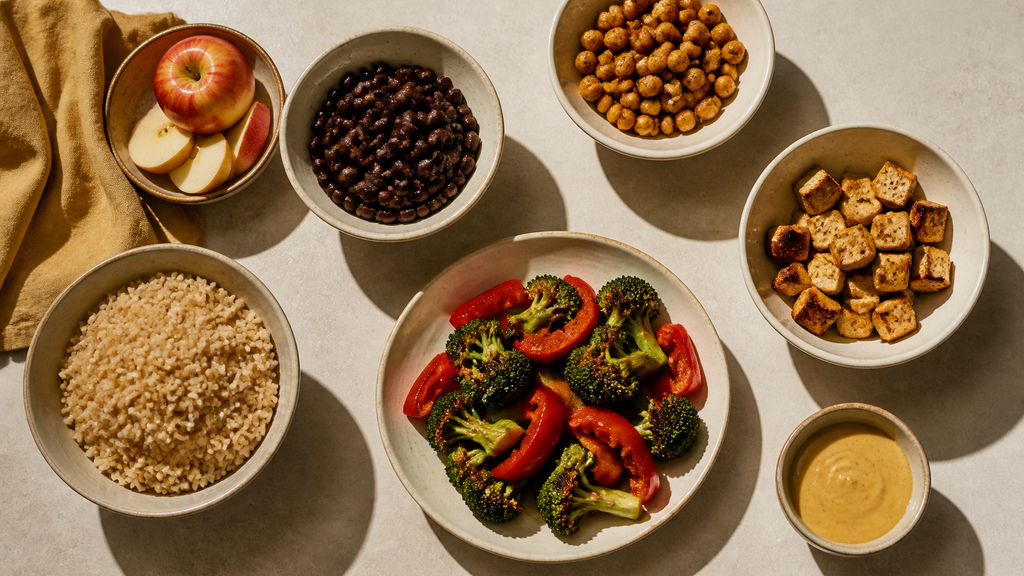
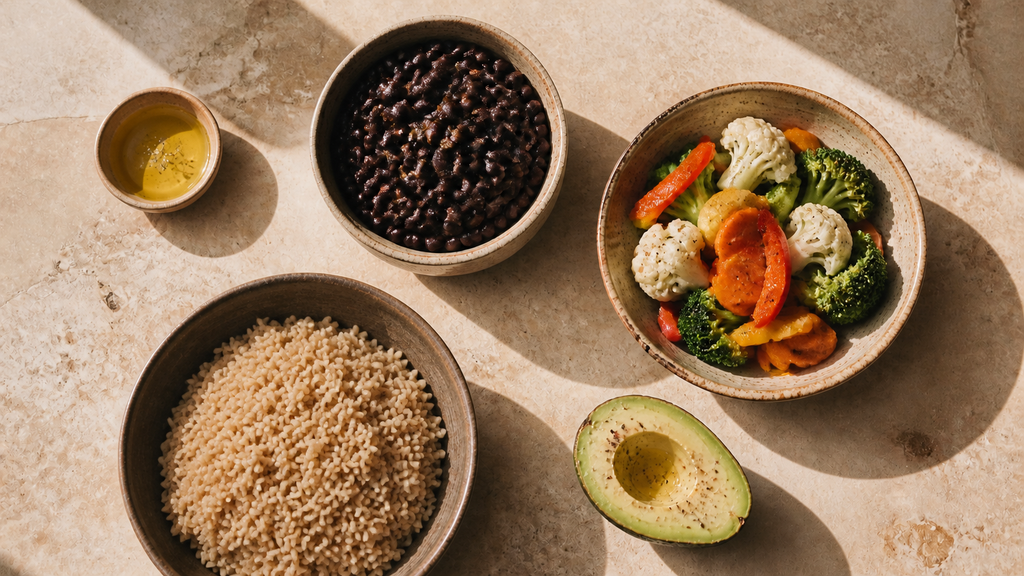
    Brown rice, beans, tofu, roasted vegetables, fruit, and dressing arranged as flexible meal components.
    Build meals from flexible components you enjoy and can find.
    Building blockEveryday optionsFast shortcut
    Protein foodEggs, yogurt, fish, poultry, meat, beans, lentils, tofu, tempeh, nuts, or seedsCanned beans, boiled eggs, plain yogurt, canned fish, or baked tofu
    Vegetables or fruitFresh, frozen, canned, or dried optionsFrozen vegetables, pre-washed greens, or fruit that needs no chopping
    Fiber-rich carbohydrateOats, whole-grain bread, brown rice, quinoa, potatoes, beans, or whole-grain pastaMicrowave grains, canned beans, or whole-grain toast
    Fat or flavorOlive oil, avocado, nuts, seeds, cheese, hummus, herbs, or sauceOne dressing or sauce you already enjoy

    Not every plate needs to contain every item. Breakfast may be oatmeal with yogurt and berries. Lunch could be a bean-and-rice bowl. Dinner might be fish or tofu, potatoes, and vegetables. Look at the pattern across your day and week rather than grading one meal.

    If you want the basic habits behind this formula, start with our healthy eating tips for beginners. Pick one change that feels manageable before adding another.

    Water and unsweetened drinks are simple everyday choices. Snacks are optional and depend on your appetite and schedule. If you want one, combine foods that sound satisfying to you. Try fruit with yogurt, crackers with hummus, or nuts with a piece of fruit.

    How to use this plan without overcomplicating it

    Before you look at the seven days, make three decisions:

    1. Check your calendar. Mark late workdays, meals out, travel, and evenings when cooking is unlikely.
    2. Choose what to repeat. Two breakfasts, two lunches, and three dinners are enough to create variety without buying a different ingredient for every meal.
    3. Plan one backup. Keep a freezer or pantry meal for the day your original plan stops being realistic.

    The amounts are intentionally open. Serve more or less based on your hunger and needs. Add another component if a meal does not keep you satisfied, and remove or swap anything that does not suit you.

    A simple nutrition plan for the week

    This example reuses ingredients on purpose. Cook once, use leftovers safely, and change the format or sauce so lunch does not feel like a replay of dinner.

    DayBreakfastLunchDinner
    MondayOvernight oats with plain yogurt or a fortified soy alternative, berries, and nuts or seedsChickpea and grain bowl with crunchy vegetables and lemon dressingSheet-pan chicken or tofu with broccoli, peppers, and potatoes
    TuesdayEggs or tofu scramble on whole-grain toast with fruitSheet-pan leftovers in a wrap with greens and hummusLentil tomato pasta with spinach
    WednesdayYogurt or fortified soy yogurt with oats, fruit, and seedsLeftover lentil pasta with extra vegetablesBlack bean or chicken taco bowls with rice, cabbage, salsa, and avocado
    ThursdayOvernight oats with banana and peanut or seed butterTaco bowl leftovers packed over greens or riceBaked fish or tofu with potatoes and green beans
    FridayWhole-grain toast with nut or seed butter, banana, and yogurt or milkHummus lunch box with vegetables, whole-grain crackers, fruit, and eggs, beans, or leftover tofuFrozen vegetable stir-fry with edamame, chicken, or shrimp and rice
    SaturdayEggs or tofu scramble with vegetables and toastSoup with whole-grain toast and fruitFlexible meal: leftovers, a restaurant meal, or a familiar favorite
    SundayYogurt bowl or oatmeal with fruitLeftover soup, stir-fry, or a simple sandwichBean, vegetable, and grain bowl; prepare extra components for Monday

    Treat this as a template. Swap any ingredient for a similar option you prefer or can buy locally. If you do not eat dairy, use a suitable fortified alternative. If you eat vegetarian meals, beans, lentils, tofu, tempeh, eggs, dairy foods, nuts, and seeds can help you vary protein sources.

    For more combinations, browse these healthy eating meal ideas. Replace one meal at a time.

    Turn it into a healthy meal prep weekly plan

    Meal prep does not have to mean lining up twenty identical containers. A short component-prep session gives you more room to change your mind.

    1. Check what you already have

    Look through the refrigerator, freezer, and pantry before shopping. Note open vegetables, cooked grains, sauces, and foods that need to be used soon. Build at least one meal around them.

    2. Prepare the ingredients with the most overlap

    For the example week, you might:

    • cook one grain for bowls, wraps, and stir-fry;
    • roast one tray of vegetables and potatoes;
    • cook chicken, tofu, or another protein you chose;
    • mix one dressing or buy a sauce you will actually use;
    • assemble two jars of overnight oats;
    • wash fruit and any vegetables you plan to eat raw.
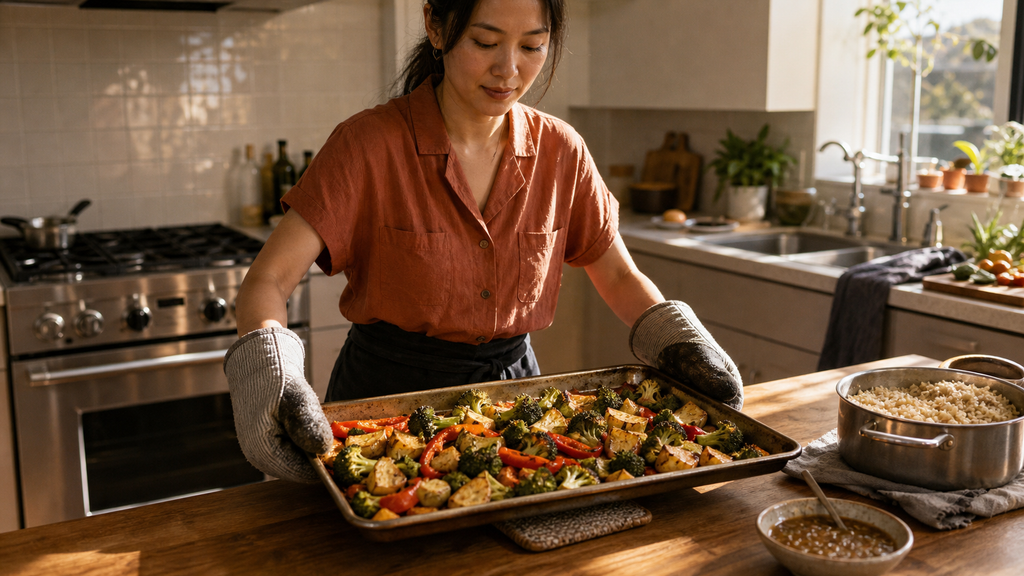
    Woman setting down roasted vegetables beside cooked brown rice and dressing for flexible meal prep.

    That is enough. Chopping every vegetable on Sunday is not mandatory, especially if texture matters to you later in the week.

    3. Use leftovers in a new format

    Put roasted vegetables into a grain bowl on Monday and a wrap on Tuesday. Add them to eggs or a tofu scramble later in the week. Turn taco-bowl ingredients into a salad or quesadilla. Repeating ingredients saves work. Repeating the exact same finished meal is optional.

    4. Plan a midweek reset

    Choose one small task for Wednesday or Thursday. Cook another grain, restock fruit, move a frozen portion to the refrigerator, or make the next two lunches. A ten-minute reset is often more useful than expecting one prep session to carry the entire week.

    5. Store prepared food safely

    Refrigerate perishable food promptly in covered containers. The USDA advises using most cooked leftovers within three to four days. Freeze portions intended for later in the week. You can also schedule a second prep session instead of keeping one Sunday batch in the refrigerator for seven days.

    Quick and easy healthy meal prep for busy days

    When your week is especially full, prep decisions rather than recipes:

    • Choose one breakfast: overnight oats, yogurt and fruit, or eggs on toast.
    • Choose one bowl: grain, beans or another protein, vegetables, and sauce.
    • Choose one tray meal: vegetables plus chicken, fish, tofu, or chickpeas.
    • Choose one backup: soup and toast, a freezer bowl, or beans with microwave rice and vegetables.

    Convenience foods can do real work here. Frozen vegetables, canned beans, and pre-washed greens are useful options. So are microwave grains, rotisserie chicken, canned fish, and prepared hummus. They shorten the route from “I should make dinner” to eating it.

    Healthy meal prep for work without sad desk lunches

    Pack lunches you would still choose at noon. Grain bowls, sturdy wraps, pasta salads, soup, and snack-style lunch boxes usually travel better than delicate dressed salads.

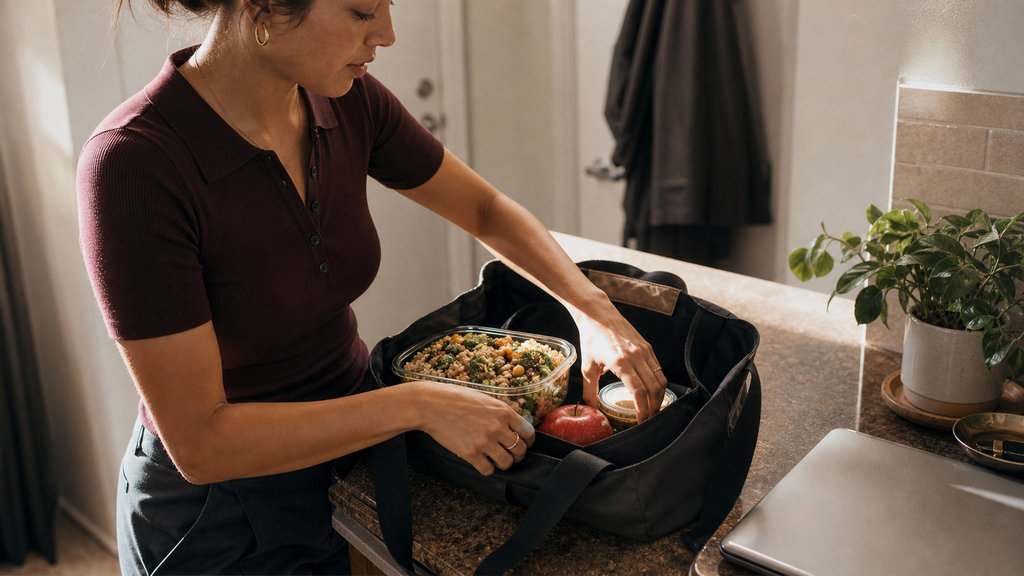
    Woman packing a grain bowl, apple, and sealed dressing into a work tote beside a laptop.

    Keep wet ingredients separate when texture matters. Add dressing after reheating or just before eating. If you have access to a refrigerator at work, put perishable food away when you arrive. For days without reliable cold storage, follow appropriate food-safety guidance and choose shelf-stable options that suit the setting.

    Keep one emergency lunch at work if you can. Try a shelf-stable grain pouch, canned beans or fish, whole-grain crackers, nuts or seeds, and fruit. It will not win a styling award. It can still rescue a meeting-heavy afternoon.

    Healthy meal prep grocery list

    Use this list as a menu of options, not an instruction to buy everything. Choose foods that match your selected meals, cross off what you already own, and adjust amounts for your household.

    Vegetables and fruit

    • berries or another fruit for oats and yogurt;
    • bananas, apples, oranges, or other easy-to-pack fruit;
    • leafy greens or cabbage;
    • broccoli, peppers, carrots, tomatoes, or green beans;
    • frozen stir-fry vegetables;
    • lemons or limes for dressing and flavor.

    Protein foods

    • eggs;
    • plain yogurt or a fortified soy alternative;
    • beans, chickpeas, or lentils;
    • chicken, fish, tofu, tempeh, shrimp, or another option you enjoy;
    • nuts, seeds, or nut or seed butter;
    • hummus.

    Grains and other carbohydrates

    • oats;
    • whole-grain bread, wraps, or crackers;
    • rice, quinoa, or another grain;
    • potatoes;
    • whole-grain or legume-based pasta.

    Fats, sauces, and flavor

    • olive oil;
    • avocado;
    • salsa, pesto, tahini, or a favorite dressing;
    • herbs and spices you already know how to use;
    • cheese, if you want it.

    Backup foods

    • canned soup;
    • frozen vegetables and fruit;
    • canned beans or fish;
    • microwave grains;
    • one frozen meal you enjoy.

    How to adjust the plan to your life

    If mornings are chaotic: repeat the same breakfast on workdays. Variety can happen at lunch or dinner.

    If you dislike leftovers: prep components instead of complete meals. Cook a grain, wash produce, and make a sauce, then assemble different meals as you go.

    If your budget is tight: compare unit prices and use beans and lentils. Buy produce in the forms that fit your budget. Plan around foods already in the kitchen. Fresh, frozen, canned, and shelf-stable foods can all have a place.

    If the week changes: move a meal, freeze a portion, or use the backup. You do not need to compensate for an unplanned restaurant meal by skipping the next one.

    If portions feel wrong: change them. A fixed online plan cannot know your body size, activity, appetite, health, or goals.

    When a general plan is not enough

    Generic meal plans cannot account for every health need. Seek personal guidance from a qualified health professional or registered dietitian if you:

    • are pregnant or breastfeeding;
    • have diabetes, kidney disease, digestive disease, or food allergies;
    • have an eating disorder or a history of disordered eating;
    • take medicines that are affected by food;
    • have significant symptoms or need therapeutic nutrition care.

    Unexpected weight change, persistent fatigue, dizziness, pain, or other concerning symptoms also deserve professional assessment rather than a stricter internet meal plan. Do not use this sample week to replace prescribed nutrition advice.

    FAQ

    Do beginners need to count calories?

    Not necessarily. Many beginners can start with regular meals and a wider range of nutrient-dense foods. It also helps to plan practical options for busy days. Calorie and nutrient needs vary. If you need a specific intake for a health condition, performance goal, or weight-management plan, seek personal guidance. A universal number cannot reflect your full needs.

    Can I meal prep for a full seven days at once?

    You can plan seven days at once, but not every cooked food should sit in the refrigerator for seven days. Refrigerate the first few days, freeze later portions, or prepare a second small batch midweek. Follow the storage directions for the specific foods you use.

    What if I miss a planned meal?

    Move it, freeze it, or replace it with your backup. The next meal does not need to “make up” for the change. A flexible plan should reduce decisions, not create another scorecard.

    Your next 10-minute step

    Choose two breakfasts, two lunches, and three dinners from this nutrition plan for beginners. Check your calendar. Circle the meals you are most likely to cook. Write down only the ingredients you do not already have.

    Then choose one backup meal. That small decision is what makes the plan useful when Thursday looks nothing like you expected.

  • Healthy Eating Tips for Beginners: 10 Simple Habits

    Healthy Eating Tips for Beginners: 10 Simple Habits

    It is 6 p.m., you are hungry, and every saved recipe seems to require twelve ingredients and a calmer week. When you are new to changing how you eat, all that advice can feel like another project you are failing to manage.

    You do not need a perfect menu. The most useful healthy eating tips are simple habits you can repeat: build more balanced meals, include vegetables and fruit, protein foods, and fiber-rich carbohydrates, choose water often, and pay attention to added sugars and sodium. Start with one action, not a total kitchen overhaul.

    These healthy diet tips are designed to work with busy days, different budgets, and the foods you already enjoy.

    10 healthy eating tips that fit real life

    1. Improve one meal first

    Choose the meal that causes the most friction. If breakfast disappears between your alarm and your first meeting, solve breakfast. If dinner turns into random snacks, start there.

    Add one useful item before you remove anything: fruit with breakfast, frozen vegetables with dinner, or a protein food at lunch. A small change you repeat has more practical value than a complicated reset that lasts three days.

    Small action: Pick one meal to improve this week and write down the one food you will add.

    2. Use a flexible meal formula

    You do not have to measure every section of your plate. Use this loose formula when you need a quick decision:

    • a vegetable or fruit;
    • a protein food;
    • a fiber-rich carbohydrate;
    • an optional source of unsaturated fat or flavor.

    That could be a bean-and-rice bowl with vegetables and avocado, or eggs on whole-grain toast with tomatoes and fruit. Portions and needs vary, so treat the formula as a prompt, not a prescription.

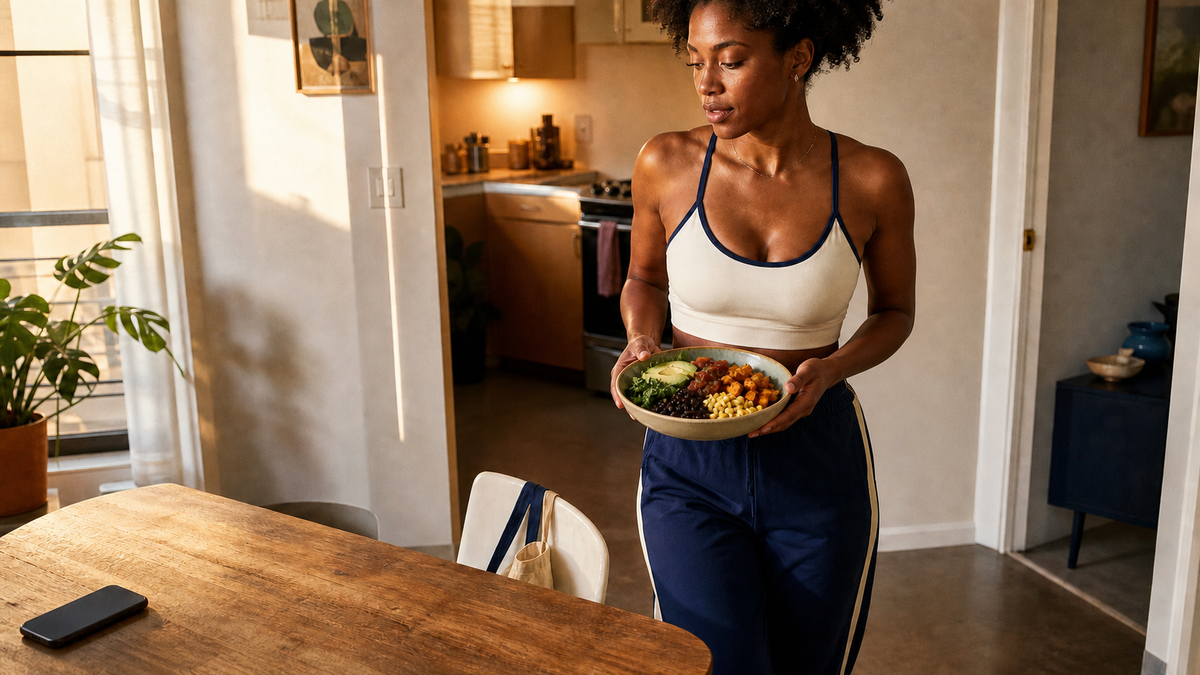
    Black woman arranging avocado on a plate with roasted vegetables, black beans, and brown rice.

    If you want more ready-to-use combinations, explore these healthy eating meal ideas for quick breakfasts, lunches, dinners, and low-effort days.

    Small action: Use the formula for your next meal and notice which component is missing.

    3. Make vegetables and fruit easy to reach

    Fresh produce is not the only valid choice. Frozen vegetables, frozen fruit, and canned options can be practical, nutritious backups. When buying canned fruit, compare options with little or no added sugar. For canned vegetables and beans, look for lower-sodium choices when available; draining and rinsing can also help.

    Keep the easiest option visible: washed fruit on the counter, pre-cut vegetables at eye level, or a bag of frozen vegetables beside your quickest dinner staples.

    Small action: Put one piece of fruit on your desk or beside the item you reach for every morning.

    4. Choose fiber-rich carbohydrates more often

    Carbohydrates do not need to disappear from a healthy diet. Whole grains, beans, lentils, vegetables, and fruit provide carbohydrates along with fiber and other nutrients.

    Try one familiar swap: oatmeal instead of a low-fiber breakfast pastry, whole-grain bread instead of white bread, or brown rice mixed half-and-half with white rice. “More often” leaves room for preference, culture, access, and the meal in front of you.

    Small action: Choose one carbohydrate you eat often and try a higher-fiber version once this week.

    5. Rotate your protein foods

    Protein can come from beans, peas, lentils, tofu, tempeh, nuts, seeds, eggs, seafood, poultry, meat, dairy foods, and suitable alternatives. You do not need every option, and you do not need to eat the same one daily.

    Keep two low-effort choices available. Canned beans, eggs, plain yogurt, tofu, canned fish, or cooked leftovers can turn toast, salad, rice, or vegetables into a more complete meal.

    Small action: Add one easy protein food to your next grocery list.

    6. Include mostly unsaturated fats

    Fat is part of a balanced eating pattern. Foods such as nuts, seeds, avocado, olives, fish, and oils including olive or canola oil provide unsaturated fats.

    Use them in ordinary ways: add nuts to oatmeal, stir seeds into yogurt, dress vegetables with olive oil, or add avocado to a sandwich. You do not need to pour “healthy” fat onto every meal; it still contributes energy, and the amount that suits you is individual.

    Small action: Choose one familiar meal and add or swap in one source of unsaturated fat this week.

    7. Keep backup meals, not just aspirational groceries

    The best healthy food tips still have to survive a late meeting. Keep meal planning light: choose two or three familiar meals for the week and one backup option for a low-energy day. Convenience is a tool, not a nutritional failure. Small action: Decide on one backup meal today and make sure its ingredients are available.

    Woman setting frozen vegetables beside beans, whole grains, eggs, fruit, and yogurt on a kitchen counter.

    8. Compare labels without turning lunch into homework

    For packaged foods, check the serving size first. Then compare similar products for the nutrients that matter to that choice, such as fiber, sodium, saturated fat, or added sugars.

    “Total sugars” includes sugars naturally present in foods such as fruit and milk as well as any added sugars. On U.S. labels, the separate “Added Sugars” line shows sugars added during processing. One label does not decide whether a food is good or bad; it gives you context for the rest of your eating pattern.

    Small action: Compare two versions of one packaged food you buy often and choose using one relevant label value.

    9. Choose water as your usual drink

    Water, sparkling water, and unsweetened drinks are simple everyday options. If plain water feels dull, add citrus, berries, cucumber, or herbs.

    You do not need to ban every sweet drink. Notice what you have most often and make the easiest useful change, such as ordering a smaller size or replacing one daily sugary drink with water.

    Small action: Replace one sweetened drink with water today.

    10. Plan for imperfect days

    Healthy eating is a pattern, not a score for one meal. Restaurant food, dessert, travel days, and convenience foods can all fit. After an unplanned meal, your next step is simply your next regular meal—not skipping food or starting a punishment workout.

    This matters because rigid rules can turn a normal schedule change into an all-or-nothing cycle. Keep the plan flexible enough to use on your busiest week.

    Small action: If one meal goes differently than planned, return to your usual eating pattern at the next meal.

    Your next step

    Choose the meal you will eat next and add one missing piece: produce, protein, a fiber-rich carbohydrate, or water. That is enough for today. You can build from there without turning dinner into a test of discipline.

  • Healthy Eating Meal Ideas for Busy Days

    Healthy Eating Meal Ideas for Busy Days

    It is late, you are hungry, and the recipe you saved for tonight somehow needs three pans and a fresh bunch of herbs you do not own. So dinner becomes a handful of snacks while you decide what to make.

    You are not bad at planning. You need a shorter list of meals that can survive a real workweek.

    These healthy eating meal ideas give you 16 flexible options for breakfast, lunch, dinner, and low-energy days. Most use familiar ingredients, and every idea has an easy shortcut or swap. Pick two that sound good—not all 16—and put those ingredients on your next grocery list.

    A simple formula for a satisfying meal

    You do not need to calculate a perfect plate. When you are staring into the fridge, look for a few useful building blocks:

    • a protein food, such as eggs, beans, lentils, tofu, fish, poultry, meat, yogurt, nuts, or seeds;
    • a vegetable or fruit;
    • a fiber-rich carbohydrate, such as oats, whole-grain bread, brown rice, potatoes, beans, or whole-grain pasta;
    • an optional source of fat or flavor, such as olive oil, avocado, nuts, seeds, cheese, herbs, or sauce.

    Not every meal has to include every item. Your needs, appetite, culture, budget, and food preferences matter. Use the formula to spot what could make a meal more complete, not to grade your plate.

    Beans, mixed vegetables, brown rice, avocado, and olive oil arranged as flexible meal building blocks

    For the everyday habits behind these meals, see our healthy eating tips for beginners and choose one small change to practice this week.

    16 healthy eating meal ideas you can actually use

    Quick breakfasts

    1. Berry oatmeal with yogurt

    Cook rolled oats with milk, a fortified plant beverage, or water. Add fresh or frozen berries and a spoonful of plain yogurt. Finish with nuts or seeds for crunch. If mornings are rushed, combine the ingredients as overnight oats the night before.

    2. Egg and vegetable toast

    Scramble eggs with spinach, tomatoes, mushrooms, or frozen peppers. Serve them on whole-grain toast with fruit on the side. For a plant-based version, use crumbled tofu and season it with pepper, garlic, and your favorite herbs.

    3. Yogurt, fruit, and oat bowl

    Layer plain yogurt or a fortified soy alternative with fruit, oats, and nuts or seeds. Frozen fruit works well if you let it thaw in the refrigerator overnight. Compare labels on flavored yogurts if you want an option with less added sugar.

    4. Peanut butter and banana toast

    Spread peanut or another nut or seed butter on whole-grain toast, then add banana slices and cinnamon. Pair it with milk, a fortified soy beverage, or plain yogurt if you want a more substantial breakfast. This one also travels well when breakfast happens at your desk.

    Woman eating peanut butter and banana toast with milk at a home office desk.

    Packable lunches

    5. Bean and grain bowl

    Start with cooked brown rice, quinoa, barley, or another grain you enjoy. Add canned beans, chopped vegetables, and salsa or a lemon-and-olive-oil dressing. Microwave grains and rinsed canned beans turn this into a five-minute assembly job.

    6. Hummus crunch wrap

    Spread hummus over a whole-grain wrap. Add cucumber, grated carrot, greens, and leftover chicken, tofu, or chickpeas. Roll it tightly and pack fruit on the side. Keep wet ingredients in the center so the wrap is less likely to go soggy.

    7. Tuna or chickpea salad on toast

    Mix canned tuna or mashed chickpeas with plain yogurt or mayonnaise, mustard, chopped celery, and black pepper. Spoon it over whole-grain toast or into a pita, then add tomatoes or leafy greens. Make enough for tomorrow’s lunch if that suits your schedule.

    8. Leftover lunch upgrade

    Use last night’s protein and grain as the base, then add a different vegetable and sauce. Roasted chicken and rice can become a bowl with frozen vegetables and tahini; baked tofu can become a wrap with slaw and salsa. Changing the texture and flavor keeps leftovers from feeling like a repeat.

    Easy dinners

    9. One-pan protein and vegetables

    Roast chicken pieces, fish, tofu, or chickpeas with a tray of vegetables. Add olive oil and seasonings, then serve with potatoes or a quick-cooking whole grain. Choose ingredients with similar cooking times, or cut slower-cooking vegetables into smaller pieces.

    10. Lentil tomato pasta

    Warm canned lentils with a tomato-based pasta sauce and stir in spinach until it wilts. Toss with whole-grain or legume-based pasta and add herbs or grated cheese if you like. Frozen spinach works too, and there is no prize for chopping it yourself.

    11. Flexible taco bowls

    Layer rice, black beans or cooked chicken, lettuce or cabbage, tomatoes, corn, and avocado. Add salsa and plain yogurt, then let everyone adjust their own bowl. Use a microwave grain pouch and frozen corn when you need dinner faster.

    12. Baked potato with a real topping

    Top a baked or microwaved potato with chili, beans, tuna, cottage cheese, or leftover meat. Add steamed broccoli, spinach, or a side salad. The topping turns a plain potato into a meal; choose the combination that fits your preferences and what is already open in the fridge.

    13. Fast vegetable stir-fry

    Cook frozen stir-fry vegetables with tofu, shrimp, chicken, or edamame. Add a simple sauce and serve over brown rice or noodles. If you compare bottled sauces, the Nutrition Facts label can help you choose between similar options for sodium and added sugars.

    14. Soup plus a useful side

    Pair lentil, bean, chicken, or vegetable soup with whole-grain toast, fruit, or a small salad. For a canned soup, add frozen vegetables or beans while it heats. A basic side can make soup feel like dinner without starting a second recipe.

    Low-effort backup meals

    15. No-cook snack plate

    Combine whole-grain crackers or bread with hummus, cheese, canned fish, or hard-boiled eggs. Add raw vegetables and fruit. It may look like a collection of ingredients, but it still counts as a meal—and it is far more useful than waiting for the energy to cook something elaborate.

    16. Freezer bowl in minutes

    Microwave frozen vegetables and a pouch of brown rice or another grain, then add canned beans, leftover protein, or edamame. Finish with pesto, salsa, tahini, or olive oil and lemon. Keep one version of this meal in the freezer and pantry for the night your original plan falls apart.

    Hand drizzling sauce over a bowl of brown rice, edamame, and mixed vegetables beside a microwave.

    How to choose meals for the week

    Planning seven different dinners is ambitious. Start with three decisions:

    1. Choose two meals from this list that share at least one ingredient.
    2. Pick one backup meal that uses mostly freezer or pantry foods.
    3. Leave room for leftovers, eating out, or a schedule change.

    For example, black beans can go into a grain bowl at lunch and taco bowls at dinner. Spinach can join eggs, pasta, or soup. This overlap shortens the grocery list without forcing you to eat the same prepared meal for five days.

    Convenience foods can help. Frozen vegetables, canned beans, pre-washed greens, microwave grains, and rotisserie chicken can reduce prep work. When choosing packaged options, check the serving size first and compare similar products for the nutrients that matter to you, such as fiber, sodium, saturated fat, or added sugars.

    FAQ

    Do frozen and canned foods count?

    Yes. Frozen vegetables and fruit can be practical options, and canned foods can make meals much faster. Look for fruit with little or no added sugar and lower-sodium vegetables or beans when available. Draining and rinsing canned beans can also remove some of the sodium from the packing liquid.

    Does every meal need to be perfectly balanced?

    No. Healthy eating is the pattern you build over time, not a pass-or-fail test at each meal. If lunch is light on vegetables, you can include some later. If dinner comes from the freezer, you have not ruined anything.

    What if one of these meals does not keep me full?

    Treat the ideas as starting points, not fixed portions. Add more food or another component based on your appetite—for example, more grain, another protein food, extra vegetables, fruit, or a source of fat. Individual energy and nutrition needs vary.

    Pick tonight’s easiest option

    Choose the idea that requires the fewest new ingredients. Write down what is missing, then decide on one backup meal for later in the week. A useful dinner plan does not have to be impressive. It only has to make your next decision easier.