

High Protein Foods: A Practical List for Busy Days
11 min readYou are standing in front of the fridge after a long day, trying to turn yogurt, half a can of beans, and yesterday’s chicken into dinner. Then your phone offers a high protein foods list full of powders, giant portions, and meals that look like a second job.
The useful answer is much simpler. Chicken, fish, eggs, Greek yogurt, cottage cheese, tofu, tempeh, edamame, lentils, beans, nuts, and seeds are all practical protein options. Choose two or three you enjoy, keep at least one quick option available, and add them to meals you already make.
This guide compares 15 familiar choices and shows how to use them without counting every gram or rebuilding your entire menu.
What counts as a protein food?
Protein is a nutrient made from amino acids. Your body uses those amino acids to build and maintain cells and to make compounds such as enzymes and hormones. Protein also provides energy, but that does not make it a special fuel that needs to take over your plate.
Many foods contain some protein. The most useful protein foods provide a meaningful amount in a realistic portion and fit into a varied meal. USDA guidance on protein foods includes seafood, meat, poultry, eggs, beans, peas, lentils, nuts, seeds, and soy products among practical choices. Dairy foods such as yogurt and cottage cheese also contribute protein and can fit into the same meal-building approach.
Different choices bring different nutrients. Beans and lentils provide fiber. Dairy foods can provide calcium. Seafood may supply omega-3 fats, while nuts and seeds add unsaturated fats. That is why rotating a few good sources of protein is more useful than searching for one perfect winner.
For the broader habits that help these foods fit into ordinary meals, see our healthy eating tips for beginners.
High protein foods at a glance
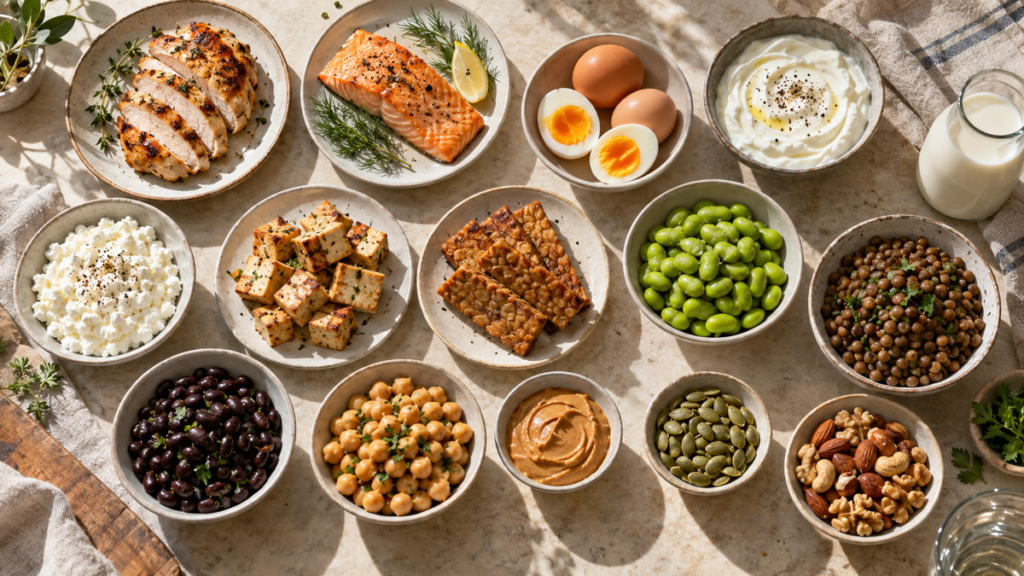
They are rounded USDA reference values; brands and current product labels may differ. The figures come from entries in the USDA National Nutrient Database protein list. They are reference portions, not required serving sizes or a prescription for one meal. Protein content can vary with the variety, brand, preparation, drained weight, and portion you actually eat. Check the package label when one is available.
| Food | Reference portion | Approximate protein | Fast way to use it |
|---|---|---|---|
| Cooked chicken breast | 3 oz (85 g) | 26 g | Slice over a grain bowl or tuck into a wrap |
| Cooked salmon | 3 oz (85 g) | 22–23 g | Pair with potatoes and frozen vegetables |
| Canned tuna, drained | 3 oz (85 g) | 20–23 g | Mix with yogurt or mayonnaise for toast |
| Plain Greek yogurt | 5 oz (140 g) | 15 g | Add fruit, oats, nuts, or seeds |
| Low-fat cottage cheese | 4 oz (113 g) | 14 g | Serve with toast, tomatoes, or fruit |
| Firm tofu | 1/2 cup | 10–22 g | Crisp in a pan or add to a stir-fry |
| Cooked tempeh | 3 oz (85 g) | 16–17 g | Add to a rice bowl, sandwich, or salad |
| Cooked edamame | 1 cup | 22 g | Stir into noodles, rice, or a snack plate |
| Cooked lentils | 1 cup | 18 g | Add to soup, tomato sauce, or a grain bowl |
| Cooked black beans | 1 cup | 15 g | Use in tacos, rice bowls, or soup |
| Cooked chickpeas | 1 cup | 14–15 g | Add to salad, curry, or a wrap |
| Egg | 1 large | 6 g | Boil ahead or scramble onto toast |
| Dairy milk | 1 cup | 8 g | Use with oats, cereal, or alongside a meal |
| Peanut butter | 2 tablespoons | 7 g | Spread on toast or stir into oatmeal |
| Pumpkin seed kernels | 1 oz (28 g) | 8–9 g | Sprinkle over yogurt, soup, or a grain bowl |
Use the table to compare realistic portions rather than to crown one food the winner. A cup of beans and 3 ounces of fish are different foods with different volumes, nutrients, costs, and uses. The best choice is the one that works in the meal you are actually making.
Choose protein rich foods by category
A long protein foods list gets easier to use when you sort it into a few groups. Pick from more than one group across the week rather than forcing the same food into every meal.
Poultry and seafood
Chicken breast, turkey, salmon, tuna, trout, shrimp, and other seafood can provide a substantial amount of protein in a relatively compact portion. They also work well as leftovers: cook extra for dinner, then use it in a wrap, salad, soup, or grain bowl the next day.
Fresh is not the only practical format. Frozen fish, canned tuna or salmon, and precooked poultry can shorten prep. For packaged or seasoned options, compare sodium and saturated fat on similar labels instead of assuming every product in the category is the same.
Eggs and dairy foods
Eggs, Greek yogurt, cottage cheese, milk, and some cheeses are convenient foods that contain protein. They are especially useful at breakfast or on evenings when cooking meat or fish feels unrealistic.
Protein content varies by yogurt style and brand, so the label gives you the clearest comparison. Cottage cheese varies by brand too. Choose plain or flavored versions according to your preferences, then compare added sugars if that matters to the rest of your meal.
Soy foods
Tofu, tempeh, and edamame are flexible, widely used protein foods. Their textures and protein numbers are not identical. Extra-firm tofu often differs from silken tofu, and flavored products may bring more sodium or added sugar.

Use tofu in a stir-fry or scramble, add tempeh to a sandwich or bowl, and keep frozen edamame for noodles or quick lunches. These foods do not need to imitate meat to earn a place on the plate.
Beans, peas, and lentils
Lentils, chickpeas, black beans, white beans, kidney beans, split peas, and similar foods provide protein and fiber together. Canned versions are ready in minutes; compare sodium across similar canned products and choose the one that fits the rest of your meal.
Their protein is less concentrated by volume than cooked poultry or fish, but that does not make them a weak choice. They can be the main protein in a meal or share the job with yogurt, eggs, tofu, fish, or meat.
Nuts, seeds, and nut or seed butters
Peanuts, almonds, pistachios, pumpkin seeds, sunflower seeds, tahini, and nut or seed butters contribute protein along with fat and other nutrients. Their usual portions provide less protein than many main-dish options, so think of them as useful additions rather than a direct swap for every food in the table.
Add seeds to yogurt, spread peanut butter on toast, or pair nuts with fruit. Small, ordinary uses count.
How to choose the best protein foods for your meal
The highest number in the table is not automatically the best answer. The healthiest protein sources depend on the whole meal, your preferences, access, culture, and the nutrients you need from the rest of your day.
Use these four questions:
- Will you actually eat it? A food that spoils untouched is not helping your week.
- What else does it bring? Beans bring fiber, dairy can bring calcium, and nuts and seeds provide unsaturated fats.
- What is already in the meal? A bean bowl may need vegetables and a grain. Eggs on toast may need fruit or vegetables. Protein is one part, not the entire plan.
- How much work does it require? Keep at least one no-cook or quick option for the day your schedule wins.
Healthy high protein foods do not have to be plain, expensive, or eaten from matching containers. Season them, mix categories, and use the cuisines and flavors you already enjoy.
Six quick ways to add protein to meals you already eat
You do not need a separate menu. Start with a familiar meal and add one useful component.
1. Upgrade breakfast without adding a new recipe
Make oatmeal with milk and add Greek yogurt after cooking. Or serve toast with eggs and fruit. If breakfast is tiny because mornings move fast, pack yogurt or a boiled egg for later.
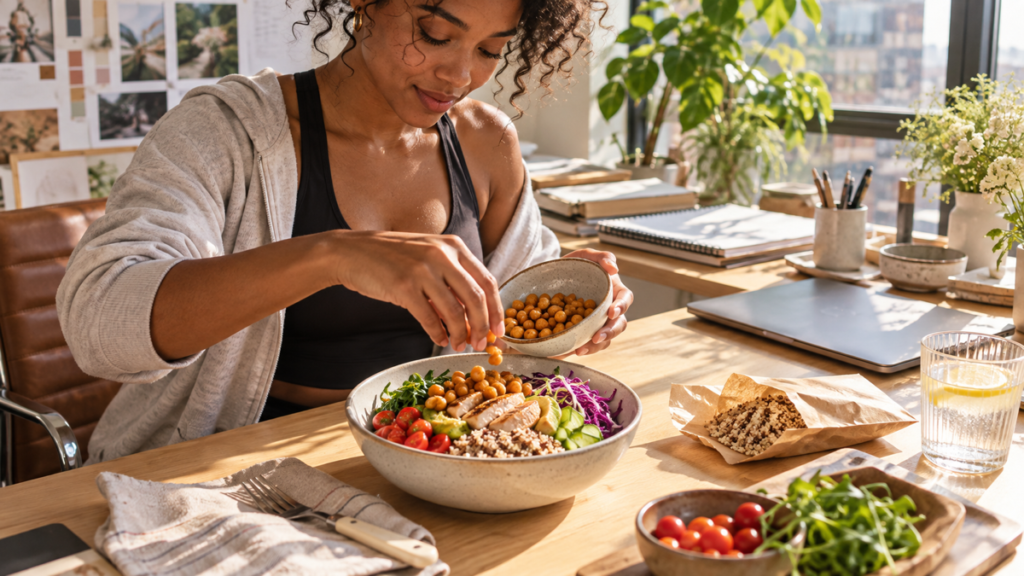
2. Give your desk lunch a reliable anchor
Add tuna, chicken, tofu, chickpeas, or edamame to a bagged salad. Pack bread, crackers, rice, or another carbohydrate alongside it so lunch feels like lunch, not a pile of leaves.
3. Make a five-minute bowl
Combine a microwave grain pouch, canned beans or precooked chicken, and frozen vegetables. Add salsa, pesto, tahini, or another sauce you like. Convenience is doing exactly what it is supposed to do.
4. Turn soup into a fuller meal
Stir lentils, beans, shredded chicken, or tofu into soup. Add bread or a grain and any vegetables that fit. You do not have to cook the soup from scratch.
5. Build a snack plate when dinner is late
Use cottage cheese, eggs, edamame, or hummus with fruit, vegetables, and bread or crackers. A snack-style dinner can still be a real meal.
6. Keep one freezer backup
Freeze cooked chicken, fish, tofu, or lentils in meal-size portions, or keep frozen edamame ready to heat. One backup removes a decision from the busiest part of your day.
For more combinations built around the same flexible idea, browse our easy healthy meals.
How to compare protein on a food label
Claims on the front of a package can make almost any snack look essential. Turn it around and compare the actual serving.
On U.S. packages, the Nutrition Facts label lists grams of protein per serving. The FDA explains how Daily Value and serving information work; the protein Daily Value is 50 grams for a 2,000-calorie reference diet. That number helps explain labels. It is not an individual target for every adult.
Use this quick check:
- Match the serving sizes. One package may list half a container while another lists the whole pot.
- Compare protein grams. Look at the amount you are likely to eat, not only the headline claim.
- Check the rest of the label. Sodium, saturated fat, added sugars, fiber, and other nutrients may help you choose between similar products.
- Choose for the meal. A product with fewer protein grams can still be the better fit if you will pair it with another protein food or simply prefer it.
Labels outside the United States may use different reference values and formats. The basic comparison still works: match the portion, then compare like with like.
A simple three-choice shopping routine
Instead of buying every item on a high protein foods list, choose three roles:

- One quick option: eggs, Greek yogurt, cottage cheese, canned fish, tofu, or canned beans.
- One main-meal option: chicken, fish, tempeh, lentils, or another food you enjoy cooking.
- One backup option: frozen edamame, canned beans, shelf-stable tuna, nuts, seeds, or nut butter.
Then decide where each one goes. “Yogurt” is easy to forget. “Yogurt with Tuesday breakfast” has a job.
If you prefer to map several breakfasts, lunches, and dinners at once, use our flexible nutrition plan for beginners and repeat ingredients on purpose.
Common mistakes that make protein harder than it needs to be
Treating more grams as automatically healthier
Protein is only one part of a food. The best protein foods for your week also need to make sense alongside vegetables or fruit, carbohydrates, fats, flavor, and the rest of your eating pattern.
Expecting one food to do everything
Chicken does not provide fiber. Beans are not a major source of every nutrient found in fish or dairy. Variety solves more problems than trying to crown one food the winner.
Buying “high protein” snacks without checking the serving
A large package may show an impressive number that applies to two servings. Another product may get most of its appeal from marketing. Check the grams, serving size, and full label before paying extra.
Turning every meal into a calculation
Numbers can help you compare unfamiliar foods, but you do not need to audit every plate. Keep several good protein foods available and include one when it makes the meal work better.
Forgetting the foods you already eat
You may not need a new product. Milk in oats, lentils in soup, eggs on toast, tofu in noodles, or beans in rice can make your existing routine more useful with very little extra work.
FAQ
What are the best high protein foods?
Chicken, fish, Greek yogurt, cottage cheese, tofu, tempeh, edamame, lentils, and beans are all strong options. The best high protein foods for you are the ones that fit your meals, preferences, access, and schedule while adding useful nutrients beyond protein.
What foods are highest in protein?
Cooked poultry, fish, and some soy and dairy foods tend to provide more protein in a compact portion. Beans and lentils provide less per equal volume than many animal foods, but they also bring fiber and work well as a meal base. Compare realistic portions rather than protein per 100 grams if that is not how you eat the food.
Are eggs high in protein?
One large egg provides about 6 grams. That is less than a typical portion of chicken or fish, but eggs are quick, flexible, and easy to combine with other foods. Two eggs with toast and vegetables or fruit can be a practical meal.
How much protein do adults need?
Protein needs vary with body size, age, pregnancy, activity, overall energy intake, and other factors. The 50-gram Daily Value on U.S. labels is a general reference for a 2,000-calorie diet, not a personal prescription. Use it to understand packaging rather than treating it as one rule for everyone.
Start with one meal, not the whole list
Choose one meal that regularly leaves you stuck. Add one protein food you already like, then decide on the easiest format: canned, frozen, precooked, or something you can prepare once and use twice.
That is enough for a useful start. A short list you repeat will help you more than a perfect list you never use.