
High-Fiber Foods: A Practical List for Busy Days
11 min readHigh-fiber foods sound simple until you open three grocery lists and breakfast suddenly seems to require bran cereal, chia seeds, berries, and a spreadsheet. It does not.
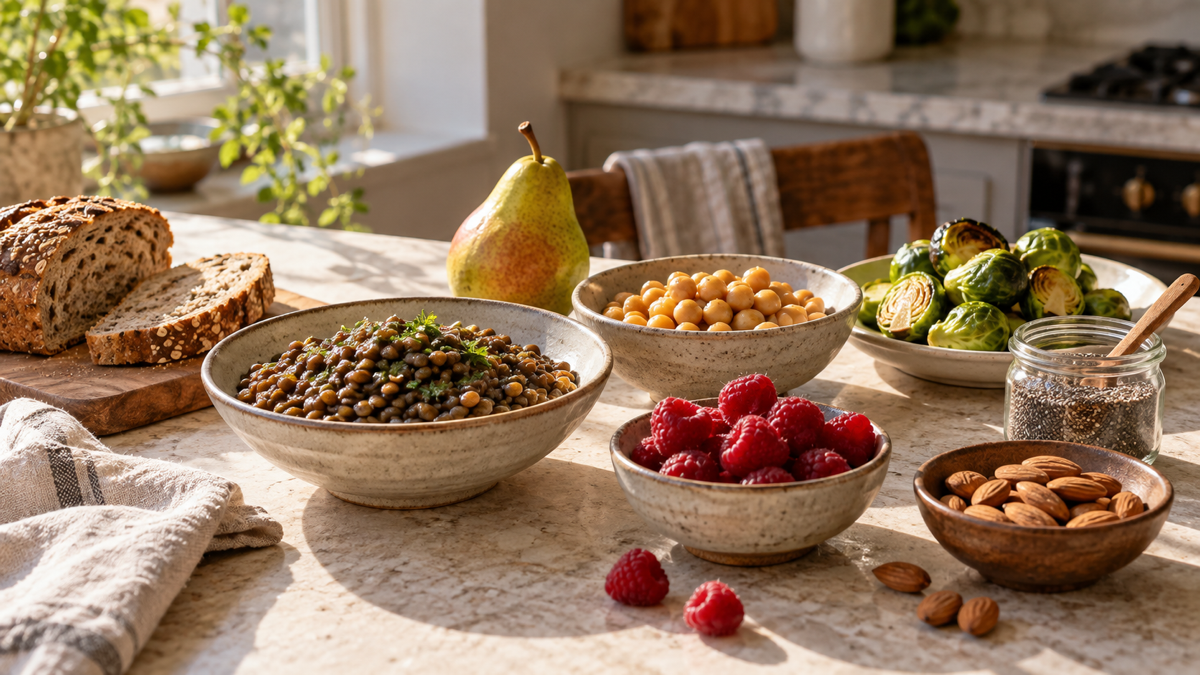
The most useful options are ordinary ingredients you can add to meals you already make: beans and lentils, peas and other vegetables, berries and pears, whole grains, nuts, and seeds. Start with one addition, such as half a cup of lentils in soup or berries on breakfast. Increase the amount gradually and drink fluids regularly as you go.
That is the short answer. You do not need a perfect menu or a kitchen full of specialty products. You need a few reliable options that fit your budget, appetite, culture, and week.
What is dietary fiber?
Dietary fiber is a type of carbohydrate that is not fully broken down in the small intestine. Different fibers behave differently: some dissolve in water or are fermented by gut bacteria, while others add bulk and help food and waste move through the digestive system.
That is one reason a varied mix of plant foods is more useful than chasing one supposedly perfect ingredient. Beans, vegetables, fruit, whole grains, nuts, and seeds bring different types of fiber along with other nutrients.
In the United States, the Daily Value for fiber on food labels is 28 grams for a 2,000-calorie diet. It is a reference for comparing products, not a personalized prescription. Needs can differ with age, energy intake, and other factors, and nutrition labels outside the United States may use different reference values.
If you want the broader meal habits around this list, start with our healthy eating tips for beginners. You can improve one meal without rebuilding everything at once.
High-fiber foods at a glance
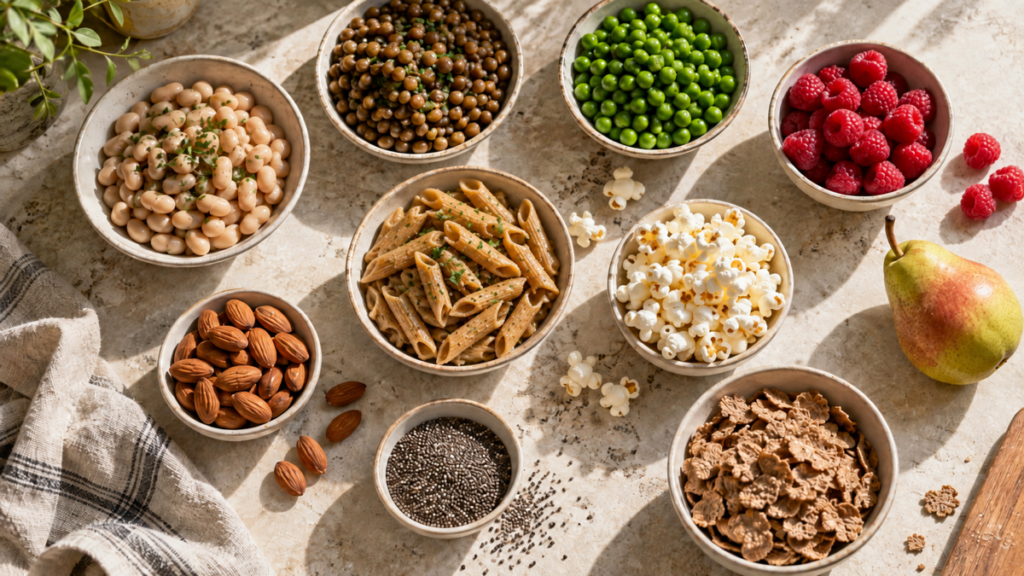
The amounts below are approximate. They come from the USDA reference list of food sources of dietary fiber and use standard portions, not required serving sizes. A different variety, brand, recipe, or cooked weight can change the number, so use the package label when one is available.
| Food | Category | Reference portion | Approximate fiber |
|---|---|---|---|
| Unsweetened high-fiber bran cereal | Cereal | 1/2 cup | 14.0 g |
| Navy beans, cooked | Beans and lentils | 1/2 cup | 9.6 g |
| Artichoke, cooked | Vegetable | 1 cup | 9.6 g |
| Green peas, cooked | Vegetable | 1 cup | 8.8 g |
| Raspberries | Fruit | 1 cup | 8.0 g |
| Lentils, cooked | Beans and lentils | 1/2 cup | 7.8 g |
| Black beans, cooked | Beans and lentils | 1/2 cup | 7.5 g |
| Brussels sprouts, cooked | Vegetable | 1 cup | 6.4 g |
| Chickpeas, cooked | Beans and lentils | 1/2 cup | 6.3 g |
| Sweet potato, cooked | Vegetable | 1 cup | 6.3 g |
| Popcorn | Whole grain | 3 cups | 5.8 g |
| Pear | Fruit | 1 medium | 5.6 g |
| Chia seeds | Nut or seed | 1 tablespoon | 4.1 g |
| Bulgur, cooked | Whole grain | 1/2 cup | 4.1 g |
| Almonds | Nut or seed | 1 ounce | 3.5 g |
The numbers help you compare options, but they are not a scorecard. A food with 3 grams of fiber still contributes. Several modest sources across breakfast, lunch, and dinner can be easier to tolerate and repeat than one giant serving.
Choose fiber-rich foods by category
You will get a more useful shopping list if you think in categories rather than trying to memorize rankings.
Beans, peas, and lentils
Beans and lentils do two jobs at once: they provide fiber and protein. Canned versions are fast; dried versions can be inexpensive if you have time to cook them. If sodium matters to your comparison, check the Nutrition Facts label across brands.
Easy options include:
- black, navy, kidney, pinto, and white beans;
- chickpeas;
- lentils and split peas;
- edamame;
- green peas.
Add a smaller amount to a food you already like. Stir lentils into tomato sauce, add chickpeas to a chopped salad, mix black beans into rice, or blend white beans into soup. There is no prize for jumping from no beans to a full bowl overnight.
High-fiber vegetables
All vegetables can contribute to a varied eating pattern, but their fiber content is not identical. Artichokes, green peas, Brussels sprouts, sweet potatoes, winter squash, parsnips, and jicama are practical higher-fiber choices.
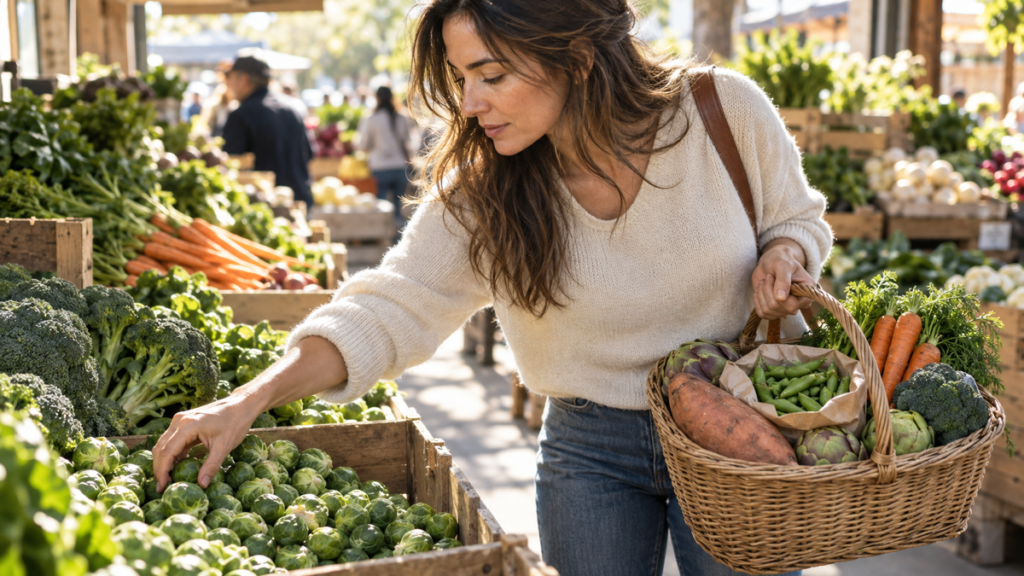
You do not need to limit your cart to the vegetables with the biggest fiber numbers. Broccoli, carrots, leafy greens, cabbage, peppers, and frozen mixed vegetables can all help you build fiber across the day, even when an individual serving is not especially high.
Fresh is not the only useful format. Frozen vegetables are quick and reduce prep. Canned pumpkin, peas, or other vegetables can work too; compare sodium and added ingredients when that matters to you.
Fruit
Raspberries, blackberries, pears, guava, oranges, apples with the skin, kiwifruit, and dried figs are useful choices. Whole fruit usually keeps more fiber than juice because the edible plant structure remains.
Use the format you will actually eat. Frozen berries can go straight into oatmeal. A pear can live in your work bag. Dried fruit is portable, but its portion is smaller because the water has been removed. Pair it with nuts or yogurt if that makes the snack more satisfying for you.
Whole grains and cereals
Useful options include bran cereals, shredded wheat, bulgur, barley, oats, popcorn, whole-wheat pasta, whole-grain tortillas, and breads made with whole-grain ingredients.
Whole grain does not automatically mean the product is especially high in fiber. Two loaves can look equally wholesome and provide very different amounts per serving. The Nutrition Facts panel gives you the answer faster than the color of the package.
Nuts and seeds
Chia, flax, pumpkin seeds, almonds, pistachios, and other nuts and seeds can add fiber, texture, and fat to a meal. Sprinkle a tablespoon of seeds over oats or yogurt, add nuts to fruit, or blend them into a snack box.
These are additions, not mandatory wellness accessories. If they are expensive, hard to find, or not part of your usual food culture, beans, grains, vegetables, and fruit can still do the main work.
How to choose high-fiber bread and packaged foods
Start with the fiber amount for a comparable serving: the FDA considers 20% Daily Value or more per serving high. Marketing words on the front are less helpful than the label on the back.
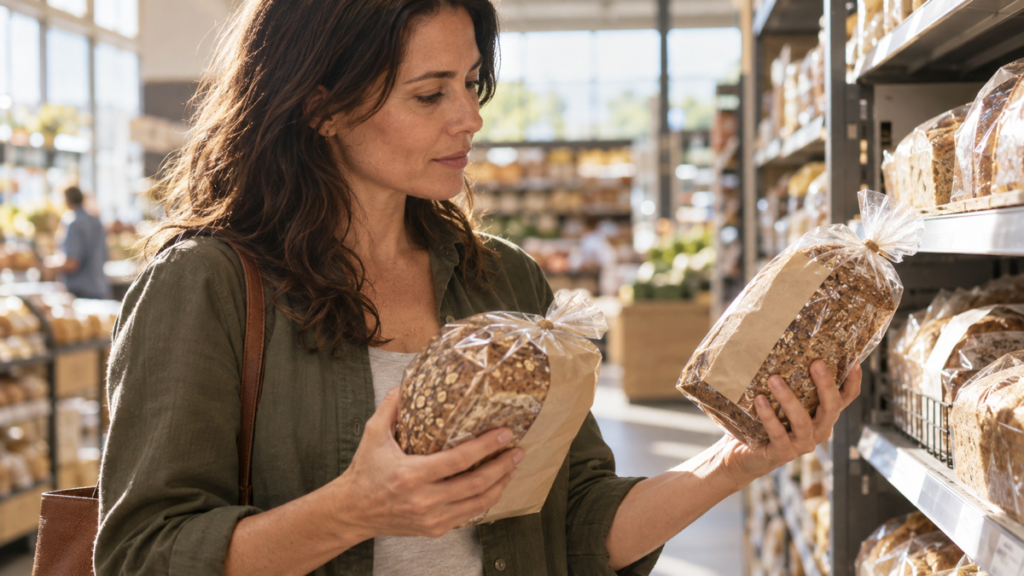
Use this quick check:
- Match the serving sizes. One brand may list one slice while another lists two.
- Compare dietary fiber. On a U.S. label, 5% Daily Value or less per serving is considered low and 20% or more is considered high.
- Read the ingredient list. Look for a whole grain, such as whole wheat, whole oats, or whole rye, near the beginning.
- Check the whole product. Fiber matters, but added sugars, sodium, taste, price, and whether you will use the loaf matter too.
Apply the same process to cereal, wraps, crackers, snack bars, and pasta. A fiber claim does not automatically make a product the best choice for your meal, and a product without a dramatic claim is not automatically low in fiber.
Five high-fiber meals that fit a workweek
You do not need a special menu to build a high-fiber diet. Start with familiar meals and give each one a fiber anchor: beans, lentils, a higher-fiber grain, fruit, vegetables, nuts, or seeds.
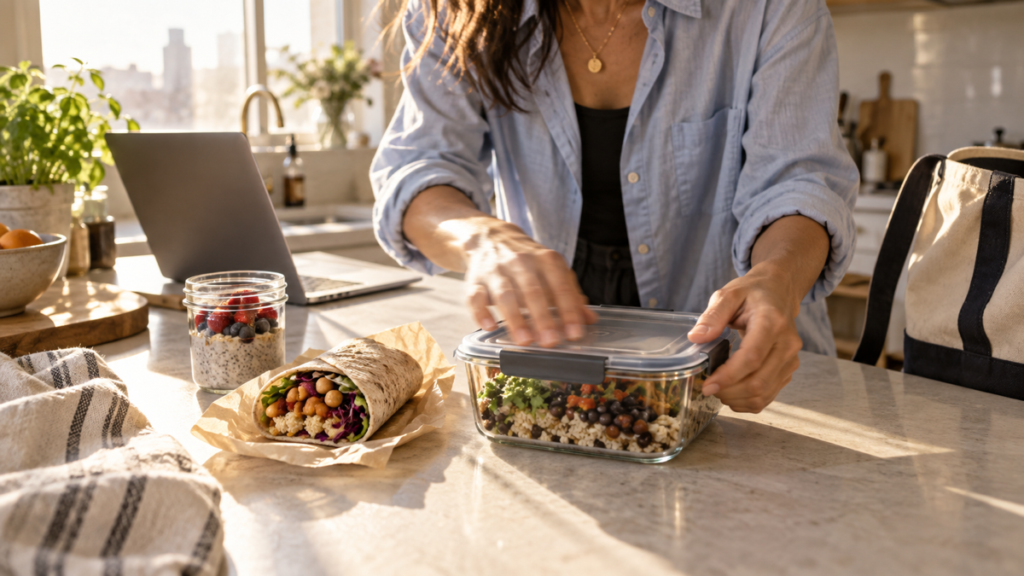
1. Berry overnight oats
Mix oats with milk or fortified soy milk, then add frozen raspberries and a spoonful of chia seeds. Leave it in the fridge overnight. If that is a big jump from your usual breakfast, start with either the berries or chia rather than both.
2. Chickpea crunch wrap
Mash chickpeas with yogurt or tahini, lemon, and seasoning. Add shredded cabbage or carrots and fold everything into a whole-grain wrap. Canned chickpeas and bagged slaw turn this into a five-minute lunch.
3. Lentil tomato pasta
Stir canned or precooked lentils into tomato sauce and serve it with whole-wheat pasta or the pasta you already buy. Add frozen spinach or broccoli while the sauce heats. The lentils add fiber without asking you to cook a separate main dish.
4. Black bean rice bowl
Combine brown rice or another grain with black beans, frozen corn, salsa, and avocado. Use microwave rice and canned beans on a deadline day. If the portion feels too large, use less rice and beans and save the rest for lunch.
5. Toast, eggs, and fruit
Choose a bread with more fiber than your usual option, then top it with eggs, hummus, or nut butter. Add a pear, apple, or berries on the side. Breakfast-for-dinner still counts as dinner.
For more combinations that use the same flexible structure, browse our easy healthy meals. You can keep the meal and change only one ingredient.
How to increase fiber more comfortably
Going from a lower-fiber routine to several large servings in one day can cause gas, bloating, or cramping. The National Institute of Diabetes and Digestive and Kidney Diseases recommends adding fiber a little at a time and drinking enough liquids to help it work effectively.

Step 1: Notice your current pattern
Look at one or two ordinary days. Do you already eat fruit at breakfast, beans at lunch, or whole grains at dinner? Start from what is there instead of treating your diet like a blank page.
Step 2: Add one repeatable source
Choose one change for several days:
- add half a cup of berries to breakfast;
- mix a small scoop of beans into lunch;
- swap one grain product for a higher-fiber version;
- add one vegetable to dinner;
- choose fruit and nuts for one snack.
If you feel comfortable, add another source. If you feel uncomfortably bloated, reduce the portion or slow the pace rather than forcing the plan.
Step 3: Spread it through the day
A little fiber at several meals is often easier than trying to catch up at dinner. It also gives you more chances to eat a varied mix of foods.
Step 4: Keep fluids in the picture
Fiber and fluid work together in the digestive tract. Drink water and other fluids regularly, and pay extra attention when you increase fiber. There is no single fluid number that fits every person, climate, activity level, or day.
Step 5: Repeat before you expand
The goal is not the most ambitious grocery cart. It is a few changes that still work during meetings, travel, low-energy evenings, and the week before your period when appetite or digestion may feel different.
If you want to organize those changes across breakfast, lunch, and dinner, use our flexible nutrition plan for beginners and plug in the foods you already enjoy.
Common mistakes when adding more fiber
Changing every meal at once
Bran cereal, beans, raw vegetables, chia, and a fiber bar on the same day is a rough experiment. Add one change, see how it feels, then build.
Treating vegetables as the only source
Vegetables matter, but beans, lentils, fruit, whole grains, nuts, and seeds can make the goal far more practical. A lunch salad does not have to carry the entire day.
Assuming fiber guarantees fullness or weight loss
Some higher-fiber meals may feel more satisfying, but the effect varies by fiber type, food, meal, and person. A systematic review of fiber, satiety, and food intake found inconsistent effects across fiber types and studies. Fiber does not automatically reduce appetite or cause weight loss. Build meals around nourishment and practicality, not a promise that one nutrient will control hunger.
Buying powders before fixing meals
Fortified foods and supplements can provide fiber, but they do not replace the variety of nutrients and textures found across whole plant foods. Start with meals unless you already have a specific reason to use a supplement.
Ignoring the label serving size
A cereal may look impressive until you notice that its fiber number applies to a larger portion than you eat. Compare like with like.
FAQ
How much fiber should adults eat each day?
On U.S. Nutrition Facts labels, 28 grams is the Daily Value based on a 2,000-calorie diet. It is a general reference, not a target tailored to every adult. Age, energy needs, and national guidance can change the number. If your current intake is much lower, work upward gradually rather than trying to hit a number tomorrow.
What foods are highest in fiber?
Among familiar foods, beans, lentils, bran cereals, artichokes, green peas, berries, some whole grains, nuts, and seeds can provide useful amounts. The best option is not simply the highest number. It is a food you enjoy, tolerate, can afford, and can use regularly.
Are fresh vegetables higher in fiber than frozen vegetables?
Not automatically. Fresh and frozen vegetables can both contribute fiber. Preparation, variety, portion size, and whether edible skins are removed can affect the final amount. Choose the format that makes it easier to eat the vegetable before it spoils.
Does cooking remove fiber?
Cooking changes a food’s texture and water content, but it does not usually erase its fiber. Peeling, juicing, straining, or refining can remove more of the fiber-rich parts. Compare foods in the form you normally eat them rather than comparing raw and cooked weights directly.
Is bread enough to make a meal high in fiber?
Bread can contribute, especially when you choose a loaf with more fiber per comparable serving. It works better as one part of the meal. Add beans, hummus, vegetables, fruit, nuts, or seeds rather than expecting two slices to do everything.
Start with the meal you already eat
Pick one familiar meal and add one fiber source. Put berries on breakfast, beans in lunch, peas beside dinner, or choose a higher-fiber bread the next time you shop. Keep the change for a few days, drink fluids regularly, and notice how it fits.
That is enough for a real start. Your meals do not need to become perfect before they become more useful.