Category: FACIAL MASSAGE

  • Gua Sha for Face: A Gentle 5-Minute Beginner Guide

    Gua Sha for Face: A Gentle 5-Minute Beginner Guide

    Gua sha for face massage can look more complicated than it is. You have a smooth little stone in one hand and three videos open in the other: one says to press firmly, another says the tool should barely touch you, and a third has turned the routine into a 25-minute choreography lesson.

    You do not need to master all of that to try gua sha for your face. Start with a clean, undamaged tool, enough moisturizer or facial oil for easy glide, very light pressure, and slow strokes from the center of your face outward. A full routine can fit into five minutes, but your first session can be shorter while you learn the angle and pressure.

    The tool should never scrape dry skin, leave bruises, or make you grit your teeth. Facial gua sha is a gentle form of tool-assisted massage. It may feel relaxing and can create temporary cosmetic changes, but it cannot permanently sculpt your face.

    What is a gua sha facial massage?

    Gua sha is a practice rooted in traditional Chinese medicine. It uses a smooth-edged tool to press and stroke the skin. Traditional body gua sha can use more pressure and may leave temporary red or purple marks. That is not the goal on your face.

    A cosmetic gua sha facial massage uses a much lighter touch. You hold the broad surface of the tool close to the skin and glide it in one direction. Stone, steel, and resin tools can all work for massage; prioritize a smooth surface, an intact edge, and a comfortable grip.

    The practical difference between using a tool and using your fingers is feedback. A tool can make it easier to notice your angle and pressure, but it can also tempt you to press harder. If you prefer the feel of your hands, these beginner facial massage techniques work without a tool.

    What you need before you start

    A beginner gua sha setup can stay simple:
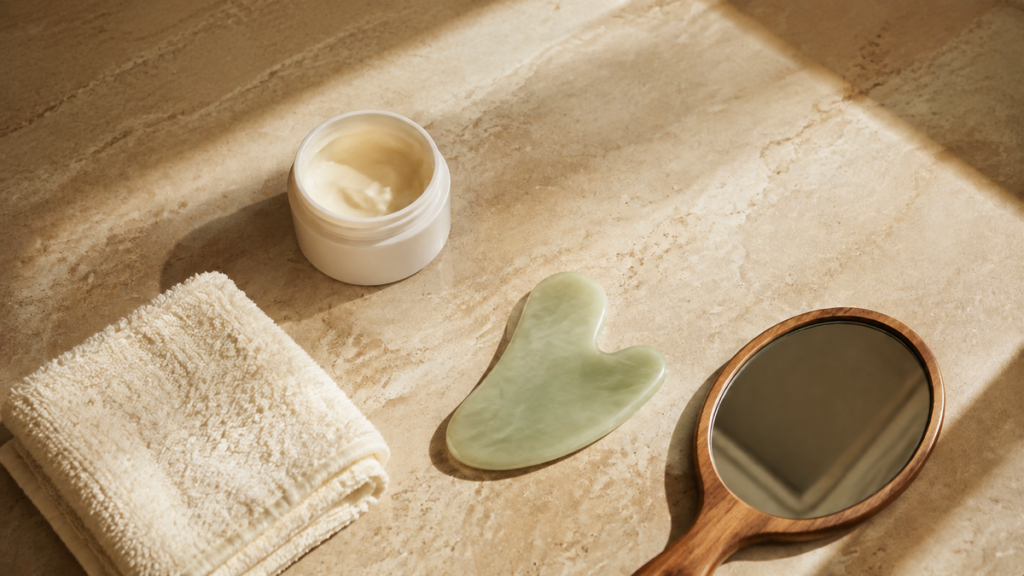
    Intact rounded gua sha tool, open moisturizer, clean washcloth, and hand mirror arranged on a vertical sunlit vanity.
    • A smooth, intact tool. Choose one that feels secure in your hand and has a long, rounded edge. Jade and rose quartz are popular, but the material matters less than a comfortable shape and an unchipped surface.
    • A familiar product for slip. Use a moisturizer, serum, balm, or facial oil that your skin already tolerates. You need enough for the tool to glide without skipping, not a thick layer that runs into your eyes.
    • Clean hands and a clean face. Remove makeup and anything gritty that could increase friction.
    • A mirror and a few unhurried minutes. Good light helps you see whether your skin is being pulled or becoming irritated.

    Wash the tool before its first use and after every session. Follow its care instructions; for many simple tools, mild soap and water followed by thorough drying are enough. Do not share it unless it can be cleaned appropriately between users. Replace a tool with a chipped, cracked, or rough edge.

    How to hold a gua sha tool

    Place the broad side almost flat against your face rather than pointing the thin edge straight into your skin. A low angle spreads the pressure across more surface area and helps the tool glide.
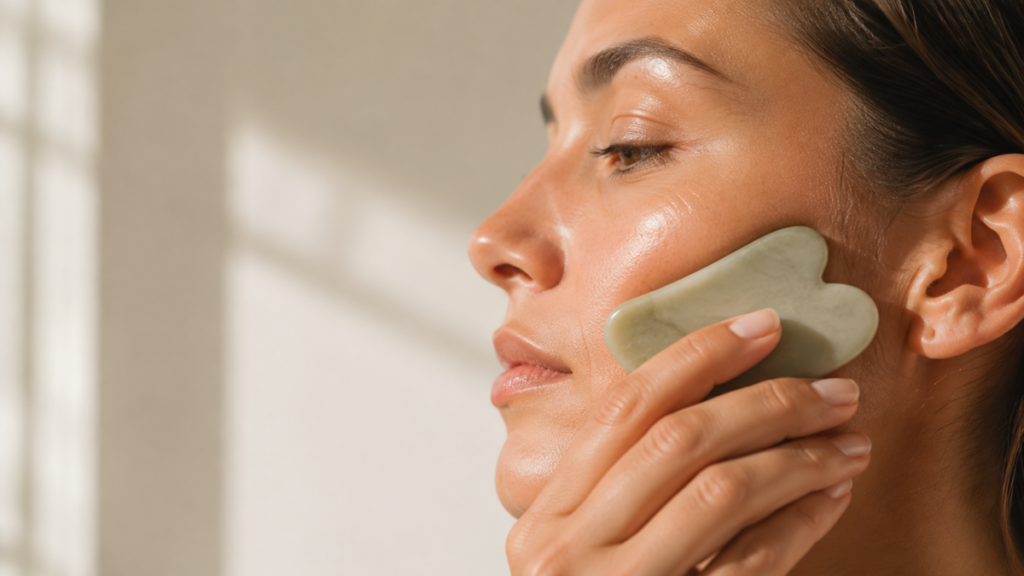
    Broad side of a gua sha tool held at a low angle with light pressure on a moisturized cheek in a vertical close-up.

    Hold the skin lightly with your free hand if that reduces tugging. Then move the tool slowly in one direction. Lift it off your face before returning to the starting point instead of scrubbing back and forth.

    Pressure should feel light and comfortable, especially around the eyes. Your skin may feel slightly warm or look a little pink for a short time. Stop if you notice pain, intense redness, broken capillaries, or purple spots. More pressure does not create a better massage.

    How to use gua sha for your face in five minutes

    This routine keeps each movement easy to repeat. Use the long smooth edge of your tool unless another curve fits the area more comfortably. Your route is simple: prep the skin, move down the sides of the neck, then work outward along the jaw, cheeks, eye area, and forehead. Three light passes per area are enough for a first full routine.
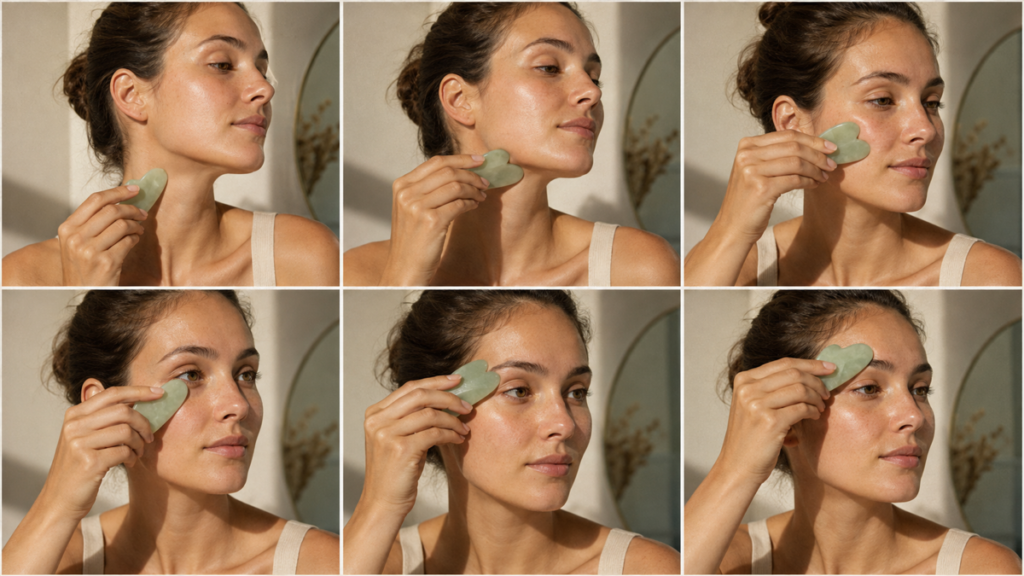
    Six vertical gua sha panels showing gentle positions for the neck, jaw, cheek, under-eye area, brow, and forehead.

    1. Create enough glide

    Apply your familiar moisturizer or facial oil across your face and along the sides of your neck. Test one short stroke on your cheek.

    If the tool catches, skips, or folds the skin, add a little more product or stop. Drag is not part of the technique.

    2. Start at the sides of your neck

    Place the tool below one ear and make a gentle downward stroke along the side of the neck toward the collarbone. Repeat on the other side.

    Stay on the soft sides of the neck. Avoid pressing into the front of the throat, enlarged or tender areas, and any unexplained lump. This step should feel like a light glide, not deep tissue work.

    3. Glide along the jaw

    Set the tool at the center of your chin. Glide outward along the jaw toward the earlobe. Keep the tool low and the pressure comfortable, then repeat on the other side.

    If your tool has a notch, it can sit loosely around the jawline, but it should not pinch the bone.

    4. Move across the cheeks

    Start beside the nose, away from the nostril. Sweep the tool across the cheek toward the ear. Work one side at a time and support the skin near your nose if needed.

    This is where facial massage with gua sha often becomes too enthusiastic. Keep the tool gliding over the skin rather than trying to push the cheek into a new position. One smooth pass beats five forceful ones.

    5. Use barely-there pressure around the eyes

    Place the tool on the orbital bone below the inner eye area, not close to the eyeball. Glide outward toward the temple with your lightest touch. Repeat above the eye by moving from the inner brow toward the temple.

    Skip the eye area if the product might migrate into your eyes, your lids are irritated, or you cannot keep the pressure feather-light. Never press on the eyeball.

    6. Finish across the forehead

    Start between the brows and glide outward toward one temple. Move a little higher and repeat until you reach the upper forehead, then switch sides.

    When you finish, your face should feel comfortable. Wash the tool, dry it fully, and put it somewhere clean. If your skin feels sore, hot, itchy, or tight later, wait for it to settle before considering another session.

    What can facial gua sha realistically do?

    The internet gives a small massage tool a very large résumé. The more useful approach is to separate what may happen from what has not been shown.

    Common claimA realistic interpretation
    “It boosts circulation”Mechanical massage can temporarily change blood flow in the area. That does not prove better long-term skin health.
    “It depuffs your face”Gentle massage may make familiar mild puffiness look less noticeable for a while, but direct research on facial gua sha and puffiness is limited.
    “It sculpts the jawline”Temporary fluid shifts, product sheen, posture, and lighting can change how contours look. Gua sha does not remove facial fat or reshape bone.
    “It lifts the face”Current research does not establish that gua sha creates a permanent lift.
    “It detoxes the skin”Your lymphatic system already helps manage fluid and waste. Cosmetic gua sha has not been shown to remove toxins or boost immunity in healthy people.
    “It relaxes facial tension”Slow, comfortable massage may feel relaxing, but it is not the same as relieving a painful jaw or headache.

    A 2025 systematic review found 12 studies of facial exercise, myofunctional therapy, and manual massage involving 321 women. The studies used different methods, small samples, and limited long-term follow-up. Taken together, the review could not establish that these methods reliably rejuvenate the face.

    So, facial gua sha can be a pleasant ritual with possible temporary effects. It is not an evidence-based facelift. For a closer look at what research does and does not support, read our guide to facial massage benefits.

    How often should a beginner use gua sha?

    There is no proven universal schedule for a face massage with gua sha, and a longer routine is not automatically better.

    Start with two or three minutes once or twice in your first week. If your skin stays comfortable during the session and over the next day, you can keep that schedule or add time gradually. Sensitive or reactive skin may prefer less frequent use. A routine that leaves tenderness or lingering redness is too much, even if a video calls it “normal.”

    Consistency is optional, not a test of discipline. If you miss three nights because work ran late, you do not need a catch-up session. Resume with the same light pressure when it suits you.

    Common gua sha mistakes to avoid

    • Holding the tool upright: A steep edge concentrates pressure and can scrape. Lower the tool so more of its broad surface touches your face.
    • Working on dry skin: If the tool drags, stop and restore the slip. Do not keep pulling until your skin “gets used to it.”
    • Pressing hard for a sharper jawline: Bruising is an injury response, not contour progress. Use less pressure and fewer passes.
    • Scrubbing back and forth: Smooth, one-way strokes are easier on the skin. Lift the tool before you return to the start.
    • Repeating every video in one session: More techniques mean more friction. Learn two or three areas first, notice how your skin responds, and build only if there is a reason.
    • Treating swelling as a cosmetic problem: Familiar mild morning puffiness is different from new or unexplained swelling. If puffiness is your only goal, use a focused facial massage for puffiness routine rather than pushing harder.

    When should you leave the tool in the drawer?

    Skip it today if: your skin is sunburned, cut, infected, actively irritated, or painful. Do not glide the tool over cold sores, rashes, or inflamed breakouts.

    Pause after a recent procedure or injury: if you have recently had a facial procedure, dental work, or a facial injury, follow the aftercare instructions you were given before restarting massage.

    FAQ

    Do you use gua sha before or after skin care?

    Use it after gentle cleansing and after applying a familiar moisturizer, serum, balm, or facial oil that gives enough slip. You can continue the rest of your normal routine afterward. Avoid pairing your first gua sha session with a new product, because you will not know whether any irritation came from the product or the massage.

    Can you use gua sha every day?

    Some people tolerate a short daily routine, but daily use is not required and has not been proven better. Start less often, use light pressure, and let your skin response guide the frequency. Stop if you develop lingering redness, tenderness, dryness, or breakouts.

    Does gua sha slim your face?

    Gua sha does not remove fat, change bone, or cause weight loss. A temporary reduction in mild puffiness can make contours look a little different, but that is not permanent facial slimming.

    Should you wash a gua sha tool after every use?

    Yes. The tool picks up moisturizer, oil, and residue from your skin. Clean it after each session, dry it thoroughly, and store it on a clean surface. Check it for chips or roughness before it touches your face again.
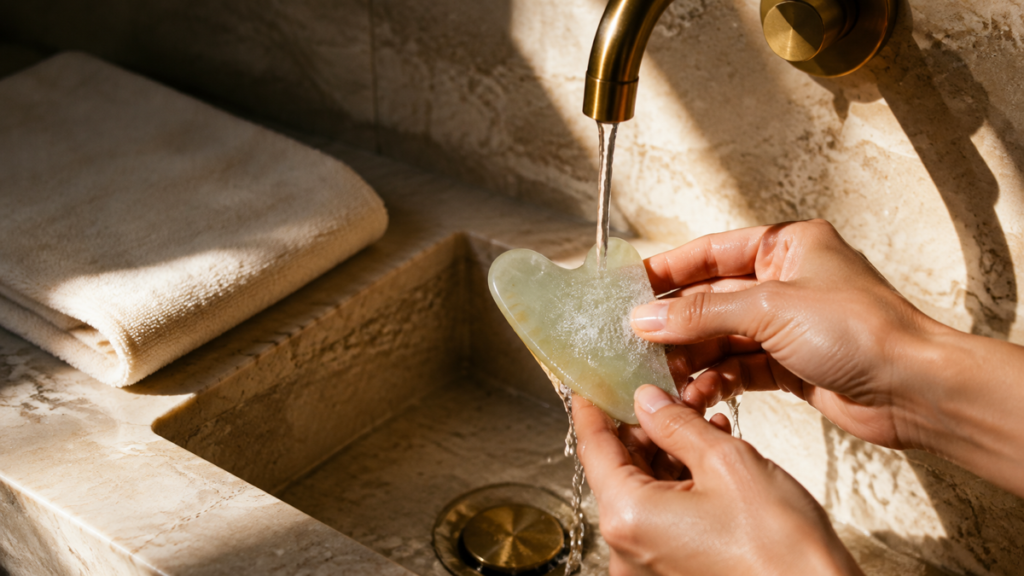
    Two hands cleaning an intact gua sha tool with mild soap and running water beside a folded towel.

    Your simplest first session

    For your first beginner gua sha session, skip the elaborate map. Clean the tool, add enough moisturizer for glide, and make three light outward passes across each cheek. That is enough to learn the angle, pressure, and pace without turning skin care into another item you can somehow fail.

    If your skin feels calm later, try the full five-minute routine next time. Use the parts that fit your routine, skip the hype, and keep your expectations temporary and realistic.
  • Facial Massage Benefits: What You Can Realistically Expect

    Facial Massage Benefits: What You Can Realistically Expect

    Your moisturizer is open, your hands are clean, and a video has promised to depuff, sculpt, lift, and detox your face before your first meeting. That is an impressive job description for a three-minute skin care step.

    The realistic facial massage benefits are smaller, but still useful. Gentle massage may feel relaxing, briefly increase blood flow in the skin, and make mild, familiar puffiness look less noticeable for a while. Early studies also report changes in skin elasticity, muscle measurements, or facial contours after regular roller or gua sha use. Those studies are small, though, and do not prove that massage creates a lasting lift or reverses skin aging.

    Think of facial massage as an optional comfort and skin care ritual, not a facial remodeling project. If it feels good and your skin stays calm, it may earn a place in your routine. If it causes soreness or irritation, you are not missing a secret anti-aging requirement by stopping.

    Facial massage benefits at a glance

    The benefits of massage on the face depend on the technique, pressure, frequency, and reason you are doing it. A gentle hands-only massage is different from a facial roller study. It is also different from professional manual lymphatic drainage or another clinical treatment.

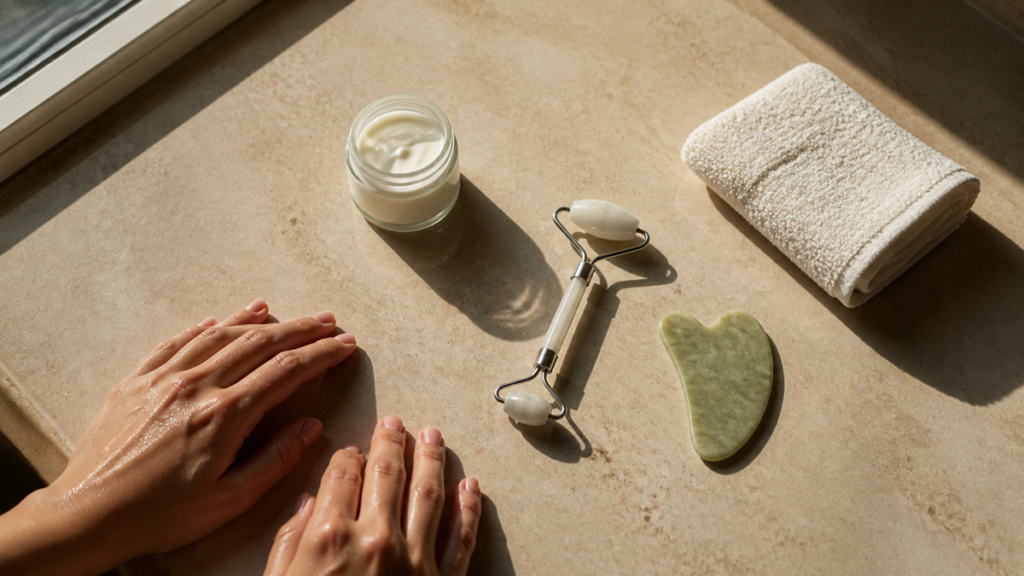
    Clean hands beside an open moisturizer jar, facial roller, gua sha tool, and folded towel on a sunlit vanity.
    Possible benefitWhat is reasonable to expectWhat the evidence does not show
    RelaxationA short routine may feel calming or comfortable.Treatment for anxiety, chronic stress, or a health condition.
    Temporary warmth or fresh-looking colorMassage can briefly raise blood flow in the area being worked.Better long-term skin health from circulation alone.
    Less visible mild puffinessLight touch may temporarily change the look of ordinary fluid-related puffiness.Treatment for new, painful, one-sided, or persistent swelling.
    A more comfortable facial routineGentle touch may help you notice areas where you habitually tense your jaw or brow.A cure for jaw disorders, headaches, or facial pain.
    Possible small changes with regular tool useEarly studies report some measured changes after weeks of roller or gua sha massage.A permanent facelift, fat loss, bone change, or predictable rejuvenation.

    What is the purpose of facial massage?

    There is no single purpose. In a simple home routine, facial massage may be used for relaxation, comfortable touch, temporary cosmetic effects, or to spread a familiar moisturizer without hurried rubbing. Some people also like the pause it adds to the end of the day. Enjoyment is a valid reason; you do not need a dramatic side-by-side photo to justify the routine.

    If you want to turn that idea into a simple hands-only routine, start with these beginner facial massage techniques before adding a tool.

    Clinical manual lymphatic drainage has a different purpose. Trained professionals use this specialized, gentle technique as part of care for lymphedema and certain other medical situations. A cosmetic face massage borrows some light movements, but it is not a substitute for a personalized drainage plan or medical assessment.

    Our guide to lymphatic facial massage explains that distinction, along with realistic results and situations when you should skip a cosmetic routine.

    If your goal is to treat swelling, pain, acne, rosacea, or another condition, the purpose changes from self-care to health care. That is the point to ask an appropriate clinician what is causing the symptom and whether massage belongs in the plan.

    Which facial massage benefits have evidence behind them?

    1. A short massage may feel relaxing

    Relaxation is one of the most plausible reasons to try facial massage. In a randomized crossover study, 22 healthy women received either a three-minute facial massage or a three-minute rest. Participants reported greater relaxation and comfort after the massage. The researchers did not find matching changes in pulse or salivary alpha-amylase, a stress-related marker, and the blood-pressure findings did not explain the reported relaxation.

    That makes the result encouraging but narrow. The study involved young women in a controlled setting and measured an immediate response. It does not show that facial massage treats anxiety or produces lasting stress reduction. It does support a simpler conclusion: three comfortable minutes of touch can feel good.

    2. Massage can temporarily increase facial skin blood flow

    One of the clearest measured effects of face massage is a short-term change in local circulation. In a 2018 study, five minutes of roller massage on one cheek increased skin blood flow in that cheek for at least 10 minutes afterward. This part of the study included 12 adults.

    A separate five-week test in 14 adults found a change in how blood vessels in the massaged cheek responded to heat. These results show that mechanical stimulation can affect local blood flow. They do not show that massage delivers more nutrients to the skin, clears acne, builds collagen, or creates a lasting glow.

    Your face may look a little warmer or fresher right after massage. Treat that as a temporary response, not proof that your skin has been transformed.

    3. Gentle touch may help mild puffiness look less noticeable

    Facial lymphatic drainage may temporarily reduce the look of puffiness for some people. The key words are may and temporarily. Direct cosmetic research in healthy faces is limited, and ordinary morning puffiness is not the same as diagnosed lymphedema.

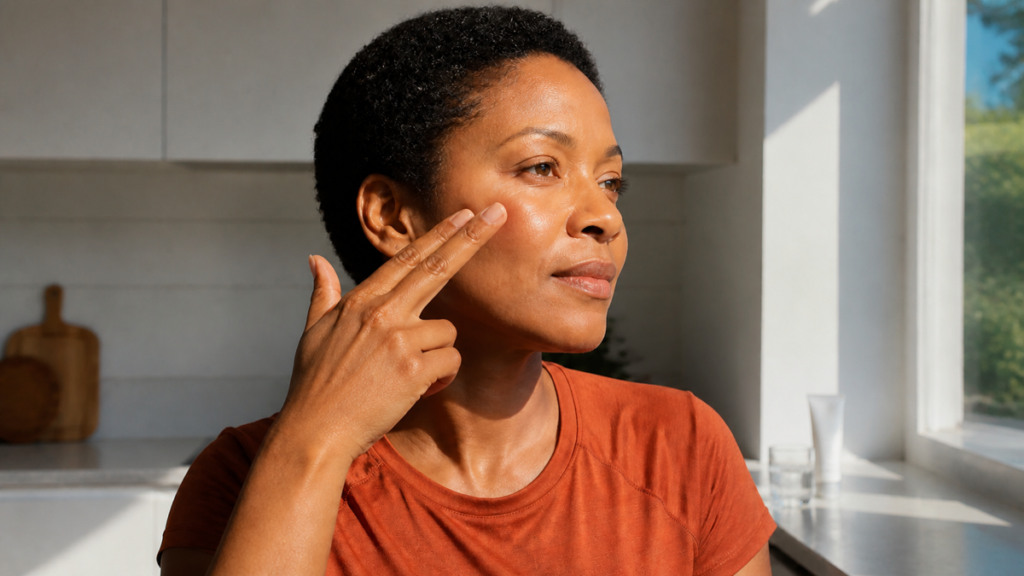
    Woman using exactly two fingertips for a light outward cheek stroke during a sunlit morning routine.

    If that is your main goal, follow a focused facial massage for puffiness routine instead of pressing harder or making a general massage longer.

    Light pressure makes more sense than force. Lymph vessels sit close to the surface, while hard rubbing can leave skin irritated. If you try a cosmetic routine for familiar morning puffiness, use slow, comfortable contact and stop if the area becomes sore, hot, or more swollen.

    Massage is not the right response to every puffy face. New, one-sided, painful, red, hot, or persistent swelling needs professional assessment. Seek emergency help if your lips, mouth, tongue, or throat suddenly swell or you have trouble breathing or swallowing.

    4. Regular roller or gua sha use may cause small measured changes

    The most interesting recent research on facial massage benefits for skin tested tools rather than a quick hands-only routine. In a 2025 trial, 34 women ages 20 to 50 were assigned to use either a facial roller or gua sha for 10 minutes, five times a week, over eight weeks. Both groups had changes in measured facial contours. The gua sha group had changes in muscle tone and stiffness, while the roller group had changes in skin elasticity.

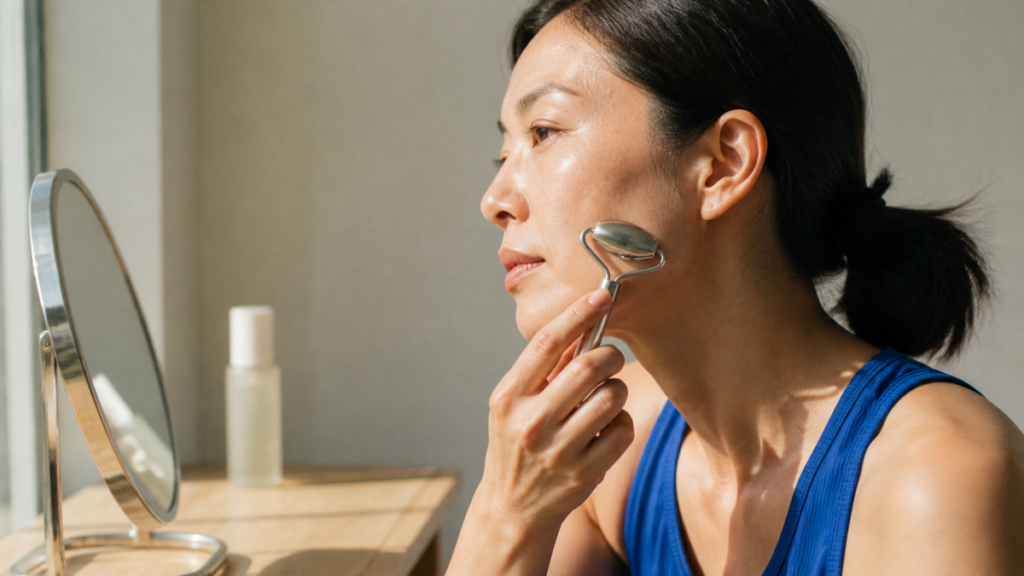
    Woman using a plain facial roller gently along her cheek in a vertical sunlit vanity scene.

    This sounds more conclusive than it is. There was no group that did no massage. We cannot tell how much of the change came from massage rather than time, repeated measurement, the skin product, or another factor. The study also cannot show whether results lasted after the routine stopped. A tool study does not automatically prove the same outcome from massage with your hands.

    A 2025 systematic review adds useful perspective. It found 12 studies with 321 women testing facial exercise, myofunctional therapy, manual massage, or related methods. Only two studies assessed manual massage. Methods and outcomes varied, samples were small, and long-term follow-up was limited. The reviewers concluded that current evidence is not strong enough to confirm facial rejuvenation with confidence.

    So the honest summary is promising but preliminary. A consistent tool routine may produce small changes for some people, but a lasting lift is not an evidence-based promise.

    5. It can make moisturizer application feel more intentional

    This is a practical benefit, not a biological breakthrough. A small amount of a moisturizer or facial oil your skin already tolerates can give your fingers enough slip for comfortable gliding. Moving slowly may also help you apply the product evenly and notice irritation before you keep piling on more steps.

    Massage has not been shown to make every active ingredient work better or push products deeper into the skin. More product is not automatically better, either. Use enough to prevent drag, then let the formula do the job it was designed to do.

    What facial massage cannot reliably do

    The internet tends to turn a pleasant routine into a list of medical and anatomical promises. Current evidence does not support saying that cosmetic facial massage can:

    • permanently lift sagging skin;
    • reshape your facial bones;
    • remove facial fat or cause weight loss;
    • erase wrinkles;
    • stimulate enough collagen to replace evidence-based skin care or treatment;
    • cure acne, rosacea, sinus problems, or jaw disorders;
    • boost immunity or “flush toxins” from a healthy body;
    • produce the same result for every face.

    Temporary contour changes can come from shifts in fluid, warmth, product sheen, lighting, or facial expression. They are not proof that tissue has moved into a new permanent position.

    If you want to support long-term skin health, keep the basics in their proper place. Gentle cleansing, a moisturizer that suits your skin, sun protection, and professional care for persistent concerns have clearer roles than an aggressive massage trend.

    Who should skip facial massage or get advice first?

    Even light massage is not right for every skin day. Skip it over cuts, cold sores, sunburn, rashes, infections, painful cysts, or skin that already burns or stings. The American Academy of Dermatology advises people with rosacea to avoid rubbing, scrubbing, and massaging affected skin because irritation can trigger a flare.

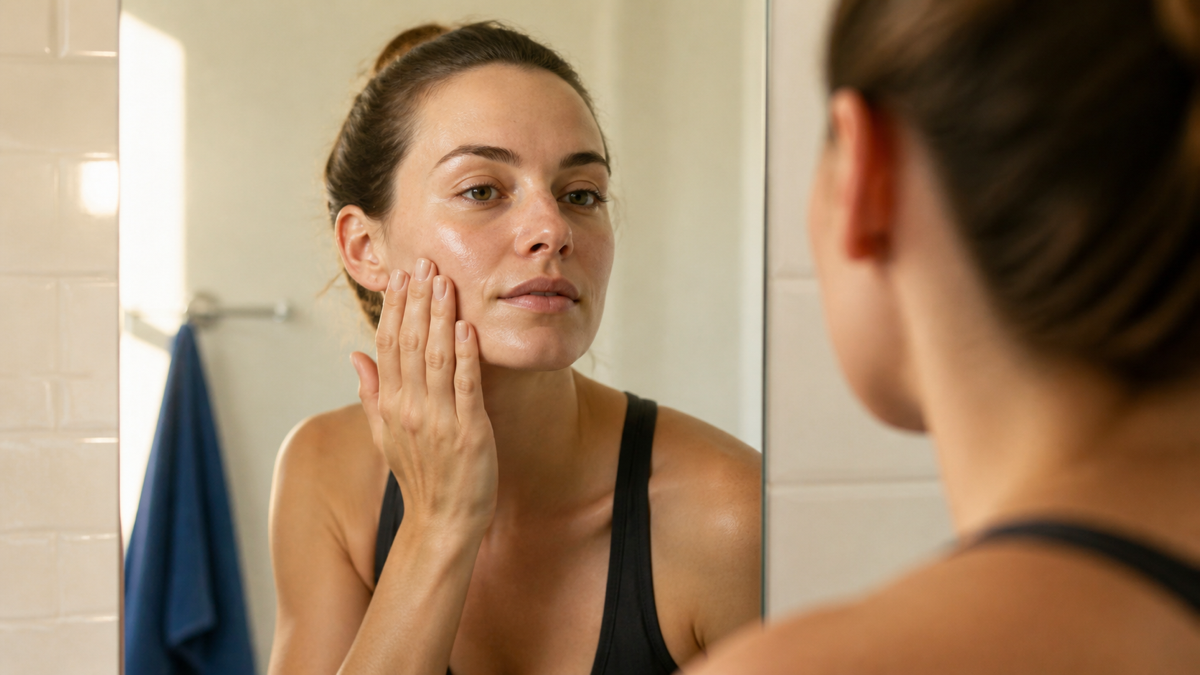
    Woman pausing at a bathroom mirror after noticing a small patch of mild cheek irritation.

    Get personalized advice before massage if you:

    • have unexplained or recurring facial swelling;
    • have diagnosed lymphedema or have had lymph nodes removed or treated with radiation;
    • recently had surgery, injections, laser treatment, a peel, dental work, or a facial injury;
    • have active cancer, an infection, a blood clot, heart disease, kidney disease, or another condition that may change whether lymphatic-style massage is appropriate;
    • have persistent facial pain, numbness, weakness, or trouble opening your mouth.

    If you are pregnant or recently gave birth, sudden swelling in your face or hands can be a warning sign of preeclampsia. Skip massage and contact your maternity care team promptly, especially if you also have a headache that will not go away, vision changes, upper abdominal pain, nausea, or trouble breathing.

    Follow the aftercare instructions from the professional who performed any procedure. Timing that is suitable after one treatment may be wrong after another.

    How to try facial massage without overdoing it

    You do not need a stone, roller, special cream, or 20-minute routine to find out whether you enjoy massage. Start with your hands and a familiar product.

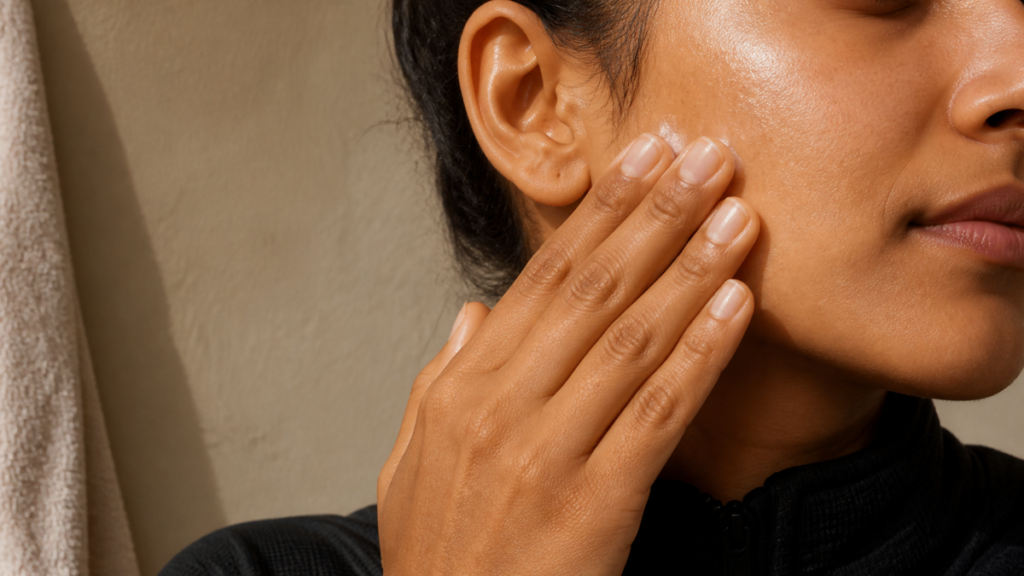
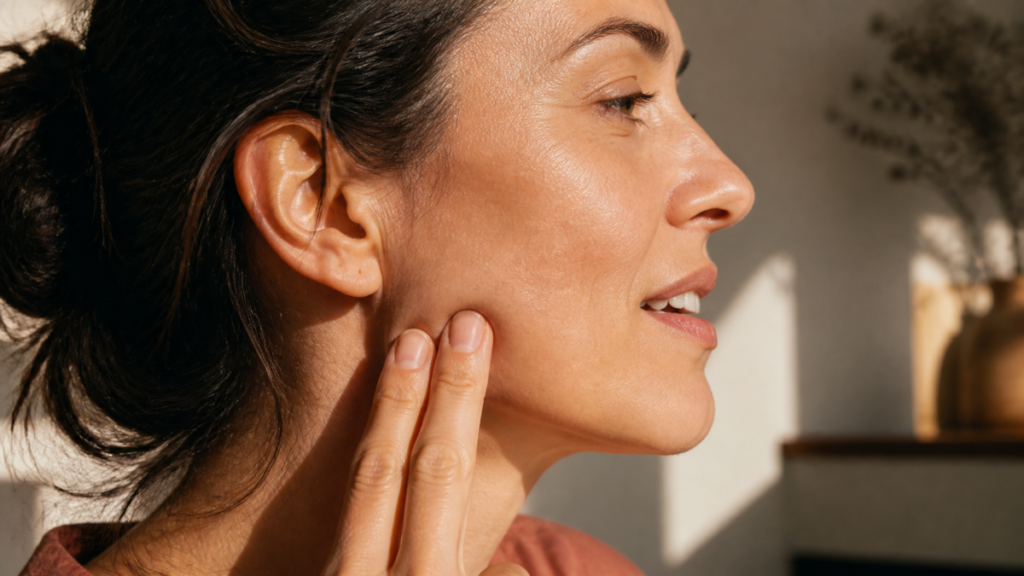
    Close vertical portrait of flat fingertips gliding across a moisturized cheek with light pressure.
    1. Wash and dry your hands. Remove rings that could scratch your skin.
    2. Cleanse gently, then apply enough moisturizer or facial oil for your fingers to glide without pulling.
    3. Use the flat pads of your fingers and light, comfortable pressure. Go even lighter around the eyes.
    4. Try two or three minutes of slow strokes across the cheeks, jaw, and forehead. Keep away from the eyeballs and front of the throat.
    5. Check your skin immediately and later that day. Shorten or skip the next session if you notice lingering redness, dryness, tenderness, or breakouts.

    There is no proven universal schedule. Some people enjoy a short daily massage; sensitive skin may prefer less. The main advantage of face massage is that it can be brief and adaptable. Use the minimum pressure and time that feel comfortable instead of treating soreness as progress.

    FAQ

    Does facial massage actually work?

    Facial massage works well for modest goals. A short session can feel relaxing and temporarily increase local skin blood flow while reducing the appearance of mild puffiness. However, evidence for lasting lifting, wrinkle reduction, or rejuvenation remains limited and inconsistent.

    Is facial massage good for acne-prone skin?

    It depends on how your skin reacts. Use clean hands and a familiar non-comedogenic product, and avoid rubbing inflamed or painful breakouts. Massage does not treat acne. If friction or a product worsens your skin, stop and return to a gentle routine recommended for you.

    How soon will you see results?

    Relaxation or warmth can happen during or soon after a session. A subtle change in mild puffiness may also be temporary. Studies that measured other changes used frequent routines for several weeks, and they did not establish lasting results after massage stopped.

    Is facial massage worth adding to your routine?

    Yes, if you enjoy the feeling, your skin tolerates it, and your goal is realistic. Skip it if the routine irritates your skin or takes time from care that matters more. The same goes if it keeps you chasing a permanent lift it cannot promise.

    Try two quiet minutes with clean hands and a moisturizer you already own. Notice comfort, not cheekbone geometry. That is the most useful purpose of facial massage for a beginner: a simple ritual you can keep, shorten, or skip without guilt.

  • Facial Massage Techniques: 5 Gentle Moves for Beginners

    Facial Massage Techniques: 5 Gentle Moves for Beginners

    You have moisturizer on your fingertips, thirty conflicting videos in your head, and one basic question: should your hands move up, out, down, or in circles? No wonder a two-minute skin care extra suddenly feels like a practical exam.

    The simple answer is that different facial massage techniques suit different goals. Gentle glides help spread product without tugging. Small circles can feel soothing over the jaw and temples. Light stretch-and-release movements are used for lymphatic-style touch. You do not need to combine every method or press hard enough to leave marks.

    For a first try, wash your hands, cleanse your face, apply a familiar moisturizer for slip, and spend three to five minutes moving slowly. Keep the touch comfortable, use less pressure around the eyes, and stop if your skin hurts, burns, or becomes more irritated.

    What can a facial massage realistically do?

    A short massage can make your skin feel warm and may be a relaxing way to apply a product you already use. Gentle touch can also help you notice when you are clenching your jaw or holding tension across your brow. Those are reasonable goals for a home routine.

    If mild morning puffiness is your main concern, use our facial massage for puffiness routine rather than making a general massage longer or firmer.

    The cosmetic evidence is much less dramatic than social media makes it sound. In a small study, five minutes of facial rolling increased blood flow in the massaged cheek for at least 10 minutes. The study included only 12 people in this short-term test, used a roller rather than hands, and did not show a permanent change in skin.

    A 2025 systematic review looked at 12 studies involving 321 women and found that research on facial exercises, massage, and related mechanical techniques was small and inconsistent. Some studies reported changes in specific areas, but the reviewers concluded that the evidence was not strong enough to confirm reliable facial rejuvenation. Long-term data were also limited.

    A separate 2025 trial found changes in contour, muscle measurements, or skin elasticity after eight weeks of gua sha or roller use. Only 33 participants completed it, and both groups received an intervention. That means the study cannot tell us how either tool compares with doing no massage at all, and it does not prove that a brief hands-only routine will produce the same results.

    So keep the promise modest. Facial massage does not remove facial fat, reshape bone, erase wrinkles, produce a permanent lift, or “flush toxins” from a healthy body. Any fresh or less puffy look may be subtle and temporary.

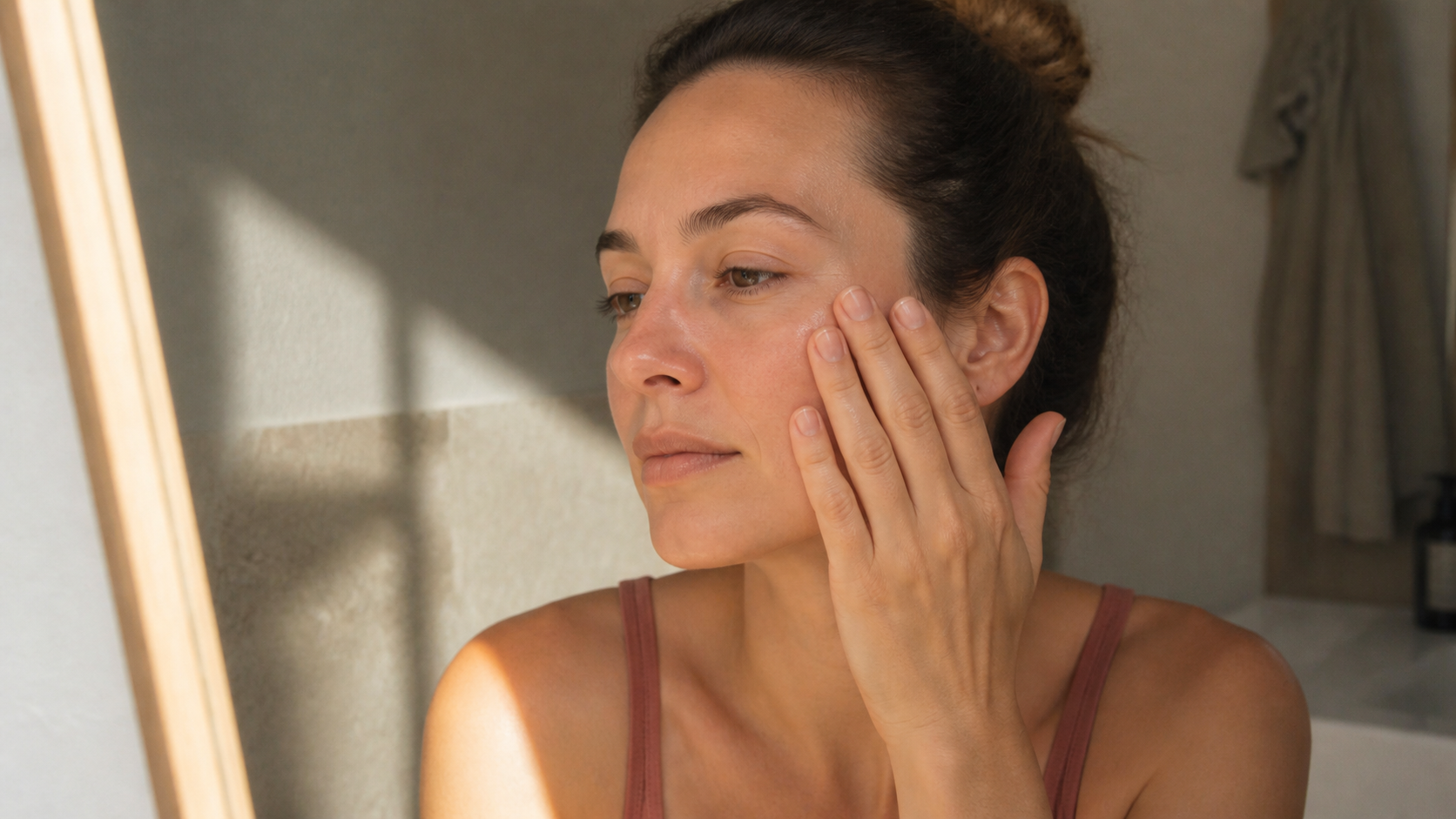
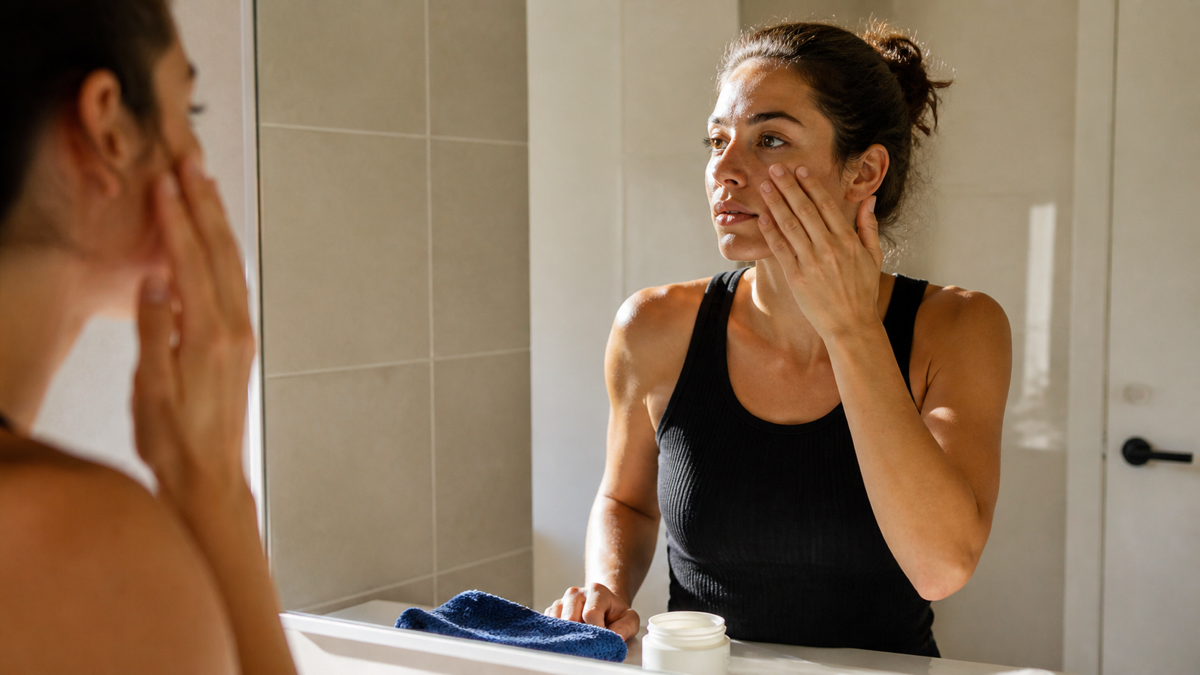
    Woman looking at her natural skin in a mirror after a short face massage.

    Before you begin: set up your skin and hands

    Good preparation matters more than owning a special tool. Your hands give you direct feedback about pressure and are easy to clean, which makes them a sensible starting point for facial massage at home.

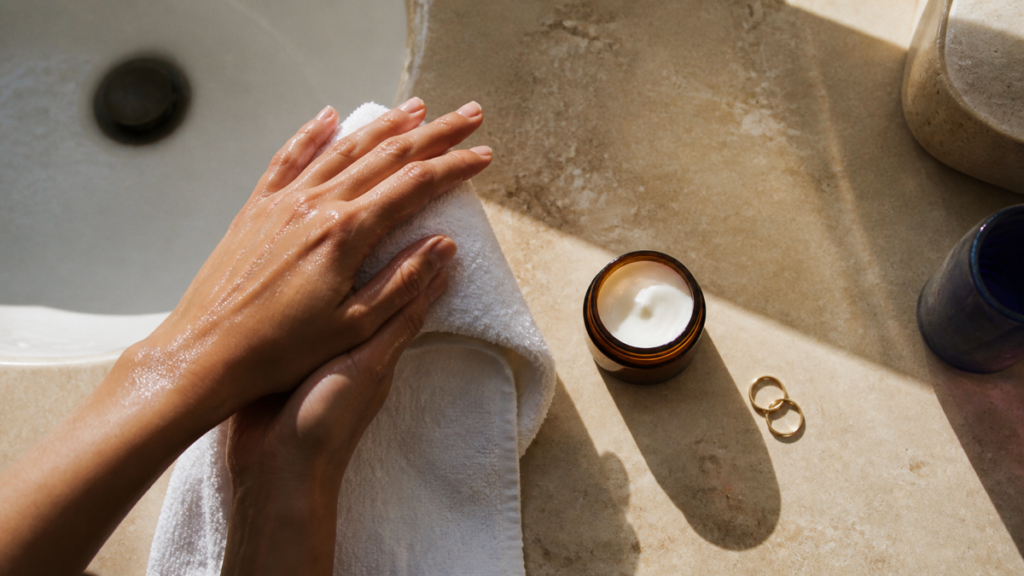
    Clean hands drying beside familiar moisturizer and removed rings before an at-home face massage.

    Use this quick checklist:

    • Wash and dry your hands, including under your nails.
    • Remove rings that could scratch your skin and keep nails smooth.
    • Cleanse your face gently, then pat it dry.
    • Apply a small amount of a plain moisturizer, balm, or facial oil your skin already tolerates.
    • Add a little more product if your fingers drag instead of glide.
    • Sit comfortably and let your shoulders drop away from your ears.

    If you are acne-prone, choose a product labeled non-comedogenic, which means it is designed not to clog pores. Do not massage directly over a sore, inflamed breakout or try to squeeze it as you go. If you have rosacea, the American Academy of Dermatology advises avoiding massage because friction can trigger irritation.

    Do not test a new active product and a new massage technique in the same session. If your skin reacts, you will not know whether the product, the friction, or both caused it.

    How much pressure should you use?

    Start lighter than you think. Your fingers should move the skin gently without digging, scraping, or making you hold your breath. Around the eyes, use very light contact and stay on the orbital bone; never press on the eyeball or a swollen eyelid.

    Pressure also depends on the method:

    • Gliding and tapping: light, comfortable contact.
    • Small circles over the jaw or temples: enough to feel the area under your fingers, never enough to cause pain.
    • Lymphatic-style touch: very light stretch and release of the skin. If you feel the muscles underneath, you are pressing too hard.

    Strong redness, soreness, broken capillaries, or bruising are not signs that a technique is working better. They are signs to stop.

    Five facial massage techniques to know

    These five movements give you a small, useful toolkit. Choose one or two based on how your skin feels instead of turning every routine into a complicated choreography.

    1. Gentle gliding strokes

    Place the flats of two or three fingers on your skin and move them in one smooth line. Keep your fingers relaxed and maintain even contact rather than pulling from the fingertips.

    Use glides across the cheeks, jawline, and forehead. They work well at the beginning and end of a routine and can spread moisturizer without rubbing one patch repeatedly. In professional massage, you may see this type of stroke called effleurage.

    Try three slow passes from the center of your chin toward each ear, then from beside your nose across the cheek. Lift your hand to reset instead of sawing back and forth.

    2. Small, slow circles

    Rest two fingertips on a comfortable area and draw a tiny circle without sliding over a large patch of skin. Move to the next spot after two or three circles.

    Two fingertips making small, slow circles over the jaw muscle with light pressure.

    This technique can feel good over the fleshy part of the cheeks, the temples, or the jaw muscles in front of the ears. Keep your teeth slightly apart while working around the jaw. Avoid grinding into the jaw joint, pressing on a painful tooth, or treating persistent facial pain as simple tension.

    If circles create drag, add more moisturizer or return to a lighter glide.

    3. Gentle hold and release

    Place your fingertips or palms on an area, hold with soft contact for one slow breath, then release fully. The aim is a quiet pause, not a painful “pressure point.”

    Try a broad hold over each cheek or place your fingertips lightly at the temples. This is a useful option when repeated rubbing feels like too much. Do not press on the eyes, front of the throat, inflamed sinuses, or an area that is numb or injured.

    4. Soft fingertip tapping

    Alternate your fingertips in a light, rain-like tapping pattern. Keep the movement small and let your fingers bounce rather than strike.

    Tap across the cheeks and forehead for 10 to 15 seconds. Use barely-there contact around the orbital bone and skip the eyelids. Tapping is optional; it should feel pleasant, not tingly, sharp, or irritating.

    This is a very soft tapping movement; keep it slow and comfortable. The at-home version here is intentionally soft. You do not need the speed or force used in body massage.

    5. Light stretch and release

    Place flat fingers on the skin, stretch it gently in one direction, then let it return before repeating. This differs from a sliding stroke because your fingers stay connected to the same small patch of skin.

    Clinical self-lymphatic massage uses this kind of very light, rhythmic movement. A cosmetic routine is not the same as treatment for lymphedema, and a healthy lymphatic system does not need a “detox.” If your goal is mild, familiar puffiness, the usual pattern is from the center of the face toward the ears, followed by light movements down the sides of the neck toward the collarbones.

    For a closer look at pressure, preparation, and sequence, read our lymphatic facial massage guide.

    Do not copy a generic drainage sequence if you have diagnosed lymphedema, lymph nodes that were removed or treated with radiation, a blood clot, active infection, heart or kidney disease, or recent head or neck surgery. Ask your clinical team for a sequence designed for your situation.

    How to massage your face in five minutes

    Ready to put the movements together? These face massage steps use your hands only and keep the routine simple. Complete each step on both sides before moving on.

    1. Check your glide — 30 seconds

    Spread your familiar moisturizer between clean fingertips. Make one slow pass across each cheek. If the skin folds or your fingers skip, add a small amount of product. Extra friction will not make the routine more useful.

    2. Relax the jaw — 45 seconds

    Let your lips meet while keeping your teeth slightly apart. Place two fingertips over the fleshy jaw muscle in front of each ear and make three small, slow circles. Move toward the middle of the jaw, staying away from any painful area.

    Finish with one gentle glide from the center of the chin toward each ear. Stop if the movement causes jaw pain, tooth pain, clicking that worries you, or a headache.

    3. Glide across the cheeks — 60 seconds

    Place your fingertips beside the corners of your mouth and move outward toward your ears. Repeat from beside the nose across the middle of the cheeks. Use three slow passes at each level.

    Keep your fingers broad and relaxed. You are moving over the skin, not trying to push cheek tissue into a new position.

    4. Use feather-light contact around the eyes — 45 seconds

    With your ring fingers, trace along the brow bone from the inner brow toward the temples. Then use tiny taps along the bone beneath the eyes, moving from the inner area outward.

    Do not massage the eyeball or a swollen, infected, recently treated, or irritated eyelid. If the eye area is your most sensitive spot, skip this step completely.

    5. Smooth the forehead and pause at the temples — 60 seconds

    Glide from the center of your forehead toward each temple. Repeat at three levels, moving from just above the brows toward the hairline. Finish with one soft hold at the temples for a comfortable breath.

    Avoid dragging the skin upward again and again in an attempt to “train” it to lift. Skin does not need a tug-of-war.

    6. Finish along the sides of the neck — 45 seconds

    Place flat fingers below your ears and move gently down the sides of your neck toward the collarbones. Keep away from the front of your throat and do not press on a pulse.

    Woman finishing a face massage with a gentle stroke down the side of her neck toward the collarbone.

    Take your hands away and check how your skin feels. Comfortable warmth is different from burning, stinging, numbness, or marked redness. If something feels wrong, rinse off the product if needed and stop for the day.

    Which direction should you massage your face?

    There is no single “correct” direction for every goal. Direction matters most when you are following a clinician-taught lymphatic drainage plan. For a simple cosmetic routine, moving from the center of the face outward gives your hands a clear pattern and reduces back-and-forth friction.

    The popular rule that every stroke must move upward to prevent sagging is not supported by strong evidence. An upward glide can feel comfortable, but it cannot permanently reposition skin or change your anatomy. Choose smooth movements, comfortable pressure, and a consistent sequence over dramatic angles.

    Face massage tips that prevent common mistakes

    Do not work on dry skin if your fingers drag

    Repeated pulling can irritate the surface. Add a little more of a familiar product or switch to a still hold. The goal is comfortable contact, not maximum friction.

    Do not use pain as a progress marker

    Deep pressure is not necessary for a useful home routine. If any of these symptoms appear, stop the massage.

    Do not massage every skin flare

    Pause over cuts, cold sores, sunburn, rashes, infections, and inflamed breakouts. If your skin condition has its own care plan, follow that instead. New, one-sided, painful, hot, or worsening facial swelling needs medical assessment rather than a beauty routine. Sudden swelling of the lips, mouth, tongue, or throat, or trouble breathing or swallowing, needs emergency help.

    Woman pausing face massage after noticing a mildly irritated patch on her cheek.

    Do not ignore procedure aftercare

    Massage timing differs after injections, peels, lasers, surgery, and other treatments. Follow the instructions from the professional who performed your procedure. For example, Cleveland Clinic advises waiting at least 24 hours before a facial or massage after Botox, and longer if bruising or swelling remains. That timing does not automatically apply to every other treatment.

    Do not assume a tool is an upgrade

    A roller or gua sha tool changes how pressure feels, but it is not required. If you add one later, clean it before and after use, check for chips or sharp edges, and start lightly. Hands are the simplest place to start when you are still learning what comfortable pressure feels like.

    How often should you do facial massage?

    There is no research-backed schedule for a general cosmetic routine. Start with one short session and notice how your skin feels immediately afterward and later that day. If it stays calm, repeat when it suits you rather than forcing a daily streak.

    Longer is not automatically better. Three comfortable minutes are more useful than 20 minutes of rubbing that leaves your skin sore. Reduce the time, pressure, or frequency if you notice dryness, sensitivity, lingering redness, or new breakouts.

    FAQ

    What is the best facial massage technique for a beginner?

    Gentle gliding is the simplest place to start. It is easy to control, works with moisturizer, and lets you learn pressure without adding a tool. Add small circles on the jaw or temples only if they feel comfortable.

    Can facial massage reduce wrinkles?

    Current evidence does not support promising wrinkle removal or a lasting lift. Massage may create temporary warmth or a rested look, but it does not replace proven skin care or professional treatment.

    Should you massage before or after skin care?

    Massage clean skin after applying enough of a familiar moisturizer, balm, or oil for comfortable glide. Continue with the rest of your routine afterward. During the day, finish with sunscreen rather than using massage as a substitute for it.

    Can facial massage help a painful jaw?

    Gentle circles may feel soothing when you have ordinary muscle tightness, but jaw pain has many causes. Stop if massage hurts. See a dentist or qualified health professional for persistent pain, locking, significant clicking, swelling, tooth symptoms, or difficulty opening your mouth.

    Your next step

    Tonight, try one glide across each cheek and three slow circles over the jaw with clean hands and a moisturizer you already trust. That is enough to learn from. If your skin feels calm, build the full five-minute routine later. If it protests, listen early and leave the complicated choreography to your saved videos.

  • Facial Massage for Puffiness: A Gentle 5-Minute Routine

    Facial Massage for Puffiness: A Gentle 5-Minute Routine

    You wake up after a short night, catch your reflection, and your face looks a little puffier than it did yesterday. The tempting response is to press harder, roll faster, and keep going until your cheekbones reappear. Your skin does not need that kind of morning drama.

    For mild, familiar morning puffiness, a gentle facial massage for puffiness may make the swelling look less noticeable for a while. Use clean hands, very light pressure, and slow movements from the center of your face toward your ears, followed by strokes down the sides of your neck. Five minutes is plenty for a first try.

    The realistic goal is a temporary change in the look of fluid-related puffiness, not a permanent lift or a new face shape. Massage cannot remove facial fat, change bone structure, or treat the medical cause of swelling.

    Does facial massage help with puffiness?

    It may help the appearance of mild, temporary puffiness, but direct research on cosmetic facial massage in healthy people is limited. Manual lymphatic drainage is a clinical technique used as part of care for lymphedema. Cosmetic face massage borrows its light pressure and slow rhythm, but the two are not the same treatment.

    For a deeper look at the drainage sequence, pressure, and safety, see our guide to lymphatic facial massage.

    A small study found that five minutes with a facial roller increased skin blood flow for at least 10 minutes in the massaged cheek. It did not measure puffiness or prove better lymph flow. A 2025 systematic review also found that studies of facial massage and related techniques were small and varied too much to support strong claims about lasting cosmetic changes.

    Even research in medical settings is not a guarantee. In one small trial after jaw surgery, the group receiving manual lymphatic drainage showed a faster decrease in swelling, but the difference was not statistically significant.

    So, can a face massage for puffiness be worth trying? Yes, if your puffiness is mild, the touch feels comfortable, and you keep your expectations sensible. A temporary, subtle change is possible. A guaranteed “snatched” jawline is not.

    First, check whether it is puffiness or swelling

    Slight puffiness on both sides of your face when you wake up can come from normal overnight fluid retention and may ease within a few hours. Sleep changes can make it more noticeable. Allergies, medication reactions, infections, dental problems, injuries, and medical conditions can also cause facial swelling, so a massage is not the right answer every time.

    Woman keeping her hands lowered while checking unfamiliar facial swelling in a mirror.

    Use this quick check before putting your hands on your face:

    What you noticeWhat to do
    Mild, familiar puffiness on both sides; no pain, heat, rash, or illnessA gentle routine may be reasonable if your skin is calm.
    New, unexplained, one-sided, painful, or worsening swellingSkip massage and contact a qualified health professional.
    Red, hot, tender, or broken skin; fever; dental pain; or signs of infectionDo not massage the area. Seek appropriate medical or dental care.
    Sudden swelling of the lips, mouth, tongue, or throat; trouble breathing or swallowingGet emergency help now.

    If you are pregnant or recently gave birth, sudden swelling of your face or hands—especially with a persistent headache, vision changes, upper abdominal pain, or breathing difficulty—needs prompt medical advice. Do not try to massage it away.

    Ask your clinician for guidance before lymphatic-style self-massage if you have diagnosed lymphedema, have had lymph nodes removed or radiation treatment, are recovering from facial or neck surgery, or have a condition such as heart or kidney disease, a blood clot, an active infection, or cancer. The safe direction and timing may be different for you.

    What you need for a depuff face massage

    Your hands are enough. Starting without a tool makes it easier to notice how much pressure you are using.

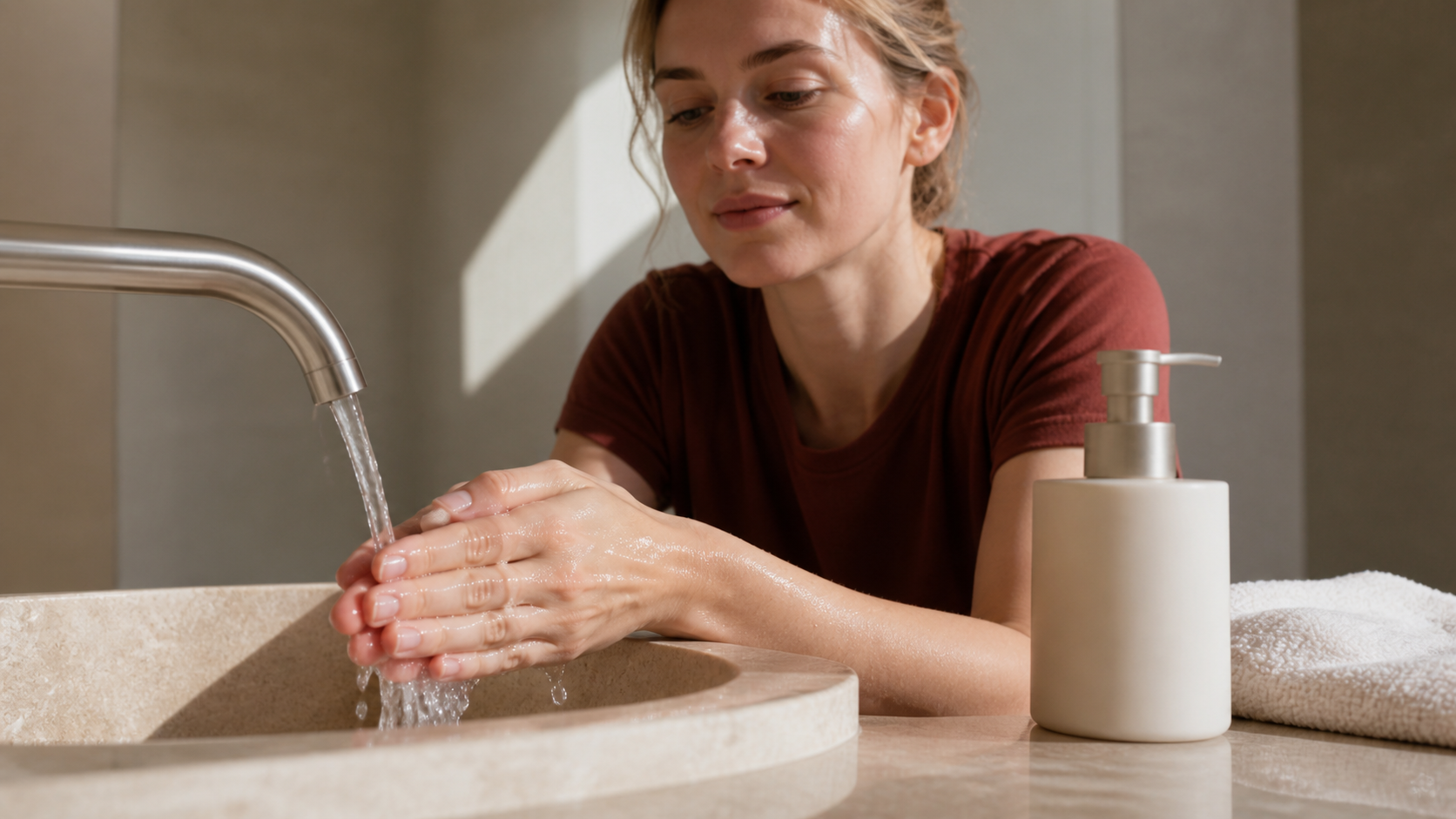
    Woman washing both hands at a bathroom sink before beginning a face massage.

    Before you begin:

    • wash and dry your hands;
    • remove makeup and make sure your skin is clean;
    • skip areas with active irritation, sunburn, a rash, cuts, or a recent procedure;
    • sit or stand comfortably with your shoulders relaxed;
    • use a small amount of a plain moisturizer your skin already tolerates if your fingers drag.

    You do not need a thick layer of oil. For lymphatic-style touch, the aim is to gently stretch and release the skin, not slide over it at speed.

    Find the right pressure

    Rest the flats of two or three fingers on your cheek. Move the skin just enough to feel a soft stretch, then release it fully. If you are digging into muscle, leaving strong red marks, or making the skin sore, lighten up.

    Two relaxed fingertips making a barely visible light-pressure stretch on the cheek.

    The eye area needs even less pressure. Work along the bone around the eye, never on the eyeball or directly over a swollen eyelid.

    How to do facial massage for puffiness in 5 minutes

    This hands-only massage for a puffy face moves from the collarbone and neck to the face, then back down the neck. Clinical self-drainage instructions often prepare the collarbone and neck areas before working on facial swelling. This short cosmetic version uses the same general order, but it is not a medical lymphedema routine.

    Move slowly. Complete each stroke on both sides before going to the next step.

    1. Relax your shoulders and breathe — 30 seconds

    Sit upright and let your shoulders drop away from your ears. Place your hands over your lower ribs or abdomen. Take three slow, comfortable breaths without holding your breath or forcing a deep inhale.

    This is your cue to slow the routine down. If you are rushing, your pressure usually gets heavier too.

    2. Start above your collarbones — 30 seconds

    Place two or three fingers in the soft hollows just above your collarbones. Keep away from the front of your throat.

    Make a tiny J-shaped movement down and slightly inward, then let the skin return. Repeat five times. The movement should feel almost underwhelming. That is better than pressing too hard.

    Two fingertips resting lightly above the outer collarbone and away from the throat.

    3. Move down the sides of your neck — 45 seconds

    Place the flats of your fingers just below your ears. Gently stretch the skin back and down along the sides of your neck, then release. Work toward the collarbones with five slow passes.

    Do not knead the neck muscles or press over the throat. If this position feels awkward, do one side at a time.

    4. Sweep from your chin toward your ears — 45 seconds

    Set your fingertips at the center of your chin. Use a light outward stroke along the jaw toward the area in front of your ears. After each pass, move down the side of your neck toward the collarbone.

    Repeat three to five times. This step should not hurt your jaw or pull the corners of your mouth.

    5. Move across your cheeks — 60 seconds

    Start beside the corners of your mouth and move outward toward your ears. Next, begin beside your nose and travel across the cheeks toward the same point. Finish each round by moving lightly down the sides of your neck.

    Woman using three broad fingertips for a light outward cheek stroke toward the ear.

    Repeat three to five times. Keep your hands broad and relaxed instead of poking the puffy area with your fingertips.

    6. Use feather-light touch around your eyes and forehead — 45 seconds

    Place your ring fingers near the inner ends of your brows. Trace outward along the brow bone toward your temples. Then move from the center of your forehead toward the temples and down in front of your ears.

    Repeat three times, then continue down the sides of your neck. Skip the eye area if you have irritation, an eye infection, unexplained eyelid swelling, or tenderness.

    7. Finish down the neck — 45 seconds

    Return your hands below your ears. Repeat five slow strokes down the sides of the neck toward the collarbones. Let your hands lift and reset between passes rather than rubbing upward again.

    Your skin should feel comfortable when you finish. A little warmth may occur after touch, but pain, stinging, marked redness, or increased swelling means you should stop.

    Common mistakes when massaging a puffy face

    Pressing harder to get a faster result

    More pressure does not equal more drainage. Lymphatic-style massage uses light skin movement. Deep kneading and aggressive scraping are different techniques and can irritate your skin.

    Starting with the under-eye area

    It is easy to fixate on the spot that looks puffiest. A calmer approach starts above the collarbones and along the neck before moving to the face. It also keeps you from rubbing one delicate area for several minutes.

    Moving back and forth

    Use one slow direction, then lift or soften your hand to reset. Rapid sawing motions add friction without making the routine more effective.

    Using a roller or gua sha tool with heavy pressure

    Tools are optional, not an upgrade you have to earn. If you use one, clean it before and after, add enough familiar moisturizer for comfortable glide, and keep the pressure light. Stop if the tool catches, causes bruising, or leaves redness that does not settle.

    Treating every swollen face as a beauty issue

    A depuff face massage cannot fix an allergic reaction, infection, dental abscess, medication reaction, or another medical cause. When swelling is new, severe, painful, one-sided, or persistent, figuring out the cause matters more than perfecting the stroke direction.

    How often should you massage your face for puffiness?

    There is no research-backed cosmetic schedule. Begin with one five-minute session and notice how your skin feels later that day. If there is no irritation, you can keep the routine occasional or try it once a day when familiar puffiness appears.

    Longer and more frequent sessions are not proven to work better. Take a break if your skin becomes sensitive, dry, sore, or more swollen. If a clinician gave you a self-drainage plan for a medical condition, follow that plan instead of this one.

    You can also pay attention to the pattern. Note when the puffiness starts, whether it affects both sides, how long it lasts, and whether it comes with itching, pain, congestion, a new product, or a new medication. That information is more useful to a health professional than a heavily filtered before-and-after photo.

    FAQ

    Can facial massage permanently slim your face?

    No. A short massage may temporarily change the look of mild fluid-related puffiness, but it does not remove fat or reshape bone. Lasting “face slimming” claims go beyond the available evidence.

    Which direction should you massage a puffy face?

    For this routine, move from the center of the face outward toward the ears, then down the sides of the neck toward the collarbones. Keep pressure light and avoid the front of the throat.

    Is a cold roller better than your hands?

    Not necessarily. A cool tool may feel soothing, but evidence does not show that you need one for a useful routine. Your hands are easier to control and simpler to clean. Never apply an extremely cold or frozen tool directly to your skin.

    What if your face is puffy every morning?

    Occasional puffiness that fades can be harmless, but a repeated pattern is worth noticing. If it is worsening, lasts more than a few days, appears on one side, or comes with pain or other symptoms, ask a qualified health professional about the cause.

    Your next step

    Try the routine once with clean hands and pressure so light that it feels almost boring. Give each stroke time instead of chasing a dramatic result. If your face feels calm afterward, you have done enough. If the swelling is unfamiliar or your body is telling you something is wrong, pause the massage and get the right advice first.

  • Lymphatic Facial Massage: A Gentle At-Home Routine

    Lymphatic Facial Massage: A Gentle At-Home Routine

    You wake up, look in the mirror, and your face seems a little puffier than usual. Then a five-minute “face sculpting” video promises sharper cheekbones, better skin, and a full-body detox before breakfast. That is a lot to ask from your fingertips.

    Here is the useful version: lymphatic facial massage uses very light, slow strokes over the skin of your face and neck. It may help mild puffiness look less noticeable for a while, and the routine can feel relaxing. It does not remove fat, change your bone structure, permanently lift your face, or “flush toxins” from a healthy body.

    If you want to try it as a simple self-care practice, pressure and sequence matter more than speed or fancy tools. Start near your collarbones, work down the neck, move from the center of the face toward the ears, then return down the neck.

    What is lymphatic facial massage?

    Your lymphatic system is a network of vessels and lymph nodes. It helps collect fluid from tissues and return it to your circulation. Manual lymphatic drainage, or MLD, is a specialized, gentle technique used by trained health professionals as part of care for lymphedema.

    A cosmetic facial lymphatic drainage massage borrows the light pressure and slow rhythm of that clinical technique. The two are not interchangeable. A short routine for a healthy person with occasional morning puffiness is not a treatment for diagnosed swelling, damaged lymph nodes, or swelling after cancer care or surgery.

    That difference matters. If you have lymphedema or swelling linked to an illness, operation, radiation, or lymph-node removal, learn self-massage from your clinician or a certified lymphedema therapist. Your drainage route may need to be adapted to your body.

    What can a lymphatic massage on your face actually do?

    The most realistic goal is a calm routine that may make mild, temporary puffiness look less obvious. You may also notice warmth or a relaxed feeling after gentle touch. A small study of facial rollers found a short-term rise in skin blood flow after five minutes, but it did not test lymph flow or prove lasting changes to facial shape.

    Research on facial massage and lymphatic drainage for healthy people is still limited. A 2025 systematic review found that studies of facial exercises and manual techniques were small and used very different methods. That makes firm claims about long-term cosmetic results difficult.

    Woman sitting calmly after a short facial massage with natural, unchanged facial contours.

    Keep these expectations clear:

    • Possible: a relaxing ritual and a temporary change in the look of mild puffiness.
    • Not established: lasting lifting, tighter skin, fewer wrinkles, or a permanently sharper jawline from lymphatic massage.
    • Not how it works: detoxing your body, melting fat, treating acne, or causing weight loss.

    Persistent or unexplained facial swelling needs a cause, not a stronger massage.

    If puffiness is your main concern, our guide to facial massage for puffiness explains how to recognize a mild, familiar pattern and when massage is not the right response.

    When should you skip facial lymph massage?

    Do not massage skin that is broken, sunburned, very irritated, infected, hot, red, tender, or painful. Skip the routine if you have a fever or feel unwell. Redness, warmth, swelling, and tenderness can be signs of cellulitis, which needs prompt medical care.

    Woman with mildly sun-irritated cheeks keeping her hands away from her face.

    Get personal guidance before trying lymph drainage massage for your face if you:

    • have lymphedema or a history of lymph-node removal or radiation;
    • are recovering from facial, neck, dental, or cosmetic surgery;
    • recently had injectables, a peel, laser treatment, or another facial procedure;
    • have a blood clot, heart disease, kidney failure, stroke history, active cancer, or another condition that may affect whether massage is appropriate;
    • are pregnant and develop sudden or new facial swelling;
    • have new, one-sided, painful, or lasting facial swelling.

    Swelling of your face, mouth, or throat with trouble breathing or swallowing needs emergency care. Do not try to massage it away.

    During any routine, stop if you feel pain, dizziness, nausea, new tingling, or worsening swelling. Red marks are not proof that the technique is working.

    How to do a DIY lymphatic facial massage

    This short routine is designed as gentle cosmetic self-massage for an otherwise healthy adult. It is not a medical lymphedema plan.

    Wash your hands and remove makeup. Keep your nails short enough that they do not scratch. You do not need a roller, gua sha tool, or facial oil. Clean, dry skin is fine. If your hands drag, use a small amount of a plain moisturizer your skin already tolerates.

    Woman washing her hands before starting a facial self-massage.

    Pressure check: use the soft pads or flats of your fingers. Gently stretch the skin, then release. If you can feel yourself digging into the muscles, pressing on your throat, or dragging the skin hard, lighten up.

    1. Settle your shoulders and breathe

    Sit upright in a comfortable position. Drop your shoulders away from your ears. Take three slow breaths into your belly, without forcing them or holding your breath.

    2. Start above the collarbones

    Place two or three fingers in the soft area just above each collarbone. Make a tiny, gentle J-shaped stretch down and inward, then fully release. Repeat five times.

    Relaxed fingertips applying very light pressure just above both collarbones.

    The movement should be slow enough that you can feel the skin return before the next repetition. This is not kneading.

    3. Move down the sides of your neck

    Place the flats of your fingers just below your ears. Stretch the skin softly back and down toward your collarbones, then release. Repeat five times on each side.

    Stay on the sides of the neck. Do not press into the front of your throat.

    4. Work from your chin toward your ears

    Place your fingers at the center of your chin. Glide or softly stretch along the jaw toward the area in front of your ears. Then move your hands down the sides of your neck to the collarbones. Repeat three to five times.

    This is the lower-face part of your self facial lymphatic massage. More pressure will not make it more effective.

    5. Move across the cheeks

    Start beside the corners of your mouth and move outward toward your ears. Repeat from the sides of your nose, moving across the cheeks. After each pass, sweep lightly down the sides of your neck. Do three to five rounds.

    Woman moving gentle facial massage strokes toward her ear and down the side of her neck.

    Keep the pace slow and even. Do not scrub back and forth.

    6. Use extra-light pressure around the upper face

    Starting near the inner brow, trace outward toward the temple with barely-there pressure. From the center of the forehead, move outward toward the temples. Continue toward the area in front of the ears, then down the neck. Repeat three times.

    Stay on the bone around the eye rather than pressing on the eyelid or eyeball. Skip this area if it feels tender or your skin is irritated.

    7. Finish down the neck

    Repeat the soft strokes from below your ears down to your collarbones five times. Finish with three slow breaths. Your skin should look comfortable, not bright red or scraped.

    The full routine takes about five minutes. That is enough for a first try.

    How often can you do facial lymphatic drainage?

    There is no proven cosmetic schedule for healthy skin. Start with one gentle session and see how your skin responds over the next day. If it feels comfortable, you can keep the routine occasional or use it once a day. More repetitions and harder pressure are not a shortcut to better results.

    Morning can be convenient if your goal is the look of temporary puffiness. Evening may fit better if you use the routine to slow down. The best time is the one that does not make you rush and press too hard.

    If a clinician prescribed simple lymphatic drainage for diagnosed swelling, follow that plan instead. Clinical routines may be longer, more frequent, and directed along different routes.

    Common facial drainage massage mistakes

    Pressing as if you are working a tight muscle

    Lymphatic-style strokes are light. Deep pressure, pinching, or aggressive scraping turns the routine into a different type of massage and can irritate skin.

    Only rubbing the puffy spot

    A useful sequence includes the collarbone and neck before and after the face. Randomly pushing one under-eye area for several minutes is more likely to irritate it than create a better result.

    Using a tool before you understand the pressure

    Your hands give immediate feedback and are easier to control. If you later use a roller or gua sha tool, keep it clean, use minimal pressure, and stop if the skin pulls, stings, or stays red.

    Treating new swelling as a beauty problem

    Allergies, infection, medication reactions, dental problems, and other conditions can cause facial swelling. Massage does not diagnose the cause. New, severe, painful, one-sided, or persistent swelling deserves medical attention.

    FAQ

    Does lymphatic facial massage remove toxins?

    No evidence shows that MLD gives a healthy lymphatic system an extra “detox.” Your lymphatic system already works with your circulation and organs to manage fluid and waste. Massage is not a cleanse.

    Will it slim or sculpt your face?

    It may briefly change how mild puffiness looks. That is different from losing facial fat or changing facial anatomy. Any de-puffing effect can vary and may not be visible at all.

    Do you need facial oil?

    No. Traditional simple lymphatic drainage uses light skin stretches, so heavy slip is not required. If dry skin makes your hands catch, use a small amount of a familiar, non-irritating moisturizer.

    Should the strokes go up or down?

    Across the face, move from the center outward toward the ears. Then continue down the sides of the neck toward the collarbones. Avoid treating “always upward” as a universal rule for this type of massage.

    Your next step

    Try one five-minute round with clean hands and truly light pressure. Pay attention to comfort, not a dramatic before-and-after photo. If you cannot tell whether your swelling is ordinary morning puffiness or a symptom, skip the DIY routine and ask a qualified health professional first.