
Meal Prep for Beginners: A Simple Step-by-Step Guide
12 min readIt is Sunday evening. You have seven saved recipes, a pile of empty containers, and no desire to spend the next four hours turning your kitchen into a production line.
That does not mean you are bad at planning. Most meal-prep advice simply starts too big.
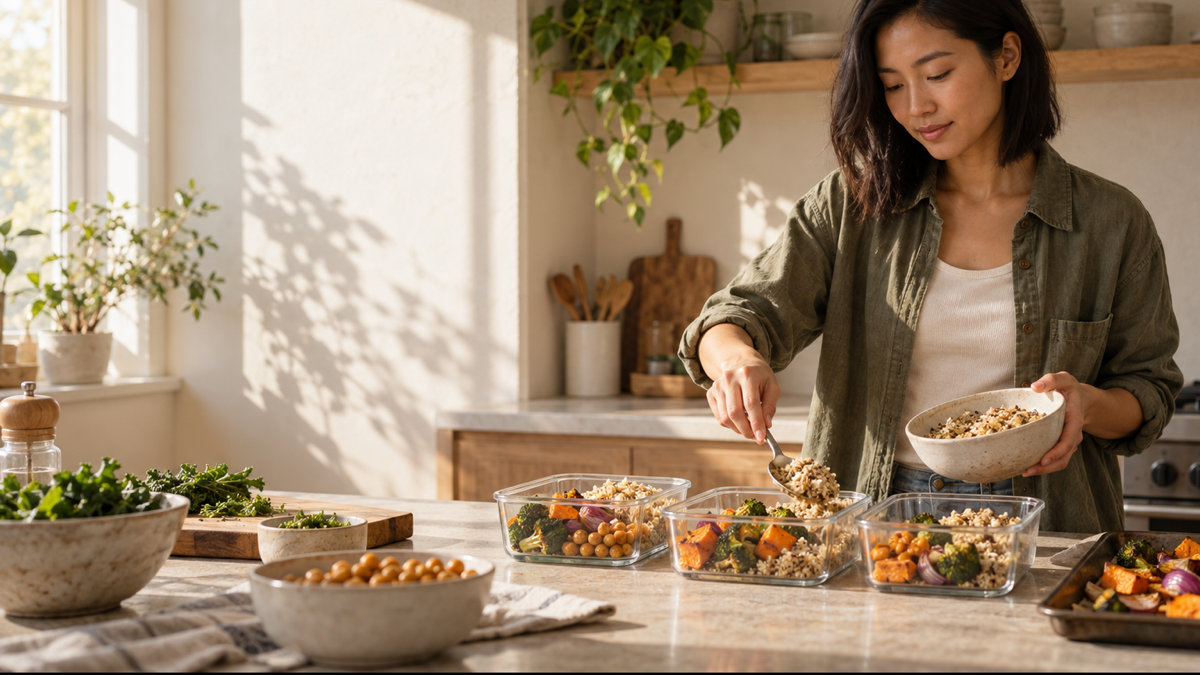
Meal prep for beginners can be much smaller: choose two or three meals that usually cause stress, prepare a few reusable ingredients, and leave room for your plans to change. You do not need 21 matching meals. You need enough food ready to make the next busy decision easier.
Here is the simplest starting plan: pick three meal slots, choose one flexible meal formula, shop from a short list, prep for about an hour, and freeze anything you will not eat within a few days.
Meal prep for beginners starts with fewer decisions
Meal prep means doing part of your future cooking before you need the meal. You might cook complete dishes, prepare separate components, portion snacks, or simply wash produce and make a sauce.
This guide focuses on the prep process itself. If you want help arranging breakfast, lunch, dinner, and snacks across a full week, use our flexible nutrition plan for beginners.
The right version depends on what slows you down during the week.
- If mornings are rushed, prepare breakfast.
- If lunch becomes a random collection of snacks, make two or three lunches.
- If dinner is the difficult part, cook components that can become different meals.
- If your schedule changes often, freeze portions instead of filling the refrigerator for seven days.
Start with three meal slots, not the whole week. For example, prep Monday and Tuesday lunches plus one emergency dinner. Once that feels useful, add more.
The best meal prep meals for beginners also have some flexibility. A grain bowl can become a wrap. Roasted vegetables can go into pasta. You can use cooked chicken, tofu, beans, or lentils for lunch today and dinner tomorrow. This is easier to repeat than preparing a different recipe for every box.
How to meal prep step by step
Step 1: Find the meals that create the most friction
Look at the next four or five days. Mark late meetings, commute days, workouts, appointments, and evenings when cooking will probably feel unrealistic.
Then choose two or three meals to support. Do not prep breakfast just because social media says you should if breakfast already works fine. Solve the problem you actually have.
A simple first target could be:
- two work lunches;
- one ready-to-reheat dinner;
- one breakfast component, such as cooked oats or boiled eggs.
Step 2: Use one flexible meal formula
Build most main meals from four parts:
- a protein food;
- a carbohydrate source;
- vegetables or fruit;
- fat, sauce, or another flavor element.
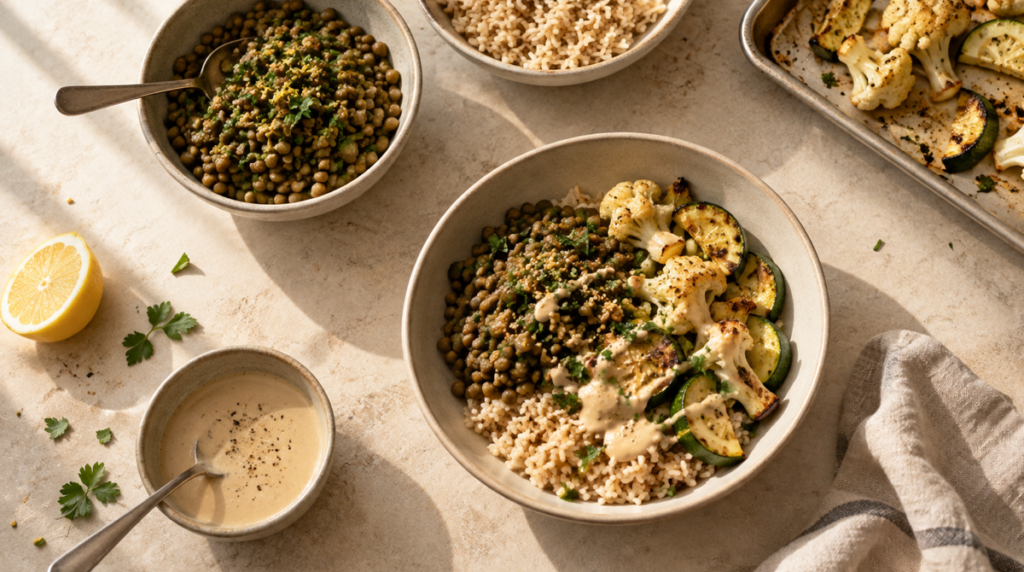
That might look like rice, chickpeas, roasted vegetables, and tahini sauce. It could also be pasta, lentils, spinach, and pesto. The parts do not need to sit in separate sections of a container.
If you want more help choosing the parts, use our simple balanced-meal guide as a loose check rather than a strict plate rule.
Step 3: Choose one recipe and two reusable components
For your first week, choose:
- one complete recipe, such as soup, pasta, curry, or a sheet-pan meal;
- one protein component, such as beans, lentils, tofu, eggs, fish, chicken, or yogurt;
- one produce or carbohydrate component, such as roasted vegetables, cooked rice, potatoes, oats, or chopped fruit.
This gives you structure without locking every meal into the same combination. If you cook lentil tomato pasta, roast a tray of vegetables, and boil a few eggs, you already have a complete dinner, vegetables for lunch, and a quick breakfast or snack.
Step 4: Make a short grocery list from what you own
Check the refrigerator, freezer, and pantry before you shop. Pick ingredients that can do more than one job, then buy only the missing pieces.
The USDA’s Food Shopping and Meal Planning resources recommend planning meals before you grocery shop and include weekly planning and grocery-list tools. Start with what you already have, choose meals that fit the time available, decide how you will use leftovers, and mix fresh foods with frozen or shelf-stable options. That sequence starts with your real week, not an ideal one.
For example, if you already have rice and frozen broccoli, you may need only tofu or chicken, fruit, and a sauce. If protein choices are the sticking point, this list of practical high-protein foods offers options for different meals and levels of effort.
Step 5: Prep in an order that saves cleanup
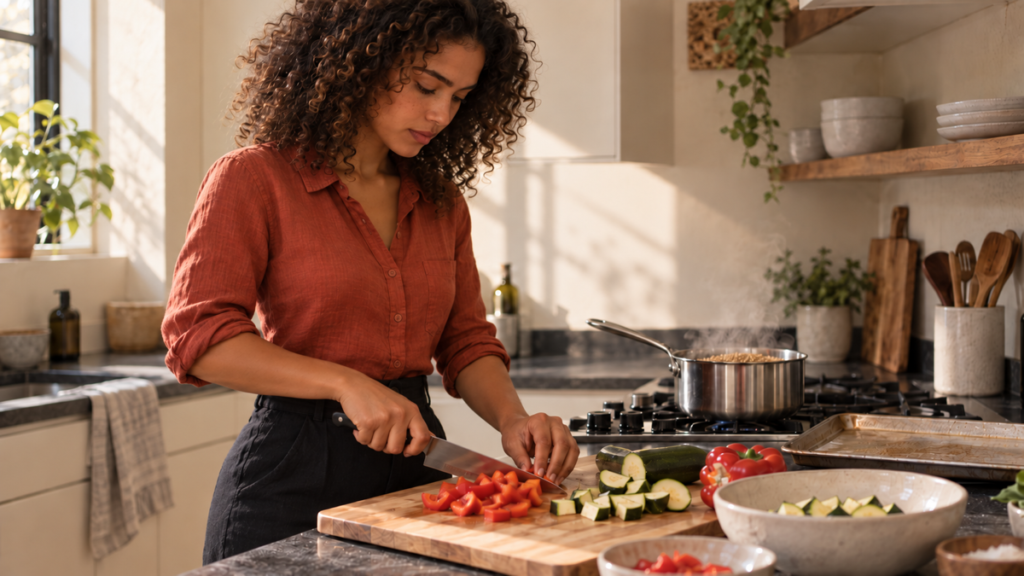
Read your recipe once, clear a section of the counter, and set out the containers you plan to use. Then work from tasks that need the most time to tasks you can finish while they cook.
A simple order is:
- start the oven and cook a grain or other long-cooking base;
- prepare vegetables and other ready-to-eat foods;
- handle raw meat, poultry, seafood, or eggs separately;
- cook the main recipe or protein;
- mix a sauce or dressing;
- portion, cool, label, and store the food.
The official four food-safety steps are clean, separate, cook, and chill. Wash hands and work surfaces, keep raw animal foods away from ready-to-eat foods, and use a food thermometer for foods that require a safe internal temperature. This matters more than having a beautiful row of containers.
Step 6: Store the food around your actual schedule
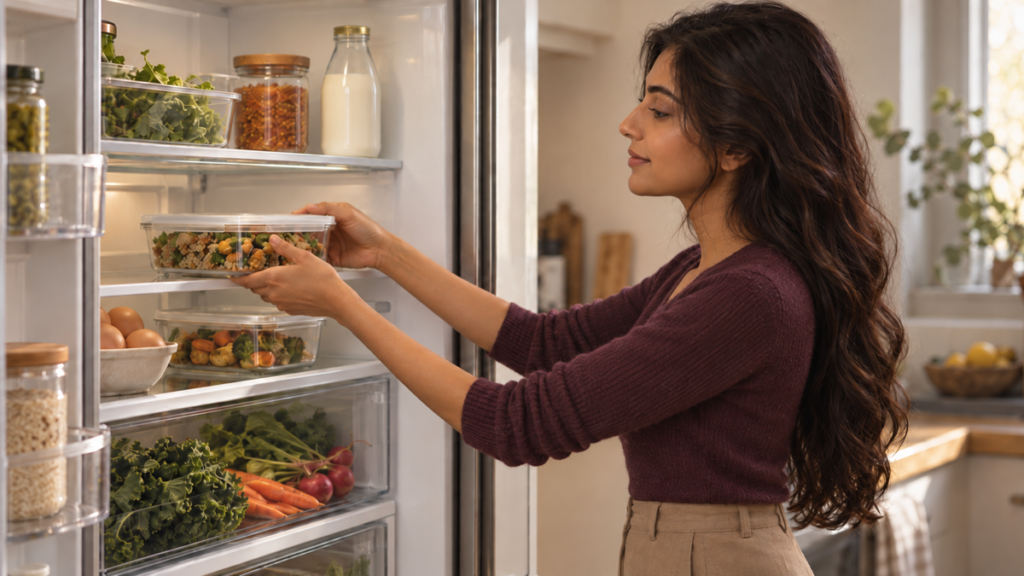
Put perishable food into the refrigerator within two hours of cooking or purchasing it, or within one hour when the temperature is above 90°F (32°C). Divide large batches into shallow containers so they cool more quickly. Keep the refrigerator at 40°F (4°C) or below, as outlined in the FDA’s refrigerator safety guidance.
According to FoodSafety.gov’s leftover-safety guidance, refrigerated leftovers should be used within three to four days, and reheated leftovers should reach at least 165°F (74°C). Freeze portions you will not eat in that window, and label containers with the name and date.
Specific storage times can differ by food. Follow package instructions when they are more restrictive, and discard perishable food that has been left out too long.
A one-hour beginner food prep plan
You can get useful prep done without giving up an afternoon. This 60-minute example assumes one oven tray, one stovetop burner, a quick-cooking base, and a protein that fits the same window. It aims to produce two or three complete portions plus one or two separate components, not a rigid seven-day menu. If your ingredients need longer, treat the hour as a stopping point and finish only the useful prep.
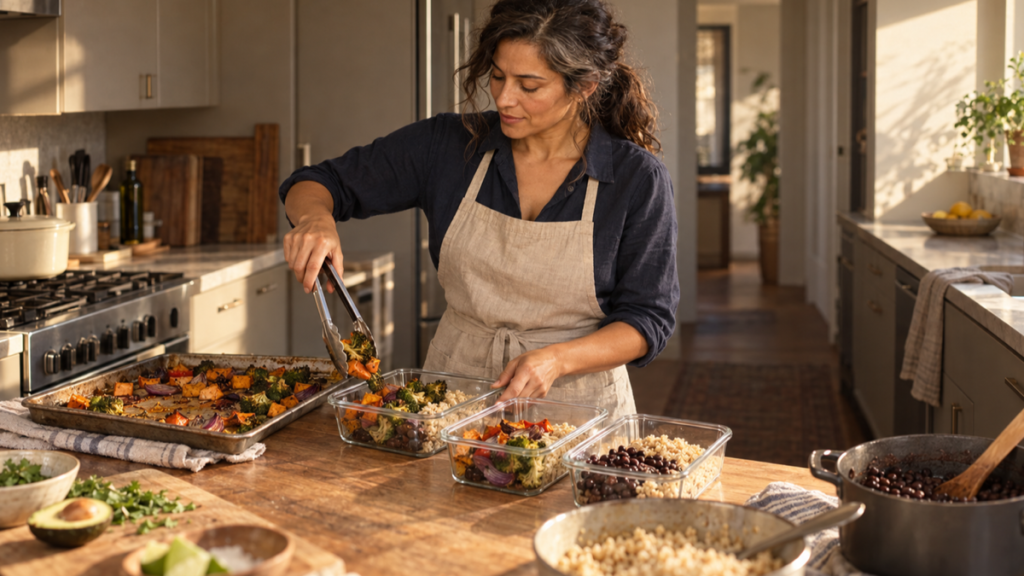
Minutes 0–10: Start and set up
- Heat the oven.
- Start rice, quinoa, pasta, potatoes, or another base.
- Wash your hands and clean the work area.
- Gather containers and label tape.
Minutes 10–30: Prepare produce and protein
- Chop vegetables for roasting and raw meals.
- Rinse canned beans if you are using them.
- Season tofu, chicken, fish, or another protein.
- Put a sheet pan in the oven.
If you are preparing raw animal foods, keep them and their utensils separate from produce and cooked food.
Minutes 30–45: Make one flavor shortcut
Mix a sauce or choose a ready-made one. Pesto, salsa, tahini sauce, yogurt dressing, curry sauce, or vinaigrette can change the same base meal without another cooking session.
You can also portion fruit, yogurt, nuts, crackers, or vegetables for quick breakfasts and snack-style meals.
Minutes 45–60: Assemble, cool, and store
Make two or three complete portions. Store the remaining components separately if you want more choice later.
Keep crunchy toppings and wet sauces apart until serving. Cool hot food promptly in shallow containers, label it, and freeze any portion planned for later in the week.
If you run out of time, stop after the useful parts. Cooked rice, washed produce, and one ready protein still count as prep.
Meal prep ideas for beginners who do not want repeat meals
Component prep gives you options without extra cooking. Prepare one base from each row, then change the assembly.
| Prepare once | Meal one | Meal two | Meal three |
|---|---|---|---|
| Rice, beans, roasted peppers | Grain bowl with salsa | Bean-and-rice wrap | Rice stirred into vegetable soup |
| Chicken or tofu, potatoes, green beans | Sheet-pan dinner | Chopped lunch bowl | Wrap with greens and sauce |
| Lentils, tomato sauce, spinach | Lentil pasta | Toast topping | Soup with bread |
| Oats, yogurt, fruit | Overnight oats | Yogurt bowl | Warm oatmeal with fruit |
Use different sauces, herbs, or textures if repetition bothers you. One bowl might get salsa and avocado; another could use tahini and crunchy seeds.
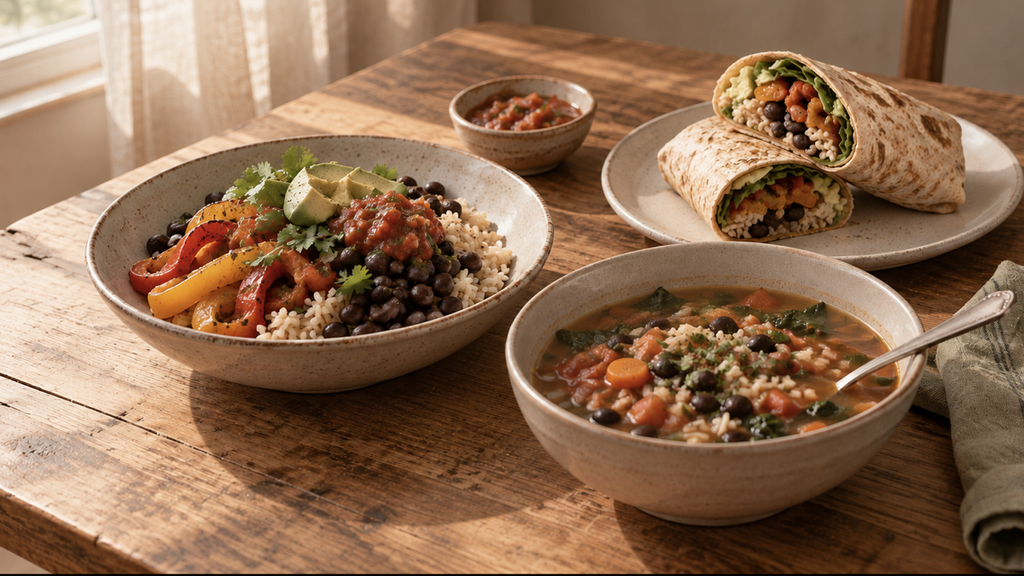
You can also prep only the slow part. Cook grains or roast vegetables, then use canned beans, eggs, rotisserie chicken, tofu, frozen edamame, or another convenient protein when you assemble the meal.
Four easy meal prep recipes for beginners
These easy beginner meal prep recipes are templates, not tests. Change the protein, produce, or seasoning based on what you eat and what is available.
1. Overnight oats in two flavors
Starter batch: two breakfasts
Hands-on time: about 5 minutes
Yield: 2 portions
Combine 1 cup (90 g) rolled oats, 1 cup (240 ml) milk or a fortified alternative, and 1/2 cup (120 g) yogurt in a bowl. Divide the mixture between two jars or lidded containers, cover, and refrigerate overnight. Before eating, add 1/2 cup fruit to each portion and 1 tablespoon nuts, seeds, or nut butter. Add a splash of milk if you prefer a softer texture.
For two flavors, top one portion with berries and seeds, and the other with sliced banana and nut butter. You get variety without making two separate recipes.
2. Sheet-pan vegetables with chicken, tofu, or chickpeas
Cut sturdy vegetables into similar-size pieces and toss them with oil and seasonings. For the simplest one-tray version, roast tofu or chickpeas with the vegetables when their cooking times match.
If you use raw chicken, prepare the vegetables first. Then use a separate cutting board, knife, and tray for the chicken; wash your hands and work surfaces after handling it; and keep raw juices away from ready-to-eat food. Cook the thickest piece to 165°F (74°C), measured with a food thermometer.
Serve with potatoes cooked on the tray, bread, or a grain. Change the sauce when you serve it.
3. Lentil tomato pasta
Cook pasta and warm canned lentils in tomato sauce. Stir in spinach, peas, zucchini, or another vegetable near the end. Finish with olive oil, cheese, herbs, or nutritional yeast if those fit your meal.
This is one of the easiest meal prep recipes for beginners because the ingredients are flexible and easy to portion. Add the tender vegetables when reheating if you prefer a fresher texture.
4. Mix-and-match grain bowls
Prepare a grain, one protein, two vegetables, and one sauce. Keep the sauce separate. Assemble a bowl when you need it, or turn the same ingredients into a wrap or salad.
Beginner meal prep recipes work best when they solve more than one meal. A bowl that can become a wrap is usually more useful than five identical boxes.
Healthy meal prep for beginners without rigid food rules
“Healthy” does not require perfect portions, expensive ingredients, or cooking everything from scratch. Aim for meals with enough variety and substance to work for your day.
A useful check is:
- Is there a protein food?
- Is there a carbohydrate source?
- Is there a vegetable or fruit somewhere in the meal?
- Is there enough flavor and food to make you want to eat it?
Frozen vegetables, canned beans, jarred sauce, precooked grains, bagged greens, and ready-cooked proteins can all reduce work. Convenience is part of the plan, especially on deadline weeks.
Budget can shape the plan too. Use overlapping ingredients, compare unit prices where available, and freeze extra portions before you get tired of them.
Meal prep also does not need to support weight loss. It can simply make regular meals easier to access. Avoid turning containers into a reason to ignore hunger or force yourself to eat food you no longer want. The plan serves you, not the other way around.
Common meal-prep mistakes and simple fixes
Preparing seven days of food on your first try
Try instead: Prep two or three days. Notice what you ate, what you skipped, and which texture held up well. Use that information next time.
Choosing too many recipes
Try instead: Pick one recipe and two components. A shorter shopping list and fewer pans make the session easier to repeat.
Making every container identical
Try instead: Store some components separately and keep two sauces. Assemble bowls, wraps, salads, or plates as the week changes.
Ignoring the calendar
Try instead: Check late meetings, restaurant plans, and travel before choosing portions. Freeze an extra meal rather than assuming every evening will go to plan.
Packing food before it is stored safely
Try instead: Use shallow containers, refrigerate perishable food promptly, and keep a visible label with the prep date. A crowded refrigerator full of unlabeled boxes is not a system.
Believing everything must be homemade
Try instead: Combine one prepared component with convenient foods. Microwave rice, frozen vegetables, canned beans, a ready-cooked protein, or store-bought sauce can turn prep into assembly.
FAQ
How should a beginner start meal prepping?
Choose two or three meals that usually feel difficult. Prepare one complete recipe plus one or two reusable components. Keep the first session to about an hour and take notes on what was genuinely helpful.
What should food prepping for beginners include?
Begin with the task that removes the most friction: cook a grain, prepare a protein, wash produce, make a sauce, or portion two lunches. You do not need to complete all five jobs for the session to count.
Can I meal prep without eating the same thing every day?
Yes. Prepare components instead of only complete meals. Use one grain, one protein, and two vegetables in a bowl, wrap, soup, pasta, or snack-style plate. Change the sauce or crunchy topping for more variety.
What foods do not hold up well for meal prep?
Some crisp greens, cut delicate fruit, fried coatings, and dressed salads may lose texture. Store wet and crunchy ingredients separately, or prep those items closer to the day you will eat them.
Make the next three meals easier
Choose three meal slots on your calendar. Pick one flexible recipe, one reusable component, and one convenient backup. Then make a short grocery list based on what is already in your kitchen.
That is enough for your first week. Meal prep for beginners should reduce decisions, not create a new Sunday performance you have to maintain.