
You have three keto tabs open. One tells you to count “net carbs.” Another puts butter in coffee. A third has turned your grocery list into a shelf of expensive snack bars. You still do not know what to make for dinner.
That confusion is not a lack of discipline. The internet often makes keto for beginners sound simpler and safer than it is.
Here is the direct answer: a ketogenic diet is a very-low-carb, high-fat, moderate-protein eating pattern designed to produce ketosis. Studies and care guides often set the range at roughly 20–50 grams of total carbohydrate a day. No single target guarantees ketosis for every person.
You do not need to follow keto to lose weight or improve your meals. It can be one option, but it is strict, can cause side effects, and may be unsafe with certain health conditions or medicines. This guide will help you understand the tradeoffs before you reorganize your kitchen around it.
What is the keto diet, exactly?
Carbs are a major source of glucose, which your body can use as fuel. When carb intake stays very low, the liver makes more ketones from fat. The body can then use more fat and ketones as fuel. This state is called nutritional ketosis.
Keto is not simply a high-protein diet. Protein is usually moderate. The main change is a large cut in carbs, so more fuel comes from fat. Exact ratios vary across studies, treatment plans, and popular diets. Two keto menus can look quite different.
Nutritional ketosis is also not the same as diabetic ketoacidosis, or DKA. DKA is a dangerous buildup of acids in the blood. It is most often linked to diabetes and too little working insulin. It needs urgent care. Extreme thirst, frequent urination, nausea or vomiting, stomach pain, deep breathing, fruity-smelling breath, marked sleepiness, or confusion can be warning signs. If you have diabetes or suspect DKA, seek urgent help rather than trying to correct it with food, pills, or powders.
What can you eat on a keto diet?
A thoughtful keto meal is more than meat, cheese, and added fat. It still needs variety, enough fiber, and foods that provide vitamins and minerals.
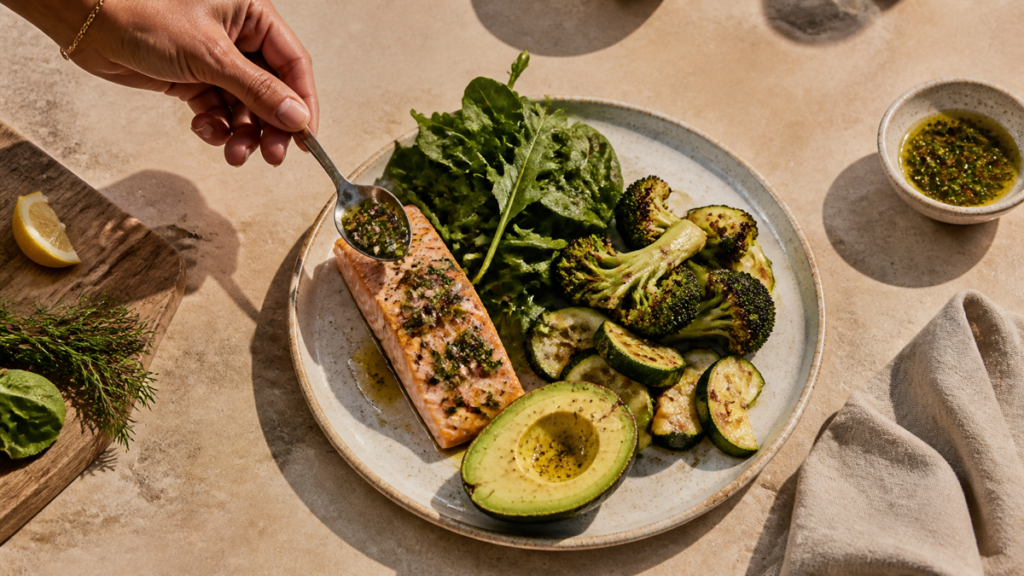
| Meal part | Options that often fit more easily | What to watch |
|---|---|---|
| Low-carb vegetables | Leafy greens, broccoli, cauliflower, zucchini, mushrooms, cucumber, peppers | Carbs add up across portions, sauces, and packaged mixes |
| Protein foods | Fish, eggs, tofu, poultry, plain yogurt, cheese, meat | Keto is not an unlimited-protein plan; processed and fatty meats can add substantial saturated fat and sodium |
| Mostly unsaturated fats | Olive or canola oil, avocado, nuts, seeds, oily fish | Fats provide a lot of energy, and “keto-friendly” does not always mean heart-healthy |
| Flavor | Herbs, spices, lemon or lime, vinegar, mustard, pesto, unsweetened sauces | Check serving sizes and added sugars in packaged sauces |
Foods commonly limited include bread, rice, pasta, cereal, potatoes, corn, most beans and lentils, many fruits, sweets, and sugar-sweetened drinks. That does not make these foods unhealthy. Whole grains, legumes, fruit, and starchy vegetables can provide fiber and useful nutrients. Keto limits them because they contain more carbs.
If you choose this pattern, prioritize low-carb vegetables and sources of unsaturated fat. Do not build every meal around bacon, butter, cream, and processed meat. The American Heart Association finds that ketogenic diets, as commonly intended, align poorly with its heart-health guidance. They can restrict fruits, whole grains, and legumes and may be high in saturated fat.
You do not need keto bars, powders, cookies, or ketone drinks. A package can say “keto” and still be expensive, heavily processed, low in useful nutrients, or easy to overeat. Read the serving size, ingredients, total carbohydrate, fiber, saturated fat, and sodium instead of relying on the front label.
A note about total and net carbs
U.S. Nutrition Facts labels list Total Carbohydrate. “Net carbs” is a marketing calculation that often subtracts fiber and sometimes sugar alcohols, but formulas can differ between products. If a doctor has given you a carb target, ask whether it refers to total or net carbs. Use the same method each time.
How to start keto without turning it into a second job
If the safety check is clear and you still want to try it, start with planning rather than a dramatic pantry purge.
1. Write down your actual goal
“I want to do keto” is a method, not a goal. Are you hoping to lose weight, manage blood glucose, reduce food decisions, or test whether certain meals feel more satisfying?
The answer matters. A less strict eating plan may meet the same goal with more freedom. If your goal relates to a health condition, ask a doctor or dietitian to review your medicines, lab results, and follow-up needs.
If you want to improve your meals without a strict carb target, start with our healthy eating tips for beginners. They focus on flexible habits you can test one at a time.
2. Review your current meals
Write down three typical days without grading them. Circle the foods that supply carbs, protein, vegetables, and fats. This shows how large the change would be.
If breakfast is oatmeal, lunch is a bean wrap, and dinner is pasta, keto would replace several foods that currently provide fiber and familiar structure. That is useful information. A plan that ignores your preferences, culture, budget, and schedule will be hard to sustain no matter how polished the meal-prep containers look.
For a broader weekly framework, use our flexible nutrition plan for beginners to organize meals without forcing them into a keto target.
3. Choose three repeatable meal templates
Use a simple formula: nonstarchy vegetables + a protein food + a mostly unsaturated fat + flavor.
- Breakfast: eggs or tofu with spinach, mushrooms, and avocado;
- Lunch: leafy salad with salmon, chicken, eggs, or tofu, plus cucumber, seeds, and olive-oil dressing;
- Dinner: fish, poultry, tofu, or meat with roasted broccoli or zucchini and an olive-oil-based sauce.
Portions determine the actual carb, protein, fat, and calorie content. These are meal ideas, not a guarantee that you will reach ketosis or a plan for your needs.
4. Plan three days before planning a month
Choose meals with overlapping ingredients. For example, use spinach in breakfast eggs and a lunch salad, roast two trays of vegetables, and cook enough salmon or tofu for leftovers. Keep a backup meal, such as an omelet with frozen vegetables or canned tuna with salad greens.

A three-day trial exposes simple problems quickly. Lunch may be too small. You may have no option near work, too little fiber, or a dinner nobody else in the household wants. Fix those problems before buying a month of specialty products.
5. Shop from a short list
Choose a few items from each group rather than buying every food labeled keto.
Vegetables:
- leafy greens;
- broccoli or cauliflower;
- zucchini, mushrooms, cucumber, or peppers;
- frozen nonstarchy vegetables for backup meals.
Protein foods:
- eggs;
- fish, poultry, tofu, or tempeh;
- plain yogurt or cottage cheese, if they fit your plan;
- canned fish or another easy backup.
Fats and flavor:
- olive or canola oil;
- avocado;
- nuts or seeds;
- herbs, spices, vinegar, mustard, lemon, or lime.
Check labels because carb counts can vary across yogurt, sauces, dressings, nut products, and plant-based alternatives.
6. Decide how you will review the experiment
Pick a date after two to four weeks to assess more than the scale. Ask:
- Can I eat enough vegetables and fiber without constant tracking?
- Do my meals fit my budget and workdays?
- How are my energy, digestion, sleep, mood, and workouts?
- Am I becoming more preoccupied with food or afraid of daily meals?
- If I have a health goal, what clear measure will my doctor review?
Stopping or changing the plan is not failure. It is a reasonable response to new information.
A simple three-day keto meal example
This example shows how meals can be built from daily foods. It does not set portions or a personal carb target.
| Day | Breakfast | Lunch | Dinner |
|---|---|---|---|
| 1 | Spinach and mushroom eggs with avocado | Chicken or tofu salad with cucumber, seeds, and olive-oil dressing | Salmon with roasted broccoli and cauliflower mash |
| 2 | Plain Greek or unsweetened soy yogurt with chia seeds, walnuts, and a small portion of berries | Tuna lettuce cups with sliced peppers and avocado | Tofu and nonstarchy vegetable stir-fry with sesame oil |
| 3 | Vegetable omelet or tofu scramble | Leftover salmon or tofu over greens | Turkey meatballs or baked tofu with zucchini ribbons and tomato sauce |
Add a snack only if you are hungry and it fits your needs. Options might include a boiled egg, cucumber with a yogurt dip, or a small portion of nuts. “Keto snack” is not a required food group.
The carb content will depend on brands, recipes, and portions. Anyone who needs a therapeutic ketogenic ratio or precise carb target should use a plan made by a doctor and dietitian.
What might you notice at the beginning?
Some people report fatigue, headache, nausea, constipation, dizziness, or changes in exercise performance as they adjust. Research on ketogenic interventions also finds gastrointestinal complaints among the most commonly reported adverse events. Symptoms and timing vary, so “keto flu” is not a milestone you need to push through.
Keep regular fluids available and include low-carb foods that provide fiber. Do not take large doses of salt, potassium, magnesium, or other pills or powders without checking whether they suit you. Kidney function, blood pressure, medicines, sweating, and other factors can affect electrolyte needs.
Pause the plan and seek care if symptoms are strong, do not pass, or get worse. Fainting, confusion, repeated vomiting, trouble breathing, severe weakness, or signs of DKA need urgent care.
Is the keto diet effective for weight loss?
Keto can produce short-term weight loss for some people, and research has found changes in several metabolic measures. That does not mean ketosis guarantees fat loss or that keto works better for everyone.
An umbrella review of randomized-trial meta-analyses found that many reported effects came from short studies. The strength of the evidence varied by outcome. Current reviews generally find no clear long-term weight-loss edge over less strict plans. Food quality, total calorie intake, your response, and the ability to keep going all matter.
Blood lipids can also respond in different ways. Triglycerides may fall for some people, while LDL cholesterol can rise. If you follow keto beyond a brief trial, ask a doctor what to track. Weight change does not tell the whole health story.
For people with diabetes, a sharp carb cut can change blood glucose and medicine needs quickly. Do not reduce insulin or other medicine on your own. The risk is not solved by choosing a more “natural” version of keto.
Seven common keto mistakes
1. Treating low carb as low vegetable
Low-carb vegetables help provide fiber, micronutrients, volume, and variety. Put them on the shopping list first, not after the cheese drawer is full.
2. Making saturated fat the default
Butter, cream, coconut oil, fatty meat, and processed meat can push saturated fat up quickly. Use more olive or canola oil, nuts, seeds, avocado, and fish when they suit your needs.
3. Trusting the word “keto” more than the label
Check the serving size and nutrition information. A cookie does not become a foundational food because the package changed color.

4. Forgetting that restriction has a cost
Removing grains, legumes, and much of the fruit in your usual diet can reduce fiber and food variety. Replacing those nutrients takes planning; a multivitamin does not automatically repair a limited eating pattern.
5. Starting during the busiest week of the month
A major food change is harder when you are traveling, working late, or feeding a household with different needs. Choose a quieter start, plan portable meals, and keep realistic backups.
6. Using pills and powders to chase every symptom
Ketone drinks, “fat burners,” and electrolyte powders are not required to begin. New or worsening symptoms deserve assessment, not an expanding stack of products.
7. Turning one higher-carb meal into a moral problem
Food is not a test of character. Review what happened and decide whether to continue, adjust, or choose a more flexible pattern. Guilt is not a nutrition strategy.
FAQ
How long does it take to reach ketosis?
It varies. Carb intake, fuel needs, activity, your body, and the specific plan can all affect timing and ketone levels. Do not use a countdown from social media as a safety check. If ketosis is required for medical care, the care team should manage the tests.
Can you eat fruit and vegetables on keto?
Yes, but the range and portions are narrower. Low-carb vegetables often fit more easily, while small portions of berries may fit some plans. Many other fruits and starchy vegetables contain more carbs and may not fit a strict target. Limited does not mean unhealthy.
Do you need to count calories on keto?
Not necessarily, but keto does not make energy intake irrelevant. Some people feel less hungry; others can easily eat more energy through oils, cheese, nuts, cream, and packaged snacks. Your goal and response matter more than a universal tracking rule.
Is keto sustainable?
For some people, yes. For many, the restrictions make travel, social meals, exercise, and even digestion harder. A plan does not need to be permanent to teach you something, but it should not require your whole life to shrink around it.
Choose your next step, not your forever diet
Before you remove half the foods in your kitchen, write down your goal and complete the safety check. Then compare keto with one less strict way to reach the same goal.
If you still choose keto, plan three days of daily meals, shop from a short list, and set a review date. A keto diet for beginners should begin with clear choices and real limits – not a promise that one carb-fat split will work for every body.