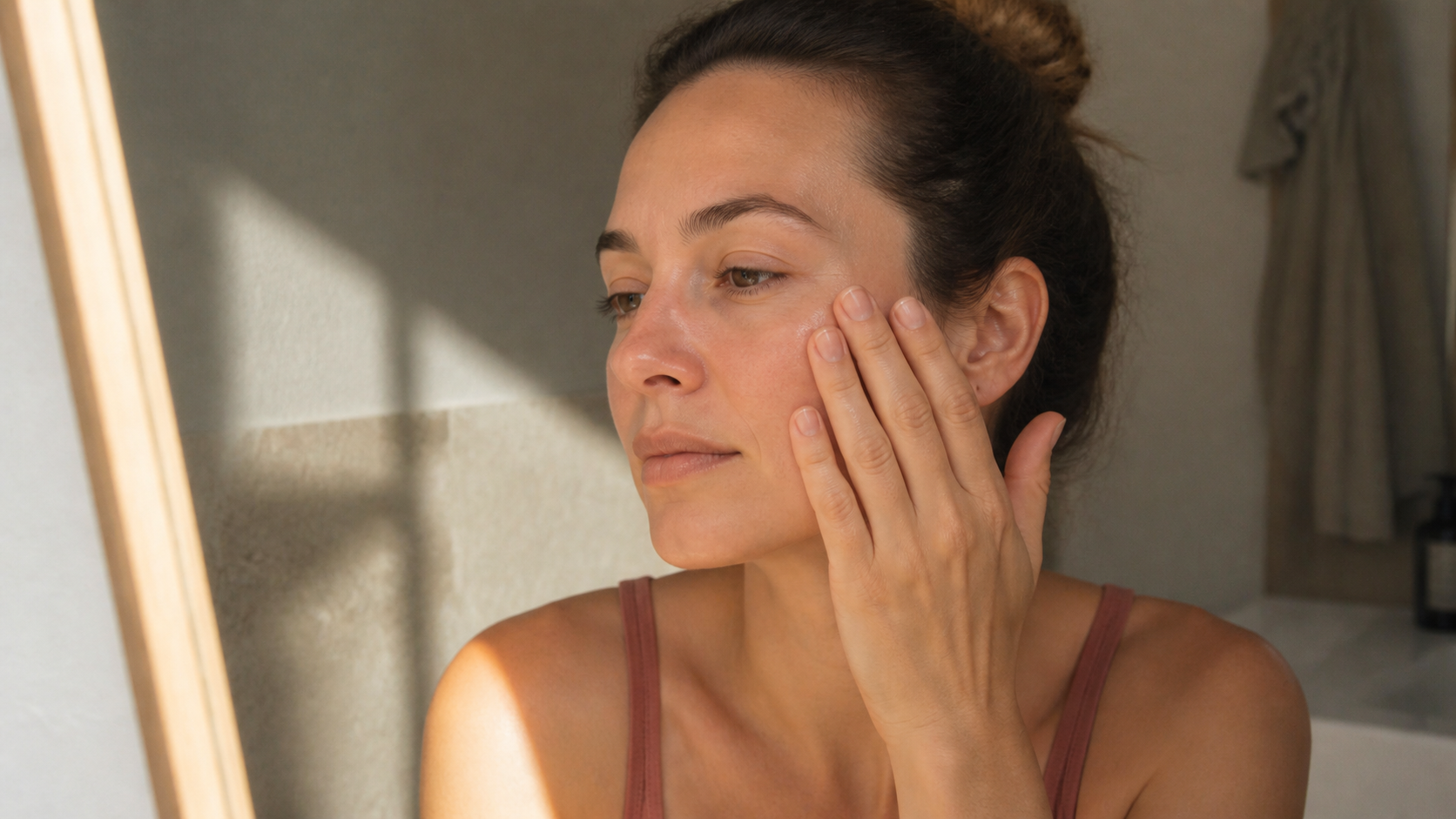
You wake up after a short night, catch your reflection, and your face looks a little puffier than it did yesterday. The tempting response is to press harder, roll faster, and keep going until your cheekbones reappear. Your skin does not need that kind of morning drama.
For mild, familiar morning puffiness, a gentle facial massage for puffiness may make the swelling look less noticeable for a while. Use clean hands, very light pressure, and slow movements from the center of your face toward your ears, followed by strokes down the sides of your neck. Five minutes is plenty for a first try.
The realistic goal is a temporary change in the look of fluid-related puffiness, not a permanent lift or a new face shape. Massage cannot remove facial fat, change bone structure, or treat the medical cause of swelling.
Does facial massage help with puffiness?
It may help the appearance of mild, temporary puffiness, but direct research on cosmetic facial massage in healthy people is limited. Manual lymphatic drainage is a clinical technique used as part of care for lymphedema. Cosmetic face massage borrows its light pressure and slow rhythm, but the two are not the same treatment.
For a deeper look at the drainage sequence, pressure, and safety, see our guide to lymphatic facial massage.
A small study found that five minutes with a facial roller increased skin blood flow for at least 10 minutes in the massaged cheek. It did not measure puffiness or prove better lymph flow. A 2025 systematic review also found that studies of facial massage and related techniques were small and varied too much to support strong claims about lasting cosmetic changes.
Even research in medical settings is not a guarantee. In one small trial after jaw surgery, the group receiving manual lymphatic drainage showed a faster decrease in swelling, but the difference was not statistically significant.
So, can a face massage for puffiness be worth trying? Yes, if your puffiness is mild, the touch feels comfortable, and you keep your expectations sensible. A temporary, subtle change is possible. A guaranteed “snatched” jawline is not.
First, check whether it is puffiness or swelling
Slight puffiness on both sides of your face when you wake up can come from normal overnight fluid retention and may ease within a few hours. Sleep changes can make it more noticeable. Allergies, medication reactions, infections, dental problems, injuries, and medical conditions can also cause facial swelling, so a massage is not the right answer every time.

Use this quick check before putting your hands on your face:
| What you notice | What to do |
|---|---|
| Mild, familiar puffiness on both sides; no pain, heat, rash, or illness | A gentle routine may be reasonable if your skin is calm. |
| New, unexplained, one-sided, painful, or worsening swelling | Skip massage and contact a qualified health professional. |
| Red, hot, tender, or broken skin; fever; dental pain; or signs of infection | Do not massage the area. Seek appropriate medical or dental care. |
| Sudden swelling of the lips, mouth, tongue, or throat; trouble breathing or swallowing | Get emergency help now. |
If you are pregnant or recently gave birth, sudden swelling of your face or hands—especially with a persistent headache, vision changes, upper abdominal pain, or breathing difficulty—needs prompt medical advice. Do not try to massage it away.
Ask your clinician for guidance before lymphatic-style self-massage if you have diagnosed lymphedema, have had lymph nodes removed or radiation treatment, are recovering from facial or neck surgery, or have a condition such as heart or kidney disease, a blood clot, an active infection, or cancer. The safe direction and timing may be different for you.
What you need for a depuff face massage
Your hands are enough. Starting without a tool makes it easier to notice how much pressure you are using.
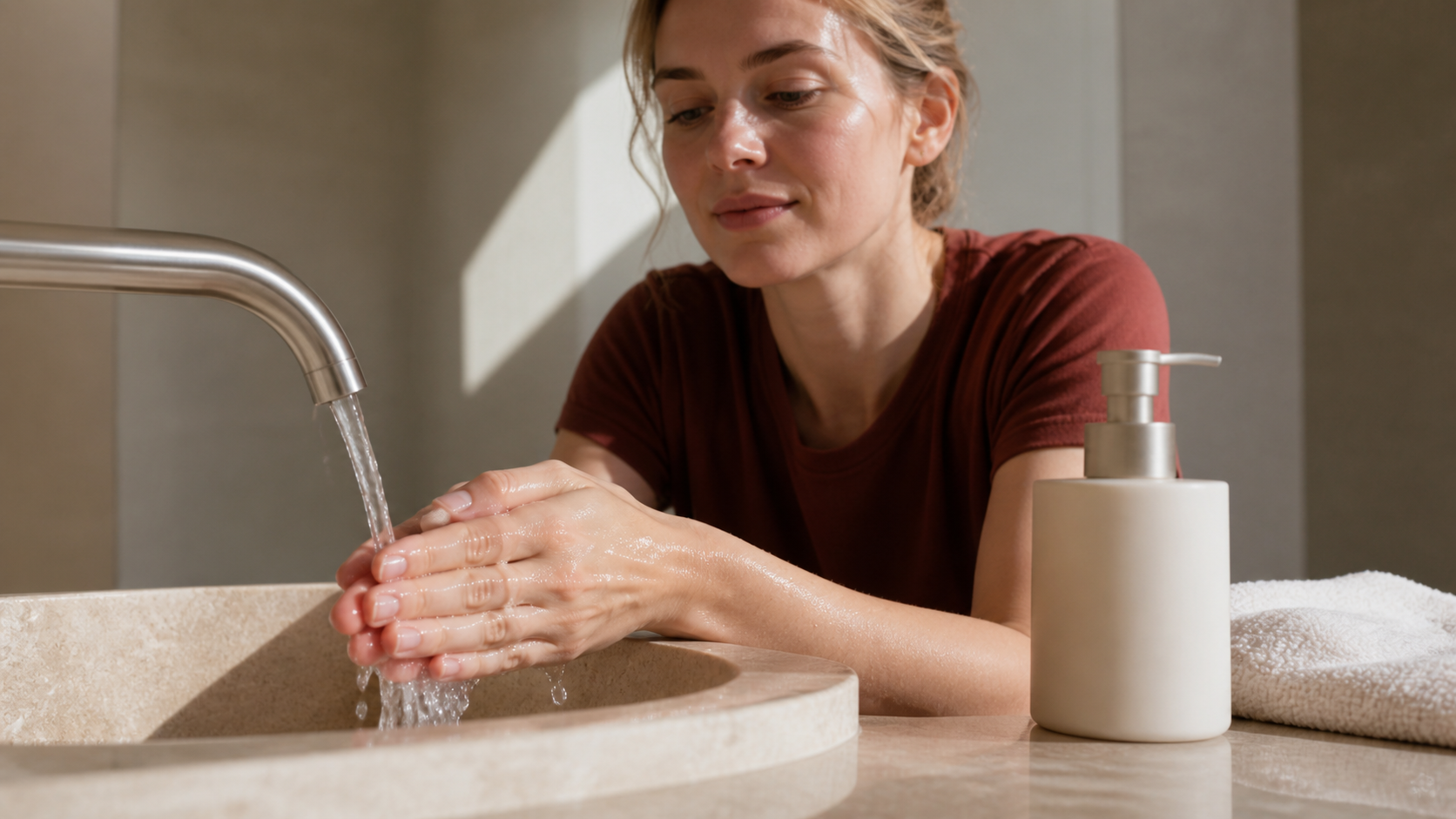
Before you begin:
- wash and dry your hands;
- remove makeup and make sure your skin is clean;
- skip areas with active irritation, sunburn, a rash, cuts, or a recent procedure;
- sit or stand comfortably with your shoulders relaxed;
- use a small amount of a plain moisturizer your skin already tolerates if your fingers drag.
You do not need a thick layer of oil. For lymphatic-style touch, the aim is to gently stretch and release the skin, not slide over it at speed.
Find the right pressure
Rest the flats of two or three fingers on your cheek. Move the skin just enough to feel a soft stretch, then release it fully. If you are digging into muscle, leaving strong red marks, or making the skin sore, lighten up.
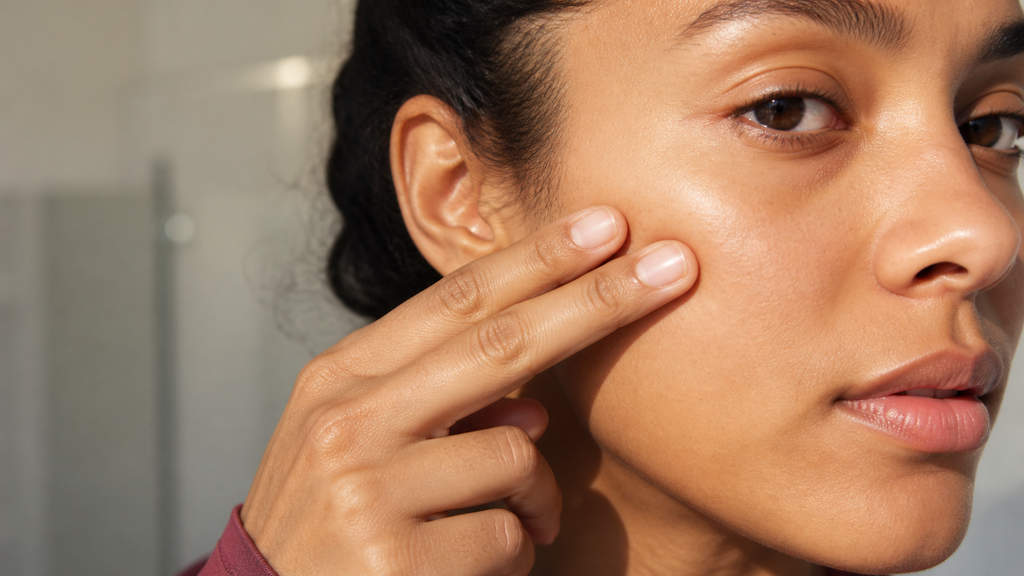
The eye area needs even less pressure. Work along the bone around the eye, never on the eyeball or directly over a swollen eyelid.
How to do facial massage for puffiness in 5 minutes
This hands-only massage for a puffy face moves from the collarbone and neck to the face, then back down the neck. Clinical self-drainage instructions often prepare the collarbone and neck areas before working on facial swelling. This short cosmetic version uses the same general order, but it is not a medical lymphedema routine.
Move slowly. Complete each stroke on both sides before going to the next step.
1. Relax your shoulders and breathe — 30 seconds
Sit upright and let your shoulders drop away from your ears. Place your hands over your lower ribs or abdomen. Take three slow, comfortable breaths without holding your breath or forcing a deep inhale.
This is your cue to slow the routine down. If you are rushing, your pressure usually gets heavier too.
2. Start above your collarbones — 30 seconds
Place two or three fingers in the soft hollows just above your collarbones. Keep away from the front of your throat.
Make a tiny J-shaped movement down and slightly inward, then let the skin return. Repeat five times. The movement should feel almost underwhelming. That is better than pressing too hard.

3. Move down the sides of your neck — 45 seconds
Place the flats of your fingers just below your ears. Gently stretch the skin back and down along the sides of your neck, then release. Work toward the collarbones with five slow passes.
Do not knead the neck muscles or press over the throat. If this position feels awkward, do one side at a time.
4. Sweep from your chin toward your ears — 45 seconds
Set your fingertips at the center of your chin. Use a light outward stroke along the jaw toward the area in front of your ears. After each pass, move down the side of your neck toward the collarbone.
Repeat three to five times. This step should not hurt your jaw or pull the corners of your mouth.
5. Move across your cheeks — 60 seconds
Start beside the corners of your mouth and move outward toward your ears. Next, begin beside your nose and travel across the cheeks toward the same point. Finish each round by moving lightly down the sides of your neck.
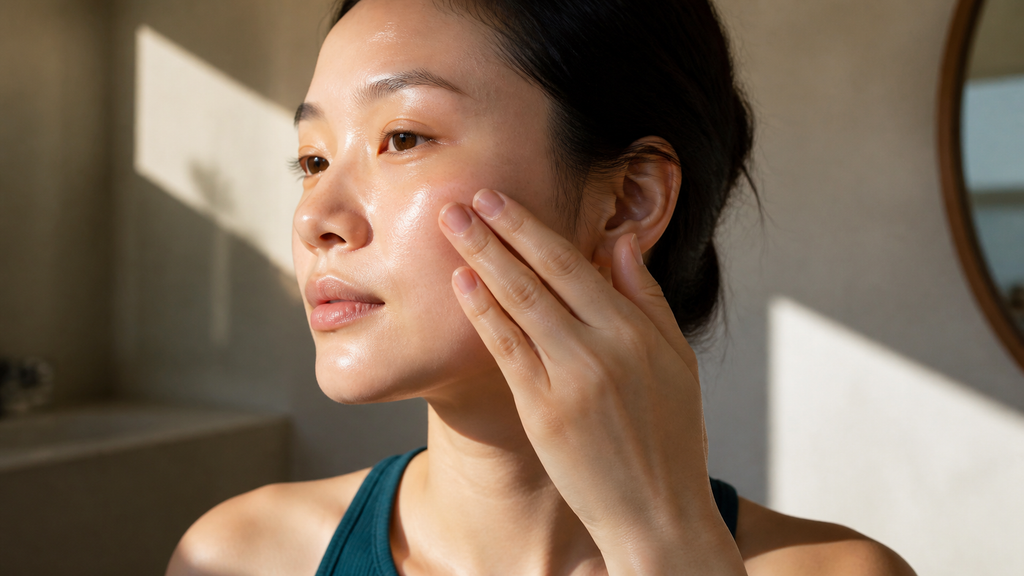
Repeat three to five times. Keep your hands broad and relaxed instead of poking the puffy area with your fingertips.
6. Use feather-light touch around your eyes and forehead — 45 seconds
Place your ring fingers near the inner ends of your brows. Trace outward along the brow bone toward your temples. Then move from the center of your forehead toward the temples and down in front of your ears.
Repeat three times, then continue down the sides of your neck. Skip the eye area if you have irritation, an eye infection, unexplained eyelid swelling, or tenderness.
7. Finish down the neck — 45 seconds
Return your hands below your ears. Repeat five slow strokes down the sides of the neck toward the collarbones. Let your hands lift and reset between passes rather than rubbing upward again.
Your skin should feel comfortable when you finish. A little warmth may occur after touch, but pain, stinging, marked redness, or increased swelling means you should stop.
Common mistakes when massaging a puffy face
Pressing harder to get a faster result
More pressure does not equal more drainage. Lymphatic-style massage uses light skin movement. Deep kneading and aggressive scraping are different techniques and can irritate your skin.
Starting with the under-eye area
It is easy to fixate on the spot that looks puffiest. A calmer approach starts above the collarbones and along the neck before moving to the face. It also keeps you from rubbing one delicate area for several minutes.
Moving back and forth
Use one slow direction, then lift or soften your hand to reset. Rapid sawing motions add friction without making the routine more effective.
Using a roller or gua sha tool with heavy pressure
Tools are optional, not an upgrade you have to earn. If you use one, clean it before and after, add enough familiar moisturizer for comfortable glide, and keep the pressure light. Stop if the tool catches, causes bruising, or leaves redness that does not settle.
Treating every swollen face as a beauty issue
A depuff face massage cannot fix an allergic reaction, infection, dental abscess, medication reaction, or another medical cause. When swelling is new, severe, painful, one-sided, or persistent, figuring out the cause matters more than perfecting the stroke direction.
How often should you massage your face for puffiness?
There is no research-backed cosmetic schedule. Begin with one five-minute session and notice how your skin feels later that day. If there is no irritation, you can keep the routine occasional or try it once a day when familiar puffiness appears.
Longer and more frequent sessions are not proven to work better. Take a break if your skin becomes sensitive, dry, sore, or more swollen. If a clinician gave you a self-drainage plan for a medical condition, follow that plan instead of this one.
You can also pay attention to the pattern. Note when the puffiness starts, whether it affects both sides, how long it lasts, and whether it comes with itching, pain, congestion, a new product, or a new medication. That information is more useful to a health professional than a heavily filtered before-and-after photo.
FAQ
Can facial massage permanently slim your face?
No. A short massage may temporarily change the look of mild fluid-related puffiness, but it does not remove fat or reshape bone. Lasting “face slimming” claims go beyond the available evidence.
Which direction should you massage a puffy face?
For this routine, move from the center of the face outward toward the ears, then down the sides of the neck toward the collarbones. Keep pressure light and avoid the front of the throat.
Is a cold roller better than your hands?
Not necessarily. A cool tool may feel soothing, but evidence does not show that you need one for a useful routine. Your hands are easier to control and simpler to clean. Never apply an extremely cold or frozen tool directly to your skin.
What if your face is puffy every morning?
Occasional puffiness that fades can be harmless, but a repeated pattern is worth noticing. If it is worsening, lasts more than a few days, appears on one side, or comes with pain or other symptoms, ask a qualified health professional about the cause.
Your next step
Try the routine once with clean hands and pressure so light that it feels almost boring. Give each stroke time instead of chasing a dramatic result. If your face feels calm afterward, you have done enough. If the swelling is unfamiliar or your body is telling you something is wrong, pause the massage and get the right advice first.