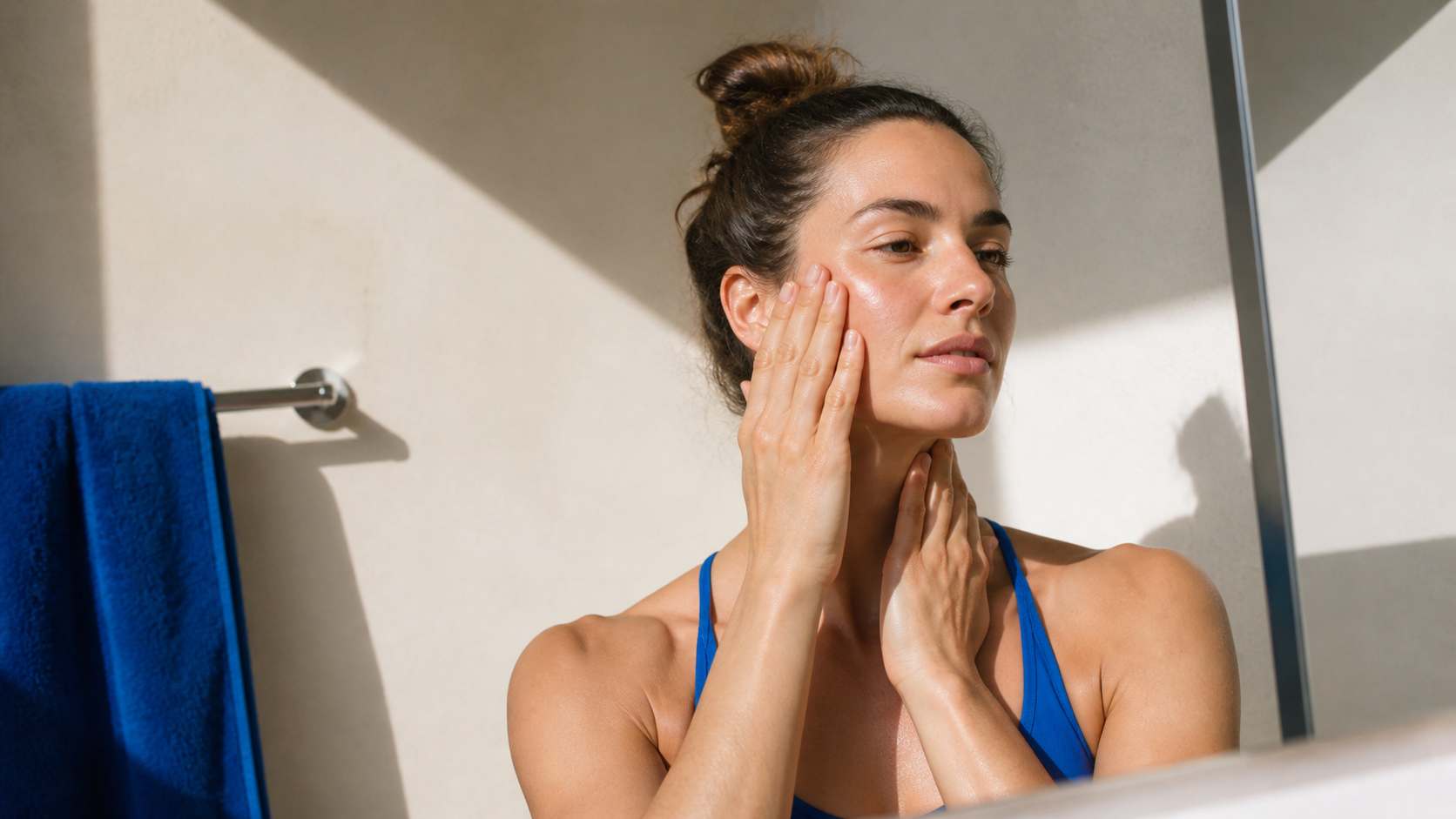
You wake up, look in the mirror, and your face seems a little puffier than usual. Then a five-minute “face sculpting” video promises sharper cheekbones, better skin, and a full-body detox before breakfast. That is a lot to ask from your fingertips.
Here is the useful version: lymphatic facial massage uses very light, slow strokes over the skin of your face and neck. It may help mild puffiness look less noticeable for a while, and the routine can feel relaxing. It does not remove fat, change your bone structure, permanently lift your face, or “flush toxins” from a healthy body.
If you want to try it as a simple self-care practice, pressure and sequence matter more than speed or fancy tools. Start near your collarbones, work down the neck, move from the center of the face toward the ears, then return down the neck.
What is lymphatic facial massage?
Your lymphatic system is a network of vessels and lymph nodes. It helps collect fluid from tissues and return it to your circulation. Manual lymphatic drainage, or MLD, is a specialized, gentle technique used by trained health professionals as part of care for lymphedema.
A cosmetic facial lymphatic drainage massage borrows the light pressure and slow rhythm of that clinical technique. The two are not interchangeable. A short routine for a healthy person with occasional morning puffiness is not a treatment for diagnosed swelling, damaged lymph nodes, or swelling after cancer care or surgery.
That difference matters. If you have lymphedema or swelling linked to an illness, operation, radiation, or lymph-node removal, learn self-massage from your clinician or a certified lymphedema therapist. Your drainage route may need to be adapted to your body.
What can a lymphatic massage on your face actually do?
The most realistic goal is a calm routine that may make mild, temporary puffiness look less obvious. You may also notice warmth or a relaxed feeling after gentle touch. A small study of facial rollers found a short-term rise in skin blood flow after five minutes, but it did not test lymph flow or prove lasting changes to facial shape.
Research on facial massage and lymphatic drainage for healthy people is still limited. A 2025 systematic review found that studies of facial exercises and manual techniques were small and used very different methods. That makes firm claims about long-term cosmetic results difficult.

Keep these expectations clear:
- Possible: a relaxing ritual and a temporary change in the look of mild puffiness.
- Not established: lasting lifting, tighter skin, fewer wrinkles, or a permanently sharper jawline from lymphatic massage.
- Not how it works: detoxing your body, melting fat, treating acne, or causing weight loss.
Persistent or unexplained facial swelling needs a cause, not a stronger massage.
If puffiness is your main concern, our guide to facial massage for puffiness explains how to recognize a mild, familiar pattern and when massage is not the right response.
When should you skip facial lymph massage?
Do not massage skin that is broken, sunburned, very irritated, infected, hot, red, tender, or painful. Skip the routine if you have a fever or feel unwell. Redness, warmth, swelling, and tenderness can be signs of cellulitis, which needs prompt medical care.

Get personal guidance before trying lymph drainage massage for your face if you:
- have lymphedema or a history of lymph-node removal or radiation;
- are recovering from facial, neck, dental, or cosmetic surgery;
- recently had injectables, a peel, laser treatment, or another facial procedure;
- have a blood clot, heart disease, kidney failure, stroke history, active cancer, or another condition that may affect whether massage is appropriate;
- are pregnant and develop sudden or new facial swelling;
- have new, one-sided, painful, or lasting facial swelling.
Swelling of your face, mouth, or throat with trouble breathing or swallowing needs emergency care. Do not try to massage it away.
During any routine, stop if you feel pain, dizziness, nausea, new tingling, or worsening swelling. Red marks are not proof that the technique is working.
How to do a DIY lymphatic facial massage
This short routine is designed as gentle cosmetic self-massage for an otherwise healthy adult. It is not a medical lymphedema plan.
Wash your hands and remove makeup. Keep your nails short enough that they do not scratch. You do not need a roller, gua sha tool, or facial oil. Clean, dry skin is fine. If your hands drag, use a small amount of a plain moisturizer your skin already tolerates.

Pressure check: use the soft pads or flats of your fingers. Gently stretch the skin, then release. If you can feel yourself digging into the muscles, pressing on your throat, or dragging the skin hard, lighten up.
1. Settle your shoulders and breathe
Sit upright in a comfortable position. Drop your shoulders away from your ears. Take three slow breaths into your belly, without forcing them or holding your breath.
2. Start above the collarbones
Place two or three fingers in the soft area just above each collarbone. Make a tiny, gentle J-shaped stretch down and inward, then fully release. Repeat five times.

The movement should be slow enough that you can feel the skin return before the next repetition. This is not kneading.
3. Move down the sides of your neck
Place the flats of your fingers just below your ears. Stretch the skin softly back and down toward your collarbones, then release. Repeat five times on each side.
Stay on the sides of the neck. Do not press into the front of your throat.
4. Work from your chin toward your ears
Place your fingers at the center of your chin. Glide or softly stretch along the jaw toward the area in front of your ears. Then move your hands down the sides of your neck to the collarbones. Repeat three to five times.
This is the lower-face part of your self facial lymphatic massage. More pressure will not make it more effective.
5. Move across the cheeks
Start beside the corners of your mouth and move outward toward your ears. Repeat from the sides of your nose, moving across the cheeks. After each pass, sweep lightly down the sides of your neck. Do three to five rounds.
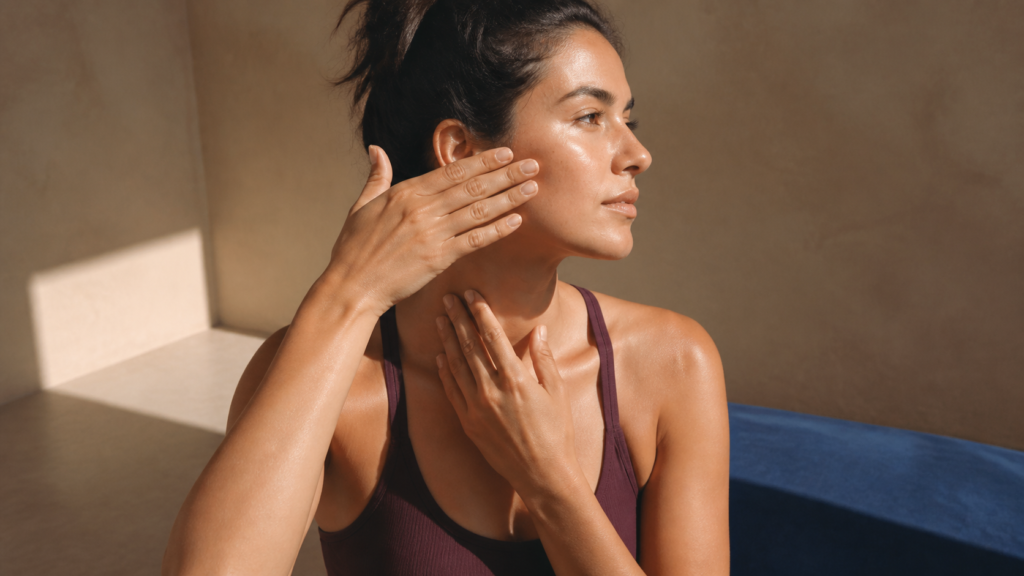
Keep the pace slow and even. Do not scrub back and forth.
6. Use extra-light pressure around the upper face
Starting near the inner brow, trace outward toward the temple with barely-there pressure. From the center of the forehead, move outward toward the temples. Continue toward the area in front of the ears, then down the neck. Repeat three times.
Stay on the bone around the eye rather than pressing on the eyelid or eyeball. Skip this area if it feels tender or your skin is irritated.
7. Finish down the neck
Repeat the soft strokes from below your ears down to your collarbones five times. Finish with three slow breaths. Your skin should look comfortable, not bright red or scraped.
The full routine takes about five minutes. That is enough for a first try.
How often can you do facial lymphatic drainage?
There is no proven cosmetic schedule for healthy skin. Start with one gentle session and see how your skin responds over the next day. If it feels comfortable, you can keep the routine occasional or use it once a day. More repetitions and harder pressure are not a shortcut to better results.
Morning can be convenient if your goal is the look of temporary puffiness. Evening may fit better if you use the routine to slow down. The best time is the one that does not make you rush and press too hard.
If a clinician prescribed simple lymphatic drainage for diagnosed swelling, follow that plan instead. Clinical routines may be longer, more frequent, and directed along different routes.
Common facial drainage massage mistakes
Pressing as if you are working a tight muscle
Lymphatic-style strokes are light. Deep pressure, pinching, or aggressive scraping turns the routine into a different type of massage and can irritate skin.
Only rubbing the puffy spot
A useful sequence includes the collarbone and neck before and after the face. Randomly pushing one under-eye area for several minutes is more likely to irritate it than create a better result.
Using a tool before you understand the pressure
Your hands give immediate feedback and are easier to control. If you later use a roller or gua sha tool, keep it clean, use minimal pressure, and stop if the skin pulls, stings, or stays red.
Treating new swelling as a beauty problem
Allergies, infection, medication reactions, dental problems, and other conditions can cause facial swelling. Massage does not diagnose the cause. New, severe, painful, one-sided, or persistent swelling deserves medical attention.
FAQ
Does lymphatic facial massage remove toxins?
No evidence shows that MLD gives a healthy lymphatic system an extra “detox.” Your lymphatic system already works with your circulation and organs to manage fluid and waste. Massage is not a cleanse.
Will it slim or sculpt your face?
It may briefly change how mild puffiness looks. That is different from losing facial fat or changing facial anatomy. Any de-puffing effect can vary and may not be visible at all.
Do you need facial oil?
No. Traditional simple lymphatic drainage uses light skin stretches, so heavy slip is not required. If dry skin makes your hands catch, use a small amount of a familiar, non-irritating moisturizer.
Should the strokes go up or down?
Across the face, move from the center outward toward the ears. Then continue down the sides of the neck toward the collarbones. Avoid treating “always upward” as a universal rule for this type of massage.
Your next step
Try one five-minute round with clean hands and truly light pressure. Pay attention to comfort, not a dramatic before-and-after photo. If you cannot tell whether your swelling is ordinary morning puffiness or a symptom, skip the DIY routine and ask a qualified health professional first.