
You decide you will start on Monday. Then Monday arrives, along with a full calendar, five saved workout videos, and no clue which one is actually meant for a beginner.
You do not need more discipline before you begin. You need a smaller first step.
Here is the short answer to how to start working out: choose one simple cardio activity and one full-body strength session, schedule two or three 10–20-minute blocks for your first week, and finish each session with some energy left. Repeat before you add more. Your first week is practice, not a fitness test.
First, choose the right starting lane
Most generally healthy adults can begin with light or moderate activity and build up. A walk, an easy bike ride, or a basic strength session is a more useful starting point than an all-out challenge.
Get individualized advice before you begin if you have an injury, ongoing pain, a chronic health condition, significant symptoms, or need pregnancy or postpartum modifications. The same applies if you are returning after surgery or a serious illness. A qualified health or exercise professional can help you choose an appropriate type and amount of activity.
During a workout, stop if you feel pain, dizziness, faintness, chest pressure, or unusual shortness of breath. Do not try to earn your way through a warning sign.
How to start working out for beginners in seven steps
1. Pick one reason that matters this month
“Get fit” is too vague to guide Tuesday’s workout. Choose a reason you can connect to an action, such as:
- feel less winded on stairs;
- learn basic strength exercises;
- move more during a desk-heavy week;
- rebuild a routine after time away.
Then choose one thing to track. It could be workouts completed, minutes walked, or the exercise version you used. Body weight, calories burned, and mirror checks are not required to prove that you started.
2. Choose one cardio option and one strength option
If you are learning how to start exercising for beginners, skip the hunt for a perfect workout style. Start with two basic categories:
- Aerobic activity: brisk walking, cycling, swimming, or dancing—anything that raises your breathing and heart rate.
- Strength activity: bodyweight exercises, resistance bands, machines, dumbbells, or another routine that works your major muscle groups.
The current U.S. guideline for adults is 150 minutes of moderate aerobic activity a week, or 75 minutes of vigorous activity, plus muscle-strengthening activity on at least two days. That is a direction to build toward, not a Week 1 entrance fee. Any amount of activity can offer benefits, and short bouts count.
Choose options that match your current ability, schedule, space, and budget. A home session is not a lesser workout. The 2026 American College of Sports Medicine review found that bodyweight, resistance-band, and home-based strength training can be effective.
3. Use this first-week plan if you are starting from scratch
The best first schedule is one you can see yourself repeating during a normal week—not only during a rare, perfectly organized one.
| Day | Session | What to do |
|---|---|---|
| Monday | 10-minute cardio | Walk, pedal, or dance at an easy-to-moderate pace. |
| Wednesday | 15-minute strength | Warm up, then practice one controlled set of 4–6 beginner exercises. |
| Saturday | 10–20 minutes | Repeat the session you preferred, or take an easy walk. |
For the strength day, use these bodyweight exercises for beginners to choose controlled movements and easier variations.
Move the days as needed. Keep some space between strength sessions if you repeat them. If three sessions are unrealistic, do two. If 10 minutes is too much today, start with five.
This is how to start working out from scratch without turning your whole week upside down. Put the sessions on your calendar with a time and place: “10-minute walk after lunch” is much easier to act on than “exercise more.”

4. Keep the effort easier than your maximum
For cardio, use the talk test. At a moderate effort, you breathe harder but can still hold a conversation. If you can only say a few words before taking a breath, the effort is vigorous. A true beginner can stay at an easy or moderate pace while learning what different effort levels feel like.
For strength work, choose a version you can control. End the set before your form falls apart. Training to momentary muscle failure is not required for the average healthy adult to make progress.
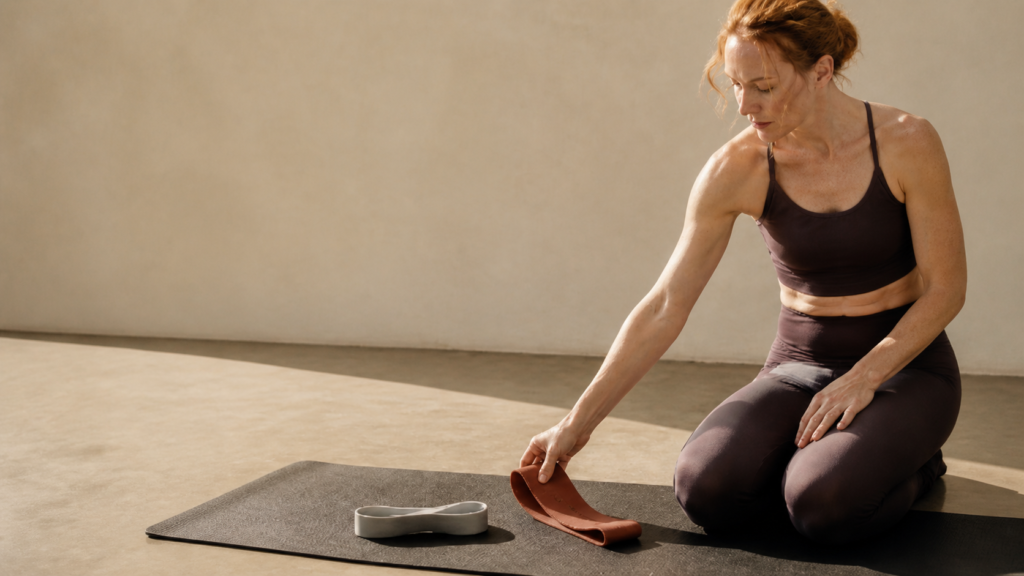
Begin each session with a few minutes of easier movement. Walk slowly before you pick up the pace, or rehearse the strength exercises with a comfortable range. Ease down at the end instead of stopping abruptly after hard effort.
5. Progress one detail at a time
When people ask how to slowly start working out, the useful word is “slowly.” Repeat your starting schedule for one or two weeks. If you recover well and the sessions feel controlled, change one thing:
- add five minutes to one cardio session;
- add a few controlled reps to an exercise;
- add one set to part of your strength session;
- add one short workout day;
- choose a slightly harder exercise variation.
Do not increase time, frequency, weight, and intensity in the same week. One change gives your body time to adapt and helps you notice what works.
If fatigue, soreness, or discomfort makes daily life harder, reduce the next session or repeat the previous week. Progress does not require you to win every workout.
6. Make the routine easy to begin
Motivation is unreliable after a long day. Set up a cue that does some of the work for you:
- keep your shoes near the door;
- save one beginner routine instead of browsing every time;
- block the session on your calendar;
- pair a walk with your lunch break or commute;
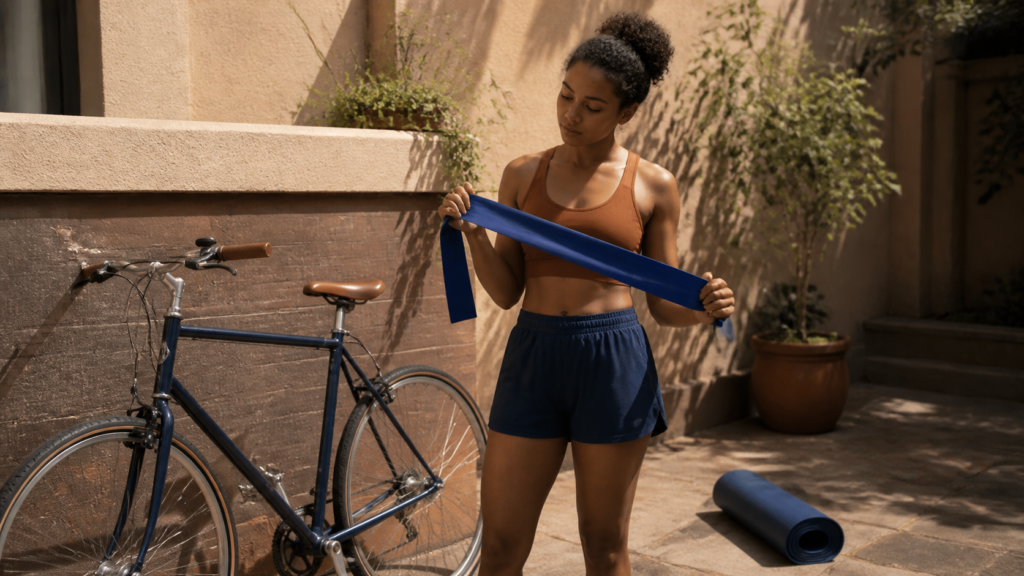
- keep a resistance band where you can see it.

Also create a minimum version. Your 20-minute workout might become five minutes of walking on a packed day. That is a deliberate adjustment, not a loophole.
7. Track the habit without demanding a perfect streak
To learn how to start exercising regularly, record the smallest facts: date, activity, minutes, and one quick note about effort. You need enough information to plan the next session, not a dashboard that becomes another chore.
If you miss a workout, do not double the next one. Return at the next practical time. If you miss a week, use the last version that felt manageable. Consistency is the act of returning, not the absence of interruptions.
How to start exercising if you never have
Starting from zero can feel awkward because every part is new: the movements, the effort, and even where to put your phone. Reduce the number of new decisions.
- Choose a low-skill activity such as walking, a stationary bike, or a beginner machine circuit.
- Learn four to six strength movements instead of collecting dozens.
- Watch instructions before the session, then keep the routine visible while you practice.
- Use a wall, bench, or stable support when balance is uncertain.
- Stop while your technique is still controlled.
You do not need special clothes, a gym membership, or an intense sweat session to qualify as someone who works out. You need one activity you can do safely and one time when you will do it.
How to start working out again after a break
Your old workout is not automatically your new starting point. After weeks or months away, begin with less time, less resistance, fewer sets, or an easier exercise version than you used before.
For the first one or two weeks, focus on relearning the movements and seeing how you recover. Add difficulty only when the current session feels steady. If the break followed an injury, surgery, pregnancy, significant symptoms, or illness, ask a qualified professional for return-to-exercise guidance.
This approach may feel conservative when you remember what you used to do. It is still faster than pushing too hard, feeling awful, and disappearing for another month.
Common beginner mistakes that make starting harder
- Copying an advanced schedule. A six-day split is not a badge of seriousness. It is simply more than most beginners need.
- Using soreness as a score. A useful workout can feel challenging without making stairs miserable for three days.
- Changing the plan every session. Repetition helps you learn technique and notice progress.
- Making every session hard. Easier work gives you room to practice and recover.
- Waiting for a free hour. A short session can establish the routine and add meaningful activity.
- Treating a missed day as failure. Move the session or continue with the next one. You do not need to “make up” the missed work.
FAQ
How should a beginner start working out?
Start with two or three short sessions that combine an accessible cardio activity with basic strength work. Keep the effort controlled, repeat the plan, and add only one small challenge at a time.
How many days a week should a beginner work out?
Two or three short days can be a practical first week, but there is no universal starting number. Your schedule, current activity, health, and recovery matter. Over time, work toward a weekly mix of aerobic activity and strength work on at least two days.
How long should a beginner’s first workout be?
Ten to 20 minutes is a useful trial for many beginners, not a minimum you have to meet. Five minutes is a valid start if you have been inactive, feel unsure, or have a very busy day. Finish at a point that makes a second session realistic.
Can a beginner start working out at home?
Yes. Walking, bodyweight exercises, and resistance-band routines can all be done at home. A gym adds equipment and support, but it is not required for your first workout or for effective strength training.
Your next step
Open your calendar and choose three possible 10–20-minute blocks. Label one “cardio,” one “strength,” and one “repeat or walk.” Then decide exactly where each session will happen.
You do not have to feel like a workout person before you begin. Do the first small session, write down what you did, and let that evidence replace the guesswork.