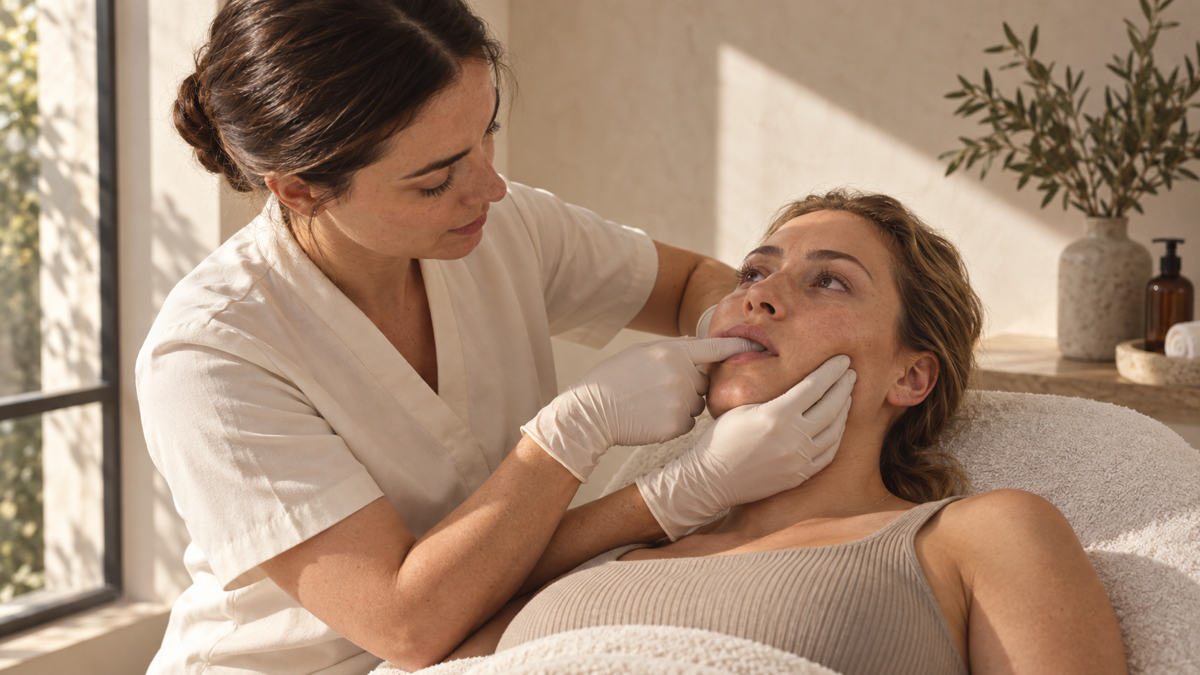
You are halfway through a facial video when the practitioner puts on gloves and places a finger inside the client’s cheek. The comments promise a sharper jawline, less buccal fat, and an instant lift. Understandably, you have questions.
Buccal massage is a face massage that works on the cheeks and nearby jaw area from both outside the face and inside the mouth. During the intraoral part, a practitioner uses a new gloved finger to apply controlled pressure to the inner cheek while the other hand may support the tissue from the outside.
The method may feel relaxing or leave the face feeling temporarily less tight. What it has not been shown to do is remove cheek fat, permanently slim or lift the face, change facial anatomy, or produce predictable anti-aging results. Direct research on cosmetic buccal massage is very limited, so dramatic before-and-after claims deserve a calm second look.
Buccal massage: 7 things to know
- It includes inside-cheek contact. A practitioner works from outside the face and inside the mouth.
- The cosmetic evidence is limited. Research has not established predictable sculpting results for this specific technique.
- It does not remove cheek fat. Massage cannot remove the buccal fat pad or create a lasting change in facial structure.
- Pressure should stay controlled. Stretching or firm pressure may be noticeable, but sharp pain or burning is a reason to stop.
- Hygiene is part of the service. Look for clean hands and a new pair of single-use examination gloves.
- Irritated tissue needs a break. Postpone the session when the skin or inner cheek is sore, open, bleeding, or actively irritated.
- External massage is the simpler home option. There is no standardized, evidence-based cosmetic protocol for an at-home intraoral routine.
What is buccal massage?
“Buccal” means cheek. The buccal mucosa is the moist lining on the inside of your cheek, so buccal facial massage is partly an intraoral technique. That is the main difference between it and an ordinary facial massage performed only on the skin.
A session often includes external strokes across the cheeks and jaw before any work inside the mouth. The practitioner then uses a gloved finger to reach the inner surface of one cheek at a time. The exact sequence, pressure, and session length vary because there is no single standardized cosmetic protocol.
The naming is equally loose. You may see names such as buccal facial massage, inner facial massage, intraoral facial massage, or sculptural buccal massage. These labels do not guarantee a particular method, training standard, or result, so the service description matters more than the trend-friendly name.
What happens during a session?
A good appointment should begin with a clear explanation. You should know which parts of the face and mouth will be touched, whether the intraoral step is optional, what hygiene process is used, and how to signal that you want less pressure or want the treatment to stop.

The session may include:
- A brief check-in. The practitioner asks about current mouth or skin irritation, recent procedures, and the result you expect.
- External preparation. The practitioner begins with clean hands on cleansed skin, using enough product to avoid dragging.
- Fresh gloves for intraoral work. The practitioner puts on a new pair of single-use examination gloves before touching saliva or the inner cheek.
- One cheek at a time. A gloved finger works inside the cheek while the other hand supports or massages from the outside.
- A gentle finish. The practitioner removes and discards the gloves, cleans their hands, and may finish with light external strokes.
The inside-mouth step is probably the part that caught your attention. It should feel like firm but controlled pressure or a stretch along the cheek, not scraping, sharp pain, pinching, or a test of how much discomfort you can tolerate. You can pause or end the intraoral part at any point. Consent is not a one-time box to check at the start.
What results are realistic?
The honest answer is modest: a cosmetic session may feel pleasant, create a temporary sense of ease around the cheeks or jaw, or make the face look slightly different right afterward. Research has not established how often those changes happen, how large they are, or how long they last specifically after buccal massage.

A 2025 systematic review included 12 studies and 321 women. Its abstract categorized two studies as manual massage, while the full-text discussion grouped three under manual therapy and/or massage. Methods varied widely, and none established cosmetic buccal massage as a standardized technique with reliable aesthetic results.
There is separate research on intraoral myofascial therapy for people with chronic muscle-related temporomandibular disorders. In those studies, structured treatment targeted pain and jaw function. That does not prove that a salon-style intraoral facial massage sculpts a healthy face, treats jaw symptoms, or provides the same outcome. Similar hand placement does not make the purpose, protocol, or evidence interchangeable.
This is where expectations save you money and frustration. If you enjoy skilled touch and a quiet pause, the session may be worthwhile as a comfort ritual. If your goal is permanent contour change, fat loss, wrinkle removal, or a lasting lift, the evidence does not support that promise. Our guide to realistic facial massage benefits explains what broader facial-massage research can and cannot tell you.
Can it sculpt your face or remove cheek fat?
“Sculpt” is a visual marketing word, not a precise outcome. A face can look a little different from one photo to the next because of lighting, camera angle, expression, muscle position, and normal shifts in fluid. A post-session photo cannot tell you which factor changed or whether the effect will last.
Massage also does not remove the buccal fat pad. This is a naturally occurring pad of fat in the cheek, and its size varies from person to person and even between the two sides of one face. Actual buccal fat removal is a surgical procedure that removes tissue through an incision inside the mouth. Pressure from fingers cannot reproduce that process.
That makes “buccal fat massage” a misleading search phrase if it suggests fat can be kneaded away. Massage does not selectively burn facial fat, dissolve it, move it out through lymphatic pathways, or permanently carve a hollow below the cheekbone.
A temporary change is not automatically fake; it is simply temporary and hard to predict. The problem begins when a brief appearance shift is sold as proof of structural remodeling, collagen rebuilding, rejuvenation, or a natural facelift.
How does it compare with other facial massage?
The easiest way to choose is to match the method to the experience you actually want.
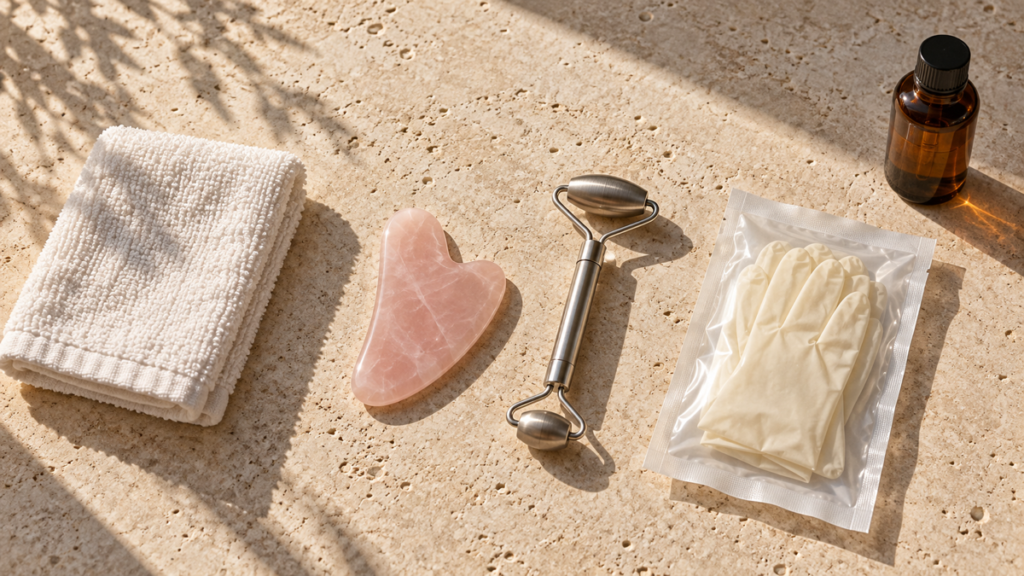
| Method | Where it works | What makes it different | A realistic reason to choose it |
|---|---|---|---|
| Buccal massage | Outside the face and inside the cheeks | Includes direct contact with the oral mucosa using a gloved finger | You are comfortable with intraoral touch and want a practitioner-led face massage experience |
| External hands-only massage | Skin surface only | No fingers enter the mouth; pressure is easy to adjust yourself | You want a simple, low-equipment home routine |
| Gua sha or facial roller | Skin surface with a tool | Requires slip, a smooth tool, and careful pressure | You enjoy the feel and ritual of a tool |
| Lymphatic-style massage | Skin surface with very light movements | Focuses on gentle surface-level strokes rather than deep cheek pressure | You want to understand a light-touch approach; start with our guide to lymphatic facial massage |
None of these methods removes facial fat or changes bone structure. More pressure is not an upgrade, and stacking several methods into one long routine does not make the result more permanent.
Hygiene checks that matter
Inside your cheek is a delicate lining called the buccal mucosa. Intraoral work also involves contact with saliva, which makes hygiene a core part of the service, not a nice extra.
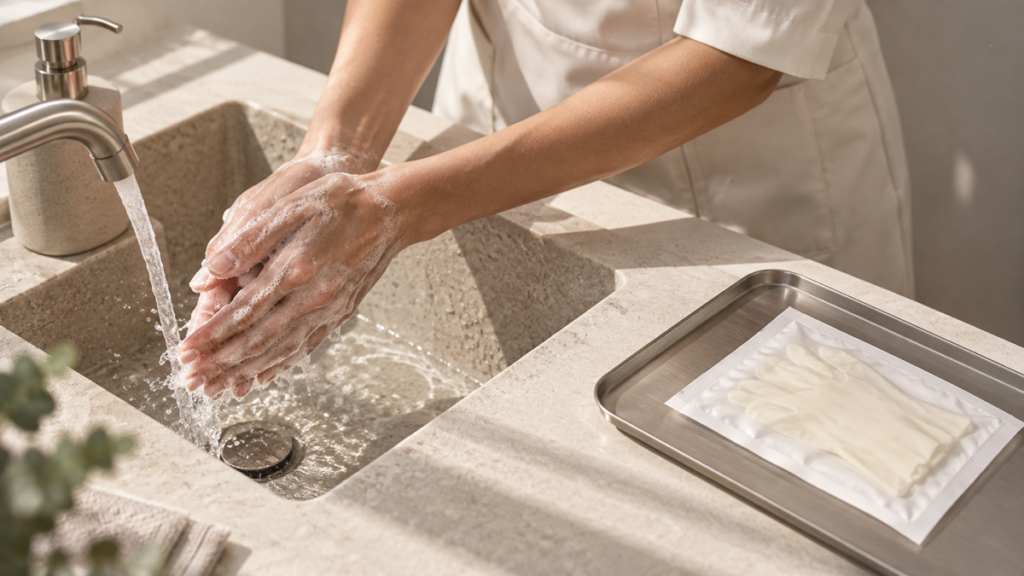
Because cosmetic buccal services are not standardized, treat the following points as practical hygiene questions rather than proof of a provider’s license or training. They are adapted from CDC dental infection-control guidance for contact with saliva and mucous membranes; they are not a universal spa licensing or training standard.
Before the intraoral step, look for these basics:
- The practitioner washes or sanitizes their hands before putting on gloves.
- They use a new pair of single-use examination gloves for you.
- The gloves do not touch a phone, door handle, drawer, product jar, or other surface before entering your mouth.
- A torn or punctured glove is replaced immediately.
- Nails are short and smooth enough not to scratch through the glove.
- Any reusable external tools are cleaned according to their care instructions.
- Gloves are removed and discarded after the intraoral part, followed by hand hygiene.
Gloves do not replace clean hands, and washing a disposable glove does not make it reusable. If you cannot see the setup, asking, “What is your glove and hand-hygiene process for the intraoral part?” is entirely reasonable.
When it makes sense to postpone the session
Skip intraoral massage when the inside of your mouth is sore, cut, ulcerated, bleeding, or irritated. Friction and pressure are not helpful additions to tissue that is already trying to settle. Postpone work on any treatment area that is sore, broken, or irritated rather than asking the practitioner to massage around it.
Recent dental work, oral surgery, injectables, threads, lasers, peels, microneedling, or other facial procedures can come with specific aftercare restrictions. Follow those instructions and do not add massage until the stated no-massage period has ended. Guessing is not a useful skin care strategy.
During the session, stop the intraoral work if you feel sharp pain, burning, pinching, numbness, nausea, or worsening jaw discomfort. Afterward, do not chase soreness with another massage. Give the area a break and keep the rest of your routine gentle if the skin or mouth feels irritated.
How to choose a provider
Because service names and permitted scopes vary by location, ask specific questions instead of relying on “certified” in a bio. A clear provider should be able to explain:
- what training they completed for intraoral work;
- whether buccal work is allowed within their local scope;
- how they clean their hands and manage single-use gloves;
- what the session includes and how long the intraoral portion lasts;
- how they adjust pressure and obtain consent;
- which claims they make about likely outcomes;
- what they do if tissue becomes painful or irritated.
Be cautious with guarantees of fat loss, detoxification, permanent lifting, anatomical change, or a fixed number of sessions that everyone “needs.” A credible explanation should leave room for no visible change at all.
You can also ask to skip the inside-mouth portion and keep the session external. A menu is not a contract, and being curious about a trend does not obligate you to complete every step.
What about at-home routines?
Social videos can make intraoral massage look as simple as putting on a glove and kneading the cheek. The missing pieces are pressure control, clean technique, a clear reason for each movement, and knowing when irritation means stop. More detailed choreography does not solve those gaps.
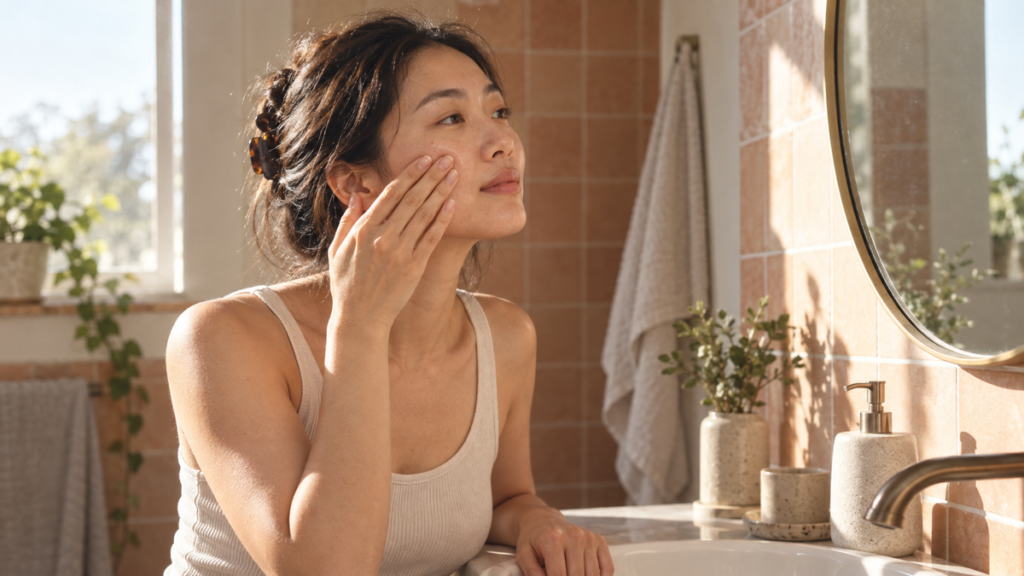
There is no standardized, evidence-based cosmetic protocol for doing buccal massage at home. For a beginner routine, keep the massage external, use comfortable pressure, and stop if the skin becomes sore or irritated. These gentle external facial massage techniques offer a practical place to start without adding inside-mouth contact.
FAQ
Does buccal massage remove buccal fat?
No. Massage cannot remove or selectively reduce the buccal fat pad. Buccal fat removal is a surgical procedure; a massage does not create the same anatomical change.
How long might a short-term change last?
There is no reliable standard answer. Direct studies have not established the size or duration of cosmetic changes after a buccal massage. If your face looks different immediately afterward, treat that as a possible short-term change rather than evidence of permanent sculpting.
Should the inside-cheek step hurt?
No. You may notice pressure or stretching inside the cheek, but sharp pain, burning, pinching, or worsening jaw discomfort is a reason to stop. Stronger pressure has not been shown to create a better cosmetic result.
Is a sculptural buccal massage better than gua sha?
There is no good comparative evidence showing that one produces superior or lasting facial sculpting. Choose according to the experience you prefer, the hygiene and pressure controls, and whether the provider describes the limits honestly.
Can you combine it with gua sha?
You can keep the methods on separate days rather than piling more friction onto the same session. If the skin or inner cheek feels sore or irritated, pause both. Doing more techniques at once does not prove that you will get a stronger or longer-lasting result.
The practical takeaway
Buccal massage is an external and inside-cheek face massage, not a non-surgical way to remove fat or rebuild your facial structure. The most useful expectations are comfort, a distinctive massage experience, and perhaps a subtle short-term appearance change that may or may not happen.
If you book a session, focus on the things you can verify: clear consent, controlled pressure, clean hands, new gloves, calm tissue, and honest claims. You do not need to tolerate pain or believe a facelift-sized promise to enjoy a face massage.