

Ice Roller for Face: Benefits, How to Use It, and Safety
11 min readAn ice roller for face care can feel like the obvious answer after a short night: you catch your reflection and want less puffiness before your first meeting. The promise is tempting: smaller pores, calmer breakouts, and a sharper face, too.
Using an ice roller on your face can feel refreshing and may make mild, familiar puffiness look less noticeable for a while. It does not permanently shrink pores, treat acne, sculpt your features, tighten loose skin, or change facial anatomy. A simple first routine is enough: chill the tool as its instructions direct, use light pressure on clean skin, keep it moving, and stop before your skin feels numb or painful.
Think of an ice roller as a short cooling ritual, not a corrective treatment. A subtle temporary change counts. A dramatic before-and-after photo is not the standard your morning needs to meet.
What is an ice roller for the face?
An ice roller is a handheld tool with a smooth rolling head designed to feel cold against the skin. Some have a gel-filled or water-filled head. Others use metal, stone, or another solid material that cools in a refrigerator. Product directions vary, so “ice roller” does not always mean the tool should be frozen.
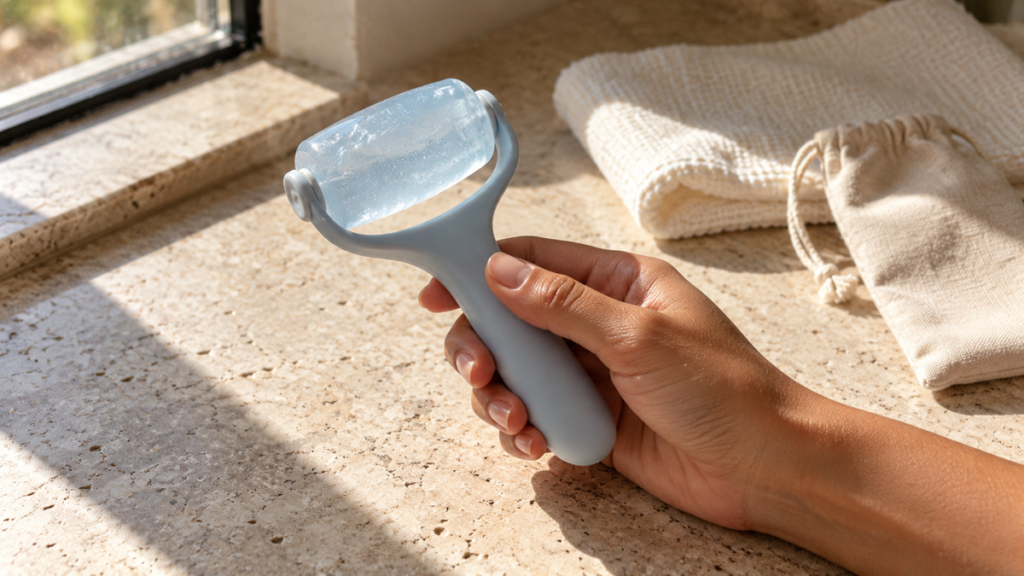
A cold face roller combines two things: cool contact and gentle movement over the skin. That makes it different from holding an ice cube in one spot. It is also different from a medical cooling device, a cold pack used after an injury, or temperature-controlled treatment after surgery.
The tool should roll smoothly without pinching, scraping, or leaking. If the head is cracked, rough, stuck, or damaged, it no longer belongs in your skin care routine.
What are the realistic benefits of an ice roller for your face?
The evidence for a consumer ice roller is much thinner than social media claims suggest. There are studies of facial cooling and studies of facial massage rollers, but that is not the same as testing a chilled beauty roller for everyday puffiness.
Here is what the available evidence can—and cannot—tell us.
A fresh, cooling sensation
This is the most reliable benefit. Cold contact activates temperature sensation, so the roller may feel refreshing after sleep, heat, or a long day. That sensory effect can make the routine pleasant even when nothing visible changes.
Cold also affects blood flow near the skin, but the response depends on temperature, exposure time, and the area being cooled. In a small controlled facial-cooling study, 30 minutes of regulated cooling reduced measured facial skin blood flow during treatment. Participants found milder temperatures more comfortable than the coldest settings. The study tested controlled equipment, not a beauty roller, so it supports a basic point rather than a beauty claim: colder is not automatically more useful or more comfortable.
A temporary change in mild puffiness
You may notice a temporary change in familiar morning puffiness, but direct research has not shown how much of that change comes from cooling, rolling, or normal variation.
Do not confuse ordinary morning puffiness with new, painful, one-sided, or persistent swelling. A beauty tool is not the right experiment for swelling you do not recognize as normal for you.
Brief warmth or color after rolling
Your skin may feel cooler and look less flushed during use, then become warmer or pinker as it returns to its usual temperature. Mechanical rolling adds another variable. One small study found that five minutes with a non-cooled facial massage roller increased cheek skin blood flow for at least 10 minutes, but it included only 12 people in the short-term test and did not measure puffiness, pores, acne, or the effect of cold. In other words, roller movement and cold can produce different short-term responses.
That is why the benefits of ice rolling your face should stay modest: a cool sensation, a quick ritual, and a possible temporary change in familiar puffiness. The evidence does not support promises of lasting lifting, permanent pore reduction, increased collagen, “detox,” fat loss, or a reshaped jawline.
How to prepare your skin and roller
You do not need a complicated setup. You do need a clean tool and a temperature your skin can tolerate.

Before you start:
- Read the storage and use instructions for your specific roller. Refrigerate or freeze it only if the maker says to.
- Wash and dry your hands.
- Cleanse your face gently and pat it dry.
- Check that the roller head turns freely and has no cracks, leaks, chips, or rough edges.
- Let a very cold roller sit at room temperature briefly if it feels painfully cold in your hand.
- Test it for a few seconds along the side of your lower cheek or jaw before moving across the rest of your face.
You usually do not need oil for an ice roller because the head should roll rather than drag. If your tool pulls the skin, check that it is moving properly instead of adding pressure. A thin layer of a familiar moisturizer is fine if that makes the routine more comfortable, but this is not the moment to test a new active product.
How to use a cold roller on your face
There is no research-backed cosmetic schedule for ice rolling. Treat the following as a conservative first routine, not a proven formula.
1. Start with one cheek
Place the roller near the side of your nose, without pressing into it. Roll slowly toward your ear, lift, and return to the starting point. Make one or two passes at slightly different heights.
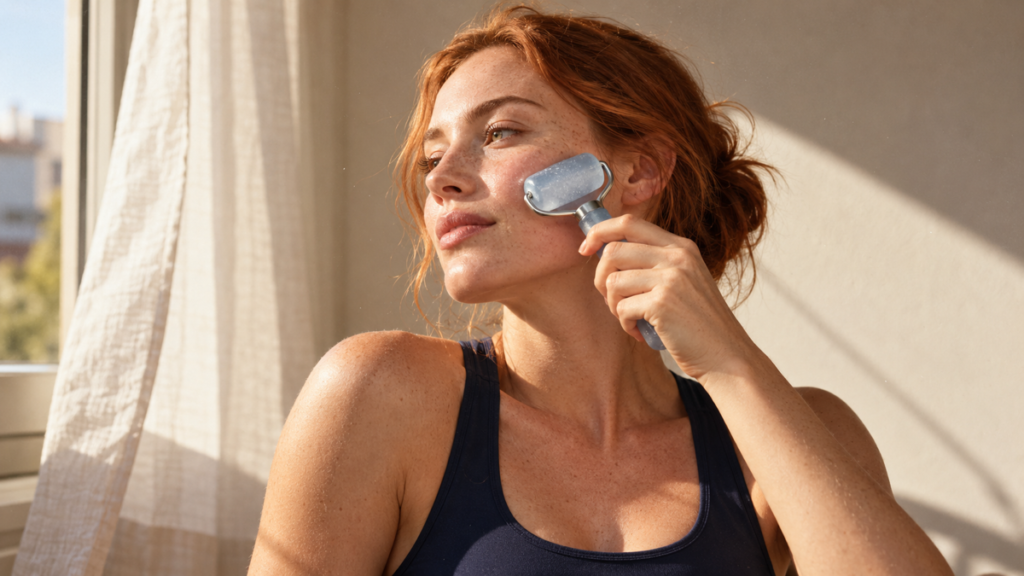
The roller should stay in motion. Do not park it on one spot while you check your phone.
2. Move along the jaw
Start at the center of your chin and roll toward the area below your ear. Keep your grip light. Pressing into the jawbone will not create a sharper contour.
Repeat on the other side. If the tool starts to catch or the cold becomes uncomfortable, stop rather than completing a fixed number of passes.
3. Use extra care around the eyes
Work over the bone below the eye, not on the eyeball or mobile eyelid. Move from the inner under-eye area toward the temple with almost no added pressure. One slow pass may be enough.
Skip this area if your eyes are irritated, the roller is too large to control, or the cold makes the skin sting.
4. Roll across the forehead
Move from the center of your forehead toward one temple, then repeat on the other side. Keep the roller away from the hairline if strands keep catching in the tool.
5. End while your skin still feels comfortable
Keep your first session brief, follow the instructions for your roller, and stop before the cold becomes uncomfortable. Stop immediately if you notice pain, burning, numbness, intense itching, a welt, marked color change, or increasing irritation.
Let your skin return to its usual temperature on its own. Do not follow the roller with hot water or another strong temperature swing.
Ice roller for face care: how often should you use it?
Start with one short session and notice how your skin feels during use and after it warms up. If your skin stays comfortable, you can use the roller occasionally when you enjoy the cooling sensation or notice familiar morning puffiness.
Daily use is not required, and more sessions have not been shown to create a lasting lift or better skin. Reactive skin may prefer less frequent use—or no ice rolling at all.
Morning is convenient if puffiness is your reason for using the tool. Evening may feel better after a hot commute or busy day. The clock matters less than clean storage, comfortable temperature, and a short session you do not have to rush.
How to clean and store an ice roller
A roller moves across oil, moisturizer, sweat, and skin residue. Putting it straight back beside your food without cleaning it is not a charming shortcut.
After each use:
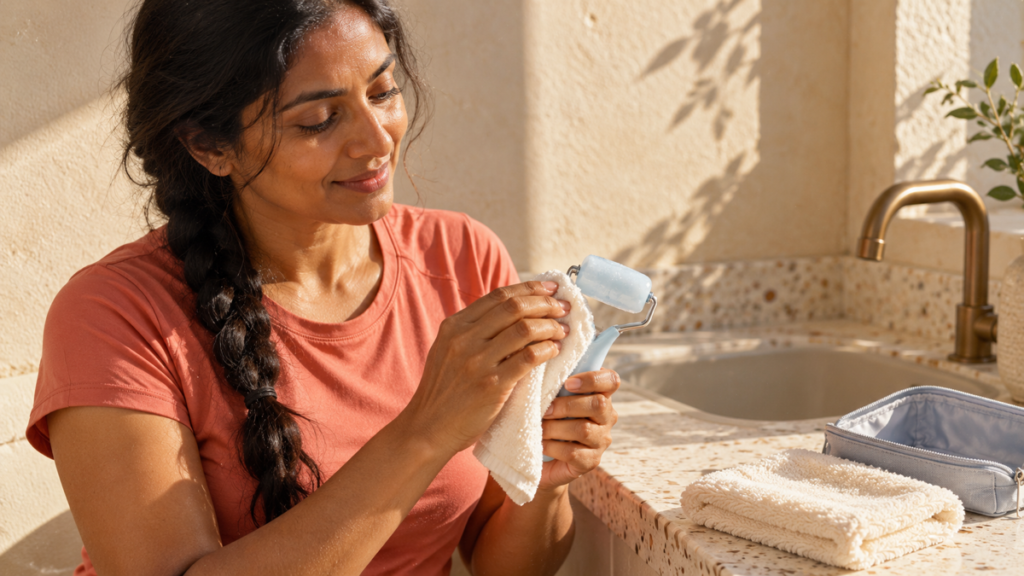
- Follow the maker’s cleaning directions for the roller material.
- Clean every surface that touched your face, including the edges of the roller head.
- Dry the tool fully before closing a cap or placing it in storage.
- Store it in a clean container or washable pouch, separate from loose freezer items.
- Do not share it unless the product can be cleaned appropriately between users.
If the head cannot be removed, do not immerse the handle unless the instructions say it is waterproof. Replace a roller that develops a leak, rough seam, or persistent residue you cannot clean.
When should you skip ice rolling?
Skip the roller on broken, sunburned, infected, freshly exfoliated, very dry, or actively irritated skin. Do not roll over cold sores, an active rash, painful breakouts, or an area that is already numb.
Leave it out of your routine when:
- cold has caused hives, itchy welts, swelling, or a burning reaction before;
- you have reduced sensation or poor circulation in the area;
- your skin is flaring or cold is a known trigger;
- you recently had facial, dental, injectable, laser, peel, or surgical treatment and your aftercare instructions do not include rolling;
- the roller feels frozen to the touch, painful, or difficult to control.
Cold-triggered welts are not a sign that the roller is “working.” The American Academy of Dermatology explains that people with cold urticaria can develop itchy hives and swelling after cold exposure. Skip intentional cold exposure if that pattern sounds familiar.
Cold can also trigger some rosacea flares. If your skin becomes more red, raw, itchy, or uncomfortable after cold exposure, do not use the roller to chase the redness away. The American Academy of Dermatology lists cold and wind among possible rosacea triggers, and individual triggers vary.
Avoid direct ice on facial skin. Improvised ice cubes can stick, create very uneven cold, and make it easy to stay in one spot too long. The FDA has documented cold-related skin injuries ranging from numbness to frostbite with improperly used cold-therapy devices; those devices are not ice rollers, but the practical lesson still applies: pain and numbness are warning signs, not progress.
Ice roller vs. gua sha: which one fits your goal?
Both tools can fit a short face-care ritual, but each requires a different technique.
| If you want… | Ice roller | Gua sha |
|---|---|---|
| A cooling sensation | The main feature | Possible if the tool is chilled, but not required |
| Help with familiar morning puffiness | May create a subtle temporary change | Gentle massage may also create a subtle temporary change |
| Product slip | Usually optional | Needed so the tool does not drag |
| Technique | Light pressure, keep the roller moving | Low tool angle, light one-way glides |
| A lasting lift or sculpted face | Not supported | Not supported |
| Cleanup | Clean and dry after every use; store hygienically | Clean and dry after every use; inspect the edge |
Choose the ice roller if you mainly enjoy cold and want minimal setup. Choose gua sha if you prefer a slower massage and do not mind using a product for slip. For a tool-assisted sequence aimed at familiar puffiness, use our gua sha routine for a puffy face. If the angle and pressure still feel confusing, the beginner gua sha guide explains the basics without turning the routine into facial choreography.
You do not need both tools in one session. If you combine them, keep the total routine short and stop if your skin feels overworked. More tools do not create a more proven result.
Common ice rolling mistakes
Assuming colder means better
A roller that hurts is too cold for that session. Let it warm slightly, shorten the contact, or skip it. Comfort is a limit, not a lack of commitment.
Holding the roller still
Leaving intense cold on one small area increases the chance of irritation or injury. Keep the tool moving and pay attention to sensation instead of the timer.
Pressing to “drain” more fluid
Heavy pressure adds friction and does not turn a cosmetic roller into a clinical drainage treatment. Let the cool surface make contact without digging into the tissue.
Rolling over irritated skin
Do not use cold to push through existing irritation. Wait until the skin feels calm and intact.
Skipping the cleanup
A roller is reusable, not self-cleaning. Wash it after every session and dry it before storage. Do not keep layering yesterday’s skin care residue onto today’s face.
Expecting permanent pore or contour changes
Cold can make skin look temporarily different, especially under bright bathroom light. It does not permanently close pores, remove facial fat, reshape bone, or create a lasting lift.
FAQ
What does an ice roller do for your face?
An ice roller for face care provides cool contact and gentle rolling. That may feel refreshing and can make mild, familiar puffiness look less noticeable for a short time. Direct evidence for consumer ice rollers is limited, so lasting lifting, pore shrinking, acne treatment, and collagen claims are not established.
How long and how often should you use an ice roller?
If your product does not give a timing limit, start with a few light passes and stop at the first sign of stinging, pain, or numbness. Daily use is not necessary; use the roller only as often as your skin stays comfortable during and after the routine.
Does ice rolling shrink pores?
No. Pores do not open and close like doors. Cooling may temporarily change the way skin texture looks, but an ice roller does not permanently reduce pore size.
Can an ice roller treat acne?
No. The cool sensation may feel soothing, but an ice roller does not treat the causes of acne. Do not press or repeatedly roll over sore, inflamed, or broken spots.
Keep your first session simple
Clean the roller, chill it exactly as directed, and try one light pass across each cheek. Add the jaw and forehead only if the temperature feels comfortable. Then clean the tool and get on with your morning.
That small routine tells you more than a dramatic 20-minute video: whether you enjoy the cold, whether your skin stays calm, and whether the tool is worth keeping in your refrigerator. A cooling face roller can be pleasant without needing to change your face to earn its place there.