
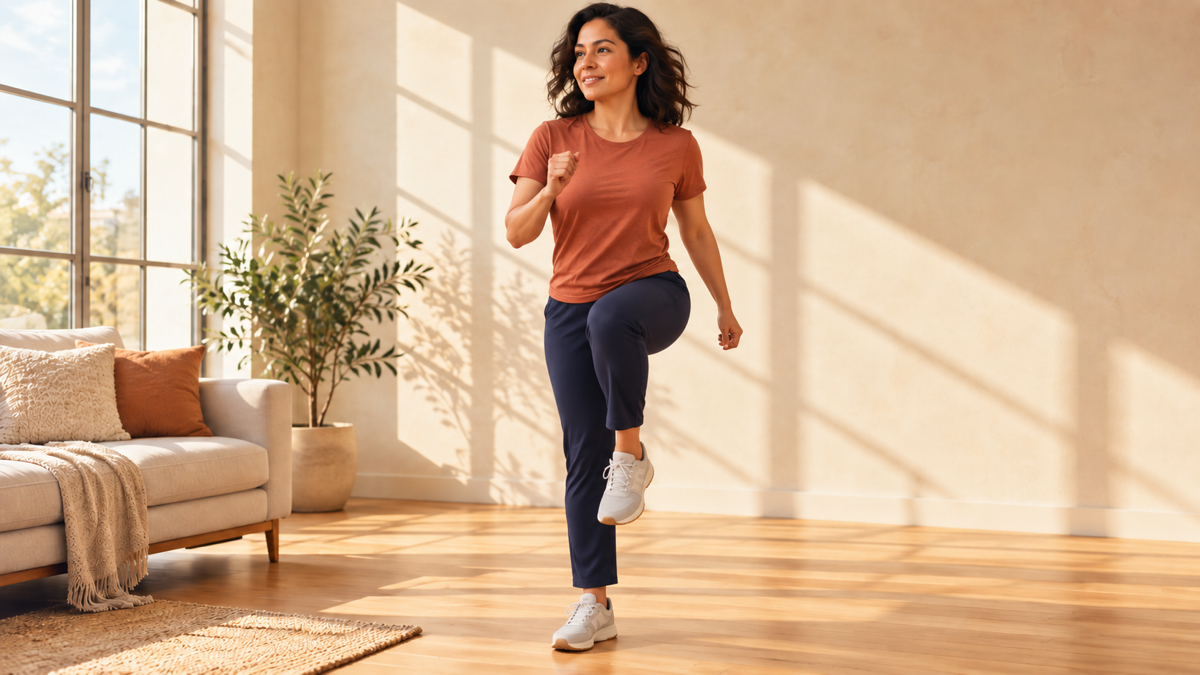
Aerobic Exercise for Beginners: An Easy 10-Minute Start
11 min readYou have ten free minutes, enough floor space to stand, and no interest in learning a dance routine with 47 counts. Fair. Starting cardio should not require a choreography degree.
The simplest aerobic exercise for beginners is rhythmic movement that raises your breathing and heart rate while staying controlled. Brisk walking, marching, step-touches, cycling, swimming, and low-impact dance can all work. For your first session, aim for an easy-to-moderate effort and stop after 10 minutes. Repeat that short routine before you make it longer or harder.
The plan below gives you a no-jumping home workout, plus step and chair options. You can follow it in a small room, adjust the pace on a tired day, and still know exactly what to do next.
What Counts as Aerobic Exercise for Beginners?
Aerobic exercise uses large muscle groups in a repeated, rhythmic way. Your breathing gets quicker and your heart beats faster to support the movement. You may also hear it called cardio or endurance exercise.
The CDC explains that aerobic activity raises your breathing and heart rate and lists brisk walking, water aerobics, and level cycling among moderate-intensity examples. The label on the activity matters less than how hard it feels to you. The same walk may be easy for one person and moderate for another.
Aerobic exercise is different from strength training, although a complete week can include both. A set of squats has pauses and focuses on muscular force. Ten minutes of continuous marching keeps a rhythm and challenges your heart and lungs. Some workouts blend the two, but you do not need to solve that overlap before your first session.
If you want one basic aerobic exercise, start with marching or walking. Both are easy to scale: shorten the step, slow the pace, hold a stable support, or add more arm movement when you want a little more effort.
How hard should a beginner work?
Your first aerobic beginner workout does not need to leave you gasping. Use the talk test instead of chasing a calorie number or copying someone else’s pace.
- Easy: you can speak and sing comfortably.
- Moderate: you can talk, but singing would be difficult.
- Vigorous: you can say only a few words before pausing for breath.
The CDC describes moderate effort as about 5 or 6 on a 0–10 effort scale. Beginners can keep most of a short routine easy to moderate: your breathing is quicker, but you remain in control. There is no prize for jumping straight to vigorous effort.
Check the talk test once or twice during the session. If a full sentence feels difficult, slow your feet, reduce the arm movement, or march gently until your breathing settles. If the routine feels too easy, add a little more pace before you add impact.
Easy aerobic exercises for beginners
You do not need every move on this list. Pick four or five that feel coordinated, then repeat them. Familiar movements make it easier to notice effort, balance, and breathing.
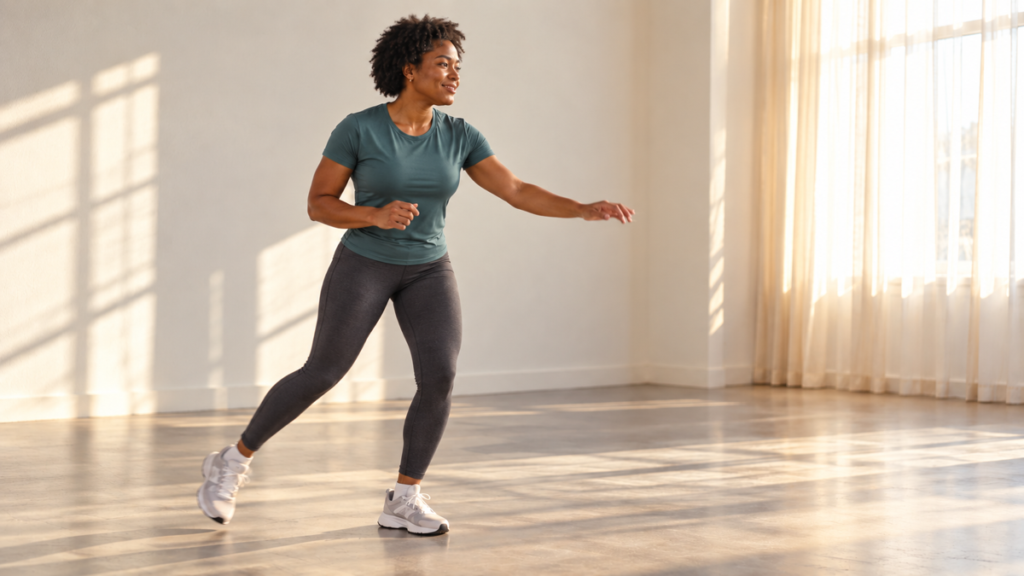
March in place
Stand tall and alternate your feet. Let your arms swing naturally. Keep the steps low at first, then lift your knees slightly higher or move your arms more if you want to raise the effort.
Step-touch
Step to the right, bring the left foot in, then reverse. Keep a soft bend in your knees. Add an easy arm reach once your feet feel steady.
Heel dig
Place one heel on the floor in front of you, return it, then switch sides. Pull your elbows back gently as each heel reaches forward. Make the movement smaller if shifting your weight feels awkward.
Alternating knee lift
Lift one knee to a comfortable height, lower it, and switch. Stay upright instead of folding toward the knee. Touch a wall or chair lightly if you want more balance support.
Side step with reach
Take two comfortable steps to one side and two steps back. Reach your arms forward or overhead only as far as you can control without leaning.
Low step-up
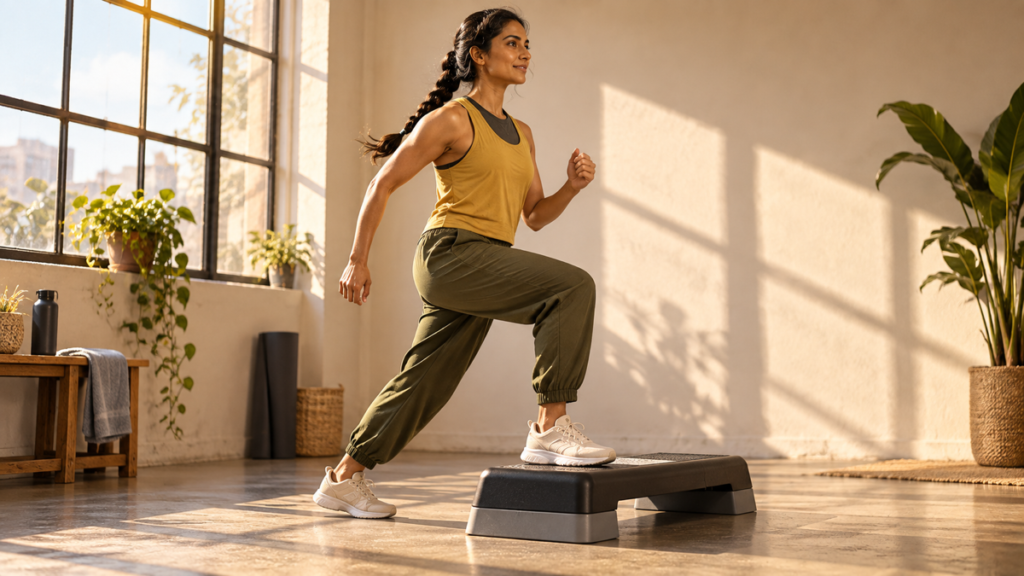
Step onto a low, stable platform with one foot, bring the other foot up, then step down one foot at a time. Keep the whole foot on the platform. Start without arm choreography and alternate the leading leg.
These simple aerobic exercises for beginners can all stay low impact, meaning one foot remains in contact with the floor most of the time. Low impact does not mean low value. Moving faster, using a larger comfortable range, or adding arm movements can increase the challenge without jumping.
Set up aerobic exercise at home for beginners
Clear enough room to step forward, backward, and sideways without catching a rug, bag, cable, or coffee table. Wear shoes that feel secure on your floor, or choose another non-slip setup that works for the movement and surface.
Place water nearby so you can pause without leaving your setup. Keep a stable chair or wall within reach if balance is still new. If you use a step, it should sit flat, stay still, and be designed to support exercise. A stack of books is not a step platform. It is a future mess.

Use the first few minutes to increase your pace and range of motion gradually. If you want a longer preparation before this routine or plan to continue into a harder session, use this simple dynamic warm-up. Stop the session if you feel pain, dizziness, faintness, chest pressure, unusual shortness of breath, or a clear worsening in how you feel.
A 10-Minute Aerobic Workout for Beginners
This no-jumping routine uses 10 one-minute blocks. Read the move descriptions first, then set a timer that chimes every minute. Keep the first two minutes easy, work at an easy-to-moderate pace through the middle, and use the final minute to slow down.
| Time | Move | Simple cue | Easier option |
|---|---|---|---|
| 0:00–1:00 | Easy march | Let your arms swing and take quiet steps | Shift your weight side to side |
| 1:00–2:00 | Step-taps with shoulder rolls | Tap one foot out as the shoulders roll gently | Keep both feet under your hips |
| 2:00–3:00 | Step-touch | Step right and left with soft knees | Make each step smaller |
| 3:00–4:00 | Alternating knee lifts | Lift only as high as you can stay tall | Use toe taps instead |
| 4:00–5:00 | Heel digs | Alternate heels and pull the elbows back | Remove the arm movement |
| 5:00–6:00 | Side steps with reaches | Take two steps each way | Use one step each way |
| 6:00–7:00 | Basic step or floor pattern | Step up-up, down-down, then change lead | Mark the same pattern on the floor |
| 7:00–8:00 | Brisk march | Add pace or stronger arm swings | Return to your easy march |
| 8:00–9:00 | Your best move | Repeat the move that felt most natural | Shift your weight side to side or march slowly. |
| 9:00–10:00 | Slow march | Shorten each step and let breathing settle | Stand and shift weight gently |
During minutes 2–9, check whether you can still speak a sentence. If not, reduce the pace or range. If the whole routine stays easy and coordinated, repeat it on another day before adding difficulty. One successful session does not require an immediate upgrade.
How to Do a Basic Aerobic Step
Stand close to the platform. Step up with your right foot, bring up your left, step down with your right, then bring down your left. That is one up-up, down-down pattern. After several repetitions, lead with the left foot.
Keep your entire foot on the platform and face forward. Do not rush the change of lead. For beginner step aerobics, a low platform and plain footwork are enough. Once the pattern feels automatic, add a relaxed arm swing or a side step on the floor between repetitions.
No platform? Trace the same four-count pattern on the floor: right forward, left forward, right back, left back. You still practice rhythm and weight transfer without the extra height.
Chair aerobics for beginners
A seated routine is useful when standing for the whole session does not fit today. Use a firm chair on a non-slip surface, sit away from the backrest if comfortable, and keep both feet within easy reach of the floor.
Replace the 10-minute sequence with five moves, repeated twice:
- Seated march: alternate lifting your feet for one minute.
- Heel taps: extend one heel forward at a time for one minute.
- Side toe taps: tap one foot out to the side, return, and switch for one minute.
- Knee lifts with arm pulls: lift one knee as your elbows draw toward your sides for one minute.
- Easy march: reduce the pace and let your breathing settle for one minute.
Keep your torso tall and the movement controlled. Larger arm movements and a slightly quicker rhythm can increase effort. Smaller steps, slower arms, or brief pauses can lower it. The goal is rhythmic movement, not forcing your joints through the biggest possible range.
Build an aerobic exercise routine for beginners
Public-health targets describe where adults can work toward, not what you must complete on day one. Current U.S. Physical Activity Guidelines recommend 150–300 minutes of moderate-intensity aerobic activity each week, plus muscle-strengthening activity on at least two days. They also make clear that any amount of moderate-to-vigorous activity can offer some benefit and that short bouts count.
Use this three-week ramp as a practical starting example:
| Week | Aerobic sessions | What changes |
|---|---|---|
| 1 | 10 minutes, 3 days | Learn the moves and find an easy-to-moderate pace |
| 2 | 12–15 minutes, 3 days | Add time by repeating two or three comfortable moves |
| 3 | 15 minutes, 3–4 days | Add one short day only if recovery feels normal |
The sample starts well below the wider guideline range on purpose. When it feels manageable, add two to five minutes to one or two sessions. Repeat that version before adding another day or a faster pace.
An aerobic routine for beginners can include different activities across the week. You might use the home sequence on Tuesday, walk briskly on Thursday, and cycle on Saturday. The common thread is a controlled, rhythmic effort—not matching workouts.

If you want to combine this cardio practice with simple strength sessions, place it inside this beginner home workout week. If a workout leaves you unusually tired or sore, make the next day easier and do not stack missed sessions.
How to progress without making every session harder
Change one variable at a time. Your options are:
- Time: add two to five minutes to one session.
- Frequency: add one short session to the week.
- Pace: move a little faster while keeping the talk test in the moderate range.
- Range: make a step or arm reach slightly larger while staying controlled.
- Complexity: add a simple arm pattern after your feet know the move.
For most beginners, time is the clearest first change. Add a few minutes before you add jumping, fast direction changes, or complicated combinations. This keeps the workout easy to follow and makes it simpler to judge how you recover.
If you slept badly, feel unusually drained, or your usual pace feels much harder, use the easy version. Slow marching, a short walk, or stopping after the first 10 minutes is a valid adjustment. You do not owe yesterday’s plan a harder workout today.
Common beginner mistakes
Starting with choreography instead of movement
A complicated routine can turn cardio into a memory test. Learn two or three foot patterns first. Add arm movements only after your feet feel organized.
Treating sweat as the goal
Room temperature, clothing, and individual response affect sweating. Use breathing, the talk test, control, and recovery to judge the session instead.
Jumping because low impact looks too easy
Impact is an option, not proof that cardio is working. Increase your pace, arm movement, or session time before you add hops.
Changing the routine every time
Repeat the same 10-minute plan for at least a few sessions. Familiarity frees your attention for posture, balance, and effort.
Skipping the easy start and finish
Going straight from sitting to your fastest pace can feel rough. Give your body a gradual first few minutes, then slow down instead of stopping abruptly at the end.
FAQ
What aerobic exercise is best for beginners?
The best starting option is one you can control and repeat. Walking, marching, cycling, swimming, low-impact dancing, and simple step-touches are all useful forms of aerobics for beginners. If you want one simple aerobic exercise for beginners, try marching because you can change the pace and range without learning new footwork. Choose the activity that fits your space, balance, schedule, and preferences.
How long should a beginner do aerobic exercise?
Ten minutes is a practical trial, not a required minimum. You can begin with less if that makes the first session more manageable. Repeat the duration until it feels familiar, then add two to five minutes rather than doubling the workout.
Is walking an aerobic exercise?
Walking can be aerobic exercise when it raises your breathing and heart rate. Pace is relative: one person’s moderate walk may feel easy or vigorous to someone else. Use the talk test to judge your own effort.
How do I know when to make the routine harder?
Wait until the current routine feels controlled across several sessions and your recovery feels normal. Then change one detail: add two to five minutes to one session, move a little faster, or add a larger arm movement. Keep the other sessions unchanged at first so you can tell how the adjustment feels.
Start with the version you can repeat
Clear a small space, set a 10-minute timer, and use the routine once. Keep the effort controlled enough to talk, note which moves felt natural, and repeat the same plan later in the week.
Aerobic exercise for beginners works best when the next session feels possible. Let the routine become familiar, build one detail at a time, and keep the easy option available for the weeks that refuse to cooperate.