
Dumbbell Workouts for Beginners: Six Moves for Your First Session
11 min readDumbbell workouts for beginners can feel straightforward—until you pick up a pair, look around for a free bench, and realize the plan ended at “lift weights.” Should you squat? Curl? Copy the person doing something elaborate in the mirror?
You do not need a complicated routine to start. A useful dumbbell workout for beginners can cover six basic actions: squat, hinge, push, pull, press, and carry or brace. Choose a light weight, do one controlled set of each move, and finish while your form still feels organized.
The session below works at home or in a gym. It uses six basic dumbbell exercises, takes about 25–35 minutes, and includes easier options for the moments when balance, floor space, or energy are not cooperating.
What You Need to Start Working Out With Dumbbells
One pair of dumbbells is enough for your first session. Adjustable dumbbells are convenient, but a fixed pair works too. You may also want a stable chair and an exercise mat. A bench is optional.
Before you begin, check the dumbbells for loose plates, cracked coatings, or collars that do not lock. Clear enough space to lower the weights without hitting furniture, another person, or your own toes. Place each dumbbell on the floor instead of balancing it on a chair or leaving it where you may step backward onto it.
Different movements often need different loads. Your legs may handle more weight than your shoulders, so a single pair can feel easy for a squat and challenging for a press. That is normal. If you have only one weight option, adjust the repetitions, use one dumbbell instead of two, or shorten the set rather than forcing every exercise into the same target.
Learn the pickup before the exercise
Stand close to the dumbbells with your feet steady. Bend your knees and hips, keep the weights close, and stand without twisting. When the set ends, reverse the same movement and place the dumbbells down with control.
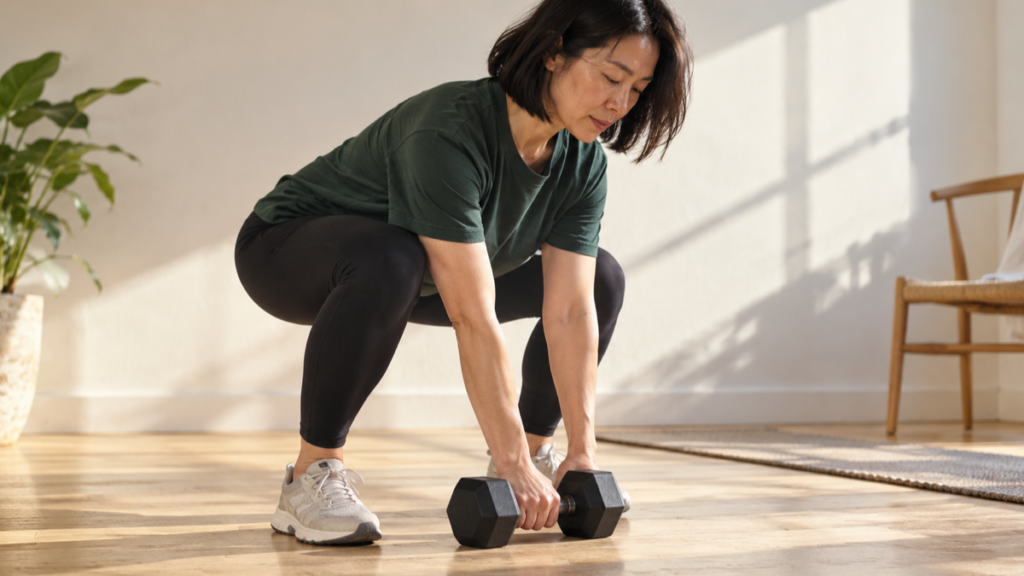
Avoid dropping a weight from standing height just because the set is over. The final repetition includes putting it away.
How to Choose Your First Dumbbell Weight
The number printed on the dumbbell is not a beginner level. It is simply a load. Start lighter than you think you need and use the first five repetitions as a test.
A practical starting weight lets you:
- move through a comfortable range without rushing;
- keep the same body position from the first rep to the last;
- lower the weight as deliberately as you lift it;
- finish the set feeling that you could do two or three more good reps.
If you could repeat the set many more times without effort, the weight may be too light for that movement. If you have to swing, hold your breath, shorten the range suddenly, or change position to finish, it is too heavy for today.
You do not have to train until you cannot complete another rep. The American College of Sports Medicine’s 2026 Position Stand, which reviewed 137 systematic reviews, reported that training to fatigue or momentary muscle failure did not consistently affect outcomes for the average healthy adult. For a first session, leaving a few controlled reps in reserve gives you room to learn.
Dumbbell Workouts for Beginners: Six Exercises to Learn
Read each setup before you pick up the weight. Practice the movement without a dumbbell if the pattern is new. Then add a light load and keep the range you can control.
1. Goblet squat
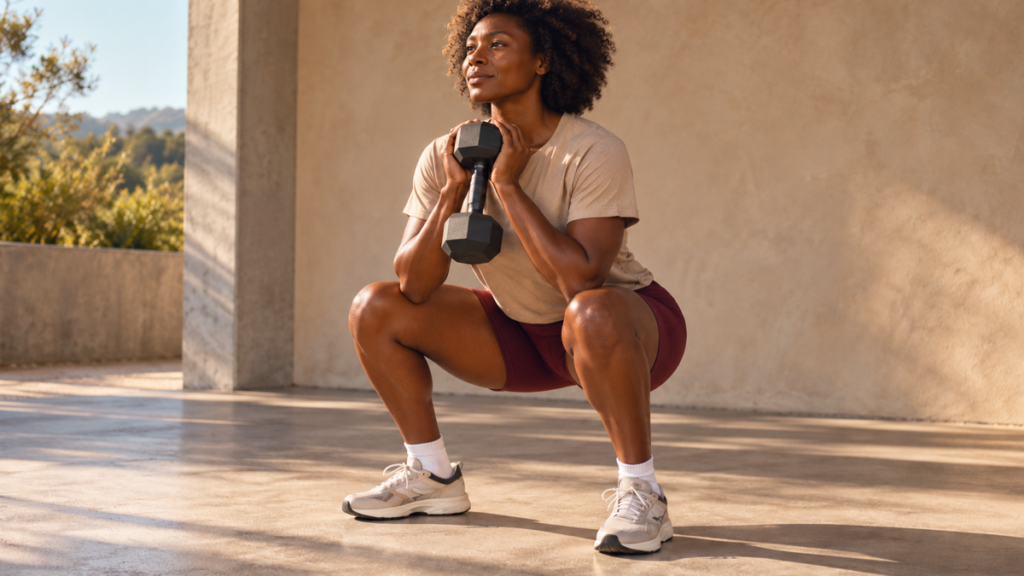
Hold one dumbbell vertically against your chest, with both hands supporting the top end. Set your feet in a comfortable stance. Sit your hips down and back as your knees bend, then press through your feet to stand.
Keep the dumbbell close instead of reaching it forward. Squat toward a stable chair if you are unsure about depth. Tap the seat lightly and stand; do not drop onto it.
Make it easier: squat without weight or use a smaller range.
2. Dumbbell Romanian deadlift
Hold one dumbbell in each hand in front of your thighs. Soften your knees, send your hips backward, and let the dumbbells travel close to your legs. Stop when you feel tension in the backs of your thighs or before your back begins to round. Push the floor away and bring your hips forward to stand.
This is a hip hinge, not a deep squat. Think about closing a car door with your hips while your shins stay almost vertical.
Make it easier: practice the hinge without weights, reaching your hips toward a wall behind you.
3. Dumbbell floor press
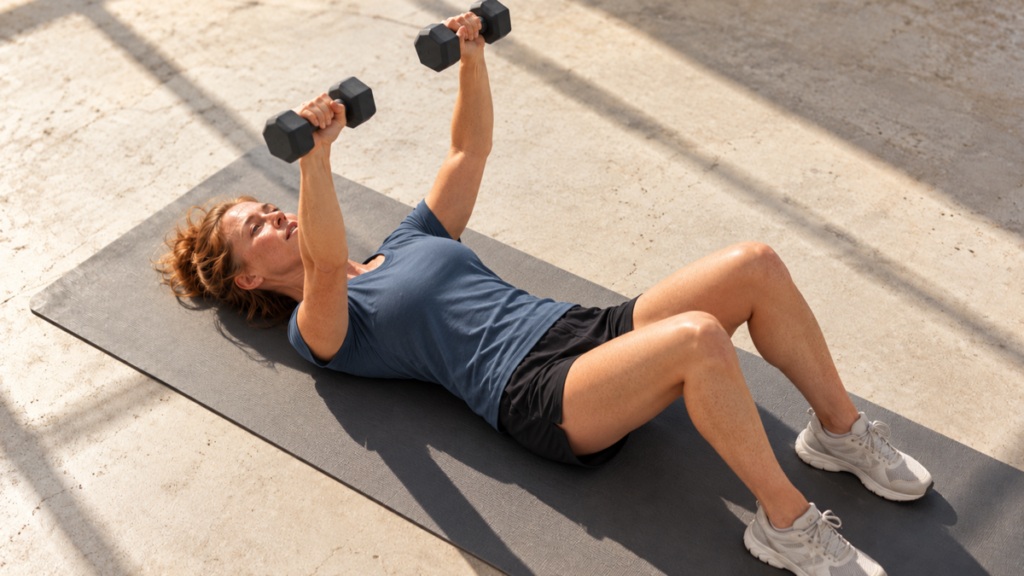
Sit on the floor with a dumbbell beside each hip. Bring the weights onto your thighs, then roll onto your back with your knees bent and feet planted. Hold the dumbbells above your chest with your palms facing forward or slightly inward.
Lower your upper arms until they touch the floor gently. Keep your forearms close to vertical, then press the dumbbells up without banging them together. Finish the set, lower the weights to your chest, and roll to one side before placing them down.
Make it easier: use one dumbbell for a one-arm floor press. Complete the set, then switch sides; keep your empty hand on the floor for balance.
4. Supported one-arm row
Place your left hand on a stable chair or bench and step your left foot slightly forward. Hold a dumbbell in your right hand. Send your hips back, keep your spine long, and let the right arm hang toward the floor.
Pull your elbow toward your back pocket without twisting your chest open. Pause briefly, then lower the weight until your arm is long again. Complete the set and switch sides.
Make it easier: stand more upright or use a lighter weight. Support yourself on something that will not slide.
5. Seated dumbbell overhead press
Sit tall on a stable chair with your feet on the floor. Hold one dumbbell in each hand at shoulder height, with your palms facing slightly inward. Press the weights overhead through a comfortable path, then lower them slowly to your shoulders.
Keep your ribs stacked over your hips instead of leaning far back. If the weights drift, your neck tightens, or your back arches to finish the rep, lower the load or use the one-dumbbell option below.
Make it easier: press one light dumbbell with one arm, complete the set, then switch sides. You can also stop before your arm reaches fully overhead.
6. Suitcase hold or march
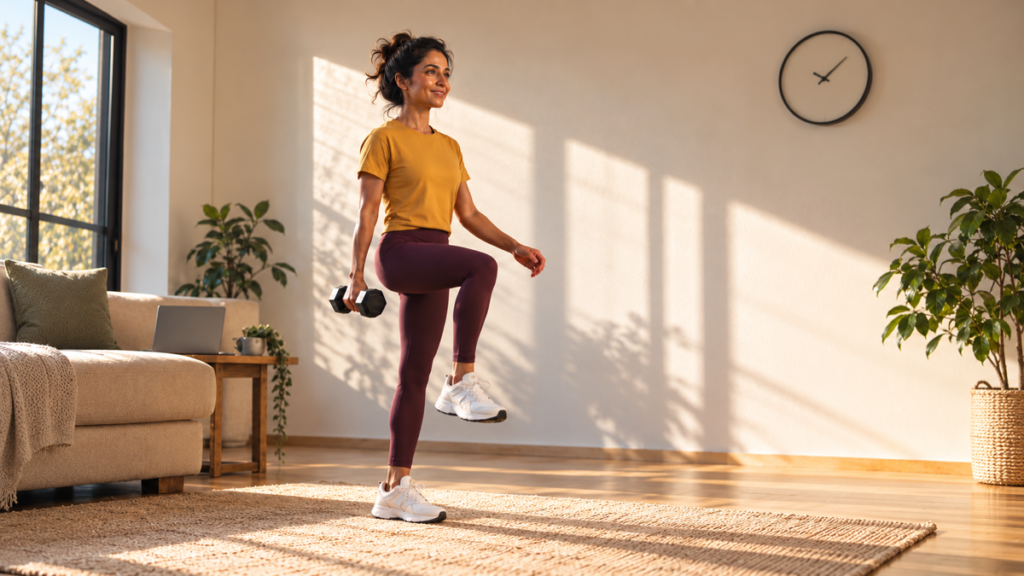
Stand with one dumbbell at your side as if you were carrying a suitcase. Keep your shoulders level and resist leaning toward or away from the weight. Hold for 20–30 seconds, then switch sides.
If the still hold feels steady, march slowly without letting your torso sway. Clear the floor first and lift each foot only as high as you can control.
Make it easier: shorten the hold or keep your free fingertips on a wall for balance.
These starter dumbbell exercises train your legs, hips, chest, back, shoulders, and trunk without requiring a long list of isolation moves. If you want to compare them with machines and bodyweight options, this overview of beginner gym exercises explains eight useful movement patterns.
A Simple Dumbbell Workout for Beginners
Begin with five to ten minutes of easy movement. Walking, marching, arm circles, bodyweight squats, and a few no-weight hinges all work. The American Heart Association recommends a 5–10 minute warm-up that gradually builds toward the activity ahead.
For a ready-made sequence, use this simple dynamic warm-up, then practice one no-weight repetition of each exercise below. Use the table as a familiarization example for this first session, not as a fixed target for every workout.
| Order | Exercise | First-session target | Rest or reset |
|---|---|---|---|
| 1 | Goblet squat | 1 set of 8–10 reps | Rest until breathing feels settled |
| 2 | Dumbbell Romanian deadlift | 1 set of 8–10 reps | Put the weights down and reset your stance |
| 3 | Dumbbell floor press | 1 set of 8–10 reps | Roll up carefully before moving on |
| 4 | Supported one-arm row | 1 set of 8–10 reps per side | Change sides after a short pause |
| 5 | Seated overhead press | 1 set of 6–10 reps | Reduce the load if your torso leans back |
| 6 | Suitcase hold or march | 1 round of 20–30 seconds per side | Rest between sides if your grip needs it |
Do the exercises in order and rest long enough to set up and begin the next move without rushing. The timer is not a pass-or-fail test; take more time if you need to check the instructions or wait for a space to clear.
This one-set session is designed to help you learn the movements and record useful starting weights, not to act as a permanent training prescription. Once it feels familiar, increase only one variable at a time based on your control, recovery, and goal. Your first workout is information: which weights fit, which cues make sense, and which setup needs another look.
Stop an exercise if you feel pain, dizziness, faintness, chest pressure, unusual shortness of breath, or a clear worsening in how you feel. Put the dumbbells down safely and end the session if those signs do not settle.
How to Build on This Simple Dumbbell Workout
When you are ready to make resistance training regular, current CDC guidance includes muscle-strengthening activity on at least two days each week. Treat that public-health target as something to build toward, not a deadline for your first week.
Keep the same six exercises while you learn their setups instead of starting from zero every time. When a set feels steady and you could do several more controlled reps, choose one change:
- Add repetitions while your position stays consistent.
- Add another set to an exercise.
- Move to the next available dumbbell weight and do fewer controlled reps.
Change one detail at a time. If you add weight to every exercise, double all the sets, and shorten every rest period in the same week, you will not know which change made the workout feel rough.
When the next dumbbell is a large jump, keep the lighter weight and slow the lowering phase, add a repetition, or use the heavier option for only the first few controlled reps. Progress does not require winning an argument with the rack.
Make the Workout Fit a Busy or Crowded Day
A basic dumbbell workout should survive ordinary life. Use these adjustments instead of abandoning the whole session:
- You have 15 minutes: warm up, then do the goblet squat, one-arm row, and floor press. Complete one controlled set of each.
- Only one dumbbell is available: use one weight for the goblet squat, supported row, one-arm floor press, and suitcase hold. For the hinge, hold it at your chest or with both hands in front of you.
- The gym floor is crowded: take one pair to a clear area and keep it there. Do not reserve several pairs around you.
- The dumbbell rack is full: choose machine versions that train the same broad patterns. This beginner guide to gym equipment explains how to set up common strength machines.
- You slept badly or feel unusually drained: use a lighter weight, complete fewer reps, or stop after the first three exercises. Do not stack missed work onto the next session.
Consistency matters more than building the most complicated plan. ACSM’s 2026 evidence review emphasizes that moving from no resistance training to regular resistance training is the most meaningful step for many adults, while equipment type and advanced methods are secondary.
Common Beginner Dumbbell Mistakes
Choosing one weight for every move
Your squat and hinge will often use more load than your overhead press. Keep more than one pair nearby when possible, or adjust the reps and use one dumbbell. Matching every exercise to one number is tidy, not necessary.
Turning each rep into a race
Fast reps can hide a weight you cannot control. Lift smoothly, pause long enough to find the position, and lower without letting gravity finish the work.
Copying someone else’s range
Your squat depth, hinge range, and pressing path should fit the control you have today. A smaller steady range is more useful than a larger one that pulls you out of position.
Adding exercises before learning the basics
A curl, kickback, or lateral raise can be useful, but you do not need all of them in session one. Learn the six main movements first. Add smaller exercises later if they fit your goals and time.
Treating soreness as a score
New exercises may leave your muscles tender, but soreness is not required for a useful workout. Judge the session by your control, repeatable setup, and recovery—not by how difficult stairs feel the next day.
FAQ
Do women need a different beginner dumbbell workout?
No separate set of “female” exercises is required. A beginner dumbbell workout for women can use the same squat, hinge, push, pull, press, and carry patterns. The useful differences are personal: your starting weights, comfortable range, goals, available equipment, and recovery.
Can I start with one dumbbell?
Yes. One dumbbell works for goblet squats, supported rows, one-arm floor presses, suitcase holds, and two-handed hinges. Train both sides when the move is one-sided and keep the repetitions similar.
How do I start dumbbell exercises if I feel uncoordinated?
Practice the movement without weight, then add the lightest available dumbbell for five slow reps. Use a chair or wall for support where needed. Keep the first session to one set per move so you can focus on setup rather than fatigue.
Start With One Repeatable Session
Choose a light pair of dumbbells, clear a safe space, and do one set of the six movements. Write down the weight and repetitions that felt controlled. Next time, you can start from what already felt controlled.
Dumbbell workouts for beginners do not need endless exercises or punishing sets. Start with a simple dumbbell workout you can repeat, let the movements become familiar, and change one small detail when the current version feels steady.