

Cardio for Fat Loss: A Realistic Beginner Plan
11 min readYou finish a packed day, open your workout app, and find three choices: a long treadmill session, a punishing interval class, or a bright red calorie target. Suddenly, cardio feels like a debt you have to repay before dinner.
It does not have to work that way.
Cardio for fat loss can be as simple as choosing rhythmic movement you can repeat, starting with manageable sessions, and building your weekly minutes gradually. Walking, cycling, swimming, dancing, and other aerobic activities can all contribute. The useful plan is the one that fits beside strength training, meals, sleep, and the rest of your life—not the one that leaves you too exhausted to repeat it.
Here is the short version: start with two or three easy-to-moderate sessions each week, track minutes rather than machine-calorie estimates, and increase only one part of the plan at a time. Cardio can support fat loss, but it does not guarantee a specific change or choose where your body loses fat.
How cardio supports fat loss
Fat loss happens when your body uses more energy than it takes in over time. Cardio exercise increases energy use, so it can help create that gap. Food intake, everyday movement, sleep, recovery, and individual biology also affect what happens next.
The scale does not measure body fat directly. Body weight can also shift with hydration and, for some women, fluid changes across the menstrual cycle. That is why a trend across several weeks is more useful than one number after one workout.
The CDC’s current guidance on physical activity and weight makes the same distinction: activity uses energy, while weight loss usually involves both movement and changes in calorie intake. That is why cardio exercise and weight loss are related without being identical.
This matters in practice. A hard workout does not cancel a meal, and a missed workout does not ruin a week. Look at the pattern you can maintain across weeks, not one sweaty session or one number on a screen.
Cardio also has value when body weight changes slowly or not at all. The health benefits of regular physical activity include better sleep, stronger bones and muscles, and improved ability to handle everyday activities. Those benefits do not need permission from the scale.
What research says about cardio and weight loss
More cardio is not automatically better, but total weekly activity does matter.
A 2024 systematic review and dose-response meta-analysis combined 116 randomized trials involving adults with overweight or obesity. On average, more weekly aerobic exercise was associated with modest reductions in body weight, waist circumference, and body-fat measures. The changes generally increased as weekly exercise rose toward 300 minutes, while results varied between people and programs.
That evidence does not turn 150 or 300 minutes into a personal prescription. The studies focused on supervised programs lasting at least eight weeks and on adults with overweight or obesity. Your starting fitness, schedule, food intake, recovery, and consistency can all change the outcome.
For general health, the U.S. Physical Activity Guidelines recommend that adults work toward 150–300 minutes of moderate aerobic activity per week, or 75–150 minutes of vigorous activity, plus muscle-strengthening work on two days. The same official guidelines encourage inactive adults to start with small amounts and build over time.
If 150 minutes sounds miles away, good news: it is a destination, not your first-week entry fee.
Which cardio exercises for weight loss are worth doing?
There is no single best machine, class, or movement. Choose an activity that meets four practical tests:
- You can do it with control.
- Your joints and feet tolerate it.
- You can reach an appropriate effort without turning every session into a test.
- You can access it often enough to build a routine.
Useful options include:
- brisk walking outdoors or on a treadmill;
- cycling indoors or outside;
- swimming or water-based exercise;
- low-impact dance or aerobics;
- an elliptical or rowing machine;
- hiking on a manageable route;
- a mixed session that alternates two activities you enjoy.

Walking is not a lesser choice. It is easy to scale, needs little equipment, and can fit around a commute or lunch break. If running feels uncomfortable, cycling or swimming may offer a lower-impact way to build aerobic fitness. Dance may feel easier to repeat because the session has music and structure. The best choice is not the one with the most dramatic calorie display. It is the one you can perform, recover from, and schedule again.
If you need movement ideas before you build a fat-loss plan, use our beginner aerobic exercise guide for low-impact options and a simple talk-test explanation.
Choose an intensity you can repeat
Most beginners do not need to start with all-out intervals. Moderate effort is a useful base because it challenges your breathing without making every session difficult to recover from.
Use the talk test:
- Easy: you can speak and sing comfortably.
- Moderate: you can talk in sentences, but singing would be difficult.
- Vigorous: you can say only a few words before pausing for breath.

The Physical Activity Guidelines use the same talk-test cues. Keep most early sessions easy to moderate. You should finish feeling like you did useful work, not like the rest of your day has been canceled.
Vigorous work can fit later if you enjoy it and recover well, but it is optional. HIIT is one format, not a requirement for fat loss. A steady brisk walk that happens three times a week is more useful than a punishing class you avoid for the next ten days.
Cardio for Fat Loss: A Beginner Weekly Plan
This four-week template is a starting structure, not a promise about how quickly your body will change. Pick one or two activities from the list above. Keep the effort easy to moderate and leave at least one easier day after a session that feels challenging.
Week 1 — Learn the pace
- Session 1: 15–20 minutes easy.
- Session 2: 15–20 minutes easy to moderate.
- Optional session: 10-minute relaxed walk.
- Focus: finish with energy left.
Week 2 — Build consistency
- Session 1: 20 minutes moderate.
- Session 2: 20 minutes easy to moderate.
- Optional session: 10–15 minutes easy.
- Focus: repeat the same activities before adding variety.
Week 3 — Add minutes gradually
- Session 1: 25 minutes moderate.
- Session 2: 20–25 minutes easy to moderate.
- Optional session: 15 minutes easy.
- Focus: add minutes to one session, not all of them.
Week 4 — Check recovery
- Session 1: 25–30 minutes moderate.
- Session 2: 25 minutes easy to moderate.
- Optional session: 15–20 minutes easy.
- Focus: check recovery before progressing again.
For each main session:
- Start with 3–5 easy minutes.
- Settle into the planned pace.
- Check the talk test once or twice.
- Slow down for the final 3–5 minutes.
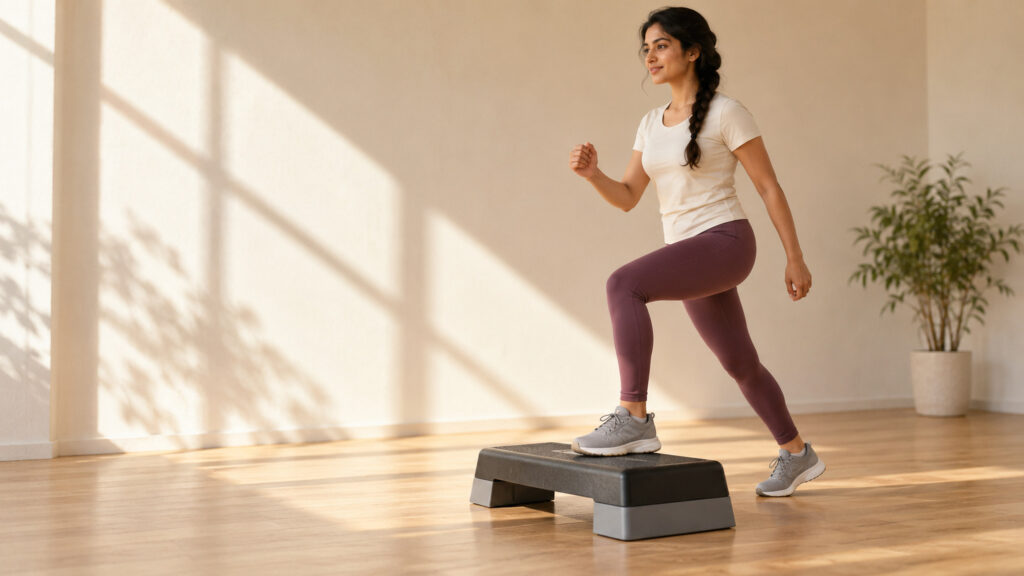
Three sessions are not mandatory. If two sessions fit your week, do two. If 15 minutes is too much today, start with 5 or 10. The goal is to establish cardio training for weight loss that you can repeat, then work gradually toward a broader activity target.
Stop the session if you feel pain, dizziness, faintness, chest pressure, or unusual shortness of breath. If the movement feels awkward rather than painful, reduce the pace or resistance. If it still does not feel right, choose another activity.
How to progress cardio without living at the gym
Cardio workouts to lose weight often fail on the calendar before they fail in the body. The plan starts with too many sessions, every session is hard, and one busy week makes the whole thing look broken.
Progress one variable at a time:
- Duration: add 5 minutes to one or two sessions.
- Frequency: add one short easy session.
- Intensity: make a small part of one session brisker.
- Terrain or resistance: add a gentle incline or slightly more resistance while keeping control.
Hold the new version for at least a week before changing it again. If your legs stay unusually heavy, your performance drops across several sessions, or your normal week starts feeling harder to manage, remove the most recent increase.
You do not have to raise every number forever. A stable routine is still doing its job if it supports your wider plan and fits your life.
When time is tight
Split the session if that makes it happen. Ten minutes before work and ten minutes after lunch still add movement to your day. Current U.S. physical activity guidance counts activity in bouts of any length, so you do not need an uninterrupted 30-minute window for the minutes to matter.
Keep a minimum version for deadline weeks: one or two short walks, an easy cycle, or a dance session at home. A reduced week is an adjustment, not proof that you lack discipline.
Combine cardio with strength training
Cardio does not need to replace lifting. Adults are advised to include muscle-strengthening activity on at least two days each week, and strength work serves a different purpose from aerobic training.
A simple week could look like this:
| Day | Plan |
|---|---|
| Monday | Full-body strength |
| Tuesday | 20–30 minutes easy-to-moderate cardio |
| Wednesday | Rest or relaxed walking |
| Thursday | Full-body strength |
| Friday | 20–30 minutes moderate cardio |
| Saturday | Optional easy activity |
| Sunday | Rest |

You can also place a short easy cardio session after strength training if separate days do not fit. Keep it easy enough that it does not turn a manageable workout into a marathon.
If you are deciding how to arrange your lifting days, this comparison of a full-body versus split routine can help you choose a structure that survives your actual week.
Food, recovery, and the energy gap
Cardio can contribute to an energy deficit, but trying to create the entire deficit through workouts can make the plan exhausting. It can also turn movement into a punishment for eating. That is a miserable job description for exercise.
Use a meal pattern that supports your energy and fits your schedule. Our simple balanced-meal framework shows how to combine produce, protein, carbohydrates, and flavor without turning every meal into a calculation.
Recovery belongs in the plan too. Hard cardio stacked onto hard strength sessions may raise fatigue without making the routine more effective. Leave room for sleep, rest, and easier movement. During a low-energy week or a difficult point in your cycle, shorten the session, reduce the pace, or move it to another day. That is normal programming, not quitting.
How to tell whether your plan is working
Do not judge the plan from one workout or one weigh-in. Track a few signals across several weeks:
- total cardio minutes completed;
- how the same pace feels;
- distance covered at a similar effort;
- recovery between sessions;
- energy during strength workouts and daily tasks;
- body measurements or weight trends, if you choose to track them.
Body weight can shift from hydration, meals, digestion, and the menstrual cycle. Look for a trend rather than reacting to each daily change. If your main goal is fat loss and the trend remains unchanged across several consistent weeks, review activity, food, recovery, and adherence before adding another hard workout.
The first useful sign may be practical: the walk that used to leave you breathless now feels steady. That counts, even before a body-composition change is obvious.
Common cardio-for-fat-loss mistakes
Making every session vigorous
Hard sessions can be useful, but they also require more recovery. Build an easy-to-moderate base first. Add vigorous work only if it suits your preferences and does not derail the rest of your week.
Choosing exercise by calorie display
Treat machine and wearable calorie numbers as rough estimates, not precise personal accounting. A systematic review of wrist- and arm-worn activity monitors found that energy-expenditure accuracy varied by activity type. Use time, pace, distance, resistance, and perceived effort to compare your own sessions instead of treating the display as food credit.
Increasing time, days, and intensity together
When everything rises at once, you cannot tell which change created the fatigue. Increase one variable, repeat it, and review.
Dropping strength training
More cardio is not automatically a better body-composition plan. Keep muscle-strengthening work in the week and arrange cardio around it.
Chasing one body area
A cardio session cannot guarantee fat loss from your stomach, hips, arms, or any other chosen area. Train muscles because you want them stronger and use cardio for its whole-body role. Where visible fat changes appear first or last varies between people.
Treating a missed day as a failed plan
Move the session, shorten it, or continue with the next planned day. Do not double the next workout to “make up” for a calendar problem.
FAQ
Which cardio is best for fat loss?
Start with an option that clears three tests: you can access it, control the effort, and recover in time for the next session. Brisk walking, cycling, swimming, dance, rowing, and elliptical training can all contribute.
How much cardio should a beginner do for fat loss?
Start below the amount you can barely tolerate. Two or three sessions of 15–20 minutes is a practical first step for many beginners, but you can begin with less. Build duration or frequency gradually. The general health target of 150–300 moderate minutes per week is something to work toward, not a guaranteed fat-loss dose.
Is walking enough cardio for weight loss?
Brisk walking can count as moderate aerobic activity and can contribute to your weekly energy use. Whether it leads to fat loss depends on the wider energy balance and how consistently the overall plan is followed. A walk does not need to become a run to be worthwhile.
Should I do cardio every day?
Not necessarily. Daily light movement may feel good, but planned cardio does not have to happen seven days a week. Start with a few sessions, keep some days easy, and leave room for strength training and recovery.
Can cardio target belly fat?
Cardio may contribute to a reduction in overall and abdominal fat over time, but it cannot promise that one chosen area will change first. Body-fat distribution and the order of visible change vary from person to person.
Build the week you can repeat
Choose one activity, put two sessions on your calendar, and decide the minimum version you will use when the week gets messy. Keep the first sessions easy enough that you could do them again.
Cardio for fat loss does not need to be dramatic. It needs a realistic place in your week, a pace you can control, and enough time to become a pattern.