
Meal Prep Ideas for Calorie Deficit: 7 Mix-and-Match Meals
13 min readMeal prep ideas for calorie deficit planning can look perfect on Sunday and still fail by Wednesday at 6:20 p.m. You have plain rice and roasted vegetables, but the protein is still in the freezer. Technically, you meal-prepped—just not a meal you want to assemble after a long day.
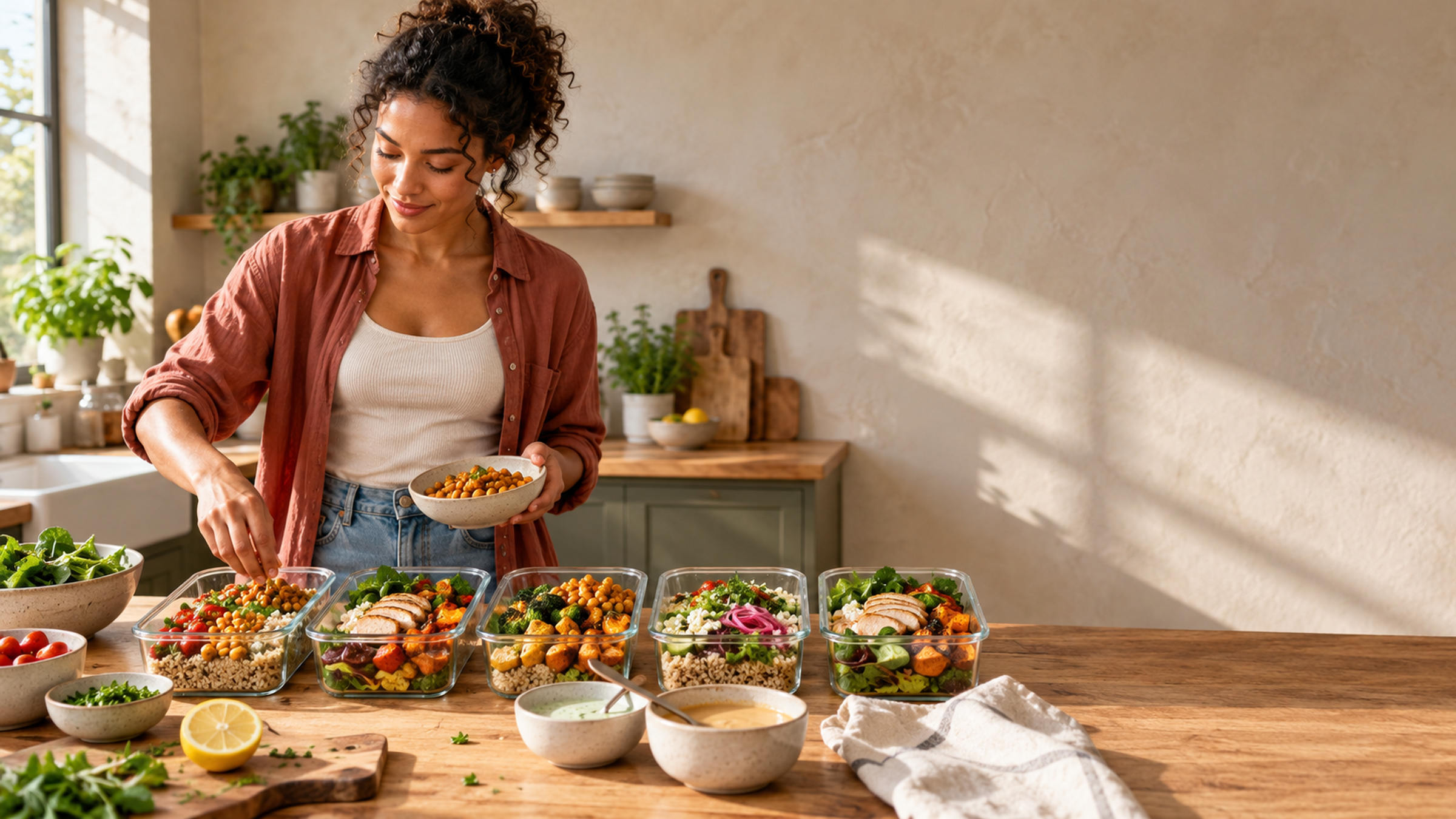
You do not need seven identical boxes or a Sunday spent weighing spinach leaves. If you are meal-prepping for a calorie deficit, start with a few flexible components: one or two protein foods, a carbohydrate you enjoy, plenty of produce, and two strong flavors. Portion the calorie-dense parts with a little care, then let vegetables, herbs, and sauces keep the meals from feeling repetitive.
For a manageable first week, prepare three lunches and two dinner bases. That is enough to make busy decisions easier without pretending your plans will never change.
What meal prep ideas for calorie deficit planning need to do
A calorie deficit describes the overall energy gap: your average energy intake stays below the energy your body uses over time. The NIDDK explains that consuming fewer calories than you use may lead to weight loss, while individual energy needs vary with factors such as age, body size, metabolism, and activity.
Meal prep works best when your calorie-deficit approach is clear enough to guide portions without turning every container into a math exercise. This article focuses on the practical next step: turning that approach into flexible components, sensible portions, and backup meals that still work during a busy week.
Your prep should make four things easier:
- Portions: decide on calorie-dense ingredients before you are tired and hungry.
- Balance: give protein foods, produce, carbohydrates, and fats a clear place.
- Flexibility: turn the same cooked ingredients into a bowl, wrap, salad, or dinner.
- Follow-through: keep something ready when a meeting runs late or cooking feels unrealistic.
The CDC’s current meal guidance recommends a variety of protein foods, vegetables and fruit, healthy fats, and fiber-rich whole grains. You do not need every food group in a perfect ratio at every meal. Use those categories as building blocks, then adjust amounts to your appetite, preferences, schedule, and overall plan.
Use a four-part mix-and-match formula
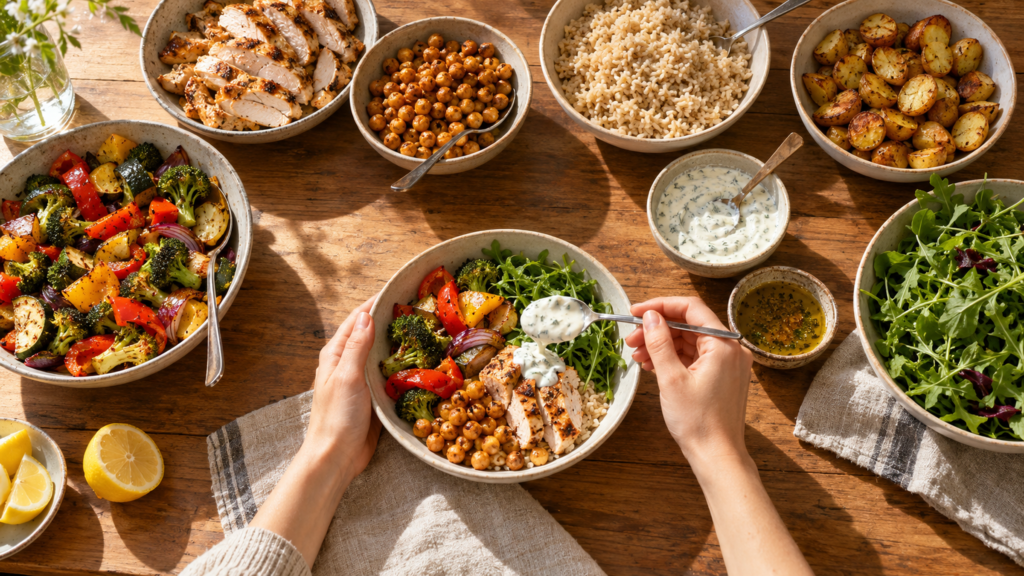
Instead of choosing five unrelated recipes, prep foods that can trade places. Pick one or two options from each row.
| Part | Prep-friendly options | Fast alternative |
|---|---|---|
| Protein food | Chicken, turkey, tofu, tempeh, lentils, beans, eggs, fish, or lean meat | Canned beans, canned fish, cooked lentils, baked tofu, or plain Greek-style yogurt |
| Carbohydrate | Rice, quinoa, potatoes, pasta, couscous, barley, tortillas, or bread | Microwave grains, frozen rice, bread, wraps, or canned corn |
| Produce | Roasted vegetables, slaw, leafy greens, tomatoes, cucumber, fruit, or frozen vegetables | Bagged salad, frozen mixed vegetables, pre-cut vegetables, or whole fruit |
| Flavor and fat | Salsa, pesto, tahini-lemon sauce, yogurt sauce, vinaigrette, nuts, seeds, avocado, or cheese | One favorite bottled sauce or dressing, portioned before serving |
The same base can become a bowl on Monday and a wrap on Wednesday. Lentils and roasted vegetables can sit over couscous at lunch and beside potatoes at dinner.
Sauces, oils, nuts, cheese, and avocado can make meals satisfying and enjoyable, but small pours can become large ones when you are rushing. Measure them during your first few prep sessions if that helps you learn the portion you intended. You do not need to measure leafy greens, cucumber slices, or every tomato.
If the workflow itself is new, use our step-by-step meal prep guide for beginners for containers, grocery planning, and a simple first session.
7 calorie-deficit meal prep ideas
These are templates, not prescribed calorie plans. Calorie and nutrient amounts vary with the ingredients, brands, cooking method, and portions you choose. Choose the version that fits your needs instead of chasing the lowest possible number.
1. Lemon-herb chicken or chickpea bowls
Prep:
- cooked chicken or chickpeas;
- quinoa, brown rice, or couscous;
- roasted zucchini and peppers;
- chopped cucumber and tomatoes;
- lemon-yogurt sauce or vinaigrette.
Keep the sauce separate until lunch. For a larger meal, add more grain, chickpeas, olive oil, feta, or pita. For a lighter version within your plan, use a little less grain or dressing and keep a generous amount of vegetables.
Second meal: Stuff the same components into a wrap with greens. Nothing tastes like leftovers once it is handheld and properly sauced.
2. Taco bowls that turn into wraps
Prep seasoned turkey, lean beef, crumbled tofu, or black beans. Add rice, corn, sautéed peppers, shredded lettuce or cabbage, salsa, and a spoonful of yogurt or guacamole.
Build bowls for the first two days. Keep the remaining filling separate and use it in tortillas later in the week. If you want crunch, pack lettuce, cabbage, or a few crushed tortilla chips separately rather than letting them soften in the container.
Portion cue: Decide on the amounts of rice, meat, cheese, and guacamole while you are packing. Add salsa, cabbage, tomatoes, and herbs when you eat.
3. Sesame tofu or chicken noodle jars
Layer a wide container with sesame-lime dressing, edamame, shredded carrots, cucumber, cooked noodles, and tofu or chicken. Keep delicate greens at the top.
When it is time to eat, tip everything into a bowl and toss. If cold noodles are not appealing, store the dressing and vegetables separately, then warm the noodles and protein before combining them.
Flavor swap: Use peanut-lime sauce one day and a lighter soy-ginger dressing another. Portion richer sauces rather than removing them; they are often the part that makes the meal worth repeating.
4. Mediterranean snack-box lunch
This is the low-cooking option for weeks when even batch cooking feels ambitious. Pack a combination of:
- hummus or a yogurt dip;
- boiled eggs, tuna, chicken, tofu, or roasted chickpeas;
- cucumber, peppers, cherry tomatoes, or carrots;
- whole-grain crackers or pita;
- fruit, olives, or a small portion of cheese.
Choose enough food to make this a meal, not a decorative snack. If you are still hungry after these boxes, increase the protein, crackers or pita, or add fruit rather than treating hunger as a planning error.
5. Tomato-lentil pasta with greens
Cook pasta until just firm, then combine it with a tomato-based sauce, lentils, spinach, mushrooms, or zucchini. Store grated cheese, pesto, or chili oil separately so you can change the finish.
Pasta can fit a calorie deficit. The useful decision is the portion and what shares the bowl with it, not whether pasta is “allowed.” Lentils and vegetables add volume and texture, while a measured topping keeps the final meal predictable.
Second meal: Spoon the lentil-tomato mixture over a baked potato or toasted bread if you do not want pasta twice.
6. Sheet-pan chicken, tofu, or fish dinner
For a practical dinner for a calorie deficit, roast a protein and vegetables on one pan, then add a prepared carbohydrate. Try chicken with broccoli and potatoes, tofu with green beans and rice, or fish with zucchini and couscous.
Use two seasonings across the tray. For example, season half with lemon and herbs and the other half with smoked paprika and cumin. That small split gives you two dinners without doubling the work.
If texture matters to you, prep the other components ahead and cook the fish closer to serving.
7. Freezer-ready soup plus a fresh side
Make a vegetable, bean, lentil, chicken, or turkey soup and freeze some portions on the day you cook it. Pair each bowl with bread, a small sandwich, yogurt, fruit, or a simple salad, depending on what the soup already contains and how hungry you are.
Soup works well as a backup because it does not have to be Tuesday’s assigned dinner. It can wait in the freezer until a late meeting, an empty refrigerator, or a plan that fell apart.
Texture fix: Freeze the soup base without pasta or delicate greens when possible. Add those after reheating so they do not turn soft.
A realistic 60-minute prep plan
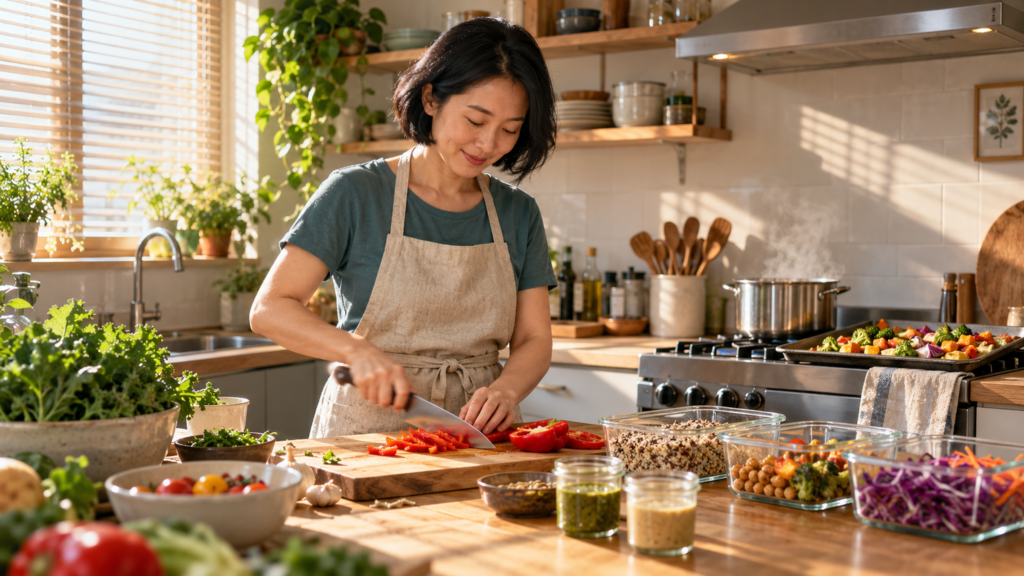
You do not need to complete every task before the timer ends. The aim is to remove the slowest decisions from your week.
Before you start
Choose two meal templates from the list above. Check your calendar, then decide which three to five meal slots genuinely need help. Do not prep Friday lunch just because a template says you should if Friday is usually a lunch-out day.
Minutes 0–10: start the longest-cooking foods
- Heat the oven.
- Start rice, quinoa, potatoes, pasta, or another carbohydrate.
- Put eggs on to boil if you are using them.
- Set out containers and labels.
Minutes 10–30: cook protein and vegetables
- Season and cook one main protein food.
- Roast or sauté two vegetables on the same pan when their cooking times are similar.
- Wash any raw produce you plan to pack.
Keep raw meat, poultry, seafood, and their utensils separate from foods you will eat without further cooking.
Minutes 30–45: make two flavors
Make two flavor options: one bright and fresh, one rich or warm. Lemon-yogurt sauce plus salsa works. So do pesto plus a vinaigrette, or tahini-lemon sauce plus a spice blend.
Two flavors matter more than a seventh container of plain vegetables. This is where component prep stops tasting like a cafeteria line.
Minutes 45–60: cool, portion, and label
Pack the meals you will eat first. Portion hot food into small, shallow containers so it cools quickly, then refrigerate or freeze it within two hours. Hot food can go directly into the refrigerator; do not leave it on the counter until it reaches room temperature. Label containers with the dish and date, especially if your freezer has become a museum of unidentified soups.
If you finish only one protein, one carbohydrate, and one tray of vegetables, you still made the week easier. Add bagged salad, frozen vegetables, canned beans, bread, or fruit when you assemble each meal.
How one prep base becomes five meals
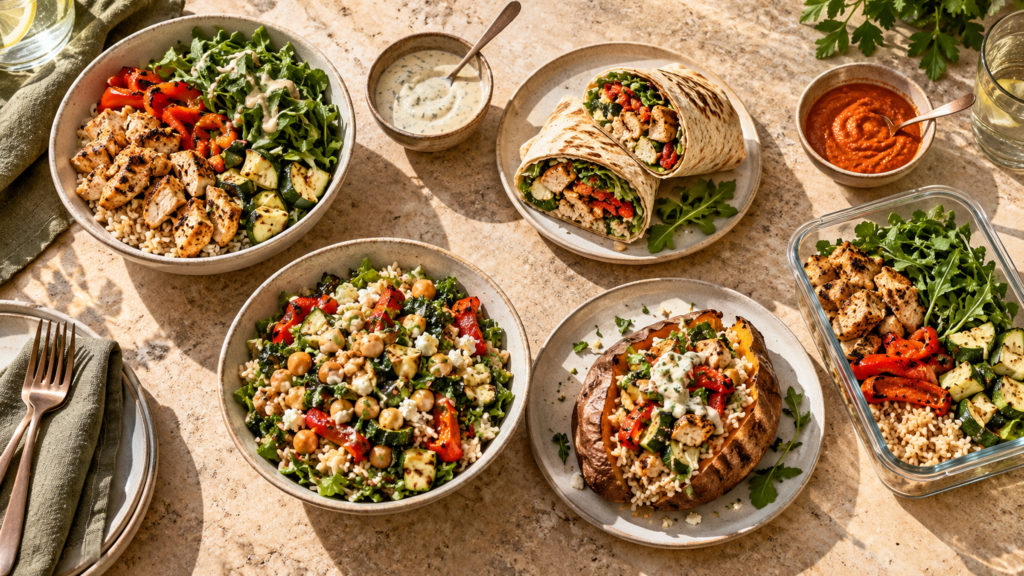
Prep chicken or chickpeas, rice, roasted peppers and zucchini, two sauces, and washed greens. Keep fresh ingredients separate until serving.
| Meal slot | Use the prep base | Add when serving |
|---|---|---|
| Lunch 1 | Rice bowl with chicken or chickpeas and roasted vegetables | Lemon-yogurt sauce and cucumber |
| Lunch 2 | Wrap with chicken or chickpeas and roasted vegetables | Greens and salsa |
| Lunch 3 | Chopped salad with a smaller scoop of rice and the remaining protein | Cucumber and lemon-yogurt sauce |
| Dinner base 1 | Chicken or chickpeas with roasted vegetables | A microwave-baked potato and salsa |
| Dinner base 2 | Freeze one portion of rice, protein, and roasted vegetables | Reheat later and serve with bagged salad |
This is one prep base, not five recipes. Change the format, sauce, and fresh add-on so it does not feel like the same meal five times.
Portion meals without making them tiny
The easiest way to overshoot a planned meal is to leave every calorie-dense ingredient for “a quick drizzle” later. The easiest way to abandon the plan is to pack a lunch that is clearly too small. Your containers need enough food to function as meals.
Try this order:
- Add the protein food.
- Add the carbohydrate portion you planned.
- Fill the remaining useful space with vegetables or fruit that fit the dish.
- Portion sauce, oil, nuts, cheese, avocado, or another fat.
- Add a note for any side you will grab later, such as fruit, yogurt, bread, or milk.
If you track calories, calculate the recipe from the exact ingredients and number of portions you made. Packaged serving sizes are reference amounts, not instructions for how much you must eat. Homemade meals also vary, so treat the number as a workable estimate rather than lab data.
If you do not track, repeat a consistent container and serving utensil for a week or two. That makes your portions easier to compare without logging every ingredient. Watch whether the meal leaves you comfortably satisfied and able to continue your day. Persistent hunger is information; it is not a reason to make the next box smaller.
Keep meal prep safe and edible
Meal prep only saves time if the food is still safe and pleasant when you reach for it.
The FDA advises refrigerating or freezing leftovers within two hours and dividing them into smaller containers for faster cooling. It also recommends using leftovers within three to four days. Freeze portions you will not eat in that window. When reheating sauces, soups, and gravies, bring them to a rolling boil.
Use these habits:
- Divide large batches among several shallow containers and refrigerate or freeze them promptly instead of leaving a deep pot on the counter.
- Put dates on containers before they disappear behind newer food.
- Store sauces and crisp toppings separately.
- Freeze extra portions early rather than waiting until the fourth day.
- Thaw frozen meals in the refrigerator, cold water, or microwave—not on the counter.
- Cook food immediately after thawing it in cold water or the microwave.
Quality matters too. Pack leafy salads for the first part of the week. Freeze soups, stews, cooked grains, and sturdy casseroles for later. Add cucumber, fresh herbs, avocado, and crunchy toppings on the day you eat them when possible.
Smart shortcuts are still meal prep
You do not earn extra credit for chopping every onion yourself. A useful prep routine may include rotisserie chicken, baked tofu, canned beans, frozen rice, pre-cut vegetables, bagged slaw, jarred sauce, or soup from the freezer.
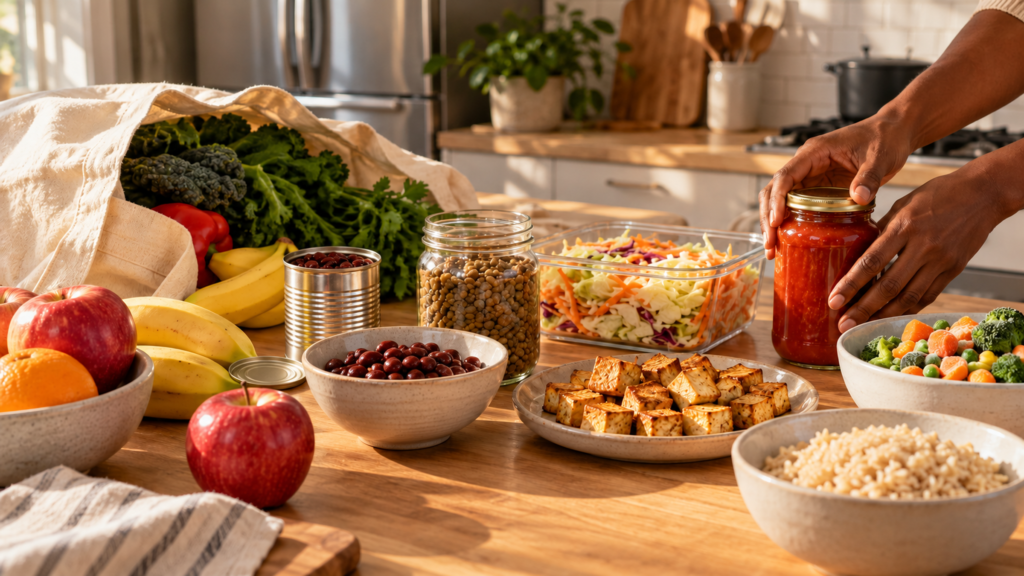
Choose shortcuts based on the problem they solve:
- No time to cook protein: use canned fish, beans, lentils, tofu, eggs, or a suitable ready-cooked option.
- Produce keeps going to waste: buy frozen vegetables and fruit, or choose sturdy options such as cabbage and carrots.
- Meals feel bland by Wednesday: buy one sauce you genuinely like.
- The grocery bill climbs: repeat ingredients across meals and compare unit prices where useful.
Our guide to quick healthy meals on a budget has more ideas for turning shared ingredients into different meals without buying a separate list for every recipe.
Common calorie-deficit meal-prep mistakes
Prepping every meal for seven days
Schedules change, appetite changes, and many refrigerated leftovers are not meant to wait a full week. Prep the meals that cause the most friction and leave space for fresh food, social plans, and leftovers.
Making every box identical
Repetition can save time, but total sameness often makes the unplanned option more appealing. Change the format or sauce: bowl to wrap, rice to potato, salsa to yogurt sauce.
Cutting the meal until it looks “diet enough”
A container with a few vegetables and a token portion of protein may be low in calories, but that does not make it a useful lunch. Start with a real meal, then adjust the portions that matter to your overall plan.
Forgetting the busy-night backup
The dinner you need most is often the one required when the original plan fails. Freeze two portions, keep a shelf-stable bowl combination available, or post one five-minute dinner option on the refrigerator.
Treating labels as exact
Nutrition labels, recipe calculators, and tracking apps are practical tools, but brands, drained weights, cooking methods, and serving sizes differ. Consistent estimates are more useful than chasing false precision.
FAQ
What should I meal prep for a calorie deficit?
Prep meals you already like, then build them from a protein food, produce, a carbohydrate, and a measured source of fat or flavor. Bowls, wraps, soups, pasta, sheet-pan meals, and snack-box lunches all work. The portion and the overall pattern matter more than whether the recipe has “diet” in its name.
Can I meal prep for a calorie deficit without counting calories?
Yes. Use consistent containers and familiar portions, then adjust them over time based on your hunger and progress. Calorie tracking is one tool, not a requirement for preparing more predictable meals.
What is an easy dinner for a calorie deficit?
Try a sheet-pan combination: chicken, tofu, fish, or beans; two vegetables; potatoes, rice, or another carbohydrate; and a sauce you enjoy. Portion the oil, sauce, and other calorie-dense toppings during prep, then adjust the amount of each component to fit your plan and appetite.
Start with five useful meals, not a perfect week
For your next prep session, choose two meal templates, buy ingredients that overlap, and prepare three lunches plus two dinner bases. Keep sauces separate, freeze what you will not eat within a few days, and leave one meal slot open for real life.
That is enough. A good prep plan does not prove how organized you are. It makes the next useful choice easier when your calendar is full and dinner cannot become another project.