

What a Balanced Meal Consists of: A Simple Plate Guide
11 min readYou open the fridge after a long day and find leftover rice, two eggs, half a cucumber, and a sauce you forgot you bought. Is that a meal, or are you supposed to start again with a recipe that checks every nutrition box?
You do not need a perfect plate. When you need a simple starting point, check for produce, protein, and carbohydrate. Fat may already be in the meal, and flavor helps make it worth eating. This is a practical shortcut, not a definition every meal has to meet.
Use that formula as a quick check, not a grading system. Your appetite, schedule, culture, budget, and the rest of your day all affect what belongs on your plate.
What a balanced meal consists of
Use four flexible parts as a meal-building shortcut. A well-balanced meal does not need each part served separately:
- Vegetables or fruit for variety, fiber, vitamins, and minerals.
- A protein food such as beans, lentils, tofu, eggs, yogurt, fish, poultry, meat, nuts, or seeds.
- A carbohydrate source such as oats, bread, rice, pasta, potatoes, corn, fruit, beans, or another grain or starchy vegetable.
- A source of fat such as olive oil, avocado, nuts, seeds, cheese, tahini, or pesto.
Flavor is not a separate food group, but it still matters. Seasonings, dressings, and sauces can make the meal worth eating and repeating.
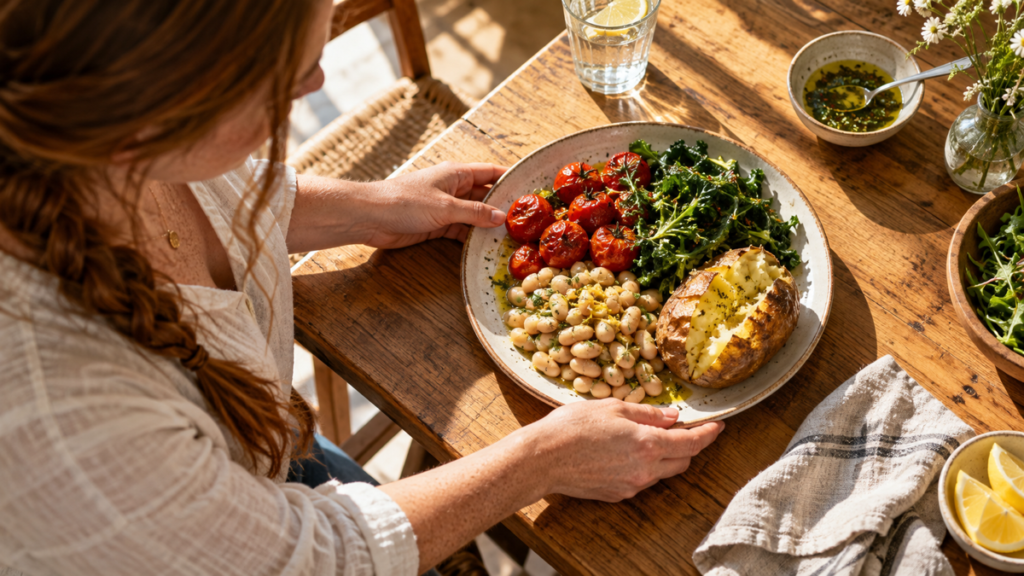
This does not mean a balanced diet consists of four separate items at every meal. Beans provide protein and carbohydrate. Nuts provide protein and fat. Yogurt can add protein, carbohydrate, and fat, depending on the type. A stew, curry, sandwich, or bowl may combine several parts before it reaches your plate.
The World Health Organization’s healthy-diet guidance describes adequacy, balance, moderation, and diversity as core principles. It also notes that the exact makeup of a healthy diet varies with individual needs, culture, local foods, and dietary customs. That is a useful reality check: balance is a pattern, not one universal photograph.
1. Vegetables or fruit
Choose any form that works for the meal: fresh, frozen, canned, cooked, raw, or dried. Tomatoes in a pasta sauce count. Frozen peas in rice count. Berries on oatmeal count. So does an apple eaten beside a sandwich because you had no time to chop anything.
Color can be a handy prompt for variety, but it is not a rule that every plate needs a rainbow. Aim to rotate what you eat across the week rather than forcing five colors into lunch.
2. A protein food
Protein foods include beans, peas, lentils, tofu, tempeh, eggs, dairy foods, fish, poultry, meat, nuts, and seeds. Pick one that fits the meal and the amount of time you have.
On a rushed day, that might be canned beans, a boiled egg, plain yogurt, leftover chicken, baked tofu, or hummus. If you want a broader list with simple ways to use each option, see our guide to practical high-protein foods.
3. A carbohydrate source
Carbohydrates are not the part of the plate you have to “earn.” They provide energy and appear in grains, starchy vegetables, fruit, beans, lentils, and dairy foods.
Whole grains and other fiber-rich choices can add fiber and nutrients, but the most useful option is one you can access, enjoy, and digest comfortably. Brown rice can work. So can white rice served with beans and vegetables. Oats, potatoes, corn tortillas, couscous, noodles, and bread can all have a place.
For ways to add fiber without overhauling your menu, browse these high-fiber foods and choose one realistic addition.
4. Fat, plus flavor
Your meal may already contain fat in foods such as salmon, eggs, yogurt, nuts, seeds, cheese, or the oil used for cooking. You do not need to add a separate fat just to complete a checklist.
When the meal needs something more, use olive oil, avocado, nuts, seeds, tahini, pesto, cheese, or another dressing or sauce. Flavor matters. A technically balanced lunch you do not want to eat is not a very practical lunch.
How MyPlate fits into a balanced diet
The U.S. MyPlate image divides a plate into fruits, vegetables, grains, and protein, with dairy shown beside it. The produce sections take up about half of the image, while grains and protein share the other half. It is a visual reminder, not a requirement to measure every bite.

The FDA’s MyPlate overview explains that food-group targets can be personalized by age, sex, height, weight, and activity. In other words, a MyPlate balanced meal is a starting framework, not a fixed portion plan for every adult.
You can use the image loosely:
- let vegetables or fruit take a visible role;
- include a protein food;
- add a grain or another carbohydrate source;
- include dairy or a fortified alternative across the meal or day if it suits how you eat.
Some meals will not resemble the icon at all. Lentil curry with rice, vegetable soup with bread and yogurt, or tacos with beans, cabbage, salsa, and avocado can still bring the same building blocks together. A healthy, balanced plate does not have to be flat, divided, or beige-free.
How to build a balanced plate without measuring
When dinner is already late, you need a sequence you can remember. Try this four-step check.

Step 1: Choose the meal anchor
Start with the food that makes the meal feel like a meal. It may be eggs, fish, tofu, lentils, chicken, yogurt, pasta, rice, or potatoes. There is no rule that says you must begin with protein.
Step 2: Add what is missing
Look at the anchor and ask two simple questions:
- Is there a vegetable or fruit here?
- Is there a useful protein source and enough carbohydrate for this meal?
If one part is missing, add the easiest option you have. Frozen vegetables, canned beans, fruit, toast, microwave rice, or yogurt all count. Convenience food is allowed to be convenient.
Step 3: Make it enjoyable
Add seasoning, sauce, crunch, or richness. That could mean salsa on eggs, olive oil on vegetables, seeds on noodles, cheese in a bean wrap, or peanut sauce on tofu and rice.
Step 4: Adjust the amount to the day
Portion diagrams cannot know how hungry you are. Start with an amount that usually works for you, eat, and notice whether you want more. A more active day or a long gap between meals may affect appetite. That is information, not a failure to follow the plate.
This gives you a practical plate-and-portion check for healthy eating without turning dinner into geometry.
Balanced meals for breakfast, lunch, and dinner
The same formula can look completely different across the day. These examples show options, not mandatory menus or portion prescriptions.
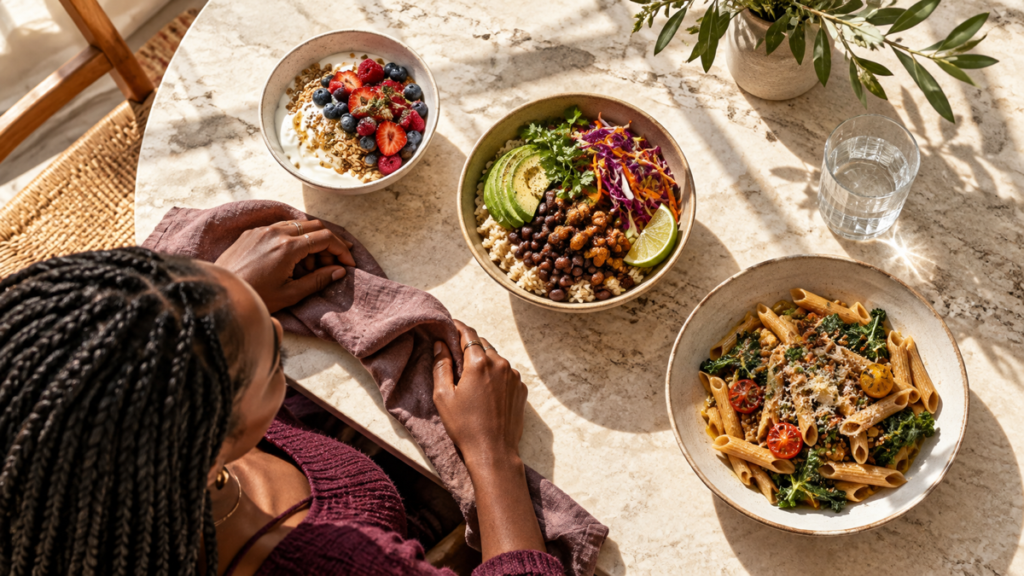
| Meal | Vegetables or fruit | Protein food | Carbohydrate | Fat or flavor |
|---|---|---|---|---|
| Overnight oats | Berries or banana | Yogurt or fortified soy milk | Oats and fruit | Nuts, seeds, or nut butter |
| Eggs on toast | Tomatoes, spinach, or fruit | Eggs | Whole-grain or other toast | Avocado, cheese, or cooking oil |
| Desk lunch bowl | Frozen vegetables or slaw | Beans, tofu, chicken, or fish | Rice, quinoa, corn, or another grain | Salsa, tahini, pesto, or avocado |
| Soup and sides | Vegetables in the soup plus fruit if wanted | Lentils, beans, chicken, or yogurt | Potatoes, grains, bread, or noodles | Oil, seeds, cheese, or herbs |
| Pasta dinner | Tomato sauce, spinach, peas, or salad | Lentils, beans, tofu, meat, or cheese | Pasta | Olive oil, pesto, or cheese |
| Snack-style meal | Raw vegetables and fruit | Hummus, eggs, yogurt, cheese, or edamame | Bread, crackers, or pita | Nuts, olives, dip, or avocado |
For a balanced diet, breakfast, lunch, and dinner do not need equal portions or matching food groups. Breakfast may be small because you are not very hungry in the morning. Lunch may be the largest meal. Dinner may come in two stages on a late workday. The overall pattern matters more than making three identical plates.
Three five-minute combinations
Yogurt bowl: Plain yogurt or a fortified soy alternative, oats or cereal, fruit, and nuts or seeds.
Bean wrap: Canned beans, bagged slaw, salsa, and cheese or avocado in a tortilla.
Microwave grain bowl: A grain pouch, frozen vegetables, tofu or leftover chicken, and a bottled sauce.
These meals are simple on purpose. A balanced diet should be flexible enough to work even when a meeting runs late.
When the food groups are mixed together
The food groups in a balanced diet are easy to spot when the foods are served separately. Real food is often mixed, and that is fine.
Use a quick ingredient scan instead:
- Sandwich: bread supplies carbohydrate; the filling may supply protein and fat; add vegetables inside or fruit on the side.
- Soup or stew: look for a protein food, a starch or grain, and vegetables; add bread, yogurt, or fruit if the bowl feels too light.
- Curry: beans, lentils, tofu, fish, or meat can cover protein; rice or flatbread adds carbohydrate; vegetables may be in the sauce.
- Tacos: tortillas provide carbohydrate; beans, fish, eggs, tofu, or meat add protein; cabbage, tomatoes, or salsa add produce; avocado or cheese adds fat and flavor.
- Pasta: pasta provides carbohydrate and some protein; add beans, lentils, seafood, meat, tofu, or cheese plus any vegetable that works with the sauce.
Do not disassemble a family recipe to make it look more “correct.” Identify what is already there, then add one missing part only if the meal needs it.
Foods for a balanced diet on your busiest days
Fresh ingredients are useful, but they are not the entry fee. The current Dietary Guidelines for Americans include frozen, dried, and canned vegetables and fruit among practical options, and recommend variety across protein foods, vegetables, fruit, and fiber-rich whole grains.
Keep a few low-effort foods in each role:

- Produce: frozen mixed vegetables, canned tomatoes, bagged slaw, apples, bananas, or frozen berries.
- Protein: canned beans, eggs, plain yogurt, tofu, canned fish, rotisserie chicken, or frozen edamame.
- Carbohydrate: oats, bread, tortillas, microwave rice, pasta, couscous, potatoes, or frozen corn.
- Flavor: olive oil, salsa, pesto, tahini, nuts, seeds, grated cheese, or a favorite bottled sauce.
Choose one item from three or four roles and stop. You do not need to use every ingredient in the kitchen.
If cost is the bigger constraint, these quick healthy meals on a budget show how to reuse the same basics without eating the same dinner all week.
How to check a packaged or ready-made meal
A frozen meal, canned soup, meal kit, or store-bought sandwich can be the anchor. Check what it already provides, then add the easiest missing piece.
A frozen pasta meal may already provide carbohydrate, protein, fat, and flavor. If it feels light on produce, add frozen peas or fruit on the side. You are filling one gap, not rebuilding dinner.
For example:
- add frozen vegetables to a noodle bowl;
- add fruit and yogurt beside toast;
- add beans to soup;
- add bread or rice to a vegetable-and-protein dish that feels too light;
- add a salad kit beside pizza rather than trying to reinvent pizza.
For packaged foods, the FDA’s Nutrition Facts label guide recommends checking the serving information first and comparing similar products for nutrients such as fiber, sodium, saturated fat, and added sugars. Use the label to compare options, not to declare one food good and another bad.
Common mistakes that make balanced eating harder
Treating the plate like a strict ratio
A diagram cannot account for the size of your plate, the type of meal, or your appetite. Use proportions as a visual prompt, not a command.
Making vegetables the whole meal
Vegetables matter, but a bowl of leaves may not keep you going through a long afternoon. Add protein, carbohydrate, fat, or a combination that makes the meal feel complete.
Removing foods before adding useful ones
You do not have to begin by banning bread, pasta, dessert, or takeout. First add what is missing: fruit with breakfast, beans at lunch, vegetables with dinner, or a protein food in a snack-style meal.
Expecting every meal to carry the whole day
One breakfast does not need every balanced diet food group. You can eat fruit at a snack, yogurt later, or vegetables at lunch and dinner. Variety can happen across several meals.
Ignoring taste and convenience
If a meal takes too long or tastes like an obligation, it will be hard to repeat. Sauces, frozen foods, canned foods, leftovers, and simple combinations are tools, not shortcuts you need to apologize for.
FAQ
What is the easiest way to balance a meal that feels incomplete?
Keep what you already have and add the easiest missing part. Fruit, toast, yogurt, canned beans, or frozen vegetables can turn a light meal into something more satisfying without starting over.
Does a balanced diet include every food group at every meal?
No. A balanced diet includes variety across the day and week. A meal can be useful without containing every food group, especially when another meal or snack fills the gap.
Do I need dairy at every meal?
No. Dairy does not need to appear at every meal. Milk, yogurt, and cheese can contribute protein and minerals, while fortified alternatives can fit some eating patterns. What matters is the overall mix across your day, not placing a dairy item beside every plate.
How do I know whether my meal is balanced enough?
Check for a protein food, produce, and a carbohydrate source. Then ask whether the meal tastes good, fits your schedule, and leaves you comfortably satisfied. If something is missing, add the easiest option—not the most impressive one.
Build your next meal, not your perfect diet
At your next meal, look at what is already there. Add one missing part: fruit beside breakfast, beans in lunch, frozen vegetables with dinner, or bread beside soup. Then eat the meal while it is still warm.
That is the point of the shortcut. A balanced meal consists of useful parts you can adapt, not a perfect arrangement you have to reproduce three times a day.