
You open your phone to learn how to start an anti-inflammatory diet, and five minutes later you have a list of foods to fear. One post bans gluten. Another blames dairy, tomatoes, or seed oils. A third wants you to buy a shelf of powders. Dinner still needs to happen.
Here is the useful answer: an anti-inflammatory diet is not one official menu or a short detox. It is a flexible eating pattern built mostly around vegetables and fruit, whole grains, beans and other legumes, nuts and seeds, protein foods, and sources of unsaturated fat. It also leaves less room for foods and drinks that are high in added sugars, saturated fat, or sodium when those choices dominate the week.
The overall pattern matters more than one “healing” ingredient. You do not need to empty your kitchen, eat perfectly, or force every meal into the same template. Start with one meal you eat often and make it a little more plant-forward, varied, and satisfying.
What is an anti-inflammatory diet?
Inflammation is part of the body’s normal defense and repair system. Short-term, or acute, inflammation helps you respond to an injury or infection. Problems can arise when inflammatory activity lasts too long or occurs where it is not needed.
Food is only one part of that picture. Injury, infection, health conditions, and environmental exposures can also affect inflammatory processes. That is why a meal cannot switch inflammation on or off like a light.
Nutrition studies often track blood markers such as C-reactive protein rather than a feeling you can notice after lunch. Reviews of the research suggest that Mediterranean-style dietary patterns may improve some markers on average. The findings are not equally strong for every marker, population, or version of the diet, and a change in a marker does not guarantee a particular symptom or health outcome.
So what can you use from the evidence? Favor a varied, mostly plant-forward pattern that you can repeat. Treat dramatic promises about single foods, detoxes, and instant results with caution.
Anti-inflammatory foods to choose more often
You do not need a special “anti-inflammatory” aisle. Most of the useful ingredients are ordinary foods that can work across cuisines, budgets, and schedules.
A quick more-often/less-often
| Choose more often | Choose less often when they dominate your week |
|---|---|
| Vegetables and fruit; beans and lentils; whole grains; nuts and seeds; varied protein foods; olive, canola, and other unsaturated fats | Sugary drinks; processed meats; foods high in saturated fat or sodium; refined grains and sweets eaten as the default |
Make plants the easiest part to add
Vegetables, fruit, beans, lentils, whole grains, nuts, and seeds bring different combinations of fiber, vitamins, minerals, and plant compounds. Variety matters more than chasing the food with the most impressive headline.
Fresh produce is one option, not the entrance fee. Frozen vegetables, frozen fruit, canned tomatoes, and canned beans can make the pattern much easier to maintain. Choose unsweetened or lower-sodium versions when they are available and useful to you, but do not let the perfect label block a practical meal.
Keep protein varied
Beans, lentils, tofu, tempeh, nuts, seeds, fish, eggs, poultry, meat, yogurt, and suitable alternatives can all contribute protein. A plant-forward diet does not have to be vegetarian, and there is no prize for forcing foods you dislike.
Try replacing some processed or fatty meat meals with beans, fish, tofu, or another protein you enjoy. Think “more often” and “less often,” not “clean” and “bad.”
Use mostly unsaturated fats
Olive and canola oils, nuts, seeds, avocado, and fish provide unsaturated fats. They can replace some butter, coconut oil, fatty meats, or other foods high in saturated fat rather than simply being added to everything.
Fat still contributes energy, so pouring extra oil over every meal is not automatically more helpful. The swap matters.
Let flavor do some work
Herbs, spices, citrus, garlic, vinegar, and sauces can make simple ingredients feel like dinner rather than a nutrition assignment. Ginger and turmeric can be part of the flavor, but neither needs to appear daily. A varied pattern does not depend on one spice.
Build an anti-inflammatory meal in four parts
When you are hungry and short on time, use this loose formula:
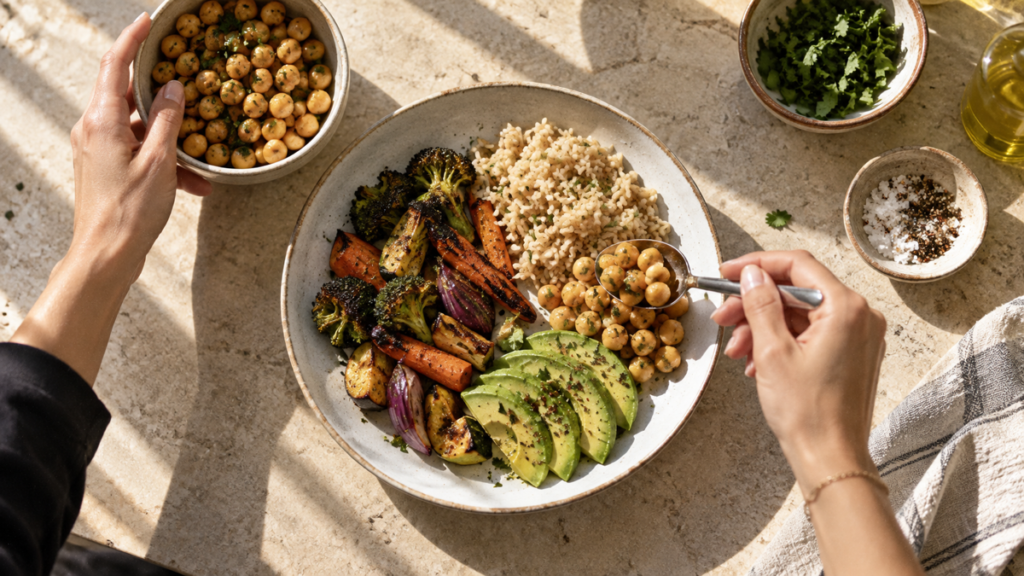
- Add a vegetable or fruit. Choose fresh, frozen, canned, or dried.
- Choose a protein food. Try beans, lentils, tofu, fish, eggs, poultry, yogurt, nuts, seeds, or another option that suits you.
- Include a carbohydrate, choosing higher-fiber options often. Try oats, potatoes, corn, whole-grain bread or pasta, brown rice, quinoa, or another grain you enjoy.
- Finish with an unsaturated fat or strong flavor. Use olive oil, avocado, nuts, seeds, hummus, herbs, spices, salsa, or a dressing you like.
Not every meal will contain every part. Your appetite, culture, budget, access, and dietary needs decide the details. Use the formula to make the next choice easier, not to grade your plate.
If you want to practice the same building blocks without the inflammation label, these healthy eating tips for beginners break them into small, repeatable habits.
What this can look like on a busy day
This is not a fixed meal plan. It is a set of ways to upgrade meals you may already eat.

- Rushed breakfast: Add berries and nuts or seeds to oatmeal, or pair whole-grain toast with eggs and fruit.
- Desk lunch: Combine a microwave grain pouch, rinsed canned beans, pre-washed greens, and a dressing.
- Late dinner: Heat frozen vegetables with tofu, chicken, or shrimp; add rice and a sauce you enjoy.
- No-cook evening: Put hummus, whole-grain bread or crackers, chopped or pre-cut vegetables, fruit, and a protein food on one plate.
- Snack that needs more staying power: Pair fruit with yogurt, nuts, or a nut or seed butter.
The convenience foods are doing useful work here. “Minimally processed” does not mean everything must be raw, homemade, or prepared from scratch. Frozen produce, canned beans, plain yogurt, whole-grain bread, and precooked grains can make a nourishing pattern possible on a Wednesday night.
For more complete combinations, use one of our easy healthy meals and make only the swaps that fit your kitchen.
A one-week starting plan
Changing everything at once makes a simple idea feel like a new job. Try this smaller sequence instead.

1. Pick one repeat meal
Choose the meal you eat most often or the one that causes the most friction. Breakfast at your desk may be easier to improve than every dinner this week.
2. Add one plant food
Add fruit to breakfast, frozen vegetables to dinner, or beans to a grain bowl. You can improve the pattern before removing anything.
3. Choose two reliable proteins
Keep one quick option and one option you enjoy cooking. That might be canned beans and salmon, eggs and tofu, or yogurt and chicken.
4. Make one fat swap
Use olive oil instead of butter for one dish, add nuts instead of a pastry to one snack, or choose fish in place of processed meat for one meal. You do not need to make every swap at once.
5. Plan one backup dinner
Pick a meal made from pantry or freezer foods. Write it where you can see it. A backup meal protects the plan from the night when the meeting runs late and the fresh ingredients have lost their charm.
6. Repeat before you expand
Use the same changes for a week. If they are affordable, satisfying, and easy enough to repeat, keep them. If not, simplify the ingredients or choose a different meal.
7. Review the routine, not your worth
Ask practical questions: Did the food keep you satisfied? Did you have what you needed? Which step took too long? Adjust the system, not your self-respect.
If you prefer to map breakfasts, lunches, and dinners together, our flexible nutrition plan for beginners shows how to reuse ingredients without cooking a different recipe every day.
Foods to choose less often without banning them
An anti-inflammatory diet does not require a forbidden-food drawer. Look at what dominates your usual pattern instead.
Try choosing sugary drinks less often, replacing some processed meats with other proteins, and relying less often on foods high in saturated fat or sodium. Refined grains and sweets can still fit; pair them with other foods and pay attention to frequency rather than treating one serving as damage.
This approach also makes room for birthdays, travel, restaurant meals, cultural foods, and the dinner someone else cooked. One meal does not define your dietary pattern. Your repeat choices do most of the work.

Do not cut out several food groups solely because a viral list labels them inflammatory. For a general eating pattern, variety is a more useful default than broad elimination. Cutting several food groups can make meals harder to plan and less varied without answering the original question.
What “clean eating” should mean here
If you searched for a “clean” anti-inflammatory diet, you may be expecting a strict list of approved foods. But clean eating is not a standardized scientific approach, and packaged food is not automatically a poor choice.
A so-called clean-eating anti-inflammatory diet often comes with more rules than evidence. A more useful approach is to choose a variety of nutrient-dense foods more often while keeping practical packaged options in the plan. It does not mean avoiding every additive, buying only organic food, or cooking every meal yourself.
Clean-eating advice framed as anti-inflammatory should not turn ordinary choices into a moral test. Canned beans, frozen vegetables, jarred sauce, and whole-grain bread may be exactly what helps you eat a more balanced dinner. Practical beats pristine.

Five mistakes that make the plan harder
1. Shopping for superfoods before planning meals
A bag of specialty powder cannot fix a week with no workable lunches. Start with meals, then decide whether any extra ingredient is worth the cost.
2. Changing breakfast, lunch, dinner, and snacks overnight
The more rules you add, the harder it is to see which ones are useful. Change one repeat meal first and build from there.
3. Confusing expensive with effective
Berries are useful, and so are apples. Salmon can fit, and so can beans. Choose foods you can buy and repeat rather than a photogenic cart that strains your budget.
4. Expecting a clear feeling after every meal
Inflammation is not something you can reliably score from one afternoon of energy, bloating, or skin changes. Many factors can affect how you feel. Use the pattern to support overall diet quality, not to explain every symptom.
5. Treating supplements as the main strategy
A whole dietary pattern and a single supplement are different interventions, so evidence for one does not automatically apply to the other. You do not need powders or capsules to start with the meal pattern in this guide.
FAQ
What is the best anti-inflammatory diet?
There is no single official plan. A Mediterranean-style eating pattern has the most consistent research support among named patterns, although the strength of evidence varies. Its practical foundation is flexible: plenty of plant foods, whole grains and legumes, a variety of proteins, and mostly unsaturated fats.
Which foods cause inflammation?
Research does not support treating one ordinary food as a universal cause of chronic inflammation. The evidence is more useful at the level of repeated dietary patterns than single foods. A pattern dominated by sugary drinks, processed meats, refined carbohydrates, and foods high in saturated fat or sodium may be less supportive than a varied, plant-forward pattern. That does not turn any one food into a toxin.
Do I need to avoid gluten or dairy?
Not by default. Both can fit an anti-inflammatory diet. Use alternatives when you have an allergy, intolerance, established dietary instruction, or a personal preference—not because a generic online list says everyone must avoid them.
Is an anti-inflammatory diet vegetarian?
It can be, but it does not have to be. Mediterranean-style patterns often include fish, eggs, dairy, and smaller amounts of meat alongside plenty of plant foods. You can choose a version that fits your culture, preferences, budget, and dietary needs.
Start with the meal in front of you
You do not need a dramatic reset. Choose one meal you will probably eat tomorrow. Add a fruit or vegetable, include a protein food, keep a fiber-rich carbohydrate, and use a fat or flavor you enjoy.
Then repeat the meal once. That is a stronger start than buying six “anti-inflammatory” ingredients with no plan for Tuesday.